
Mold Remediation in Florida
Mold remediation is the inspection, containment, and removal of mold — including mold caused by water damage — followed by addressing the moisture that let it grow. In Florida's humid climate, our crews remove mold safely and fix the underlying moisture, because removal without moisture control just invites it back.
Where mold hides in a property
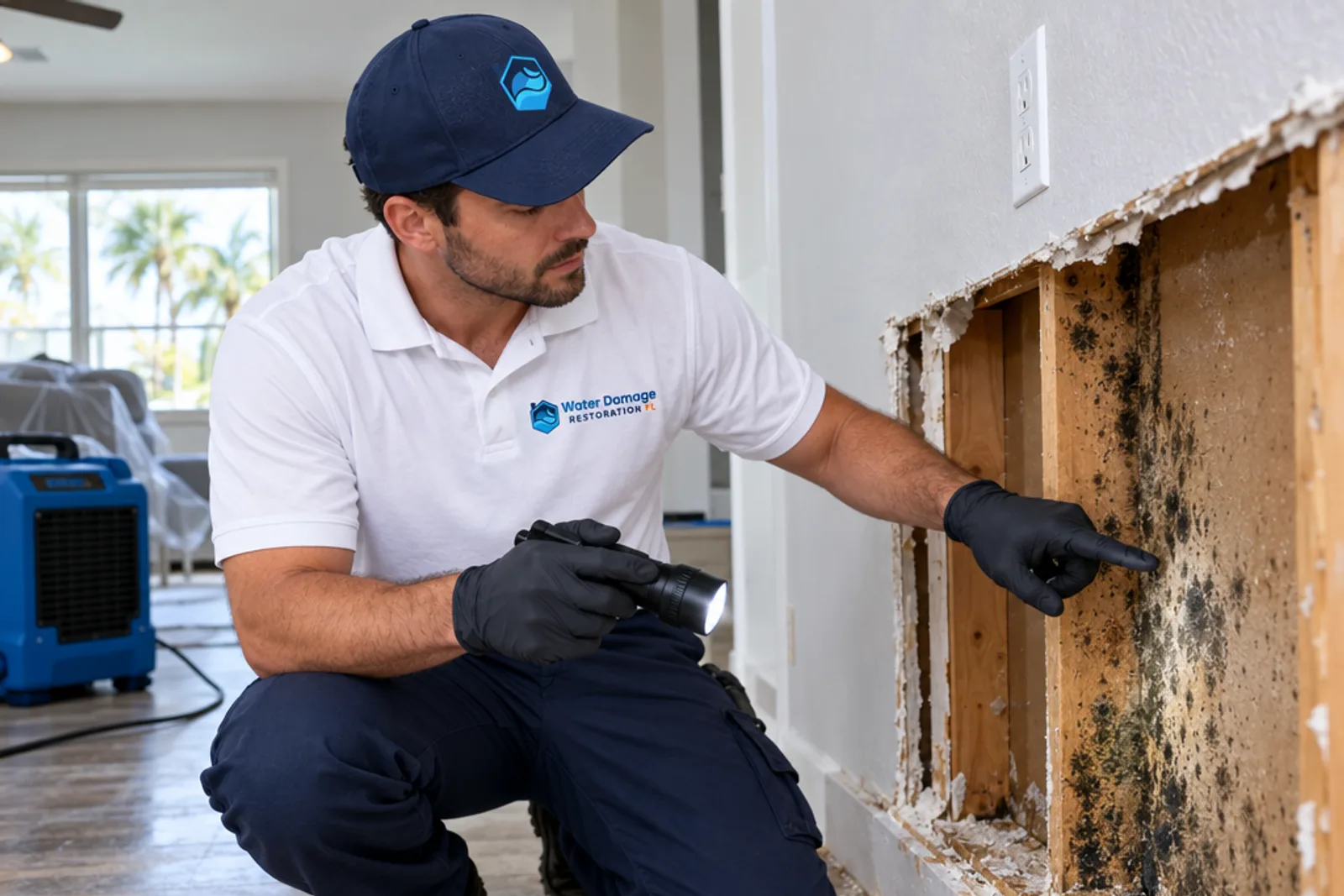
Mold rarely announces itself. Because it grows wherever moisture and a food source meet, it tends to start in the places you don't look — inside wall cavities, under flooring and carpet pad, above ceilings, behind cabinets, and in attics and around HVAC systems where condensation collects. Often a musty smell is the first clue, well before any visible growth.
That's why finding mold is as much about finding moisture as spotting the growth itself. We check the likely hiding places and use meters and thermal imaging to identify the damp conditions that support mold behind the surfaces.
Why moisture control is the real fix
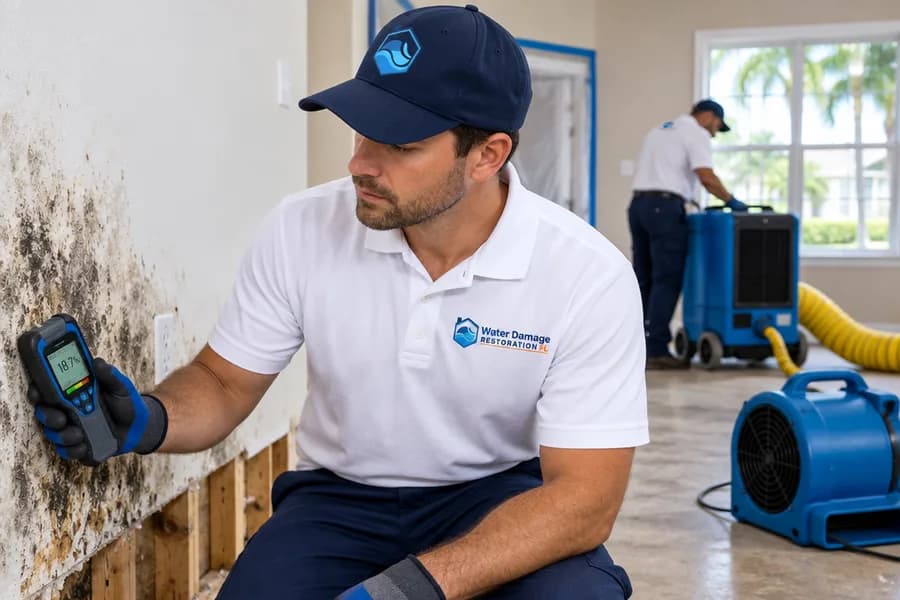
The single most important fact about mold is that it needs moisture. Remove the mold but leave the dampness — a leak, condensation, poor drainage, or high indoor humidity — and it comes back. This is why remediation that only scrubs away visible growth is a temporary fix.
Lasting remediation pairs removal with correcting the moisture source and drying the area to normal levels. In Florida's humid climate, controlling that moisture is the part that actually keeps mold from returning.
Why mold and water damage go together
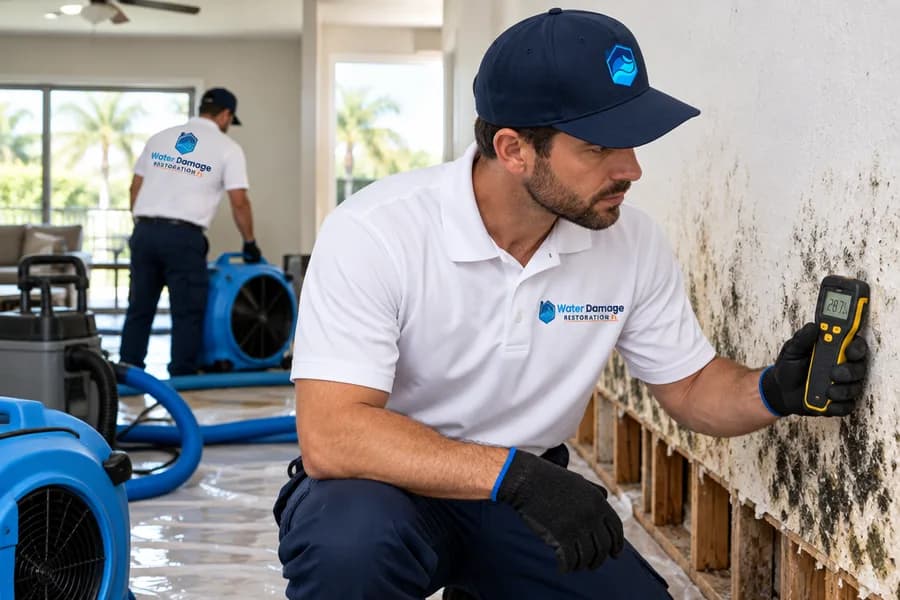
Mold develops when moisture is left behind — after a leak, a flood, or simply high humidity. Spores are always present in the air; what turns them into a problem is a damp surface to grow on. That's why mold so often follows water damage that wasn't dried quickly or completely.
It also means effective mold remediation has to do two things: remove the mold that's there, and address the moisture that allowed it, or it will return.
Our mold remediation process
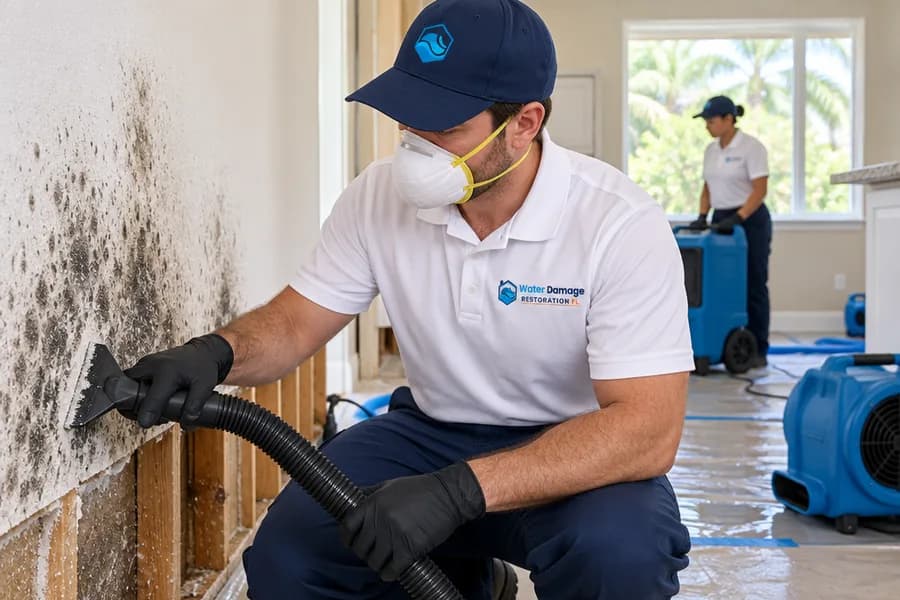
Remediation follows a careful, contained sequence to remove mold without spreading spores:
- Inspection to find visible mold and the conditions supporting it.
- Containment of the affected area to prevent spores from spreading.
- HEPA air filtration to capture airborne spores during the work.
- Removal of mold and mold-affected materials that can't be cleaned.
- Cleaning and treatment of salvageable surfaces.
- Addressing the moisture source so mold doesn't return.
Removal vs. remediation
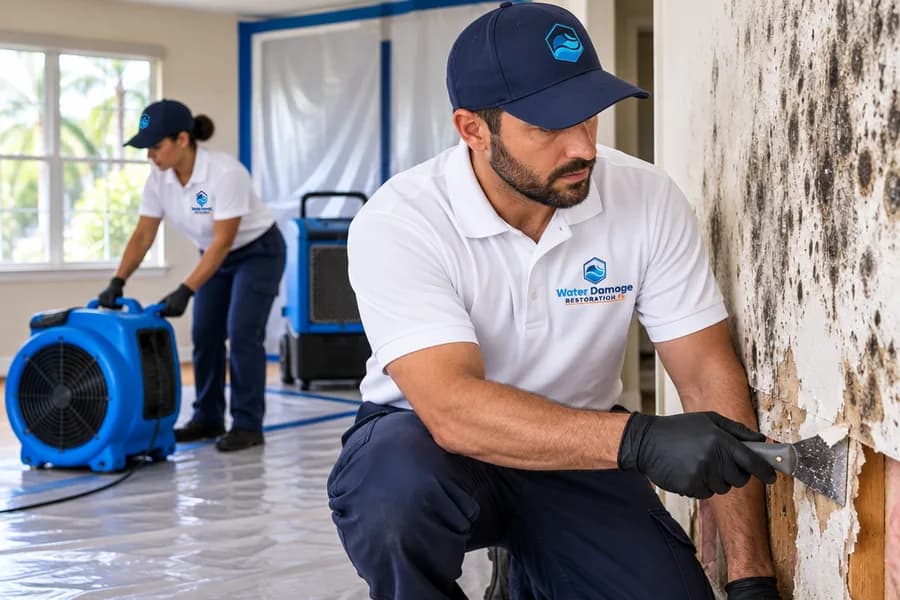
People often say 'mold removal,' but remediation is the more complete idea. Removal describes taking the mold out; remediation covers the whole process — containment, removal, cleaning, and fixing the moisture that caused it. Because spores are naturally everywhere, the realistic goal is to return mold to normal, safe levels and keep it from coming back, not to sterilize the air.
| Mold removal | Mold remediation | |
|---|---|---|
| Scope | Taking out visible mold | The full containment-to-prevention process |
| Moisture source | Not necessarily addressed | Addressed so mold doesn't return |
| Containment | May be minimal | Contained with HEPA filtration |
| Goal | Remove what's visible | Restore safe levels and prevent recurrence |
Signs you may have a mold problem
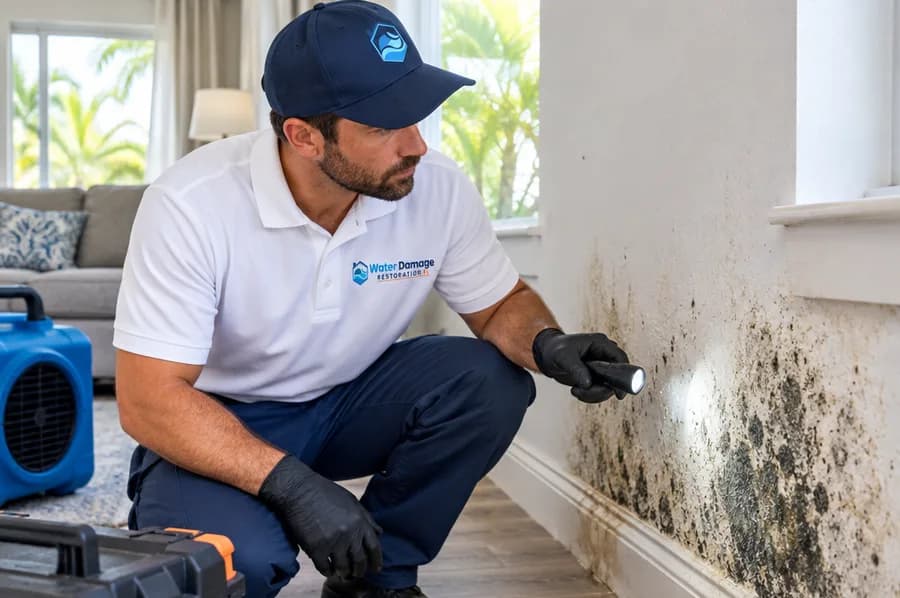
Mold isn't always visible — it often grows behind walls, under flooring, and inside cabinets before it shows. Watch for these signs, especially after any water damage:
- A persistent musty or earthy smell.
- Visible discoloration or fuzzy growth on walls, ceilings, or grout.
- Bubbling paint or a soft feel to drywall near past leaks.
- Worsening allergy-like symptoms indoors that ease when you leave.
- A history of water damage that wasn't fully dried.
Containment: removing mold safely
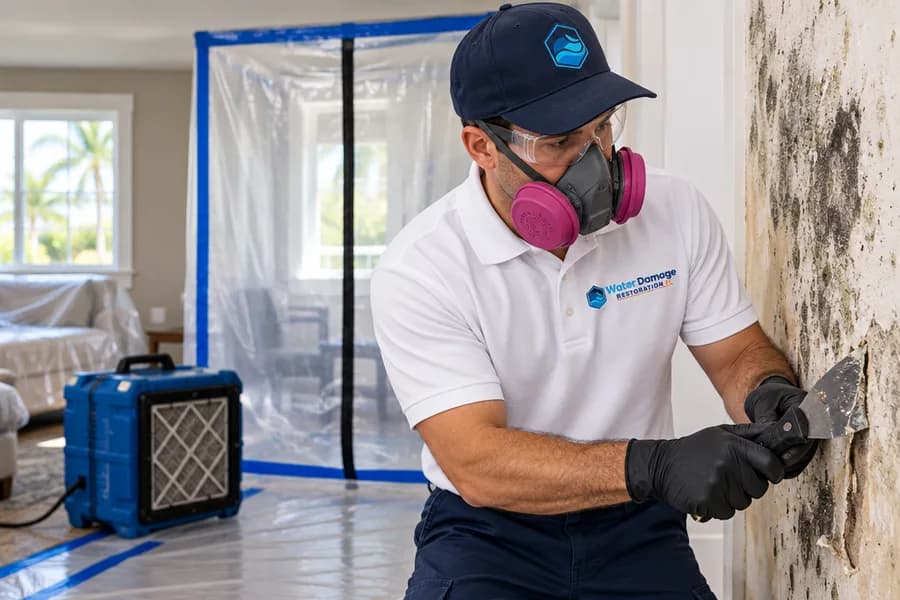
The biggest risk during mold work is spreading spores to clean areas. Proper remediation contains the work zone, uses HEPA air filtration to capture airborne spores, and follows careful removal practices so disturbed mold doesn't travel through the property.
This is why disturbing mold without containment — sanding it, scrubbing it dry, or tearing out materials without precautions — often makes the problem worse. Contained, methodical removal is what keeps it isolated.
Mold remediation across Florida
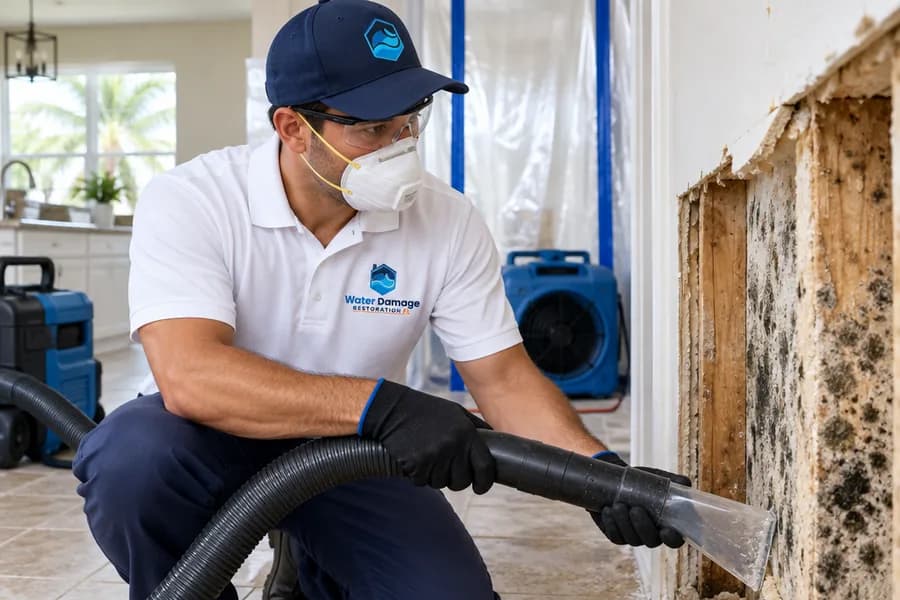
Florida's heat and humidity make it a high-risk environment for mold, particularly after water damage. Our crews provide mold inspection and remediation for homes and businesses across Florida — removing the mold and addressing the moisture behind it so the fix lasts.
Mold Remediation services
Mold Inspection
Checking a property for visible mold and conditions that support mold growth.
Learn moreMold Removal
Removing mold and mold-affected materials from a property.
Learn moreMold Remediation Services
Containing, removing, and cleaning mold, and addressing its moisture source.
Learn moreWater Damage Mold
Addressing mold growth that follows a leak, flood, or other water damage.
Learn moreBlack Mold Removal
Removing dark-colored mold growth from walls, ceilings, and other surfaces.
Learn more
Frequently asked questions
It depends on how much mold there is, where it is, and how much material must be removed. A small, contained area is far less than widespread growth involving structural materials. We assess on site and document everything, and addressing it early usually keeps the cost lower.
Removal refers to taking out visible mold; remediation is the full process — containment, removal, cleaning, and fixing the moisture source so it doesn't return. Because spores are naturally everywhere, remediation aims to restore safe levels and prevent recurrence rather than sterilize.
Any significant indoor mold growth can affect air quality and should be removed, and some people are more sensitive than others. Rather than focusing on color, we treat visible mold as something to remove safely and address at its moisture source. We don't provide medical advice — consult a doctor about health concerns.
Coverage varies widely. Mold resulting from a covered, sudden water loss may be covered, while mold from long-term humidity or neglected leaks is often excluded. Your insurer determines coverage; we document the loss thoroughly to support your claim.
Signs include a musty smell, visible discoloration, and worsening indoor allergy-like symptoms, especially where water damage wasn't fully dried. An inspection can identify visible mold and the moisture conditions supporting it.
Very small surface spots can sometimes be cleaned, but disturbing larger growth without containment can spread spores and worsen the problem. Professional remediation contains the area, uses HEPA filtration, and addresses the moisture source so it doesn't return.
Still have a question? Call us at (904) 555-0100
Damage doesn't wait for business hours — neither do we
Whether it's the middle of the night or a holiday weekend, our team is ready to respond and start stabilizing your property.