Emergency Water Damage Services in Florida
Emergency water damage services are the round-the-clock response to sudden leaks and flooding — arriving fast to stop the spread and limit the damage. Our our crews answer the phone day or night, extract standing water, and start drying immediately, because water only gets more expensive the longer it sits.
The real cost of waiting on water damage
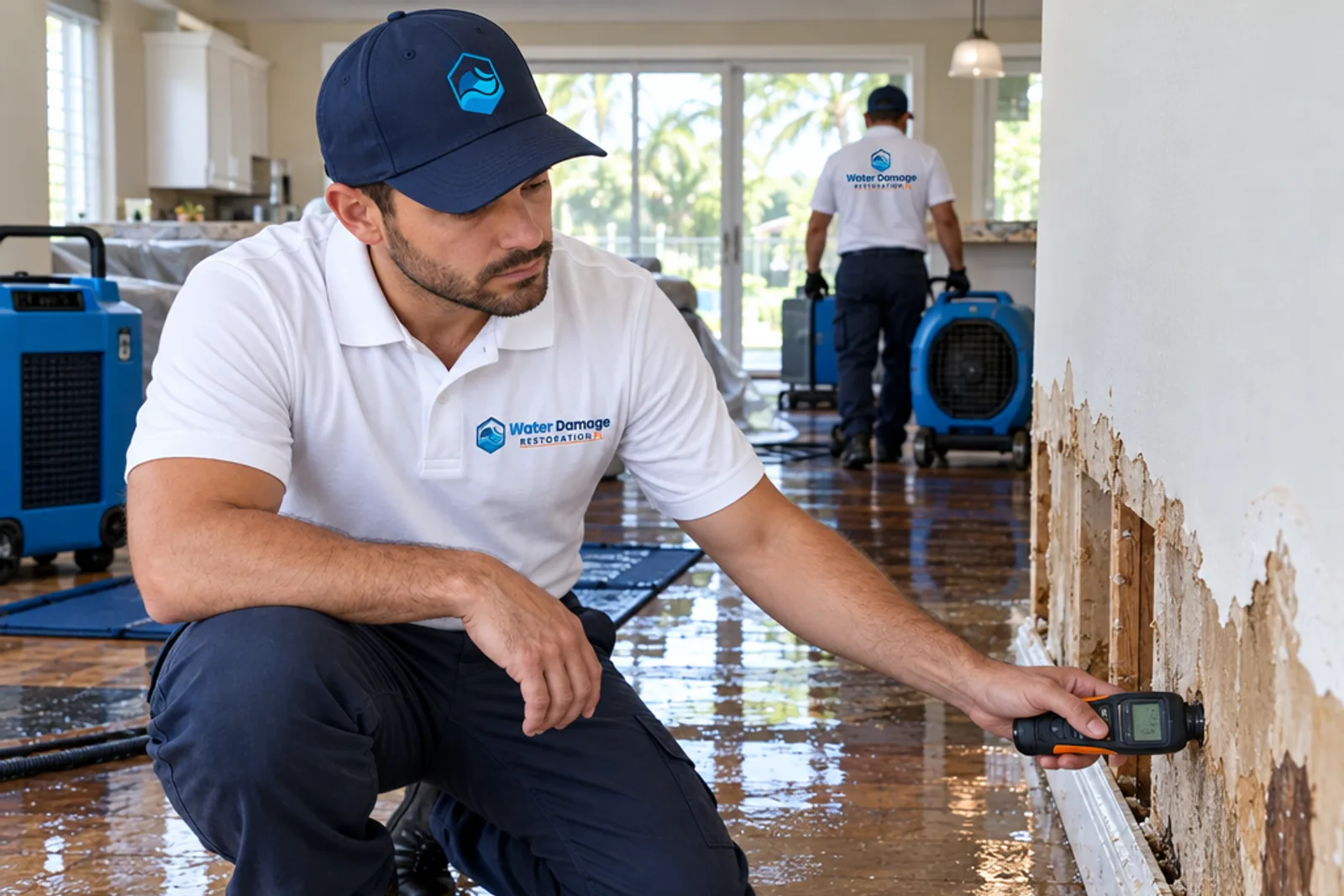
It's tempting to wait until morning, or until you've had time to think, but water damage is one of the few property problems that keeps getting more expensive by the hour. What starts as a contained spill becomes a whole-room loss as water wicks into drywall, spreads under flooring, and raises the humidity that carries moisture into rooms the water never physically reached.
The financial side follows the same curve. A fast response often means drying a space and saving the flooring; a delayed one can mean removing and replacing materials, treating mold, and rebuilding. Acting quickly is almost always the cheaper path, not just the safer one.
Homes and businesses, handled the same way
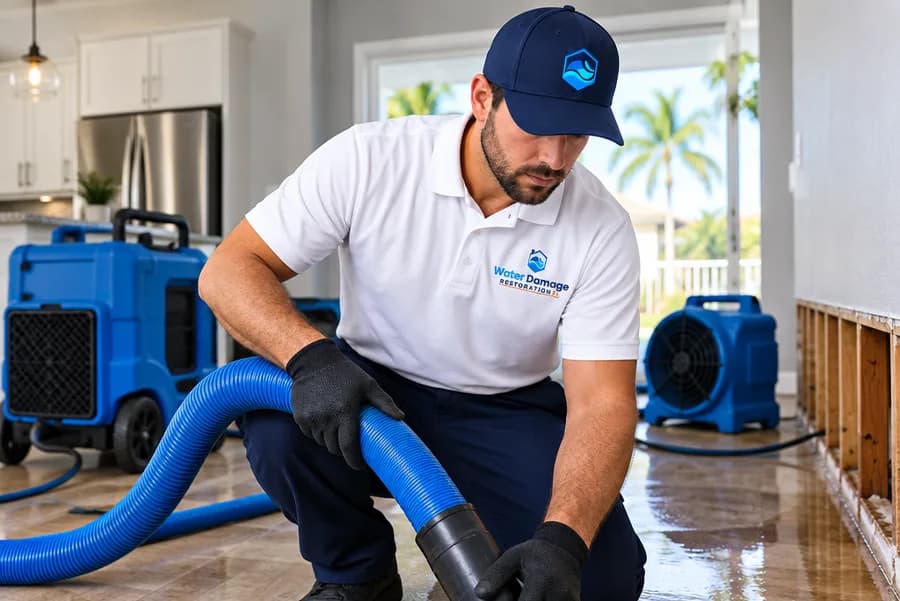
Water emergencies hit homes and businesses alike, and both need the same fast, methodical response. For a business there's added pressure — every hour a space is unusable has a cost — so we work to contain the damage and dry the area with as little disruption to operations as possible.
Whether it's a single-family home, a rental, or a commercial building, the priorities are identical: stop the spread, extract the water, and begin drying before secondary damage sets in. The equipment and methods scale to the size of the loss, but the urgency doesn't change.
When water damage becomes an emergency
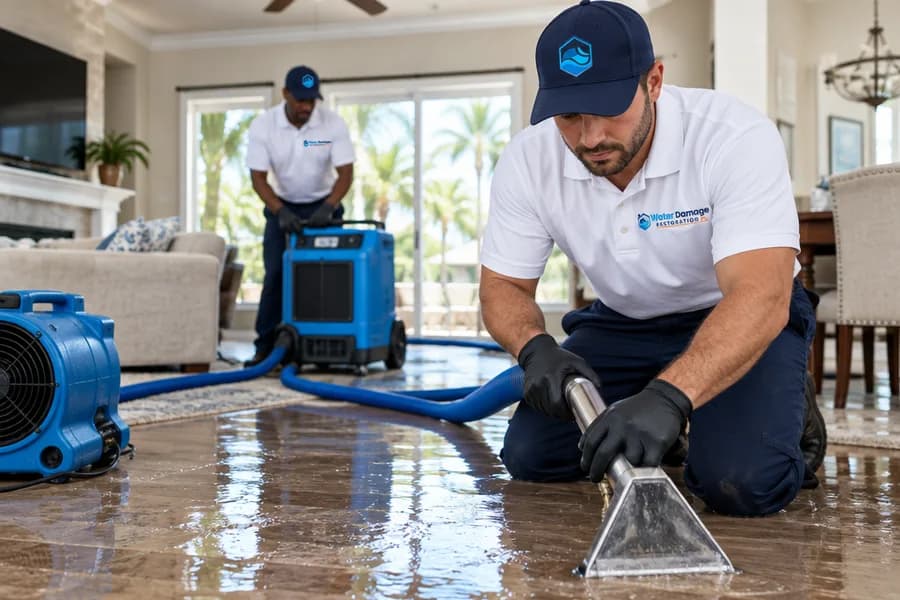
Water damage doesn't keep business hours, and some situations can't wait until morning. When water is actively spreading — or a large volume has already been released — every hour of delay means more soaked drywall, more warped flooring, and a rising mold risk. That's the definition of an emergency: the damage is still growing.
Call for emergency service any time you're dealing with one of these:
- A burst or leaking pipe you can't fully stop.
- A failed water heater or appliance dumping water.
- Flooding from a storm, roof leak, or backed-up drain.
- Standing water anywhere in a finished space.
- Water spreading toward electronics, electrical panels, or another floor.
How our emergency response works
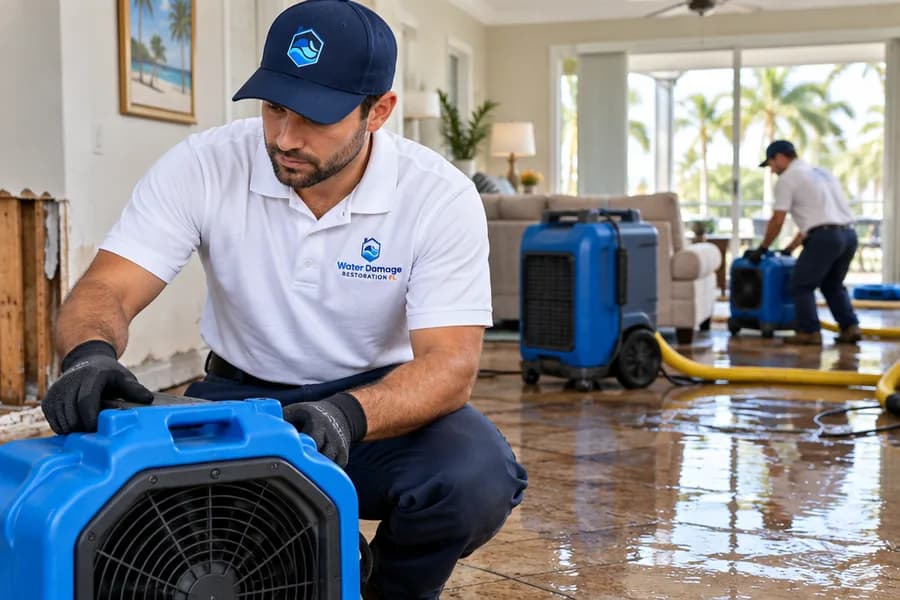
When you call, we gather the details we need to send the right crew — what happened, where the water is, and whether it's still flowing. From there, response focuses on speed and containment.
On arrival, trained restoration technicians make the area safe, stop or isolate the water source if possible, and begin extracting standing water right away. They then remove at-risk materials and set air movers and dehumidifiers so drying starts in the same visit. Documenting conditions and moisture readings from the first hour also gives you a clear record for your insurance claim.
What fast response actually saves
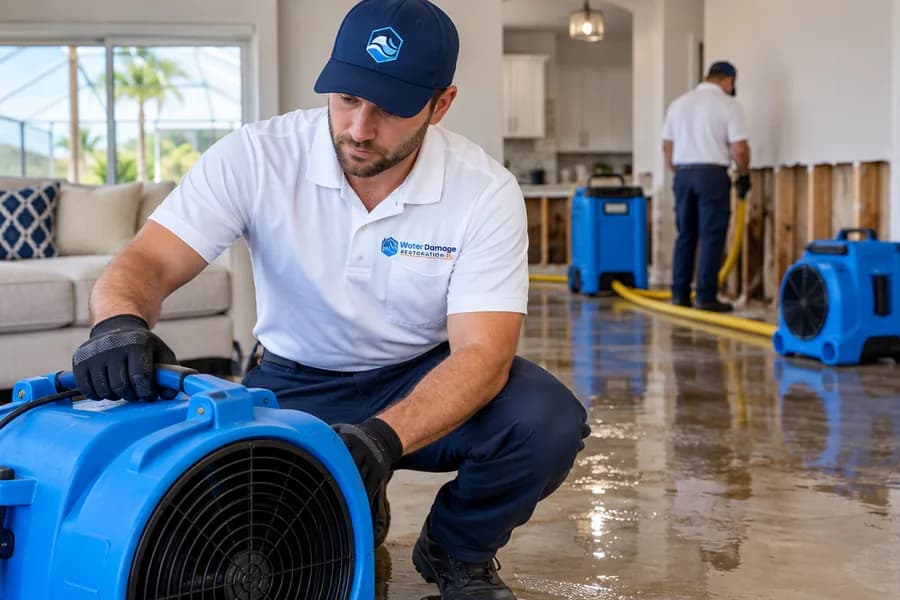
The value of an emergency response is in what it prevents. Quick extraction keeps water from wicking up walls and into subfloors. Early drying keeps moisture from settling into materials across the rest of the building. Removing soaked, unsalvageable materials early stops them from feeding the problem.
Mold can begin to grow within 24 to 48 hours, and across Florida's humidity that window is even shorter. Responding fast is often the difference between a few days of drying and weeks of repairs — and between saving your flooring and contents or replacing them.
Emergency vs. standard water damage response
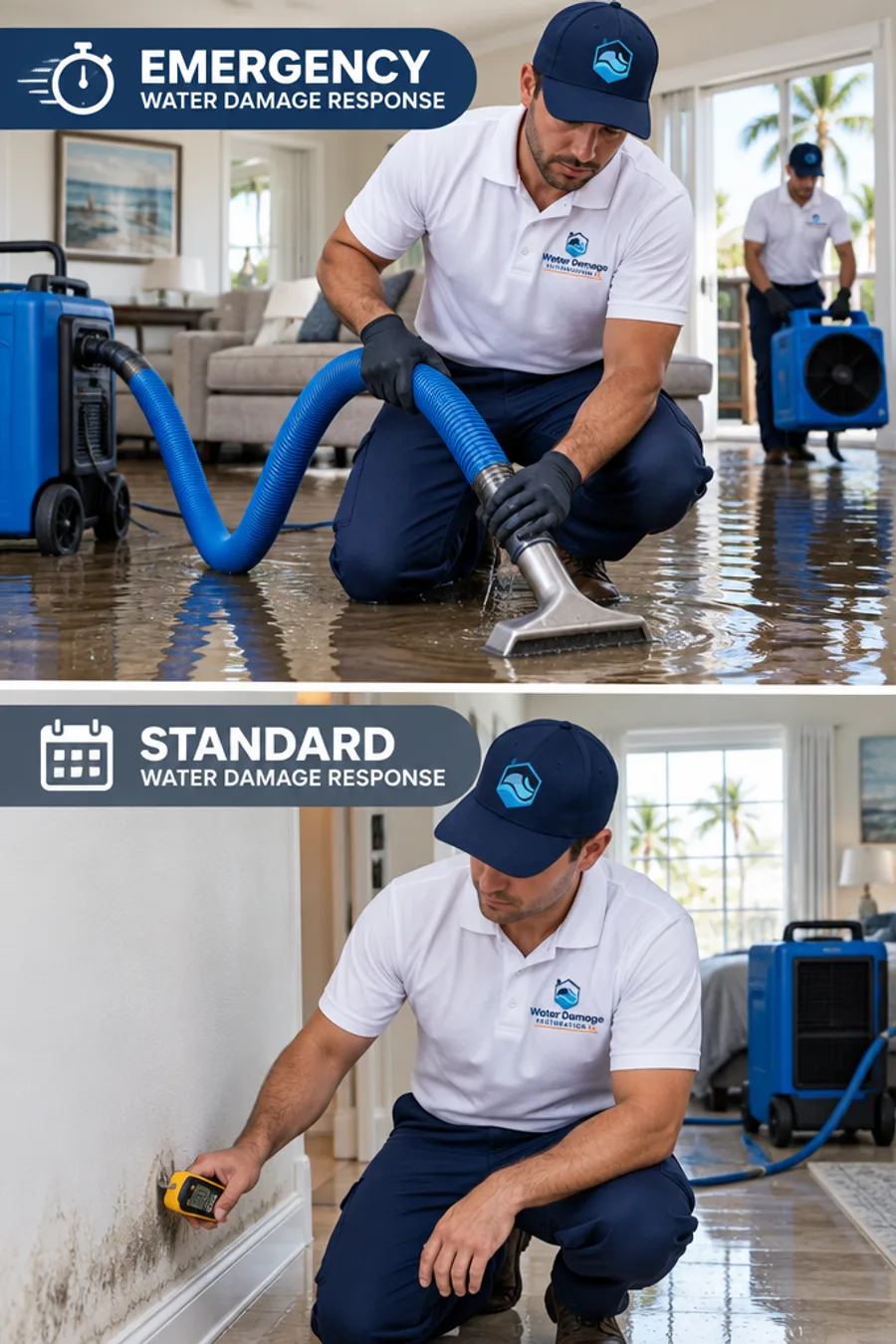
Not every water problem is a middle-of-the-night emergency, but the ones that are share a common trait: the damage is ongoing. This is how the two compare.
| Emergency response | Standard scheduling | |
|---|---|---|
| Situation | Active leak or flooding | Past damage, already stopped |
| Timing | Immediate, 24/7 dispatch | Scheduled assessment |
| Priority | Stop the spread, extract water | Assess, plan, restore |
| Example | Pipe burst overnight | A stain from an old leak |
What to do before the crew arrives
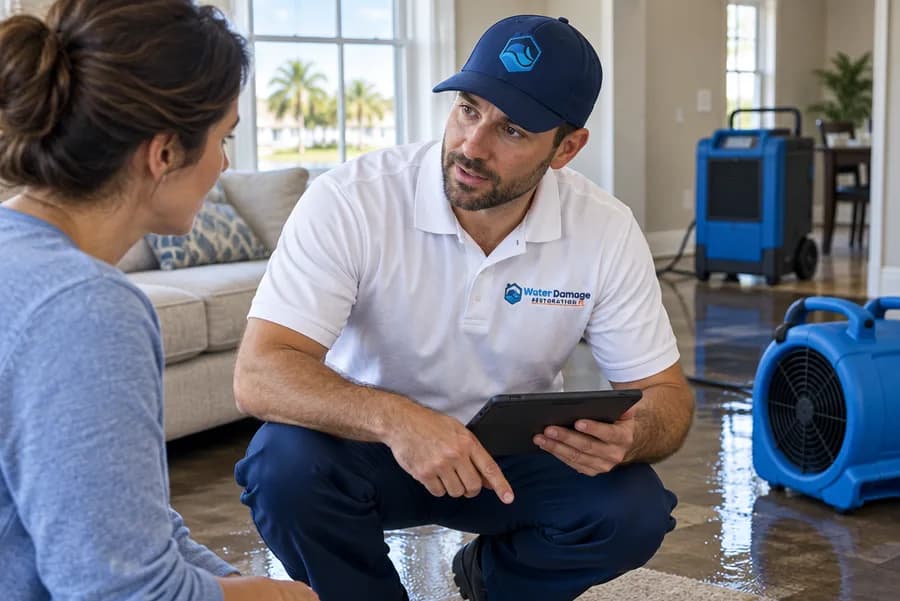
If it's safe, a few quick steps can limit the damage while help is on the way:
- Shut off the water at the source or the main if you can reach it safely.
- Turn off electricity to the affected area if water is near outlets or panels.
- Move valuables, electronics, and furniture away from the water.
- Avoid walking through standing water near electrical sources.
- Take photos for your records before cleanup begins.
24/7 emergency coverage across Florida
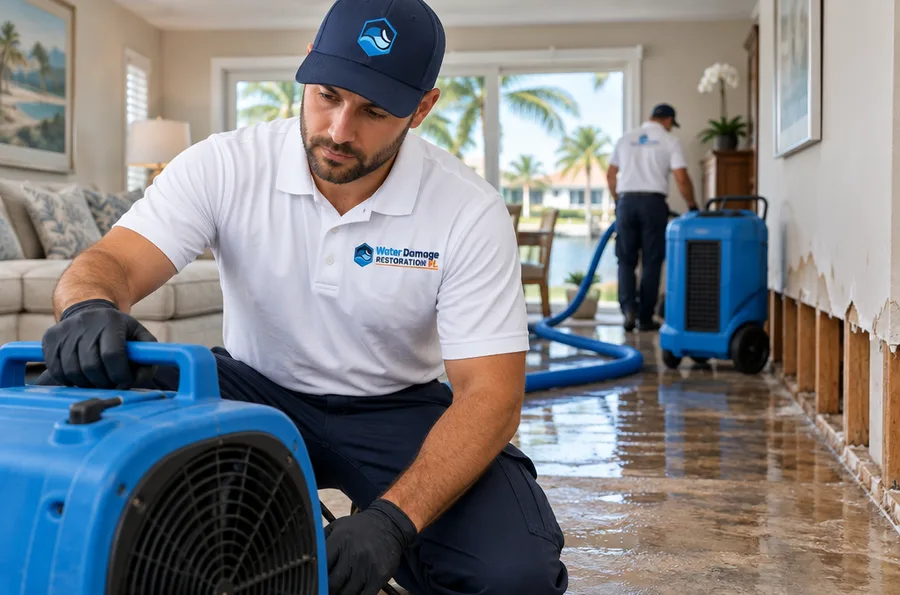
Our emergency line is answered around the clock — nights, weekends, and holidays included — because property emergencies don't follow a schedule. We respond across Florida, and because our crews are based in the region we serve, we're positioned to reach most properties quickly when it matters most.
Emergency Water Damage services
Emergency Water Damage Restoration
Urgent restoration work to stabilize a property after sudden water damage.
Learn more24 Hour Water Damage Restoration
Water damage restoration available any time of day or night, including weekends and holidays.
Learn moreEmergency Water Cleanup
Fast cleanup of water and affected materials to limit secondary damage.
Learn moreEmergency Water Removal
Quickly removing water from a property during an active water emergency.
Learn moreEmergency Water Extraction
Extracting standing water with pumps and vacuums as soon as possible after a leak or flood.
Learn more
Frequently asked questions
Yes. Our emergency line is staffed around the clock, including nights, weekends, and holidays. When you call, we gather the key details and dispatch a crew to begin extraction and drying as soon as possible.
Response time depends on your location and current call volume, but rapid dispatch is central to how we work. When you call, we'll give you a realistic estimate for when a crew can arrive — and starting fast is exactly what limits the damage.
If it's safe, shut off the water at its source or the main, cut power to the affected area if water is near electrical outlets, and move valuables out of the water. Avoid standing water near electrical sources, and take photos for your records before cleanup.
Usually, yes — standing water spreads, soaks into materials, and raises the mold risk quickly, especially in Florida's humidity. Even clean water becomes contaminated the longer it sits. It's best treated as urgent.
Cost depends on how much water there is, how far it spread, and how much material must be dried or removed. We assess on site and document everything so it aligns with your insurance claim. Calling early usually keeps the overall cost lower by limiting the damage.
Yes. We document the loss with photos and moisture readings from the first hour and can communicate directly with your adjuster about the scope of work. Coverage and claim decisions are made by your insurance provider.
Still have a question? Call us at (904) 555-0100
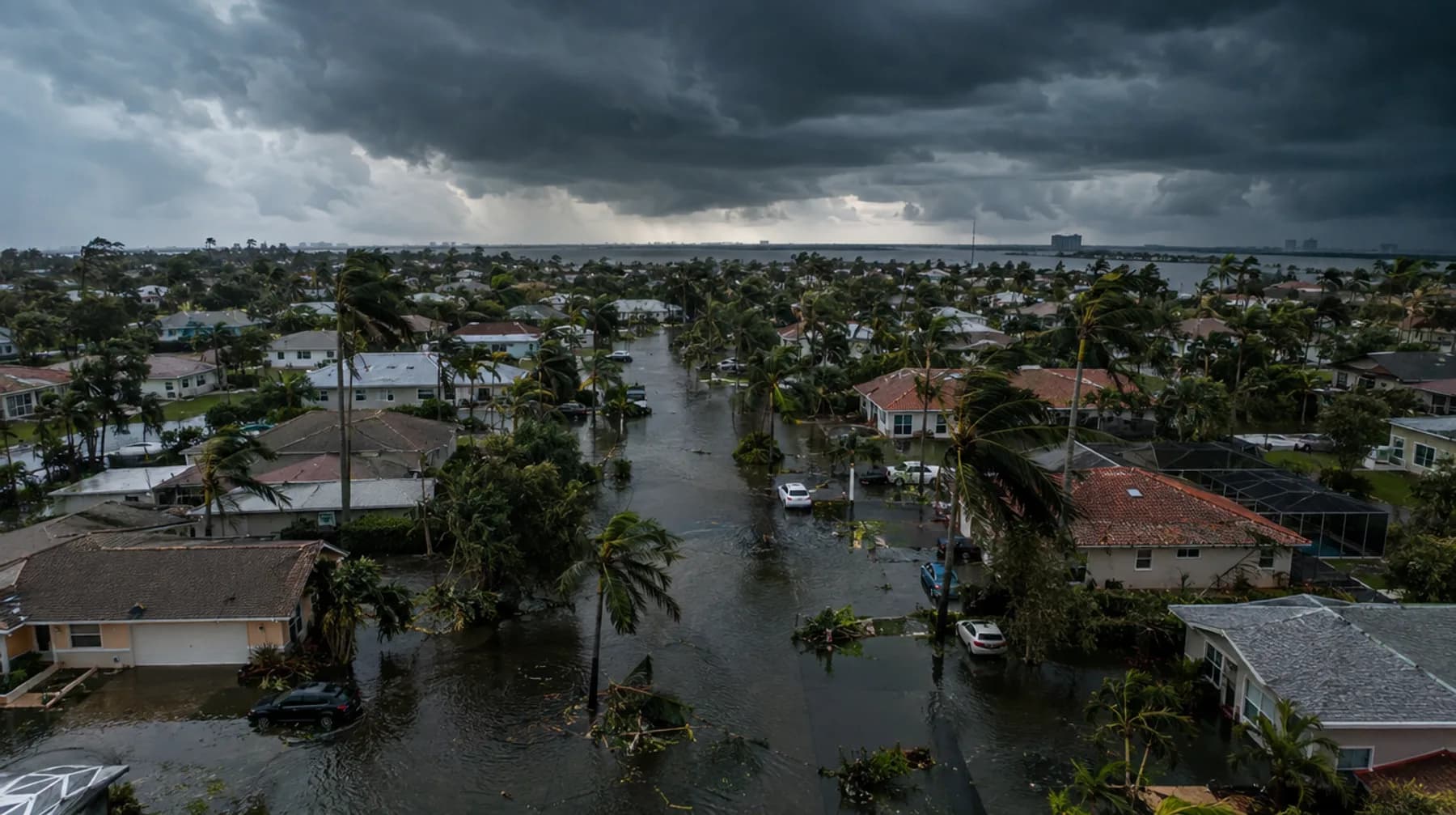
Damage doesn't wait for business hours — neither do we
Whether it's the middle of the night or a holiday weekend, our team is ready to respond and start stabilizing your property.