
Water Heater Leak Damage in Florida
Water heater leak restoration handles the water damage from a leaking or failed water heater. Our our crews extract the water, dry the surrounding structure, and repair the damage — a common loss, since a failed tank can release its entire contents at once.
Where water heater leaks do the most damage
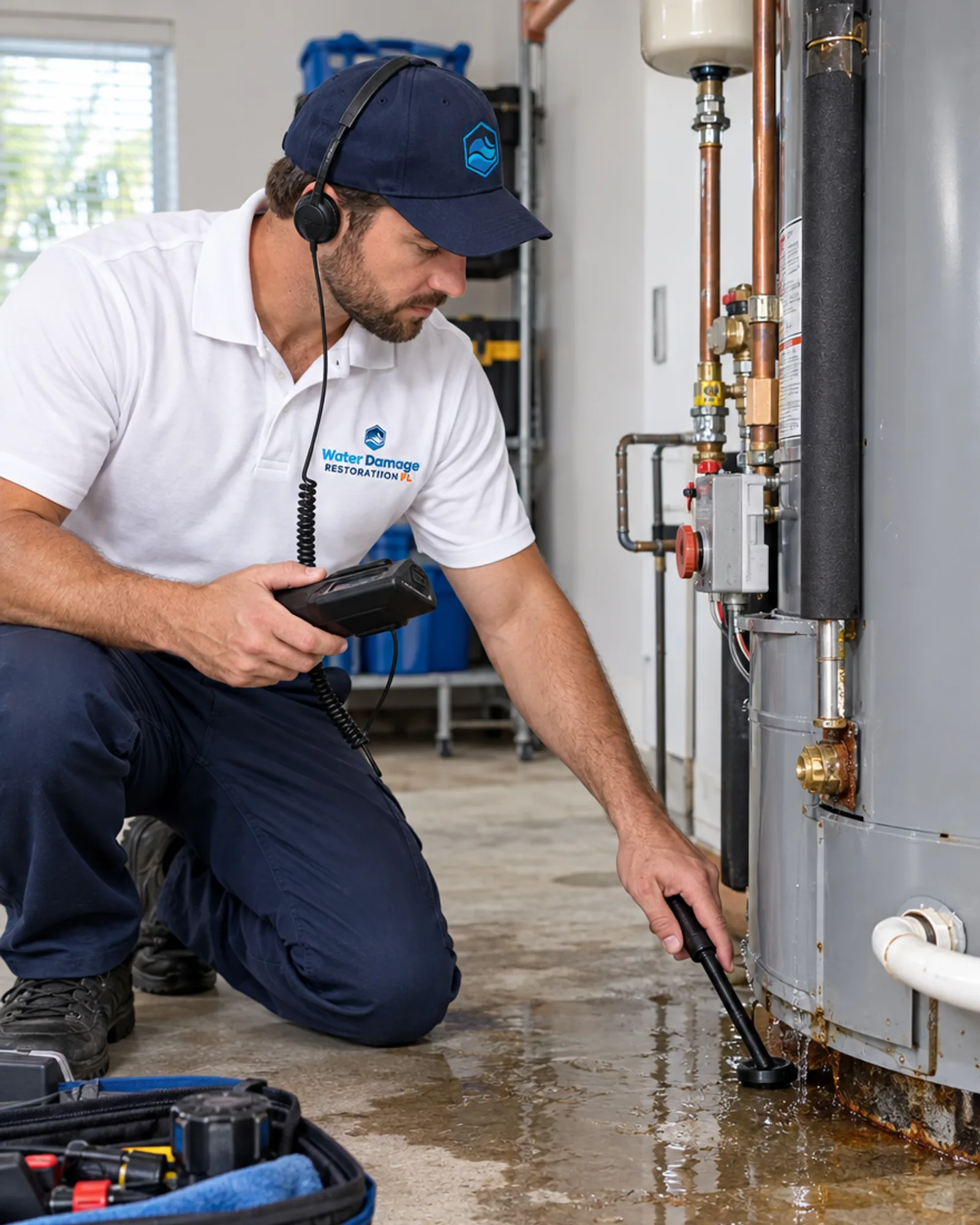
Where a water heater is installed shapes how much damage a leak causes and how far it spreads. Because heaters sit low and hold many gallons, their water follows the floor and soaks whatever is around them.
- Garages and utility rooms — water spreads across the floor and into adjacent rooms and lower drywall.
- Interior closets — enclosed, poorly ventilated spaces where trapped moisture quickly invites mold.
- Attics — a failure here can send water down through the ceiling into the rooms below.
- Second floors — water travels to the level beneath, damaging ceilings and walls on the way.
Warning signs a water heater may fail
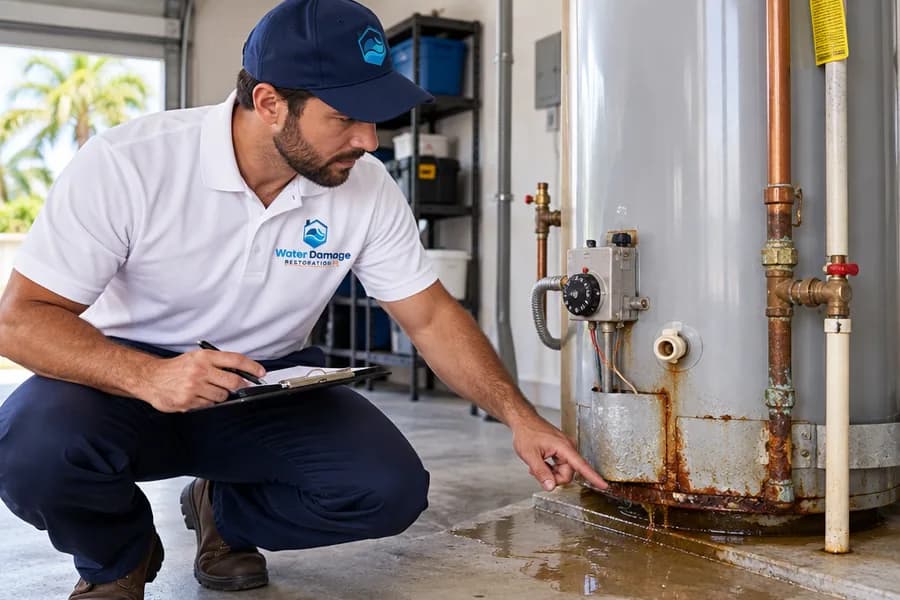
Water heaters often give hints before they fail outright, and catching them can prevent a sudden flood. Because tanks corrode from the inside over years of use, the failure is rarely truly random — it's the end of a process that leaves clues.
Signs worth paying attention to include:
- Water, rust stains, or dampness around the base of the tank.
- Rusty or discolored hot water.
- Popping or rumbling sounds from sediment buildup.
- Age — most tanks last around 8 to 12 years.
- Moisture or corrosion around fittings and the pressure-relief valve.
How water heaters cause water damage
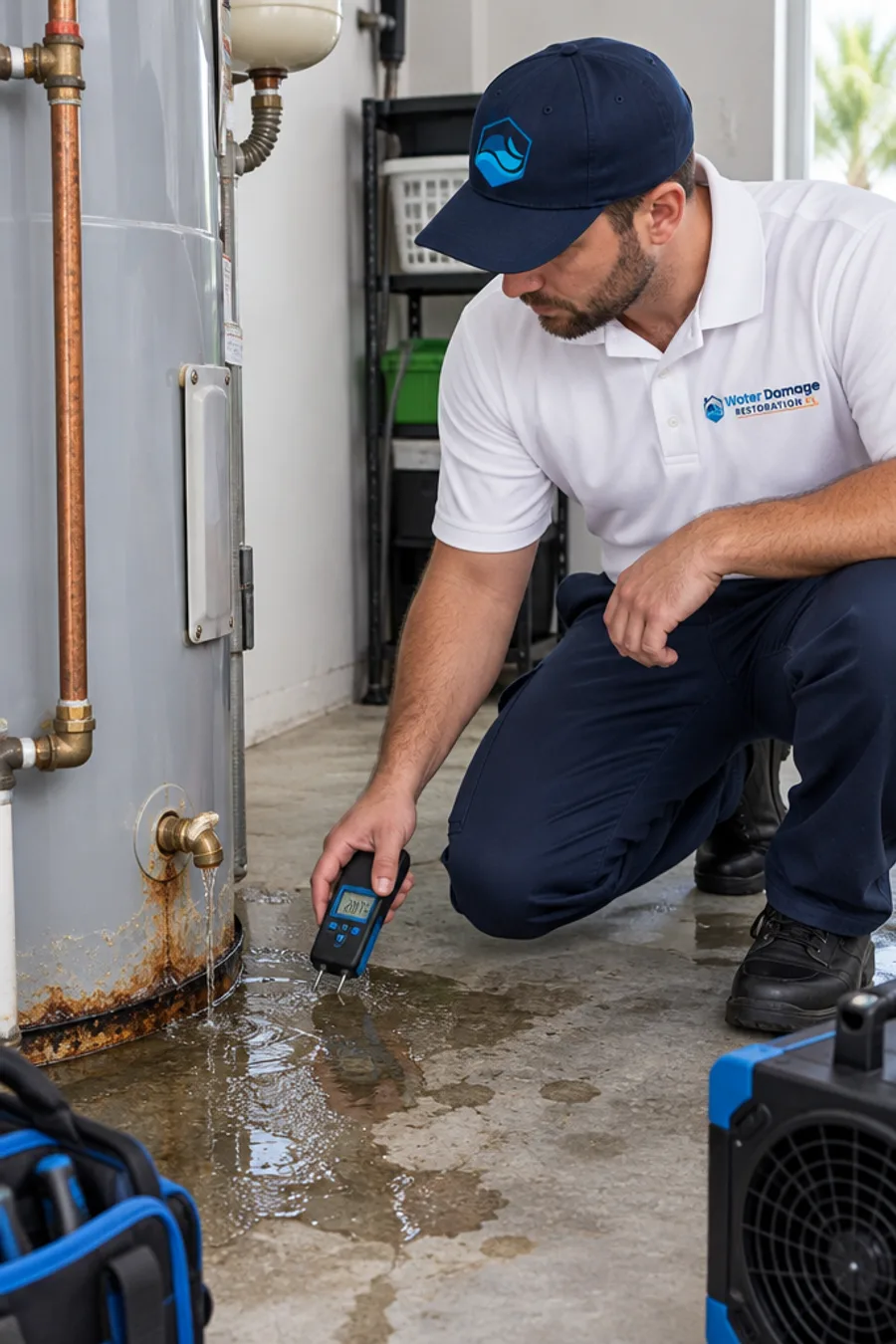
A water heater holds many gallons of water under pressure, and when the tank corrodes, a fitting fails, or the unit reaches the end of its life, it can release that water all at once or leak steadily over time. Because heaters are often in garages, closets, attics, or utility rooms, the water spreads to surrounding areas and into the structure.
A sudden tank failure is essentially an indoor flood, while a slow leak can quietly damage the floor and walls around the unit for weeks.
Restoring water heater leak damage
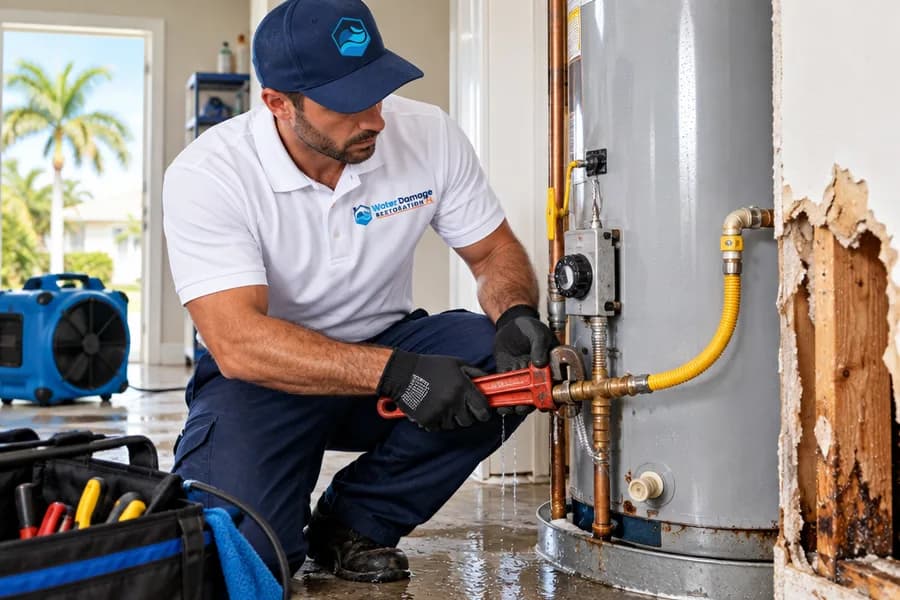
Once the water and power to the heater are shut off, restoration proceeds:
- Extract standing water from the affected area.
- Locate moisture that spread into walls, flooring, and adjacent rooms.
- Remove unsalvageable wet materials.
- Dry the structure with air movers and dehumidifiers.
- Repair the damaged flooring, drywall, and finishes.
Where water heater leaks spread
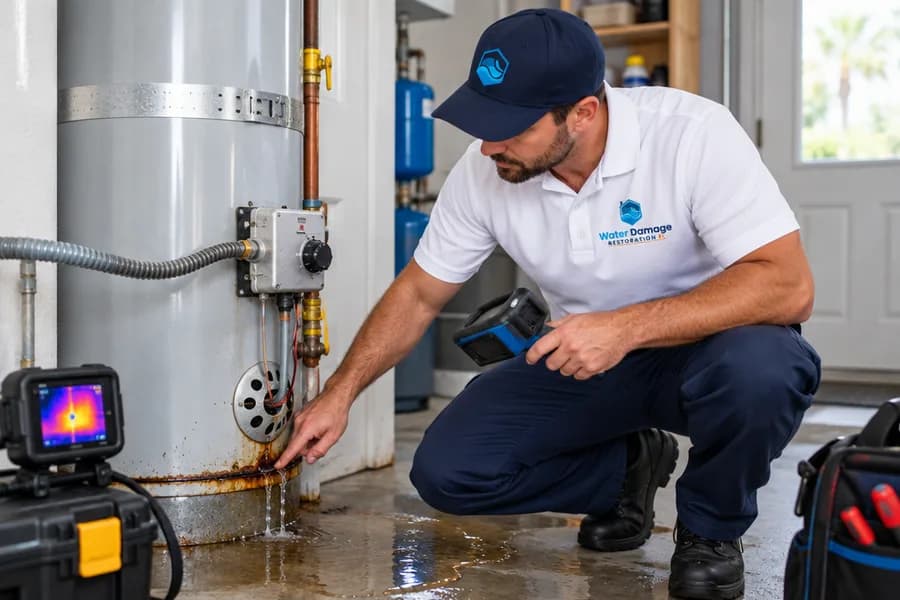
Because heaters sit low and often in enclosed spaces, their water follows the floor into adjacent rooms, soaks baseboards and lower drywall, and can travel to a level below if the unit is upstairs or in an attic. The pan and drain line don't always catch a major failure.
Our technicians check the surrounding materials with moisture meters so the drying reaches everywhere the water went, not just the puddle around the heater.
Safety around a leaking water heater
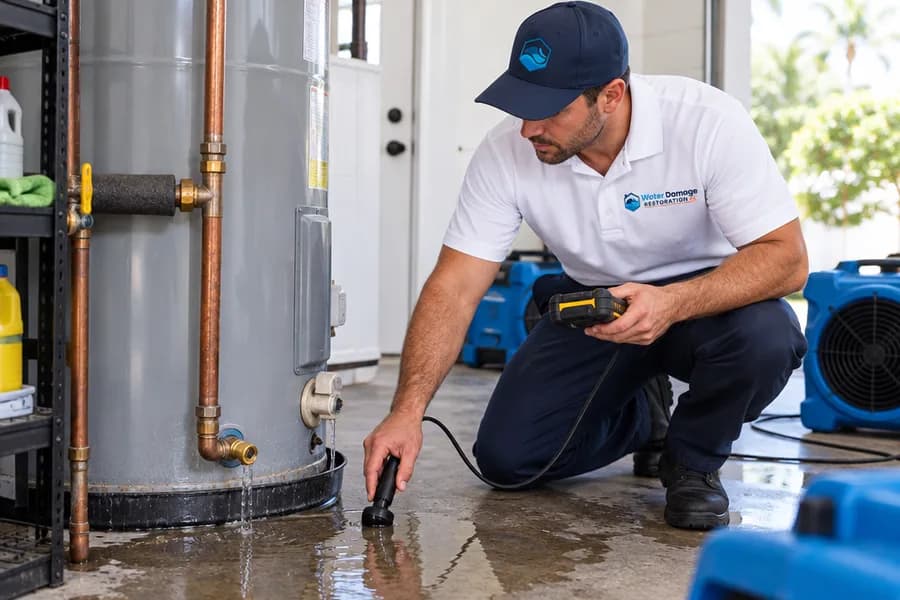
A leaking water heater combines water with electricity or gas, so safety comes first. If it's safe, shut off the water supply to the heater and cut its power or gas at the source before addressing the leak. Avoid standing water near the electrical connections.
Our crews handle the water damage restoration once the unit is safely shut off; replacing or repairing the heater itself is a plumbing task we can help coordinate.
Water heater leak response across Florida
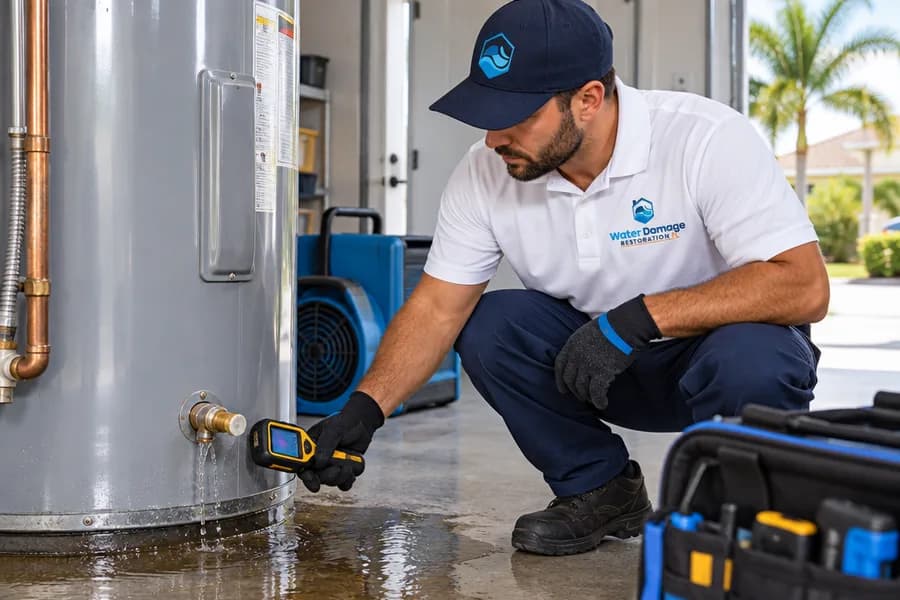
A failed water heater can flood a space fast, so our crews respond across Florida — 24/7 when it's an emergency — to extract the water and dry the structure before the damage spreads further.
More Leak / Plumbing-Related Water Damage services
- Burst Pipe Water Damage
- Broken Pipe Water Damage
- Appliance Water Damage
- Ceiling Water Damage
- Roof Leak Water Damage
Request this service
Tell us what happened and we'll follow up to confirm next steps.
Frequently asked questions
Often, yes — a heater that failed from a corroded tank usually needs replacing, since the leak is a symptom of the tank reaching the end of its life. A leak from a fitting or valve may be repairable. We focus on restoring the water damage; replacing or repairing the heater is a plumbing task we can help coordinate.
If it's safe, shut off the water supply to the heater and turn off its power or gas at the source. Keep clear of standing water near electrical connections, then call for restoration to extract the water and dry the area.
A typical tank holds 40 to 80 gallons, and a sudden failure can release all of it at once — essentially an indoor flood — plus more if the supply keeps feeding the leak until it's shut off.
Sudden, accidental failures are often covered, while damage from a slow leak that was neglected may be excluded as maintenance. Your insurer determines coverage; we document the loss thoroughly to support your claim.
We focus on restoring the water damage — extraction, drying, and repairs. Replacing or repairing the heater itself is a plumbing task, which we can help you coordinate so both get handled.
Yes, especially a slow leak in an enclosed space like a closet or garage. Trapped moisture there can grow mold within days. If we find mold, we address it along with the drying and repairs.
Still have a question? Call us at (904) 555-0100