Sewage Backup Cleanup in Florida
Sewage backup cleanup is the cleanup after sewage backs up into a property through drains or fixtures. Our our crews contain and remove the contaminated water safely, disinfect, and dry the area — because a sewage backup is a Category 3 health hazard, not an ordinary spill.
Why a backup spreads beyond the drain
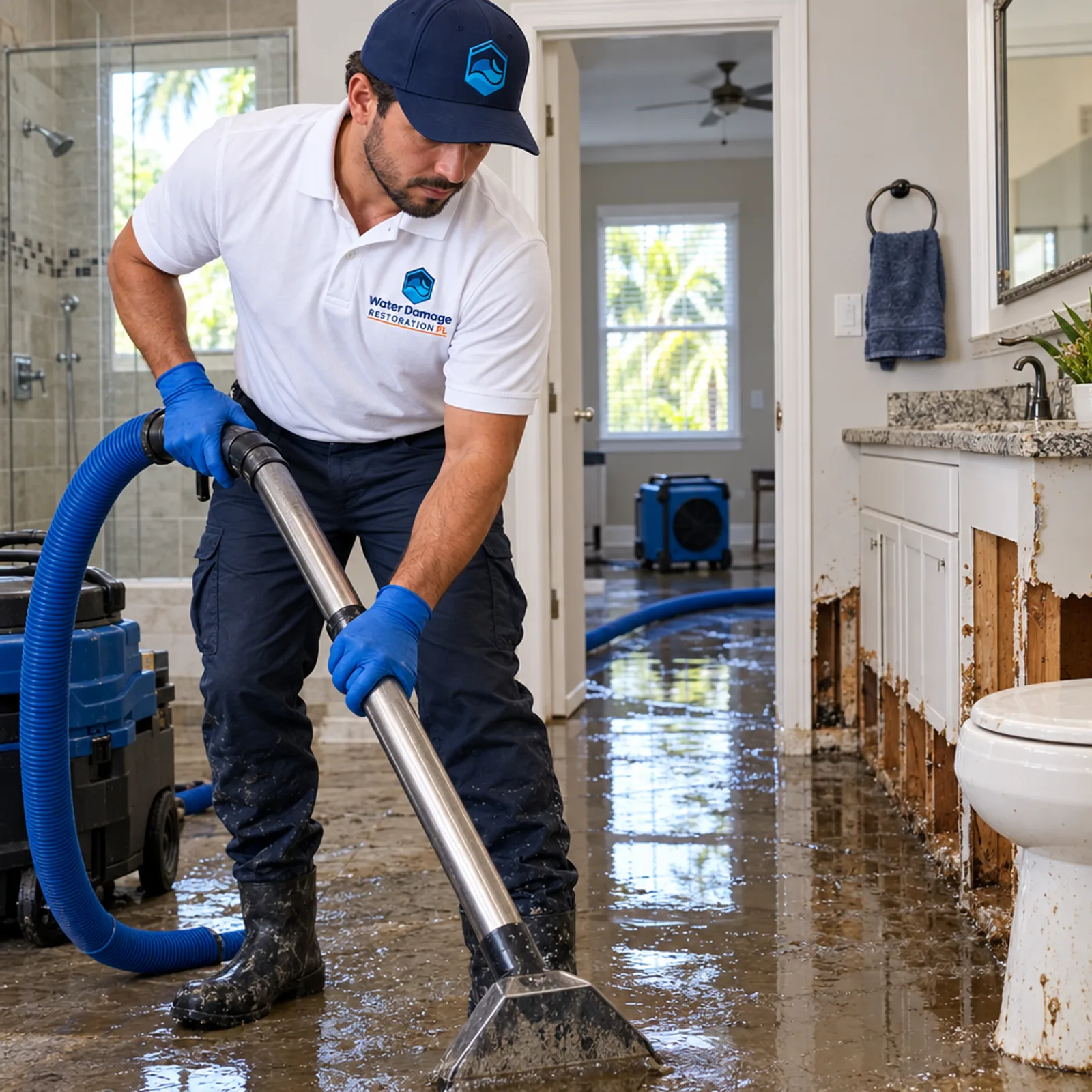
It's tempting to think a sewage backup is confined to the fixture it came up through, but contaminated water rarely stays put. Understanding how it spreads explains why cleanup has to reach further than the visible mess.
Once sewage pushes up through a drain or toilet, it flows across the floor following gravity, seeps under flooring, wicks into the base of drywall, and works into subfloor and wall cavities. In a bathroom on an upper floor, it can even reach the ceiling below. The contamination travels with the water, so areas that look untouched can still be affected. This is why our technicians map how far the water traveled with moisture meters, and why proper cleanup addresses everywhere it reached — not just the spot where it surfaced.
What to do the moment sewage backs up
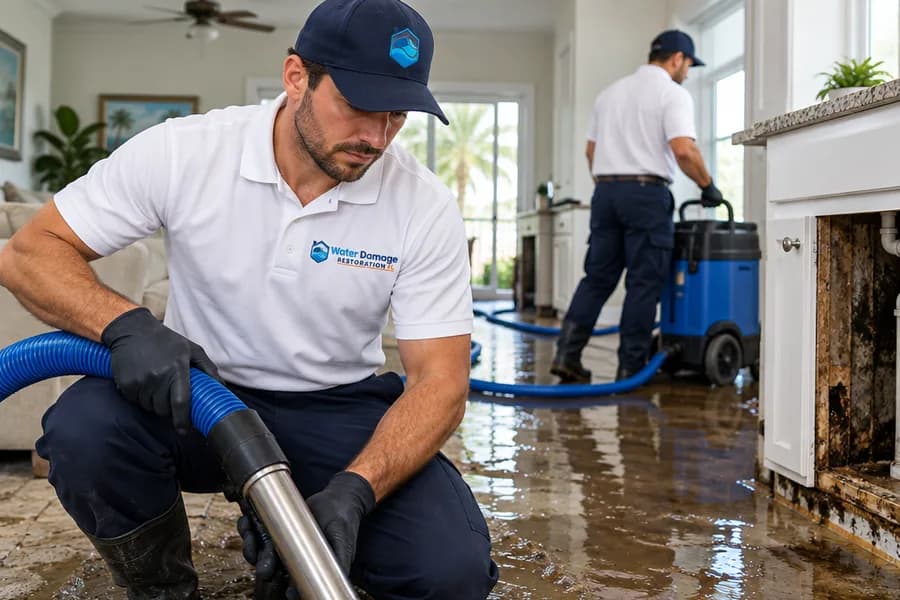
The first minutes of a sewage backup set the tone for the whole cleanup, and a few sensible steps keep everyone safe while help is on the way. The priority is to keep away from the contaminated water and stop adding to it.
If you can do so safely:
- Keep people and pets out of the affected area entirely.
- Stop using sinks, toilets, and drains that flow toward the backup.
- Avoid contact with the water and anything it has touched.
- Cut power to the area if water is near outlets or appliances, if the panel is safe to reach.
- Take photos for your records, then call for professional cleanup.
What causes a sewage backup
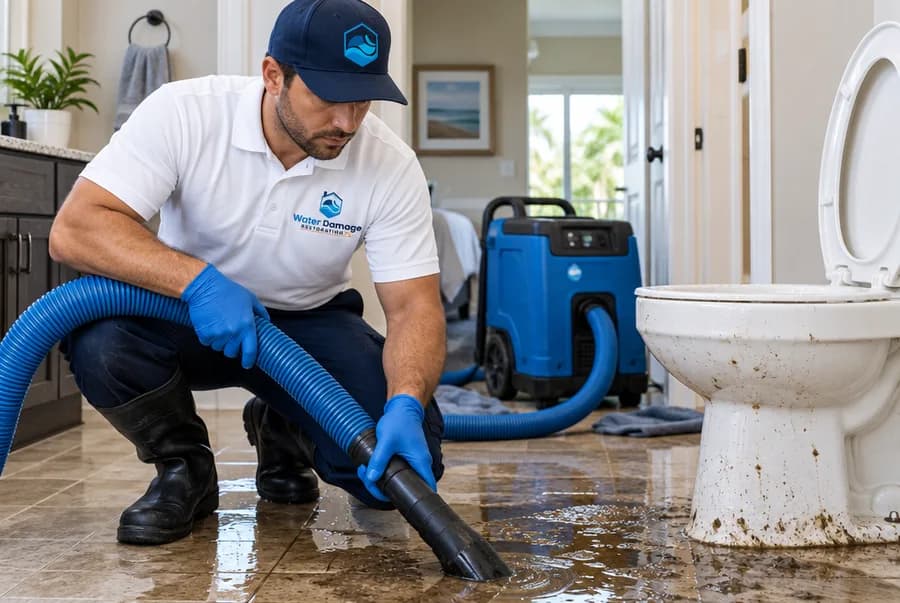
A sewage backup happens when wastewater can't flow away as it should and instead pushes back into the property through drains, toilets, or other fixtures. Common causes include clogs in the line, tree-root intrusion, aging or damaged pipes, and municipal main backups during heavy rain — a frequent issue in communities across Florida during storms.
Whatever the cause, the result is contaminated black water inside the property, which has to be handled as a health hazard.
How we clean up a sewage backup
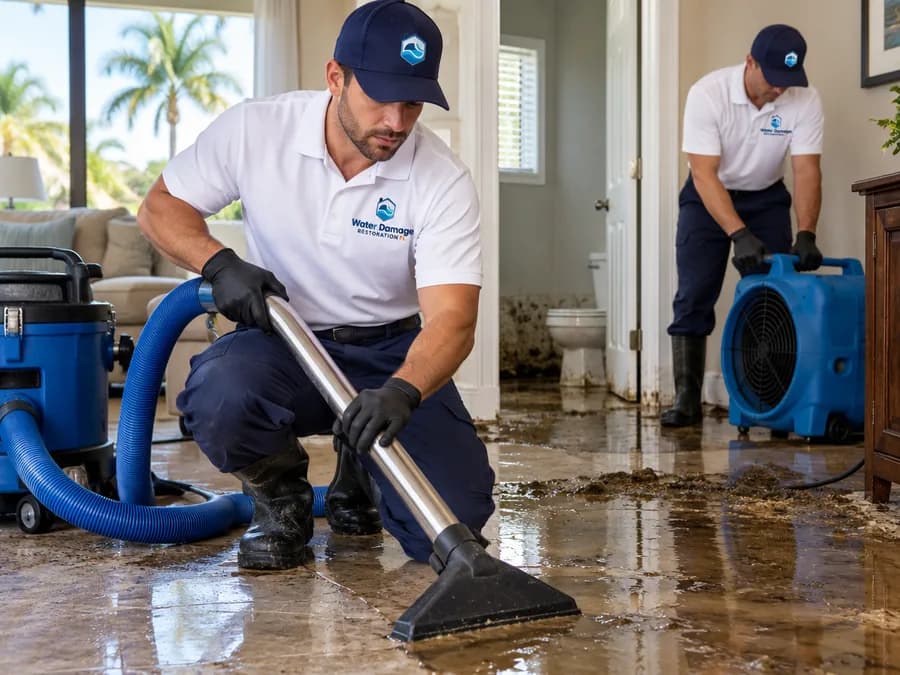
Cleanup follows a safety-first sequence:
- Contain the area to stop the contamination from spreading.
- Remove the sewage, contaminated water, and any solids.
- Remove porous materials the water soaked.
- Clean and disinfect hard surfaces with antimicrobial products.
- Dry the structure and deodorize to remove the smell.
Why speed and containment matter
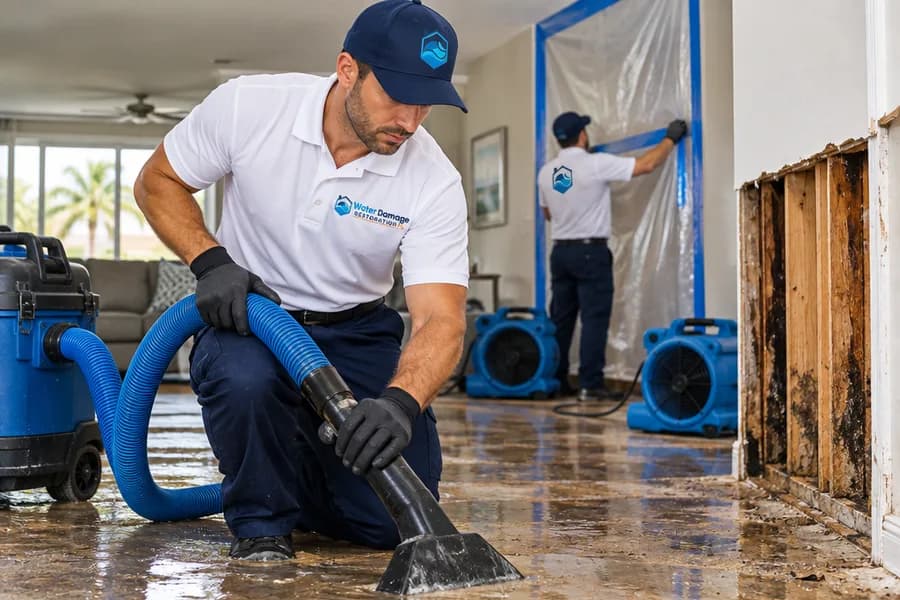
A sewage backup spreads contamination as it flows and soaks into materials, and it worsens quickly. Containing the affected area early keeps the problem from reaching the rest of the property, and prompt removal limits how much material becomes contaminated and how far the odor travels.
In Florida's humidity, fast drying after cleanup is also essential to prevent mold from taking hold on top of the contamination.
What can be saved
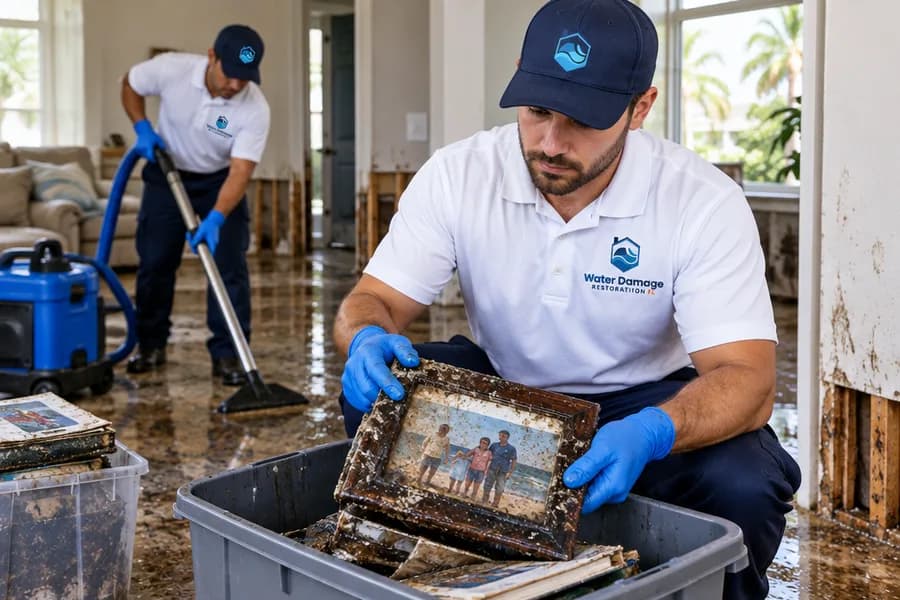
Hard, non-porous items and surfaces can usually be cleaned and disinfected. Porous materials that absorbed the contaminated water — carpet, pad, lower drywall, insulation, and many soft goods — typically have to be removed because they can't be sanitized reliably.
We document affected items before disposal and advise honestly on what can be safely kept, so you're not left with contaminated materials that should have been discarded.
24/7 response across Florida
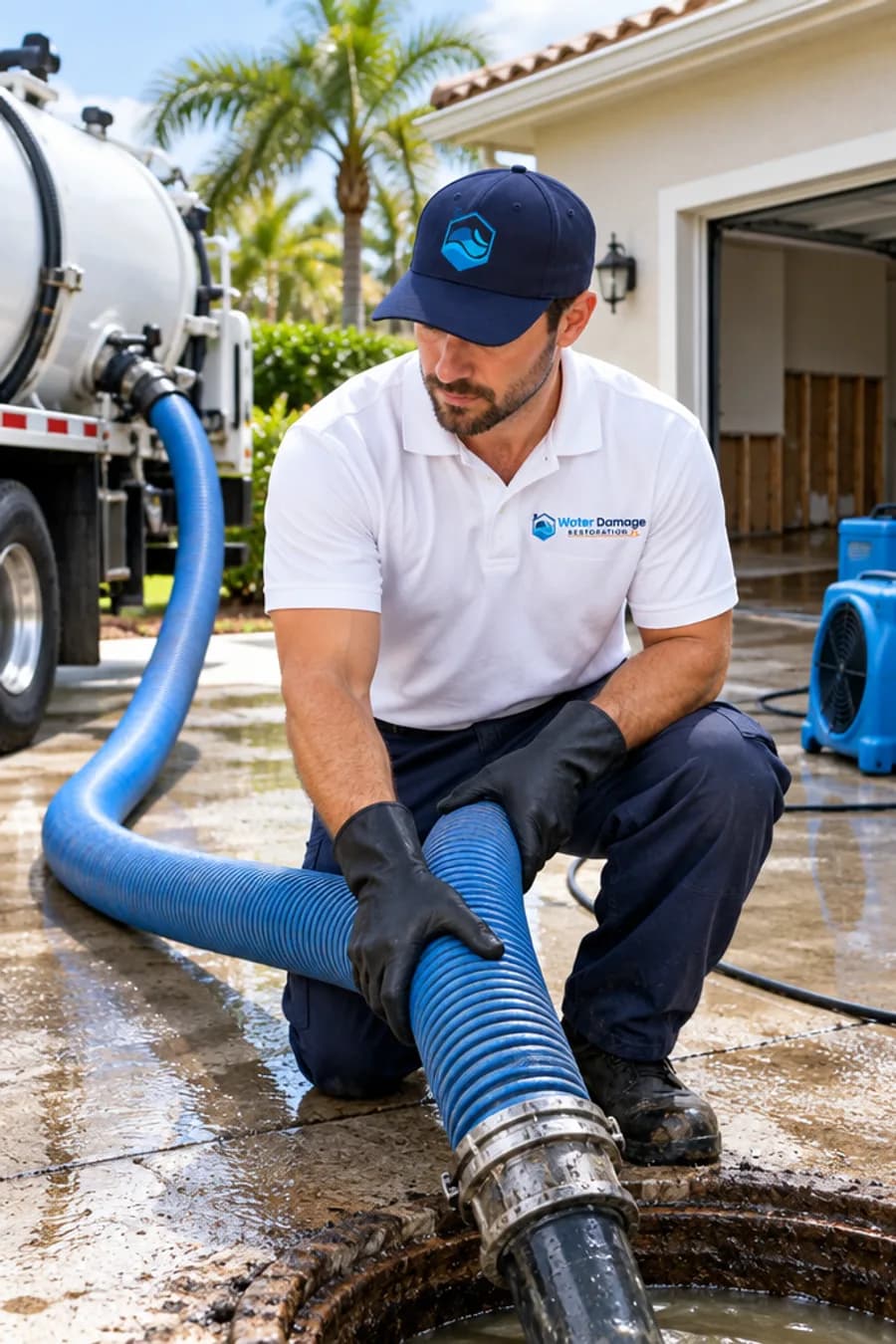
Because a sewage backup is both a hazard and an emergency, our crews respond around the clock across Florida, your area, and surrounding communities. The sooner the backup is contained and removed, the safer and more contained the cleanup.
More Sewage Damage services
View all Sewage Damage servicesRequest this service
Tell us what happened and we'll follow up to confirm next steps.
Frequently asked questions
It depends on the material. Hard, non-porous items — sealed furniture, metal, glass, dishes — can usually be cleaned and disinfected. Porous items the contaminated water soaked, like carpet, upholstered furniture, and many soft goods, generally can't be sanitized reliably and are removed. We document everything and advise honestly on what's safe to keep.
Keep people and pets away from the contaminated area, avoid using plumbing that drains toward the backup, and don't attempt to clean black water yourself. Call for professional cleanup, and take photos for your records if you can do so safely.
It happens when wastewater can't flow away — from a clog, tree roots, damaged pipes, or a municipal main backup during heavy rain. The blockage forces sewage back into the property through the lowest fixtures.
Yes. It's a Category 3 health hazard that spreads and worsens quickly. Fast containment and removal limit the contamination and the risk, which is why we respond 24/7.
Porous materials the contaminated water soaked — carpet, pad, lower drywall, insulation, and many soft goods — usually have to be removed. Hard, non-porous surfaces can generally be cleaned and disinfected.
Many homeowners policies exclude sewer backup unless you have a specific backup endorsement. Coverage varies and is determined by your insurer; we document the loss thoroughly to support your claim.
Still have a question? Call us at (904) 555-0100