
Standing Water Removal in Florida
Standing water removal is the clearing of pooled water from rooms, basements, and crawl spaces. Our our crews pump and extract standing water quickly, because pooled water spreads, soaks into materials, and grows more contaminated the longer it sits.
How long standing water removal takes
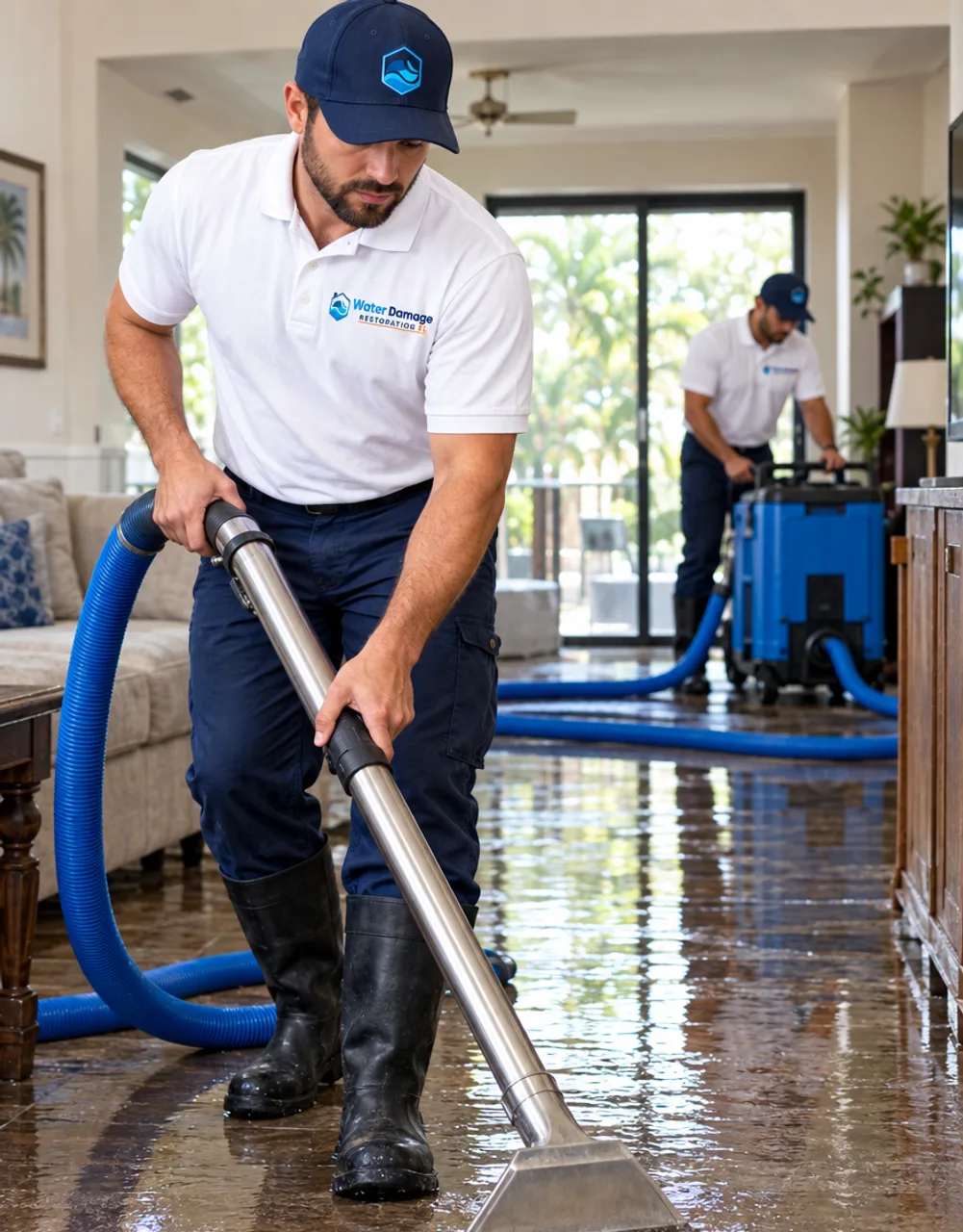
Clearing standing water is usually one of the faster stages of a water loss, though how long it takes depends on the depth, the volume, and how easy the area is to reach. A shallow pool in an accessible room clears quickly; a deep, flooded basement takes longer and needs high-capacity pumps.
What removal really shortens is everything that comes after. The faster standing water is gone, the less it soaks into surrounding materials and the sooner drying can begin — so a quick removal both limits the damage and reduces the overall timeline. It's also worth remembering that removal isn't the finish: once the standing water is cleared, the surrounding materials still need drying to reach normal moisture levels, which is the longer part of the job.
The hidden hazards in standing water
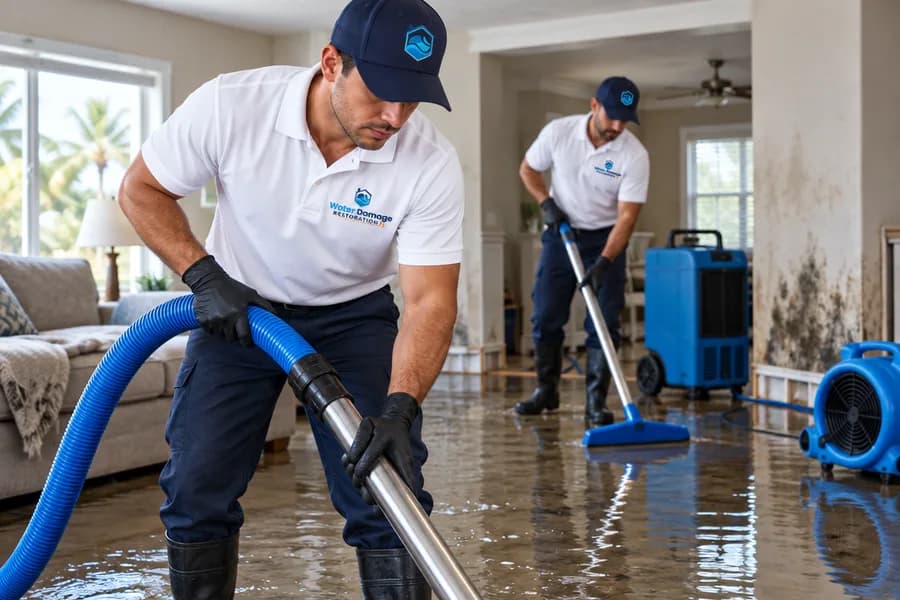
Standing water is more than a mess to mop up — it can be genuinely dangerous. Where water meets electrical outlets, appliances, or a panel, there's a shock risk, which is why cutting power to the affected area is one of the first safety steps. Deep standing water can also hide sharp debris, unstable flooring, or an unseen drop.
There's a contamination angle too. Water that has been standing, or that came from a flood or backup, may carry bacteria and other contaminants, and it grows more hazardous the longer it sits. Treating standing water as potentially unsafe — rather than wading in to deal with it — is the sensible default.
For those reasons, standing water removal is best left to technicians who can assess the hazards and clear the water safely with the right equipment.
Why standing water can't wait
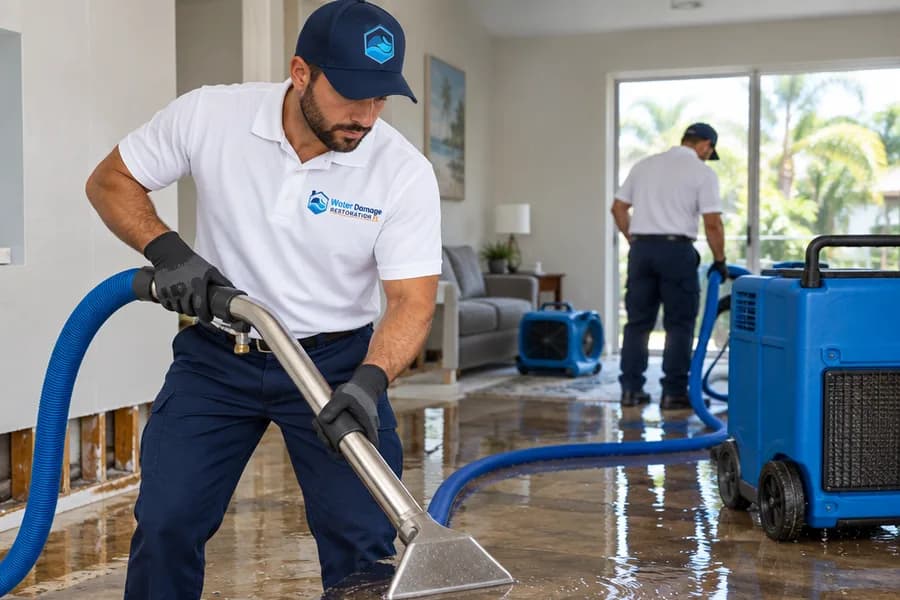
Standing water is an active problem. It doesn't stay put — it wicks into walls, soaks subfloors, and raises indoor humidity that carries the damage into dry areas. It also degrades over time: even clean water becomes gray and then black the longer it sits, turning a simple removal into a contamination issue.
Because of that, clearing standing water quickly is the first and most important move in protecting the property.
How we remove standing water
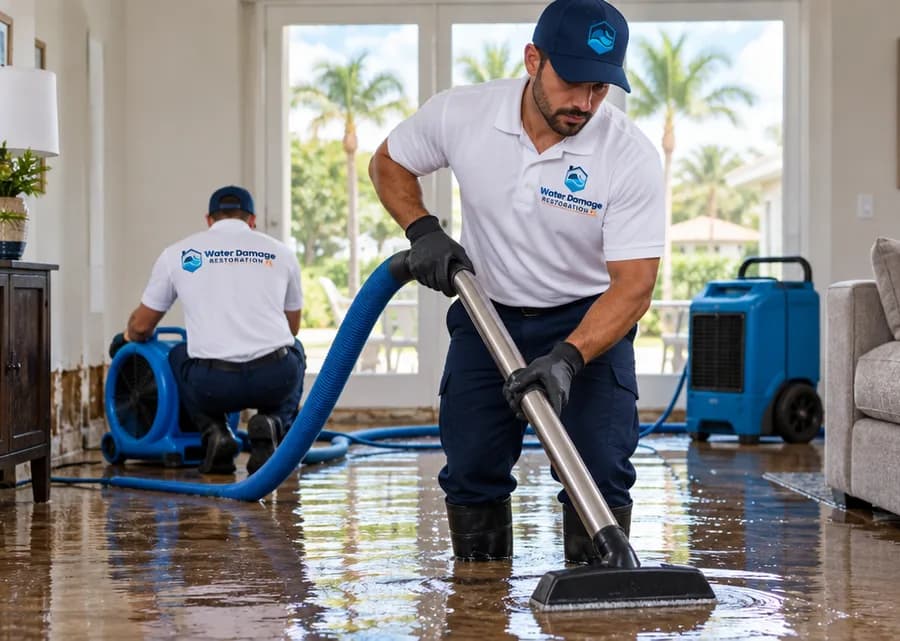
Our crews match the approach to the depth and location of the water:
- Submersible pumps for deep water in basements and low areas.
- Truck-mounted and portable extractors for shallower pooling on floors.
- Wet vacuums for detail work and finishing.
- Moisture meters to confirm where water has traveled beyond the visible pool.
Basements, crawl spaces, and low areas
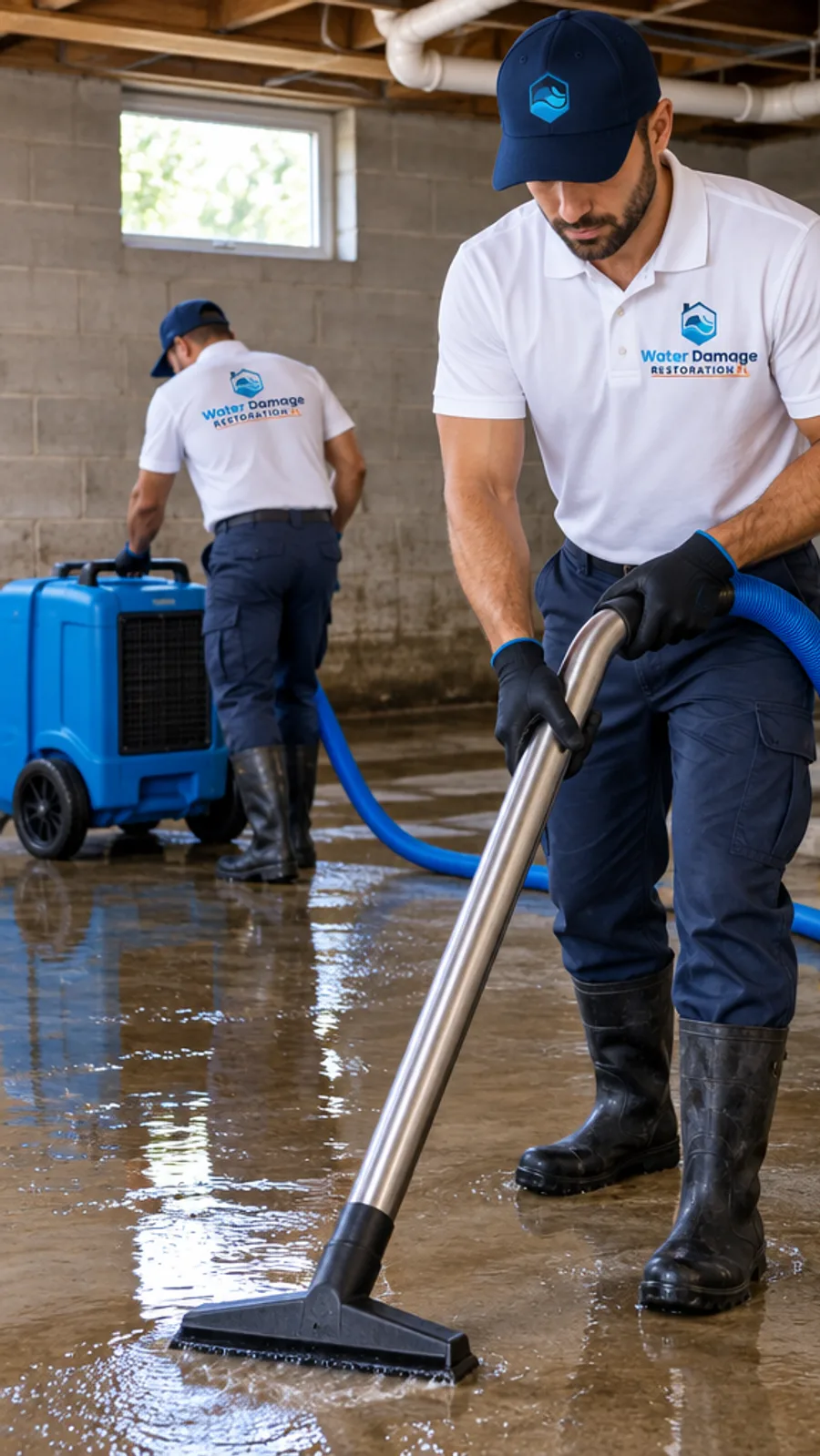
Water collects at the lowest point, which in many Florida properties means basements, crawl spaces, and ground-floor rooms. These areas are also where standing water does the most hidden harm — soaking framing, insulation, and subfloor, and creating the damp, dark conditions mold thrives in.
We clear the standing water and then check the surrounding materials with moisture meters, because the pool you can see is usually not the full extent of the problem.
Handling potentially contaminated water
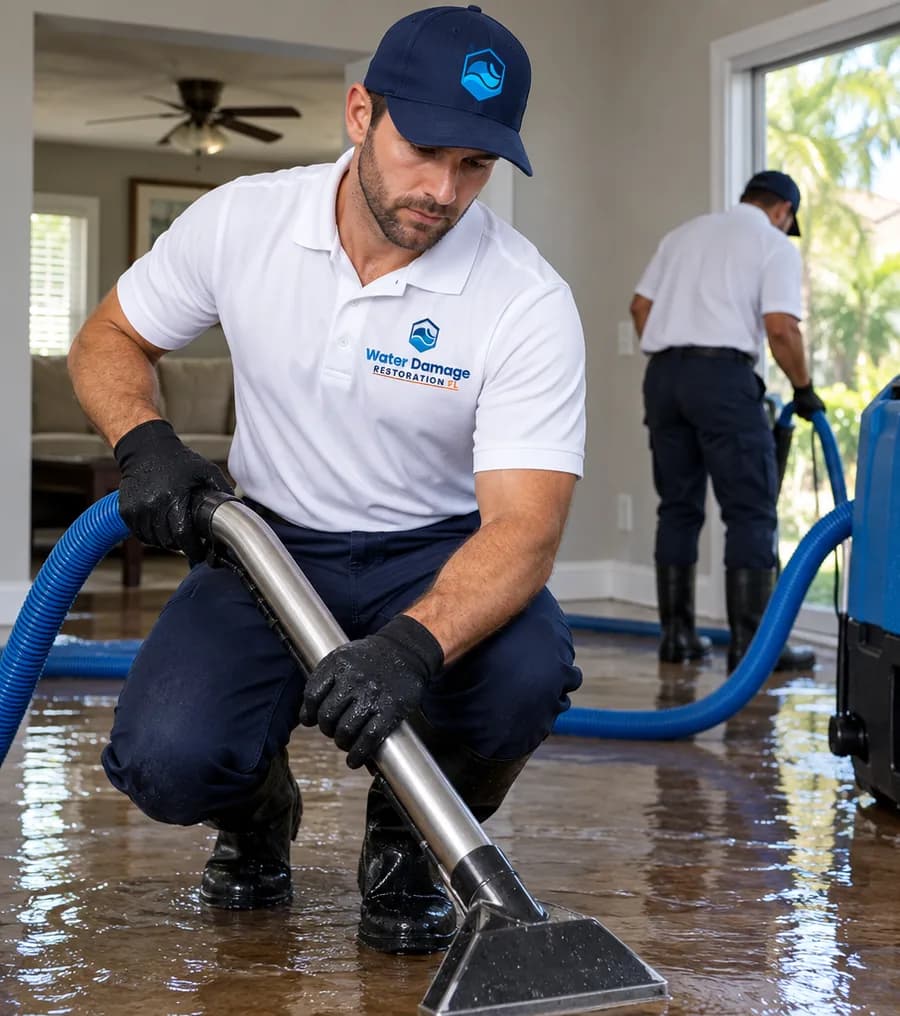
Standing water that has sat for a while, or that came from a flood or backup, may be contaminated. Our technicians identify the water category before removal so it's handled safely — with protective equipment where needed and proper disposal of porous materials it soaked.
Treating potentially contaminated water like clean water is how health hazards and lingering odors happen, so we assess first and remove accordingly.
From removal to a fully dry space
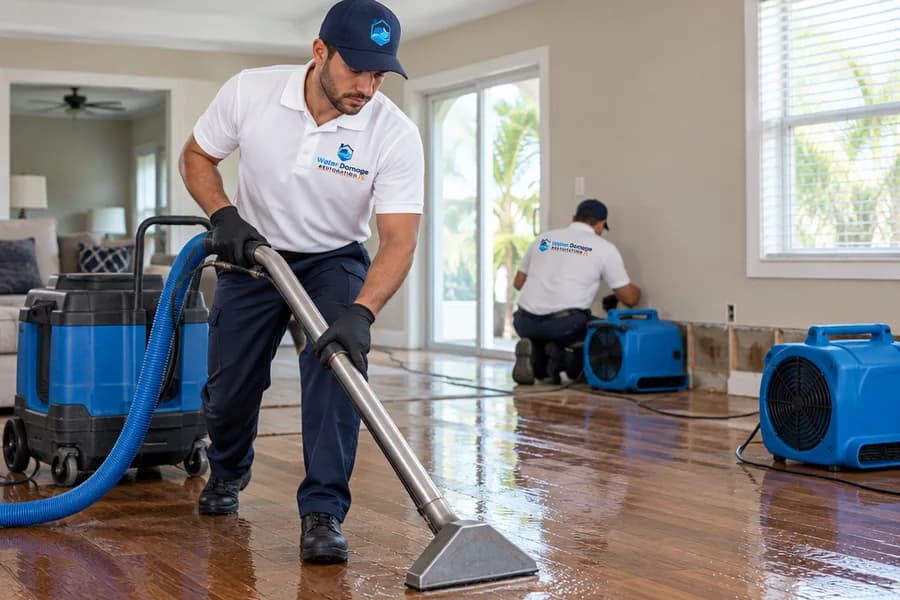
Clearing the standing water is the start. Once it's gone, structural drying pulls the remaining moisture out of the surrounding materials with air movers and dehumidifiers, bringing the space back to normal. We handle both steps together so the area is genuinely dry, not just free of visible water.
More Water Extraction & Removal services
View all Water Extraction & Removal servicesRequest this service
Tell us what happened and we'll follow up to confirm next steps.
Frequently asked questions
As fast as possible. Standing water spreads, soaks into materials, and grows more contaminated over time. The sooner it's cleared, the less damage and lower the mold risk.
It can be. Standing water may hide electrical hazards, and it becomes contaminated the longer it sits. Avoid walking through it near outlets, and let trained technicians assess and remove water that may be contaminated.
Yes. We use submersible pumps and extractors to clear standing water from basements, crawl spaces, and other low areas, then check the surrounding materials for hidden moisture.
Household tools can't move the volume or reach the hidden water that pooled water leaves in walls and subfloors. Professional pumps and extractors clear far more, far faster, which is what limits the damage.
Structural drying follows, using air movers and dehumidifiers to remove the moisture left in surrounding materials. That's what brings the space fully back to normal.
Still have a question? Call us at (904) 555-0100