Flood Damage Cleanup in Florida
Flood damage cleanup is the removal of the water, mud, and debris a flood leaves behind, followed by cleaning and sanitizing. Our our crews handle flood cleanup safely — treating it as contaminated Category 3 water — so the space is not just dry but sanitary again.
The steps of a flood cleanup, in order
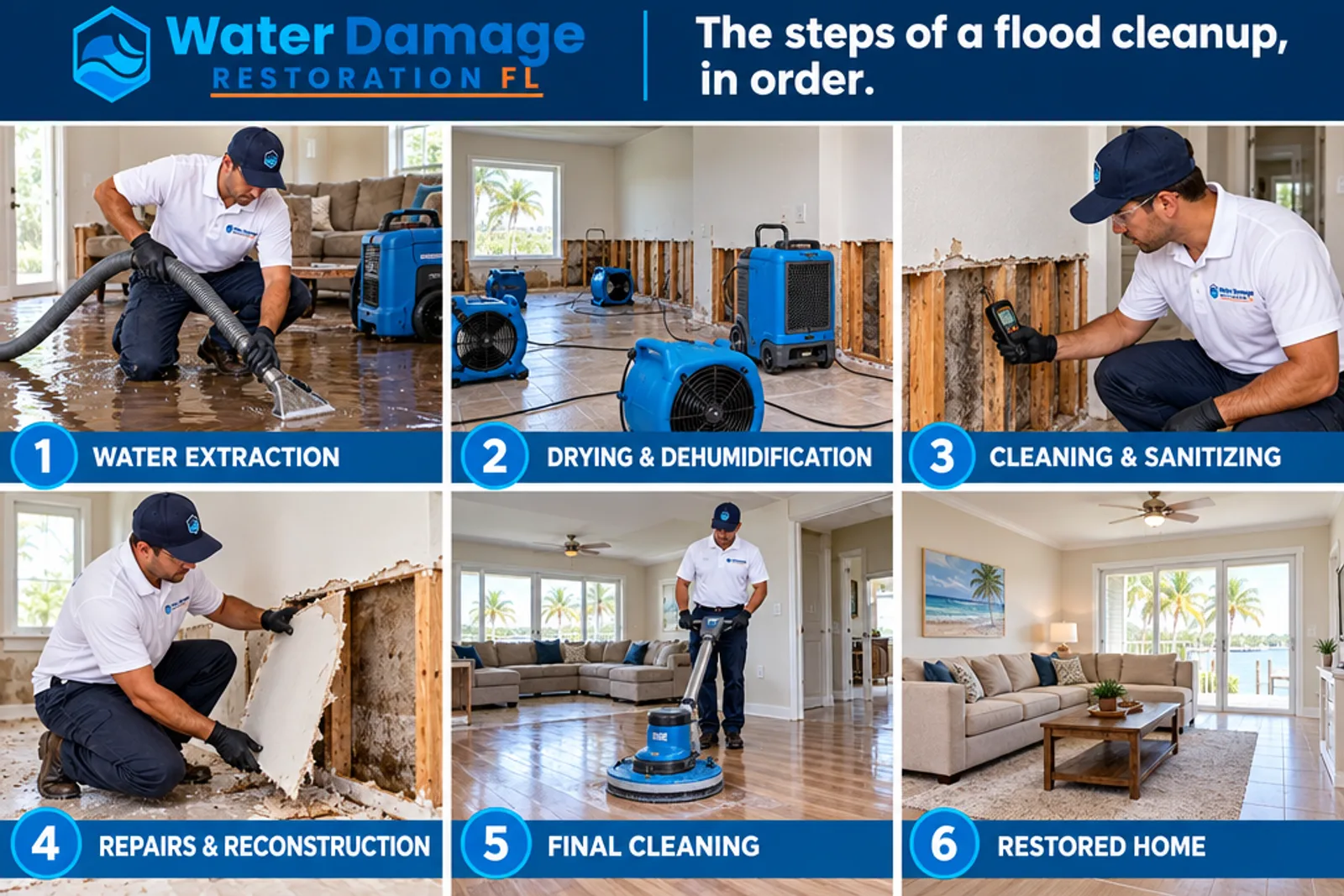
Flood cleanup follows a deliberate sequence, and each step depends on the one before it. Because flood water is usually contaminated, safety and containment come before anything else.
- Assess safety and identify the water category before entering.
- Contain the affected area so contamination doesn't spread.
- Remove standing water, mud, and debris.
- Remove porous materials the contaminated water soaked and can't be sanitized.
- Clean and disinfect hard surfaces and salvageable contents.
- Dry the structure to moisture targets, then deodorize.
Why flood cleanup shouldn't be a DIY job
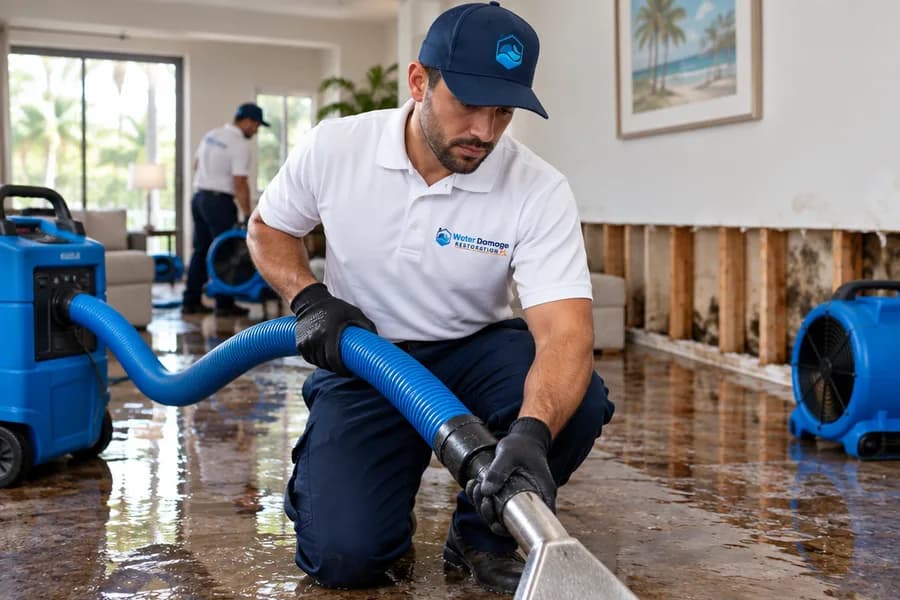
It's natural to want to start cleaning up after a flood, but flood water is one of the situations where doing it yourself carries real risk. The water is usually contaminated Category 3 black water, carrying bacteria and often sewage, and simple contact — or breathing the aerosols stirred up during cleanup — can cause illness.
There are practical hazards too. Flood water can hide electrical dangers and unstable flooring, and the porous materials it soaks can't be sanitized reliably by mopping and wiping. Cleaning contaminated carpet and drywall rather than removing them tends to leave contamination and odor behind.
Professional cleanup handles the water as the hazard it is — with containment, protective equipment, and proper disposal — so the space is made genuinely safe rather than just superficially cleaned.
What flood cleanup involves
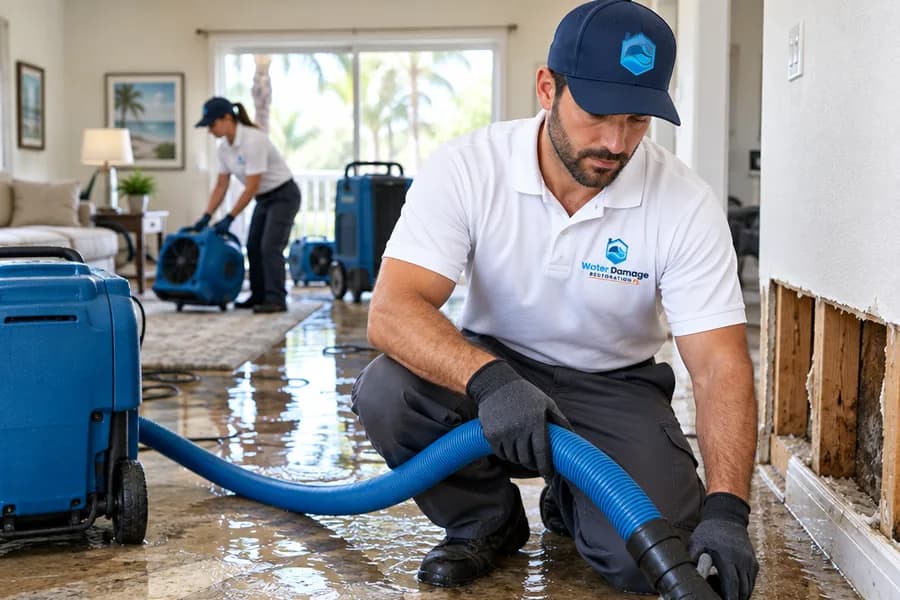
Flood cleanup is more involved than a typical water cleanup because flood water brings the outside in — mud, silt, debris, and contaminants along with the water. The work has to remove all of it and then sanitize, not just extract water.
A flood cleanup generally includes:
- Removing standing water, mud, and debris.
- Removing contaminated porous materials that can't be cleaned.
- Cleaning and sanitizing hard surfaces and salvageable contents.
- Structural drying to bring materials back to normal moisture.
- Documenting the loss for insurance.
Treating flood water as contaminated
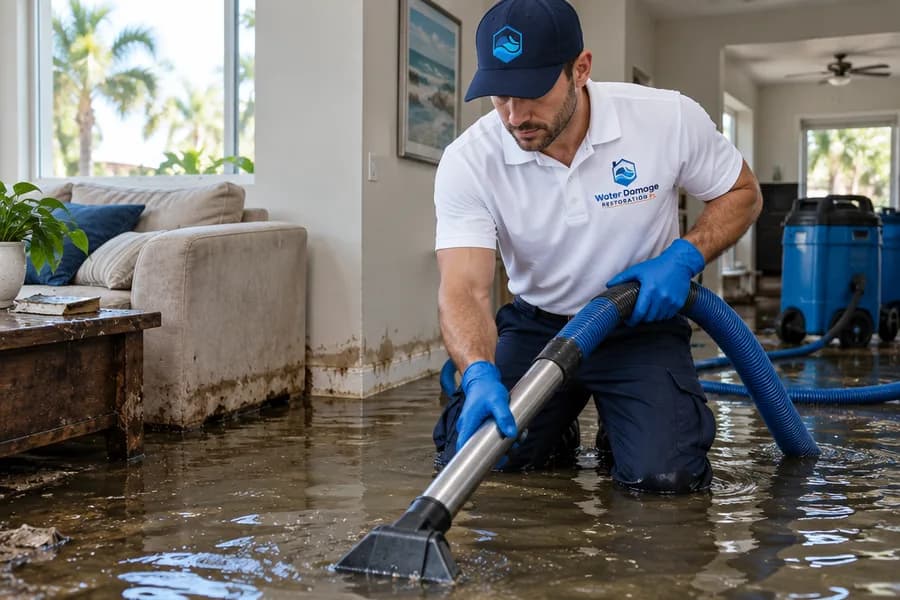
Flood and storm water is usually Category 3 black water, carrying bacteria, chemicals, and often sewage. That means it's handled as a health hazard from the start. Our technicians contain the area, use protective equipment, and dispose of porous materials the water soaked — because those materials can't be sanitized reliably once contaminated.
This is the core reason flood cleanup differs from mopping up a clean-water spill: the goal is to make the space safe, not just dry.
What can be saved and what can't
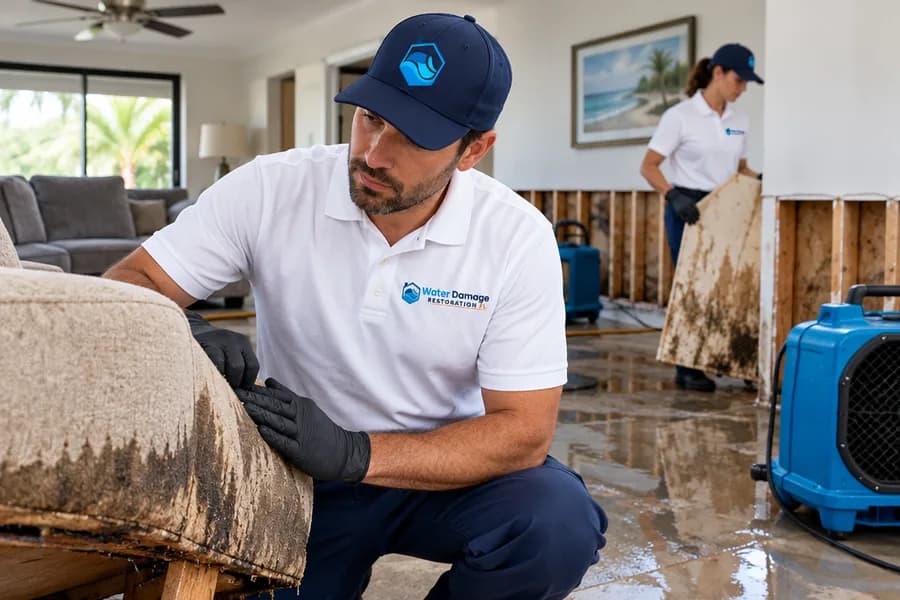
After a flood, hard and non-porous items — sealed floors, metal, glass, solid wood furniture — can usually be cleaned and sanitized. Porous materials that absorbed contaminated water, like carpet, pad, insulation, and the lower portion of drywall, typically have to be removed.
We document belongings before removal and advise honestly on what's salvageable, so you're not left cleaning contaminated items that should have been discarded.
Sanitizing after the water is gone
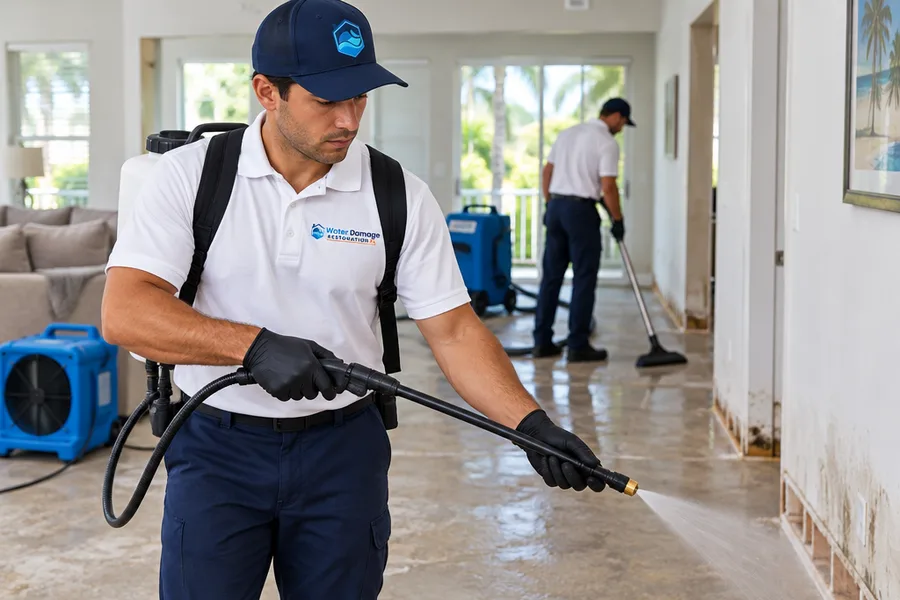
Removing water and debris is only part of flood cleanup. Because flood water leaves contamination behind, affected surfaces are cleaned and treated with appropriate antimicrobial products, and the area is dried thoroughly to discourage mold. In Florida's humidity, that drying step is especially important.
The result is a space that's been made sanitary and dry, ready for the repairs that restore it.
Fast flood cleanup across Florida
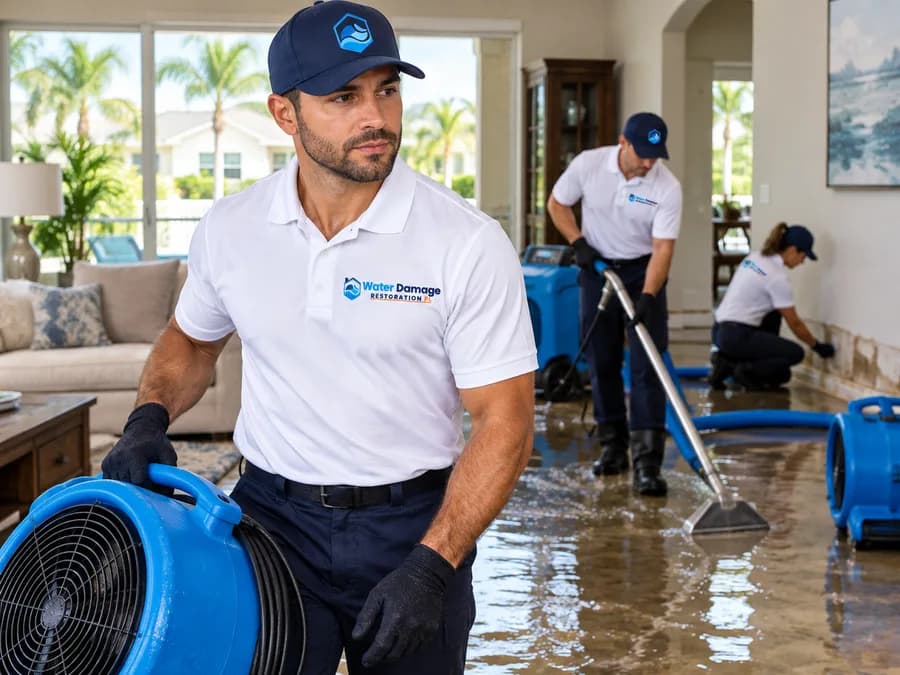
Our crews respond after floods and storms across Florida, your area, and surrounding communities. Because contamination and mold spread quickly, we focus on reaching your property fast and handling the cleanup safely from the first step.
More Flood Damage Restoration services
View all Flood Damage Restoration servicesRequest this service
Tell us what happened and we'll follow up to confirm next steps.
Frequently asked questions
It depends on the size of the affected area and how much contaminated material must be removed. The cleanup and removal phase is often a day or two, with drying continuing for several days after. A larger flood, or one affecting multiple rooms, takes longer. We give a realistic timeline after assessing the property.
Usually not. Flood water is typically contaminated Category 3 black water carrying bacteria and possibly sewage. It should be handled with protective equipment and proper disposal, which is why professional cleanup is recommended.
Porous materials that soaked up contaminated water — carpet, pad, insulation, and the lower portion of drywall — usually have to be removed because they can't be sanitized reliably. Hard, non-porous items can generally be cleaned.
Yes. Because flood water leaves contamination behind, cleanup includes cleaning and treating affected surfaces with antimicrobial products, followed by thorough drying to discourage mold.
As soon as it's safe. Contamination and mold spread quickly, and Florida's humidity accelerates it. The sooner cleanup begins, the more of the property can be saved.
Flooding from outside usually requires separate flood insurance rather than a standard homeowners policy. Coverage depends on your policies and your insurer; we document the loss thoroughly to support your claim.
Still have a question? Call us at (904) 555-0100