Emergency Water Cleanup in Florida
Emergency water cleanup is the fast removal of water and affected materials to limit secondary damage after a sudden leak or flood. Our our crews respond 24/7 to clear the water quickly, protect what can be saved, and set up drying before the damage spreads further.
Emergency cleanup vs. routine cleanup
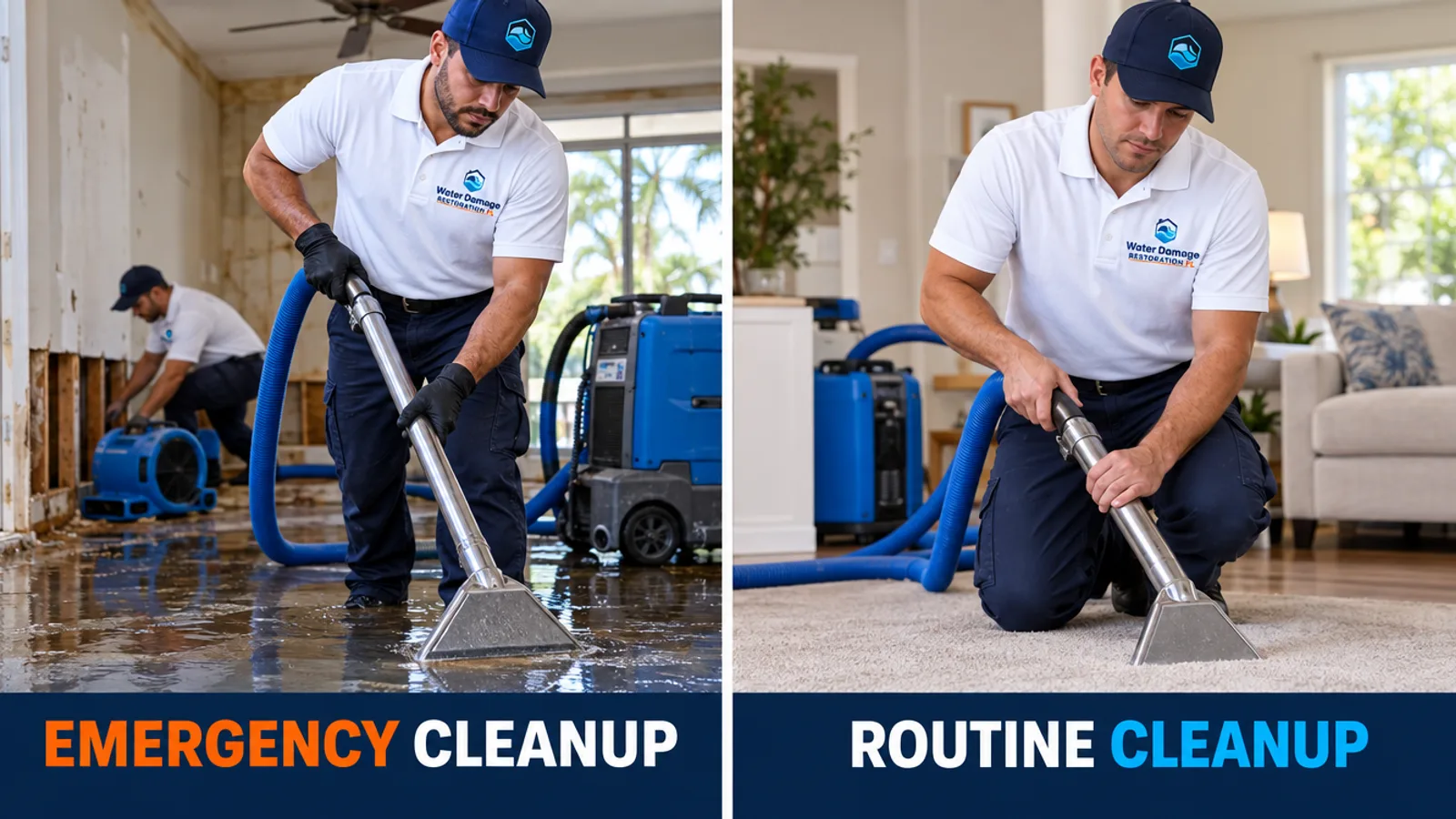
Emergency water cleanup and a routine, scheduled cleanup share the same basic goal — get the water and ruined materials out — but they differ in pace and priorities. The emergency version is fast and focused, because the damage is still growing.
| Emergency cleanup | Routine cleanup | |
|---|---|---|
| Trigger | Active or recent water loss | Past, stabilized damage |
| Priority | Stop the spread fast | Thoroughness over speed |
| Timing | Immediate, 24/7 | Scheduled |
| Goal | Limit secondary damage | Restore the affected area |
How cleanup speed affects the final cost
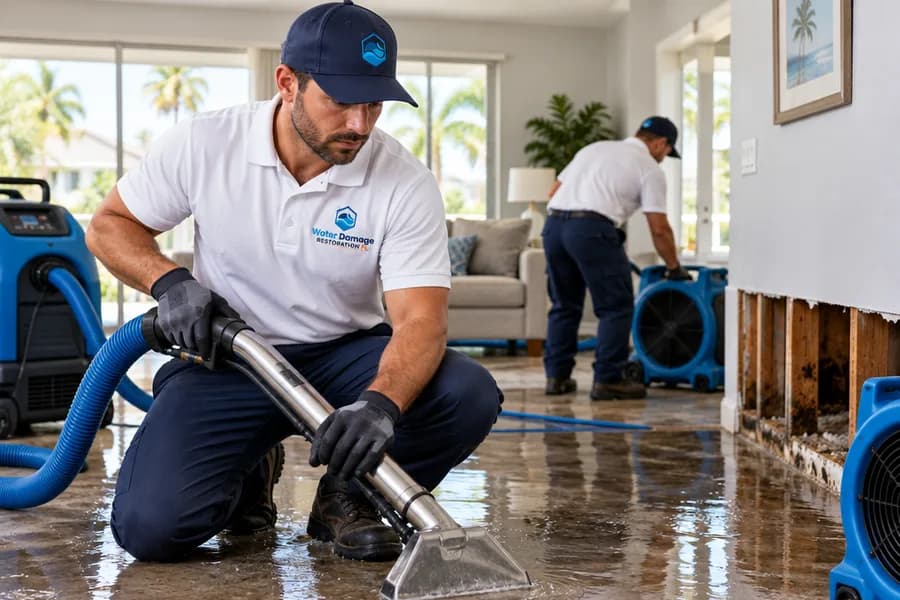
There's a direct line between how quickly cleanup starts and how much a water loss ends up costing. Water and the materials it ruins keep causing damage until they're removed, so a fast cleanup limits the amount of material that has to be dried, treated, or replaced later.
A quick response often means saving flooring, keeping drywall intact, and drying a space in days. A slow one can mean tearing out and rebuilding, plus mold treatment on top — a much larger and costlier job. The cleanup itself is a small part of the picture compared with what it prevents.
That's why we treat emergency cleanup as time-sensitive rather than routine: acting fast is almost always the cheaper path in the end.
What emergency cleanup involves
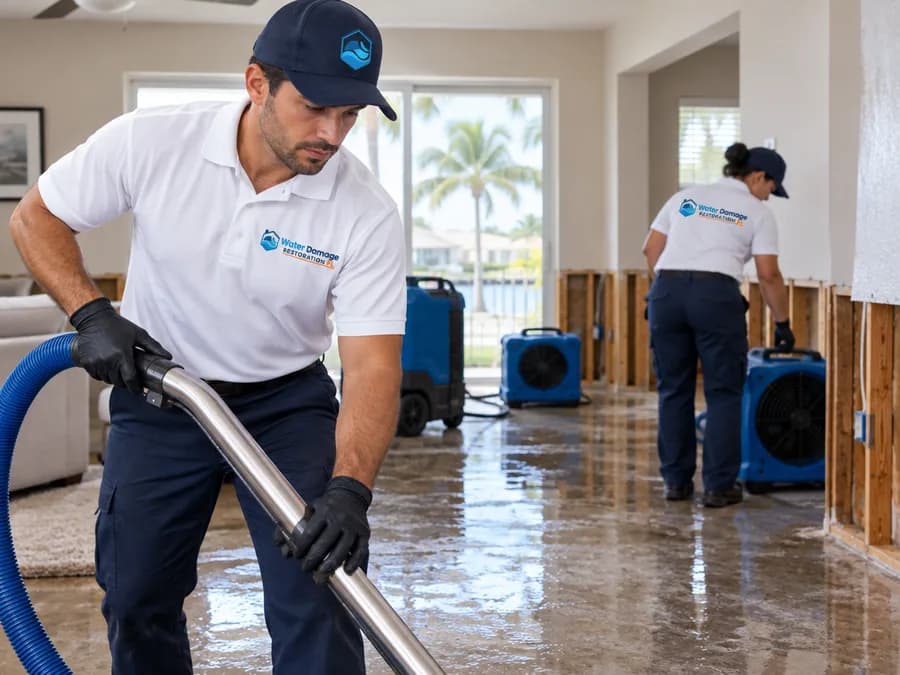
Emergency cleanup is the urgent first pass at a water loss: getting the water and the materials it ruined out of the way before they cause more harm. It's fast and focused, because the priority is stopping the spread rather than the detailed restoration that comes later.
A typical emergency cleanup includes:
- Extracting standing water with pumps and extractors.
- Removing soaked carpet, pad, and materials that can't be dried in place.
- Clearing debris and moving contents out of the water.
- Wiping down and pre-cleaning surfaces so drying can begin.
- Documenting damage for the insurance claim.
Limiting secondary damage
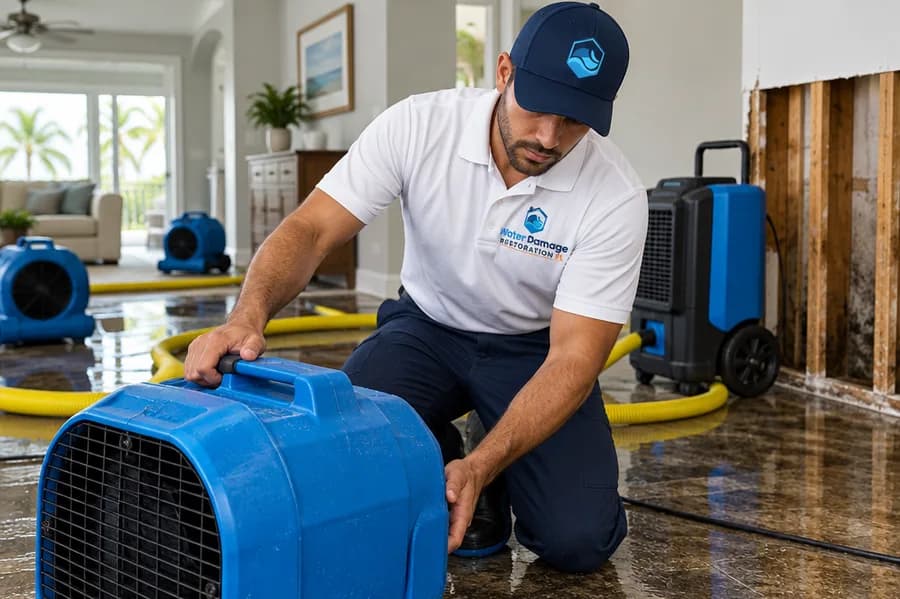
The whole point of moving fast is to prevent secondary damage — the harm that comes not from the original event but from water being left to sit. Standing water wicks into walls, warps flooring, and raises humidity that carries the problem into unaffected rooms. Wet organic materials start to break down and smell.
Prompt cleanup interrupts that chain. The sooner water and ruined materials are removed, the less there is to repair and the lower the mold risk across Florida's humid climate.
Matching the cleanup to the water type
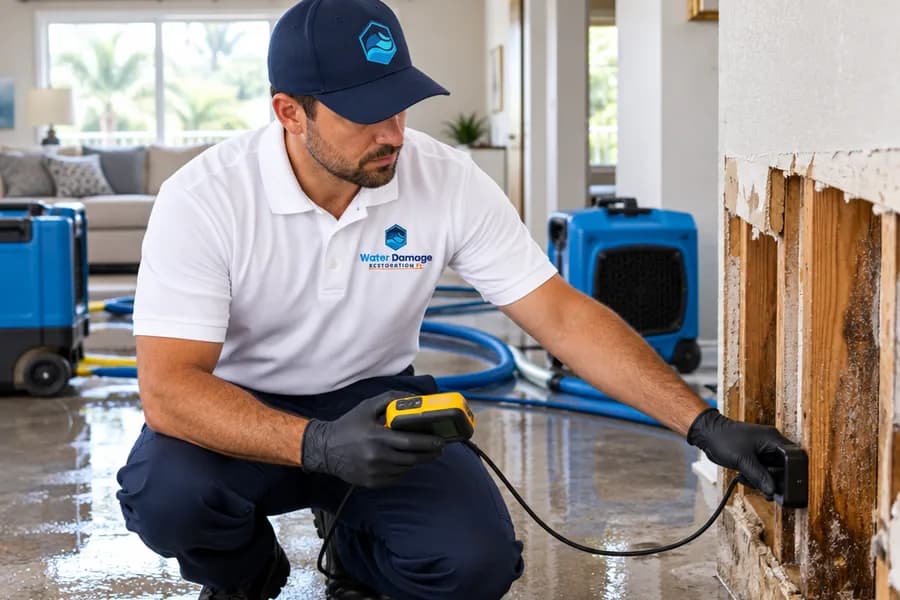
How cleanup is handled depends on what's in the water. Clean water from a supply line is straightforward. Gray water from an appliance or overflow carries some contamination. Black water from sewage or flooding is a health hazard that requires protective equipment and the removal of porous materials it touched.
Our technicians identify the category first so the cleanup is safe as well as thorough — contaminated water is never simply dried in place.
What comes after emergency cleanup
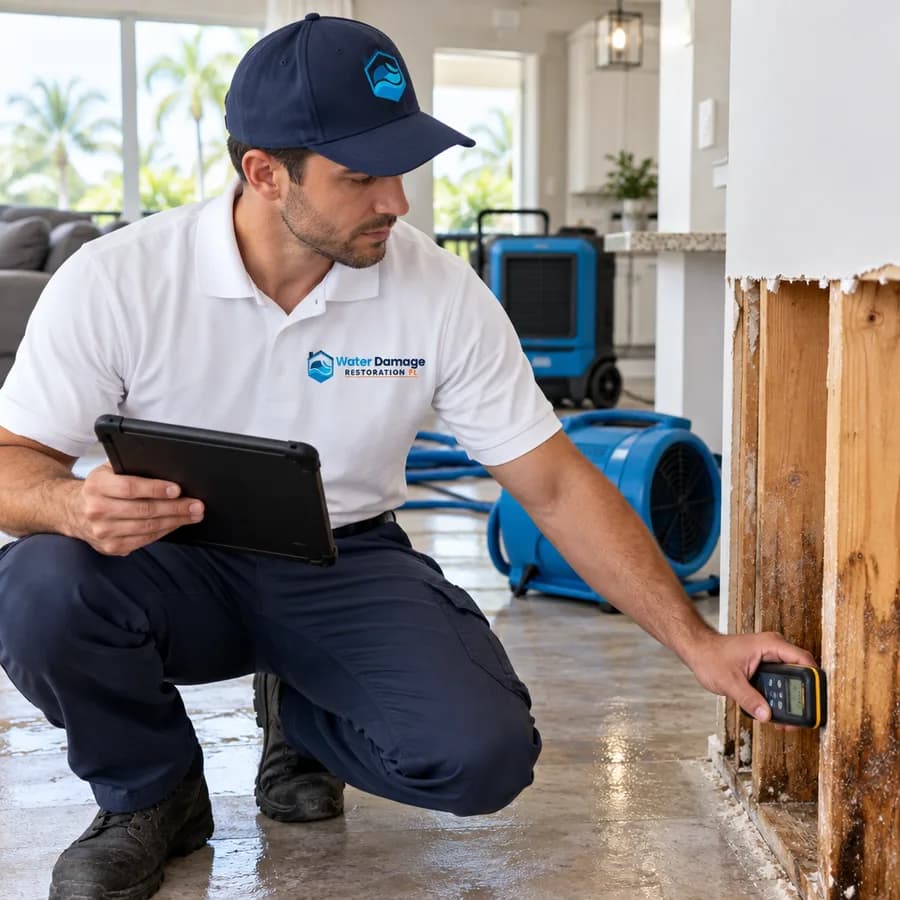
Cleanup removes the water and the worst of the damage, but it doesn't finish the job. Once the area is clear, structural drying pulls the remaining moisture out of walls, subfloors, and framing, and any needed repairs restore the space.
We carry the work straight through from cleanup to drying to repair, so nothing is left half-done and there's one team responsible from start to finish.
24/7 emergency cleanup in communities across Florida
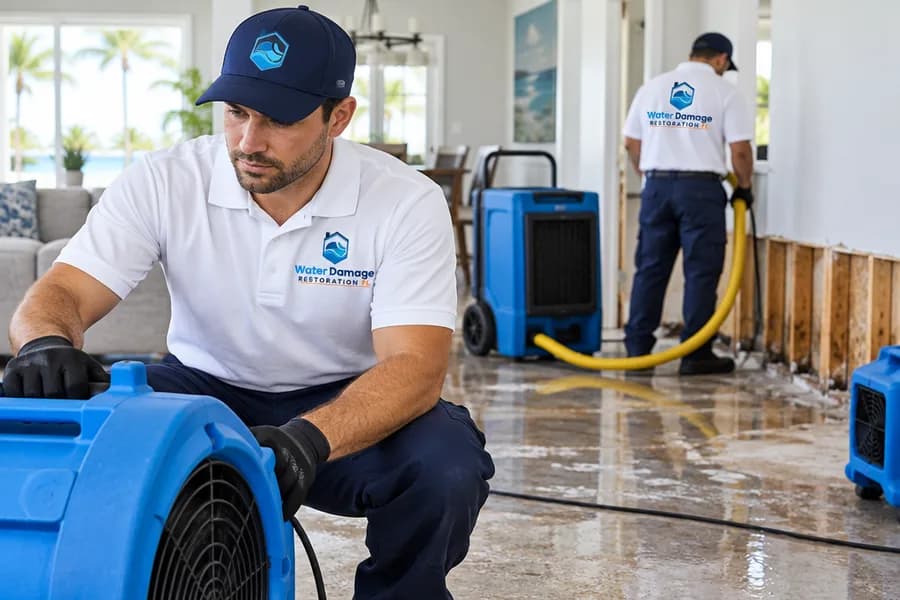
Our crews respond around the clock across Florida. Because response speed is what limits secondary damage, we focus on reaching your property quickly and getting the water out fast.
Request this service
Tell us what happened and we'll follow up to confirm next steps.
Frequently asked questions
As soon as it's safe. Water spreads and soaks into materials continuously until it's removed, and mold can start within 24 to 48 hours. Fast cleanup is what limits secondary damage.
It's the damage that comes from water being left to sit rather than from the original event — warped flooring, ruined drywall, raised humidity spreading the problem, and mold growth. Prompt cleanup is how you prevent it.
Yes, when materials are too saturated or contaminated to dry safely in place — such as carpet pad or anything touched by black water — we remove and dispose of them. Materials that can be dried are left and dried.
No — cleanup is the fast first phase that removes water and ruined materials. Full restoration continues with structural drying, cleaning, and repairs. We handle both as one continuous process.
You can safely mop up clean water and move valuables, but avoid contaminated water and don't rely on household fans to dry the structure. If in doubt about the water type or safety, wait for the crew.
Still have a question? Call us at (904) 555-0100