
Emergency Water Extraction in Florida
Emergency water extraction is the process of pulling standing water out of a property with pumps and extraction equipment as soon as possible after a leak or flood. Our our crews respond 24/7 to extract water fast — the step that sets up faster drying and less overall damage.
How we know extraction is thorough
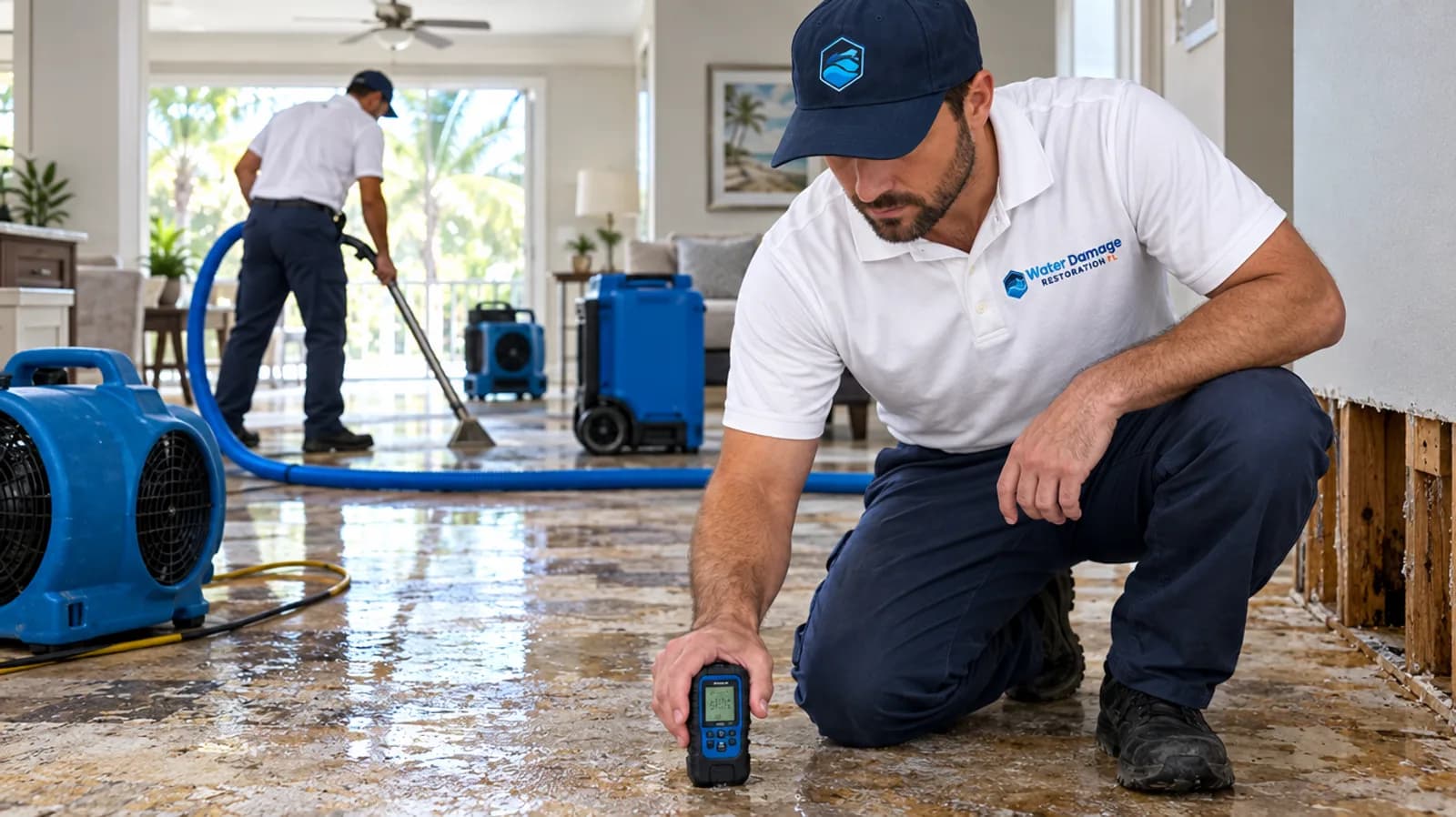
Extraction can look finished long before it actually is, because a surface stops looking wet well before the material beneath it is clear of water. That's why thorough extraction isn't judged by eye — it's measured.
Our technicians use moisture meters to check how much water remains in carpet, pad, and the subfloor, and keep extracting until the readings show the bulk of the water is out. Thermal cameras help find water that has spread to areas that aren't obviously wet. This matters because extraction is the foundation the drying stage builds on: the more water pulled out and verified now, the faster and more complete the drying that follows. Skipping that verification is how hidden water gets left behind to cause problems later.
Protecting your floors during extraction
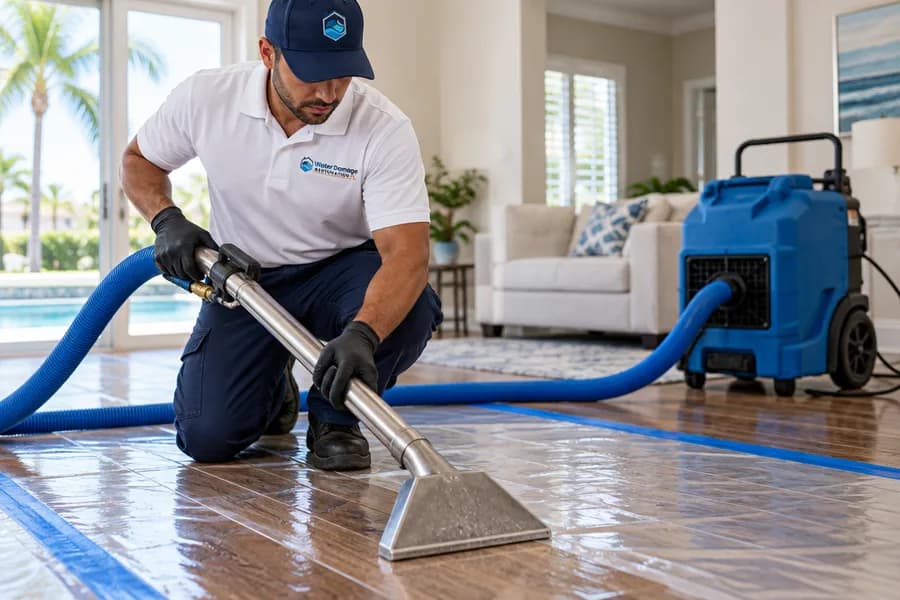
Flooring is usually the first thing water reaches and often the most expensive thing to replace, so a good extraction is done with the floor's survival in mind. The approach changes with the material: carpet and pad need deep suction to pull water from the backing, while hard floors need water cleared from seams before it works its way to the subfloor.
Moving quickly is what gives flooring the best chance. Water sitting on hardwood leads to cupping and warping; water under tile or vinyl soaks the subfloor. By extracting thoroughly and early, we can often save flooring that would otherwise have to be torn out — and we check the subfloor beneath to make sure hidden water isn't left to cause trouble later.
What water extraction does
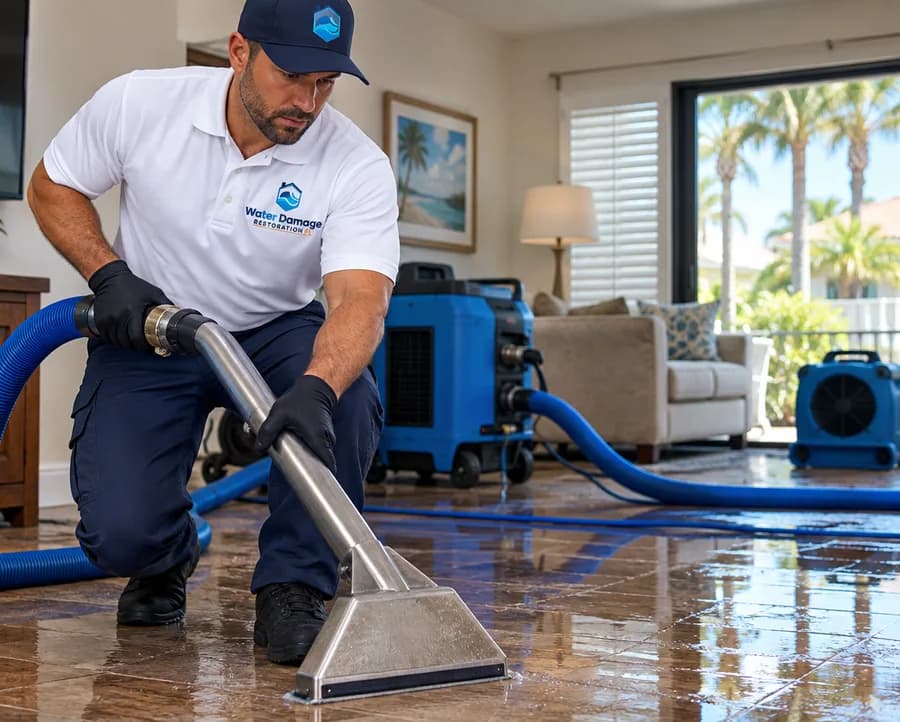
Extraction is the powered removal of water from floors, carpet, and hard surfaces. It goes beyond simply pumping out a puddle — good extraction pulls water out of the materials it has soaked into, which is what makes the later drying stage faster and more effective.
The more water that's extracted up front, the less has to be evaporated later. That's why thorough extraction is one of the highest-impact steps in the whole process.
Extraction equipment and how it's used
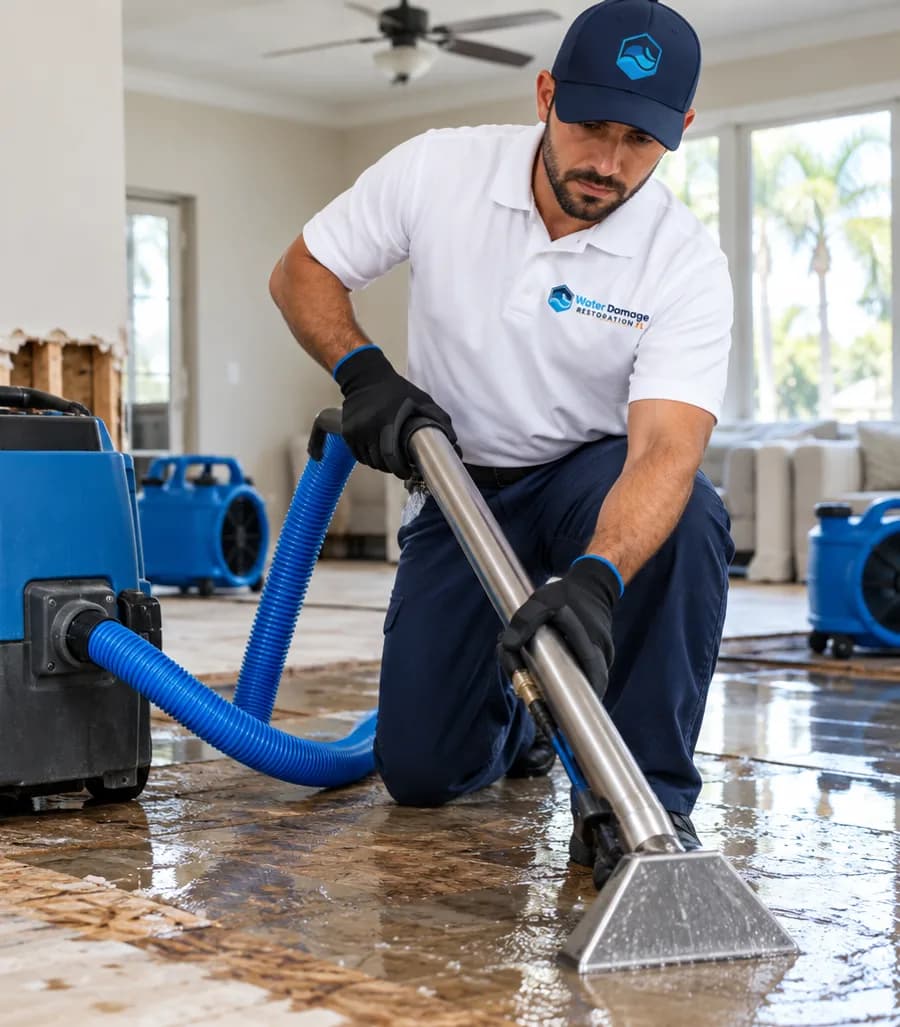
Extraction relies on purpose-built equipment matched to the surface and the volume of water:
- Submersible pumps for deep standing water.
- Truck-mounted extractors with strong suction for carpet and pad.
- Portable extractors and wands for stairs, corners, and tight areas.
- Weighted extraction tools that press water out of carpet as they pass.
Extracting from carpet and hard floors
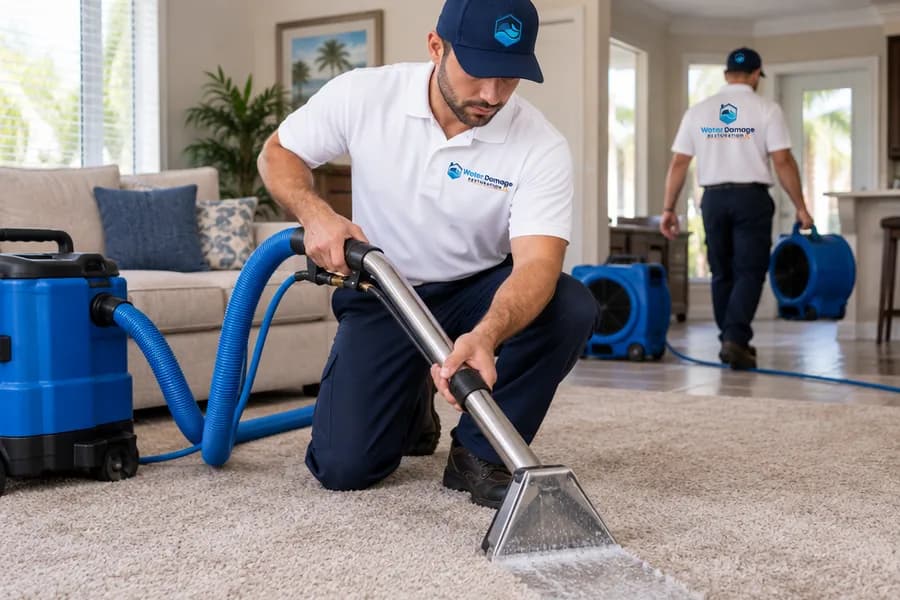
Different flooring holds water differently, and each needs the right technique. Carpet and pad act like a sponge, so extraction has to pull water from deep in the fibers and backing — sometimes the pad has to be removed entirely. Hard floors like tile and vinyl hold water at the surface and in the seams, and water can travel beneath them to the subfloor.
Our technicians extract according to the material and check with moisture meters to confirm how much water remains, rather than assuming a surface is clear because it looks dry.
Extraction is step one, not the finish
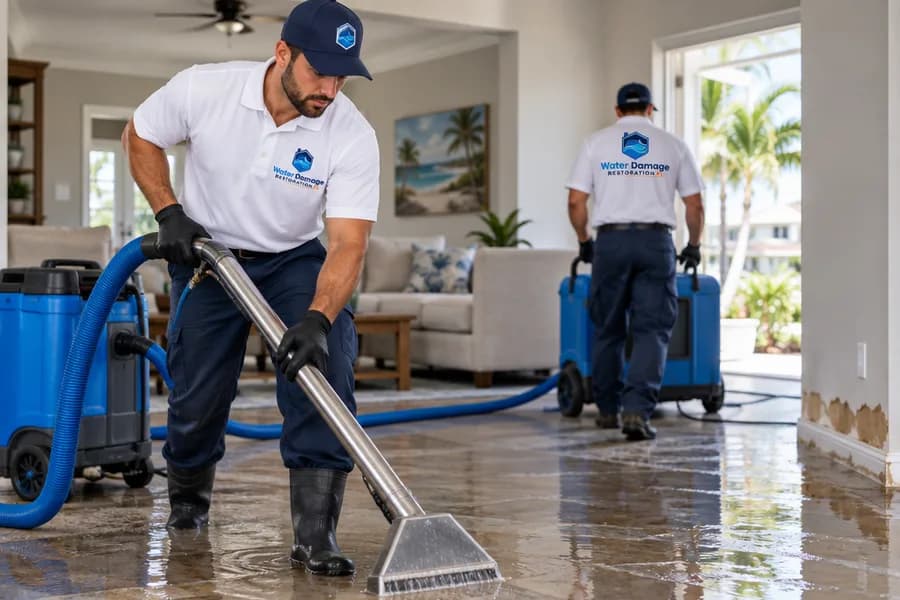
Even the most thorough extraction leaves some moisture behind in materials and the air. That's expected — extraction's job is to remove the bulk of the water quickly, and structural drying then takes the rest down to normal levels with air movers and dehumidifiers.
We move directly from extraction into drying so there's no gap where moisture sits and spreads, keeping the whole process as fast and complete as possible.
24/7 emergency extraction across Florida
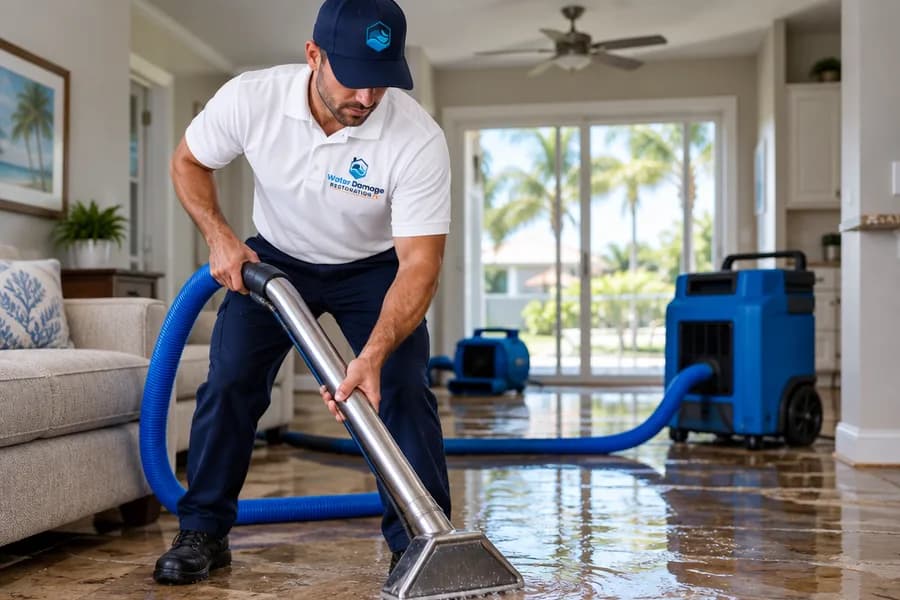
Our extraction crews respond around the clock across Florida. Because getting water out quickly is what limits the damage, we focus on fast arrival and thorough extraction from the first visit.
Request this service
Tell us what happened and we'll follow up to confirm next steps.
Frequently asked questions
It's the powered removal of standing and absorbed water using pumps and extractors. Good extraction pulls water out of the materials it has soaked into, not just off the surface, which makes drying faster.
The terms overlap — both describe getting water out of the property. Extraction usually emphasizes pulling water out of carpet, pad, and hard surfaces with specialized equipment, as the step before structural drying.
Often, yes, if the water was clean and extraction happens quickly. The pad underneath frequently needs replacing, and carpet soaked by contaminated water usually can't be saved. We assess and advise honestly.
As soon as possible. The longer water sits, the more it soaks in and spreads, and the higher the mold risk. Fast extraction removes the bulk of the water before it can cause more harm.
Yes. Extraction removes the bulk of the water, but moisture always remains in materials and the air. Structural drying with air movers and dehumidifiers finishes the job by bringing everything back to normal levels.
Still have a question? Call us at (904) 555-0100