
Moisture Removal in Florida
Moisture removal is the process of finding and removing lingering moisture from affected materials after water damage. Our our crews use moisture meters and thermal cameras to locate hidden dampness, then dry it out — because the moisture you can't see is what causes mold and warping.
Where lingering moisture hides most
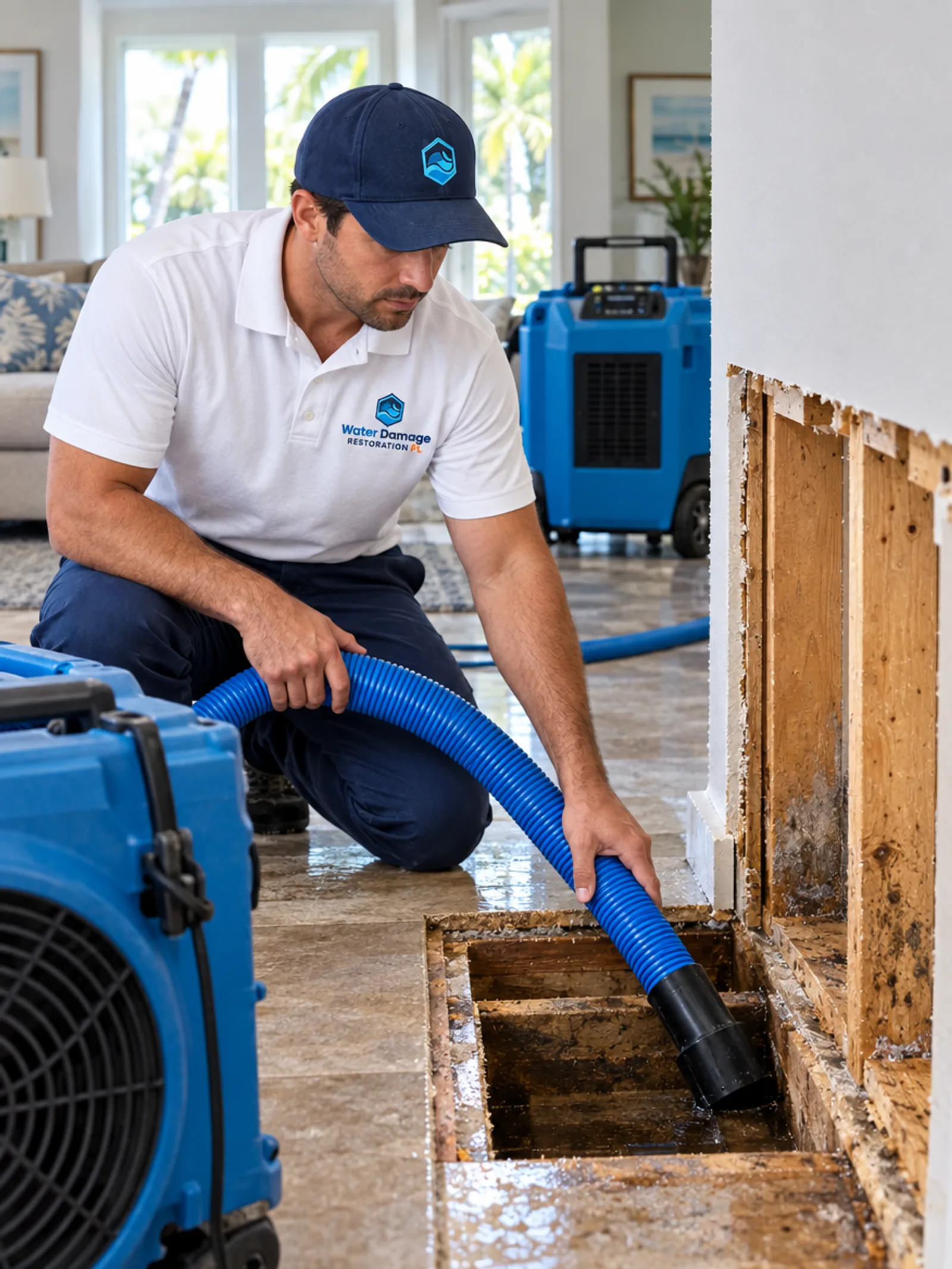
Moisture removal is largely about knowing where to look, because the water that lingers rarely sits in the open. It collects in the places that are slowest to dry and hardest to reach, which is exactly where it does quiet, long-term damage.
The usual hiding spots include:
- Inside wall cavities, soaked into the back of drywall and into framing.
- Beneath flooring and in the subfloor, especially under carpet and pad.
- In insulation, which holds water and dries very slowly.
- Around and under cabinets and built-ins against exterior walls.
- In crawl spaces and other enclosed, poorly ventilated areas.
Checking a space after a DIY dry-out
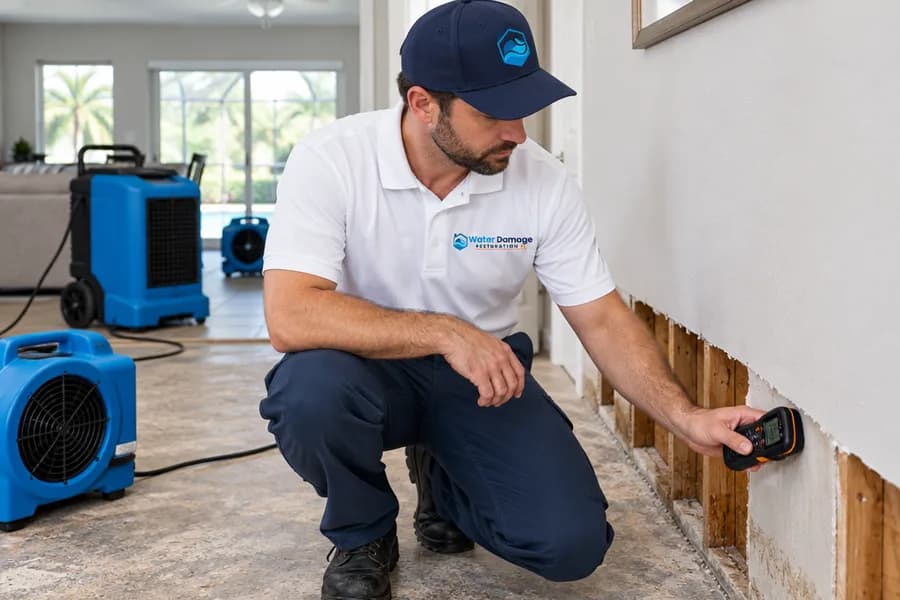
Plenty of small leaks get mopped up and fanned dry by homeowners, and often that's fine. But when the water was more than a minor spill, a DIY dry-out can leave moisture behind in places household tools never reach — inside walls, under flooring, and in subfloor and insulation.
That leftover moisture doesn't announce itself right away. Weeks later it can show up as a musty smell, a warped board, a stain, or mold, long after the surface felt dry to the touch. By then it's a harder problem than it would have been at first.
A moisture check after a leak or a DIY cleanup uses meters and thermal imaging to confirm whether anything is still damp behind the finishes, so lingering moisture can be dried before it causes hidden damage. It's a small step that can prevent a much larger one.
The moisture you can't see
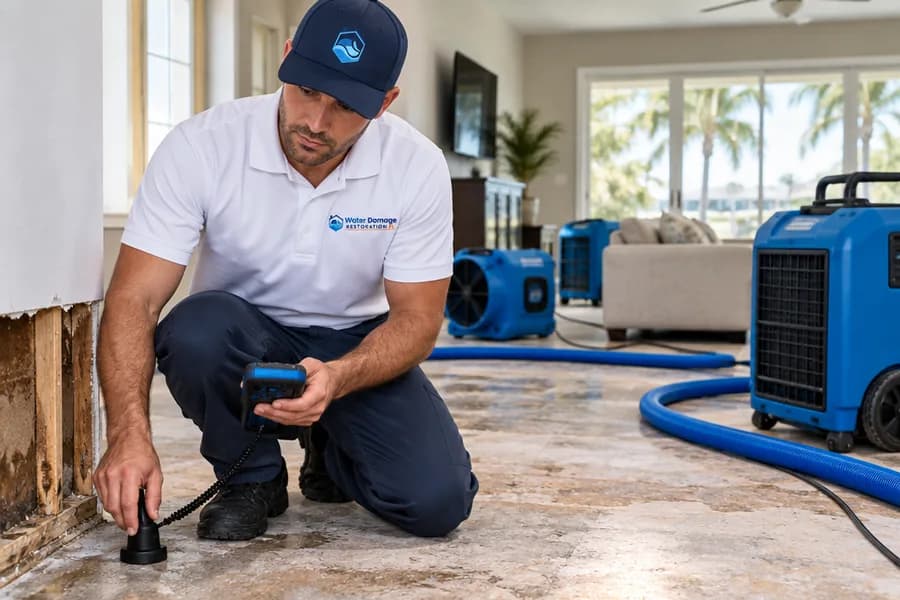
After a water loss, the most damaging moisture is often the moisture nobody notices — soaked into wall cavities, trapped under flooring, held in insulation, and lingering in the air. Surfaces can feel dry while these hidden areas stay wet for days or weeks, quietly causing rot, warping, and mold.
Moisture removal is about finding all of it and drying it, not just the obvious wet spots.
How we find hidden moisture
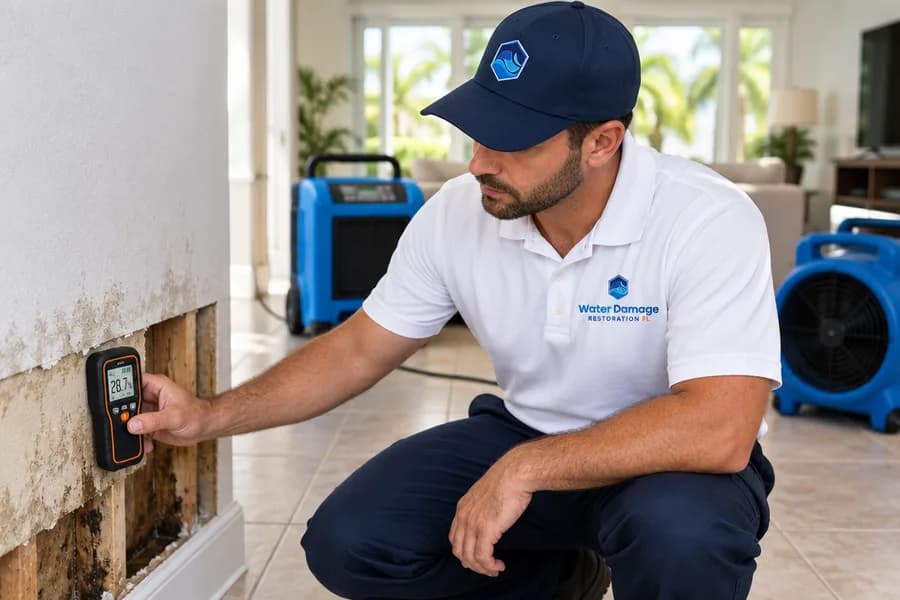
Locating moisture accurately is what makes removal complete:
- Moisture meters measure how wet specific materials are.
- Thermal cameras reveal temperature differences that indicate damp areas.
- Readings from unaffected areas set the target materials should reach.
- Mapping the moisture shows how far the water actually traveled.
Removing the moisture we find
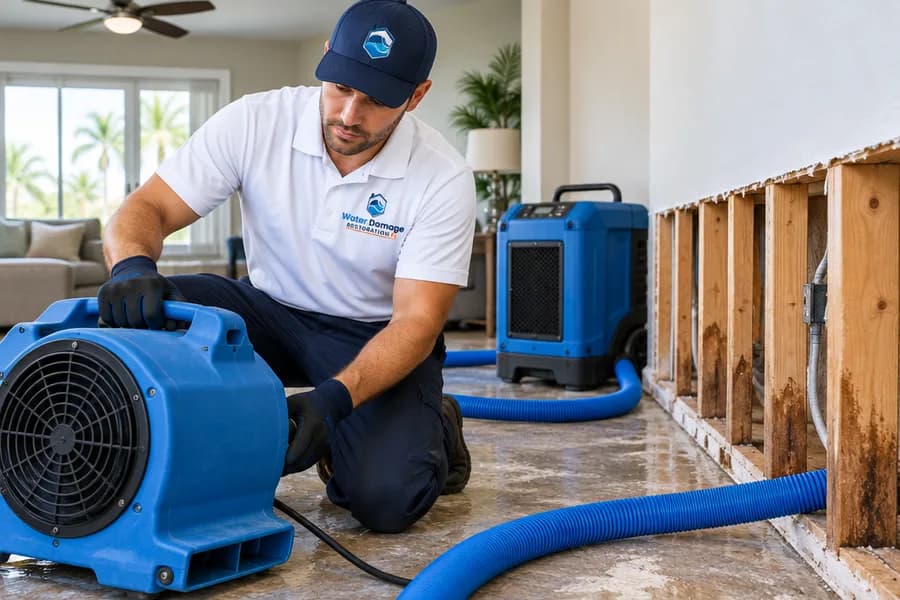
Once located, lingering moisture is removed with air movers and dehumidifiers, and where materials are too saturated to dry — like drenched insulation or carpet pad — they're removed instead. The approach is matched to each material, since drywall, wood, and concrete all release moisture at different rates.
We keep working until readings confirm the materials have reached their drying targets, so nothing is left damp behind the finishes.
Why verification matters
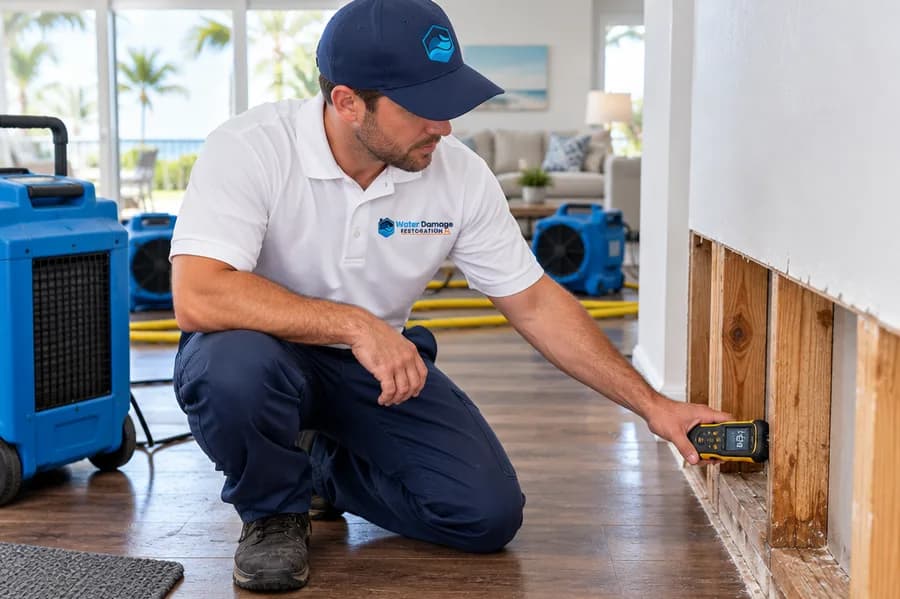
The value of moisture removal is in the verification. Declaring a job done because surfaces feel dry is how hidden moisture gets sealed inside walls and floors, only to cause problems later. Measuring materials against a target removes that guesswork.
This is especially important across Florida, where humidity can keep materials damp and mask whether drying is truly complete.
Thorough moisture removal across Florida
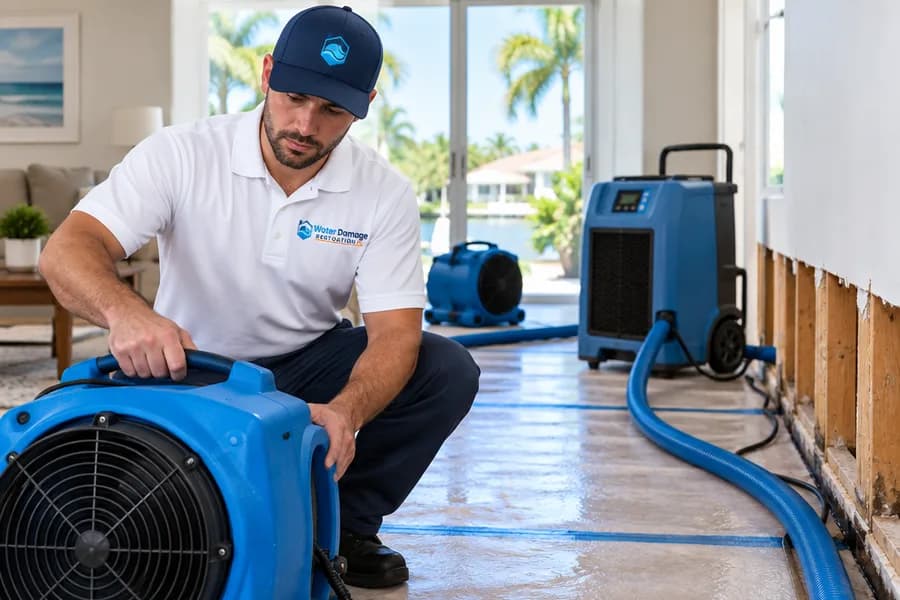
Our crews provide moisture detection and removal across Florida, as part of a full restoration or as a focused check after a leak or water loss. Finding and removing every pocket of lingering moisture is what keeps a resolved loss from turning into a mold problem down the road.
More Drying & Dehumidification services
View all Drying & Dehumidification servicesRequest this service
Tell us what happened and we'll follow up to confirm next steps.
Frequently asked questions
We use moisture meters to measure how wet materials are and thermal cameras to reveal damp areas behind surfaces. Comparing readings to unaffected areas shows where hidden moisture is and how far the water traveled.
Because moisture trapped in walls, floors, and insulation causes rot, warping, and mold even when the surface feels dry. Finding and removing it is what prevents problems that show up weeks later.
With air movers and dehumidifiers matched to the materials. Where something is too saturated to dry — like drenched insulation or carpet pad — it's removed instead. We continue until readings hit their targets.
We take moisture readings and compare them to unaffected areas of the same property. When affected materials reach their target, the moisture removal is verified as complete — not judged by touch.
Yes. We can assess an area after a leak or DIY cleanup to find any lingering moisture in walls, floors, or insulation, and remove what's left before it causes hidden damage or mold.
Still have a question? Call us at (904) 555-0100