
Ceiling Water Damage in Florida
Ceiling water damage restoration addresses wet, stained, or sagging ceilings caused by leaks from above. Our our crews find the source and hidden moisture, dry the ceiling and the space above it, and repair the damage — because a sagging ceiling can be a safety risk.
How much of the ceiling has to come out
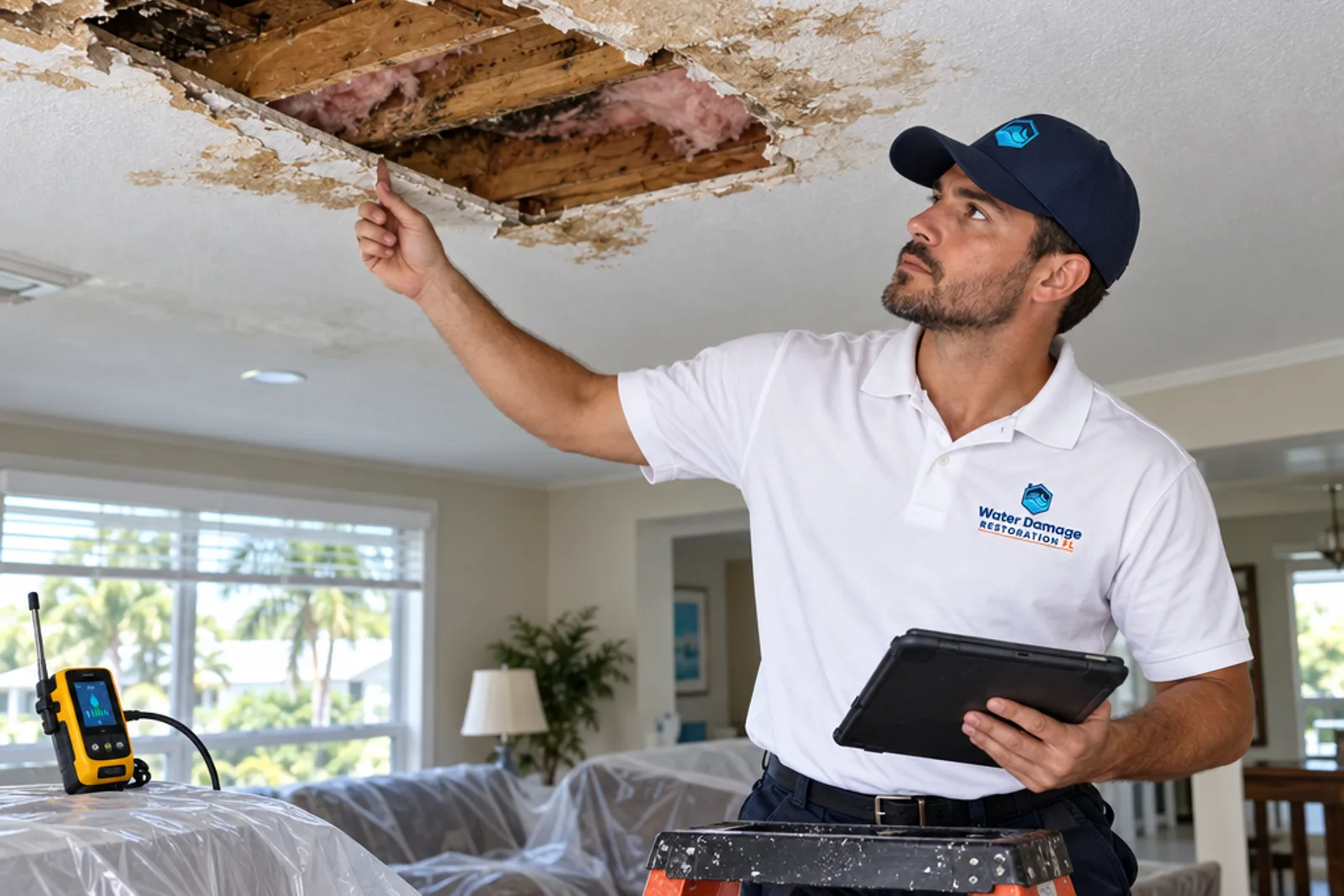
A common worry with a damaged ceiling is how much will need to be removed. The answer depends on how wet the drywall is and what's happening in the cavity above, and it's guided by moisture readings rather than guesswork.
Lightly stained but structurally sound drywall can sometimes be dried, sealed, and repainted without removal. Drywall that's sagging, soft, or crumbling has lost its integrity and is taken out. Often the approach is targeted: the wet, damaged section is removed while sound areas are saved, and any saturated insulation in the cavity above is pulled and replaced. The aim is to remove what has to go to dry the space properly and keep mold from developing — no more than necessary, but not so little that trapped moisture is sealed back inside.
Why painting over it never works
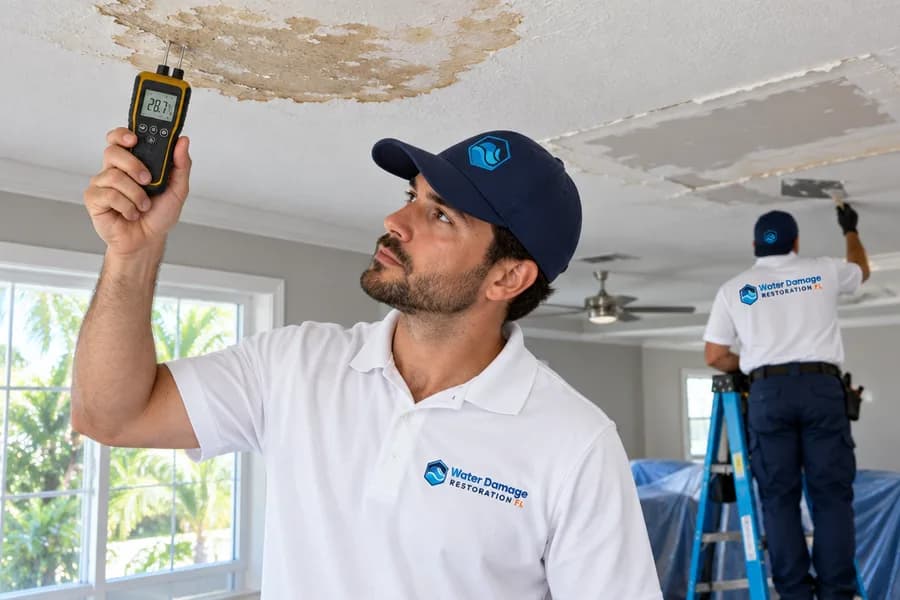
The instinct with a stained ceiling is to prime and repaint it, but that only hides the symptom. If the moisture and its source are still there, the stain usually bleeds back through the new paint, and any trapped dampness goes on to sag the drywall and grow mold above it.
A proper repair works from the cause down: find where the water is coming from, dry the ceiling and the cavity above, remove any drywall or insulation too damaged to save, and only then repair and refinish. Painting is the last step, not the fix.
Skipping the drying to get straight to a fresh coat is one of the most common ways a minor ceiling stain turns into a recurring problem — and eventually a bigger repair.
What causes ceiling water damage
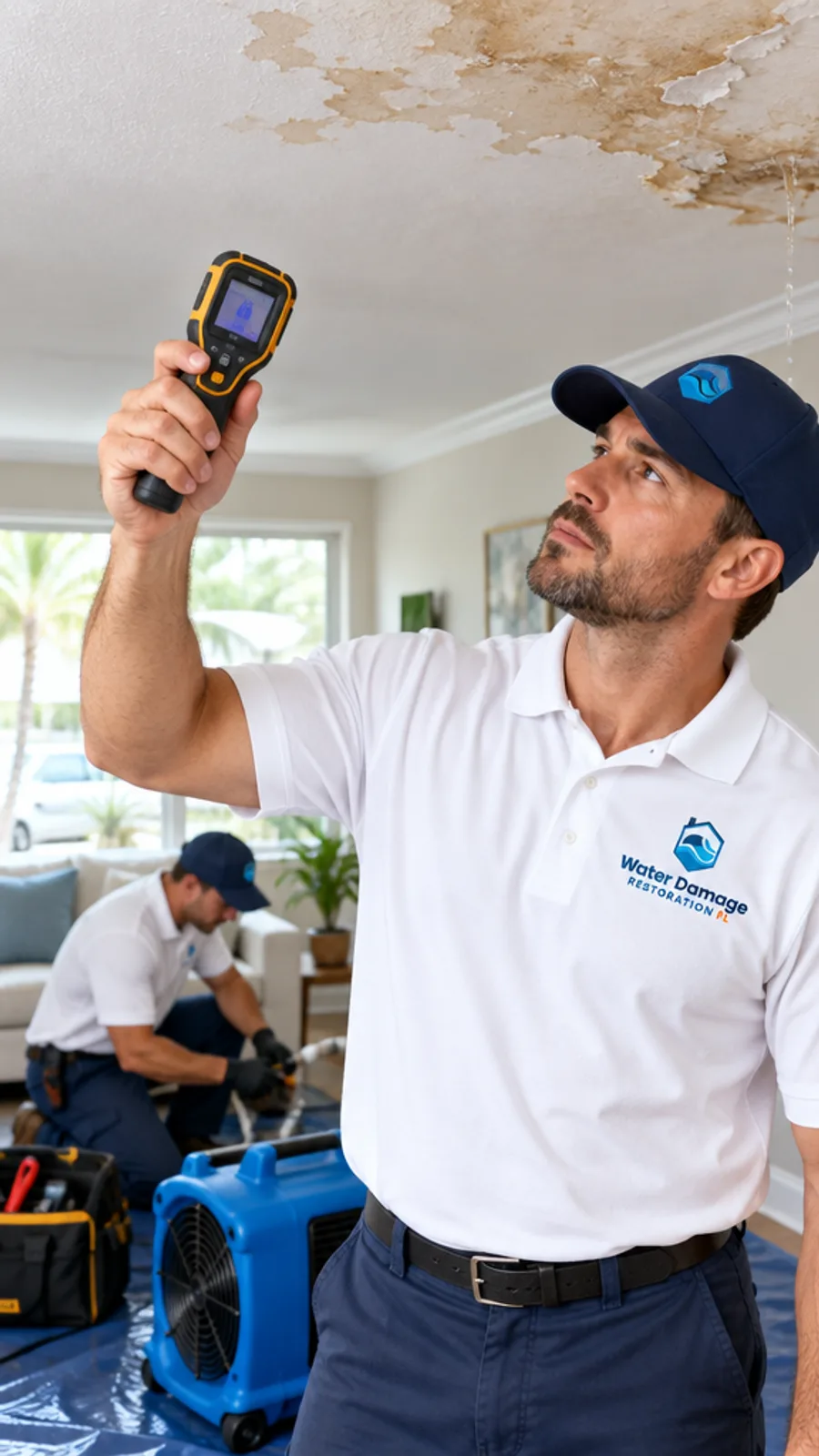
Ceiling damage always means water is coming from above — a leaking roof, a burst or leaking pipe on the floor above, an overflowing bathroom, or a failed appliance upstairs. The ceiling is often the first visible sign of a leak that started somewhere you can't see.
Because the water travels down through the structure to reach the ceiling, finding and stopping the source is as important as repairing the ceiling itself.
Why a sagging ceiling is urgent
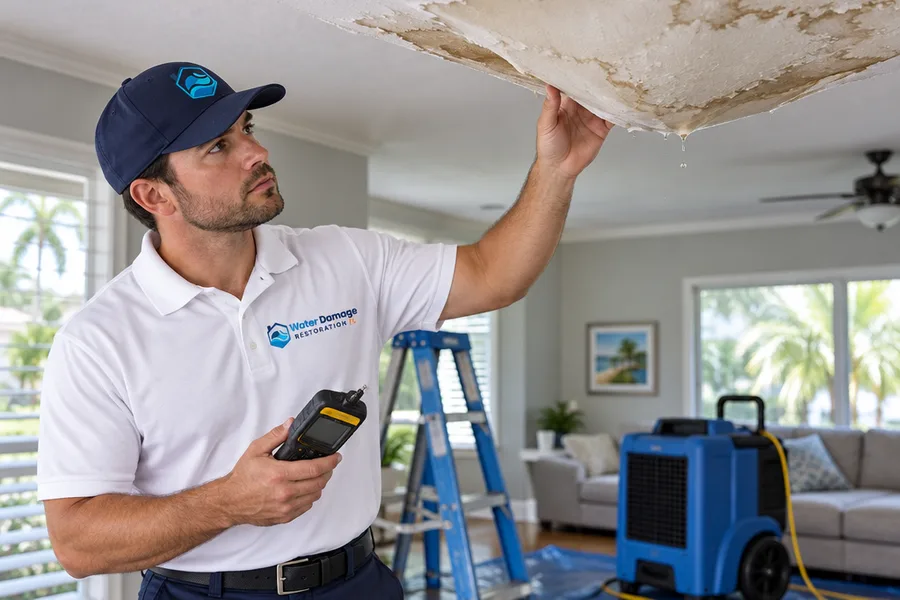
A ceiling that's stained is a warning; a ceiling that's sagging or bulging is holding water and can be a safety hazard. Waterlogged drywall is heavy, and a saturated ceiling can fail suddenly. Stay out from under a bulging ceiling and call for help promptly.
Our crews relieve trapped water safely, then assess how much of the ceiling and the structure above needs drying or replacement.
How we restore ceiling water damage
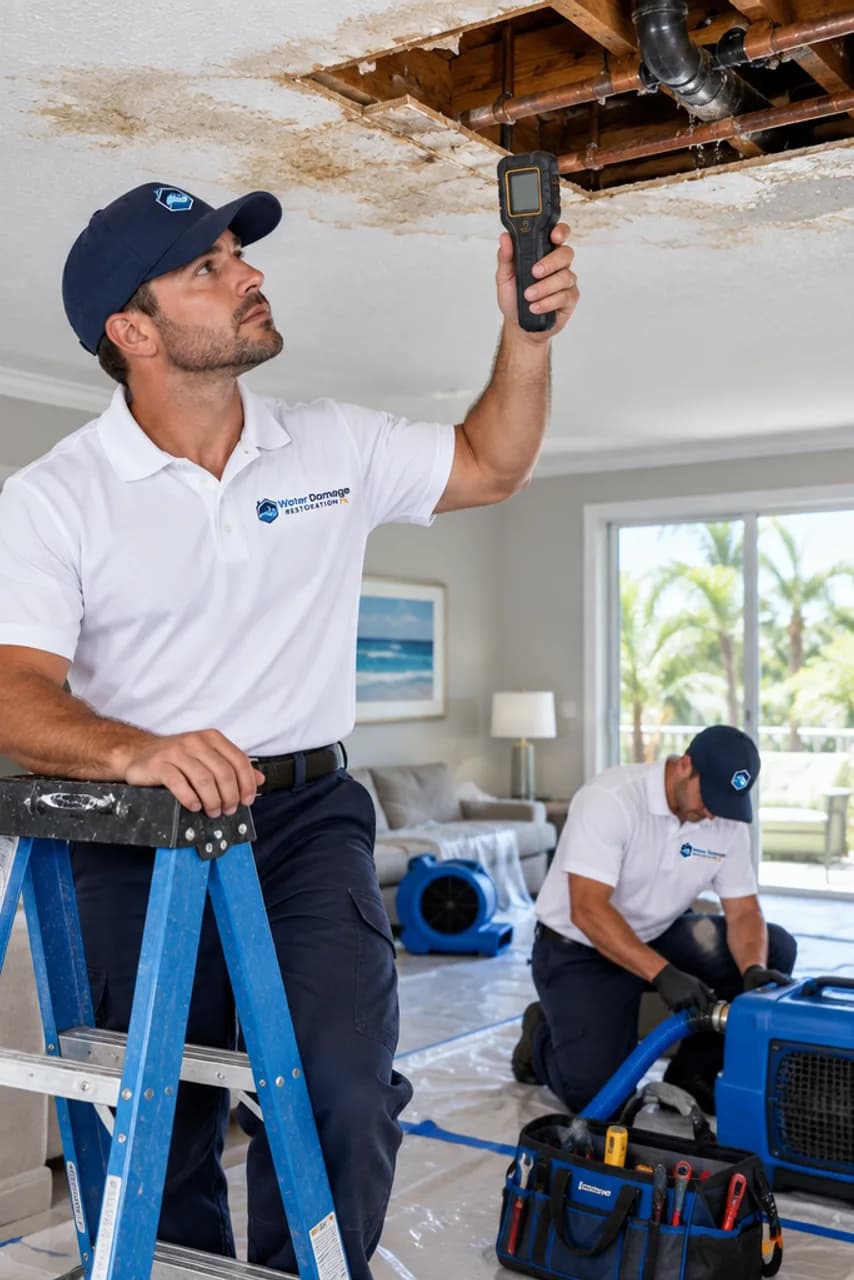
Restoration works from the source down:
- Identify where the water is coming from with moisture meters and thermal imaging.
- Safely relieve trapped water in a bulging ceiling.
- Dry the ceiling, the cavity above, and any affected insulation.
- Remove drywall and insulation that are too damaged to save.
- Repair or replace the ceiling and refinish it.
Drying the space above the ceiling
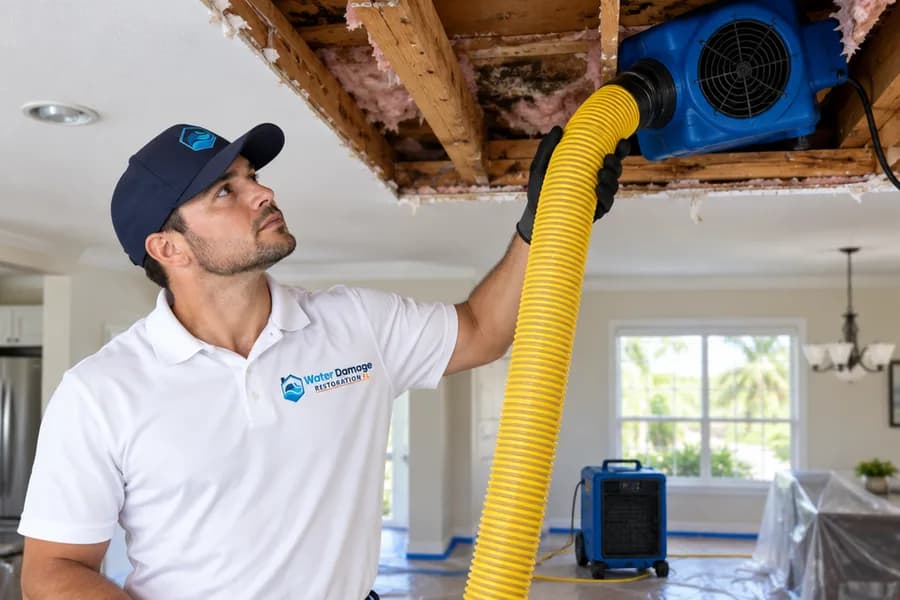
The ceiling is only the surface. Above it, the joist cavity, insulation, and the floor of the room above can all be wet. Drying just the visible ceiling leaves that hidden moisture to cause stains, sagging, and mold later.
Our technicians open and dry the cavity where needed and confirm with moisture readings, so the whole affected area is dry before the ceiling is repaired.
Ceiling water damage repair across Florida
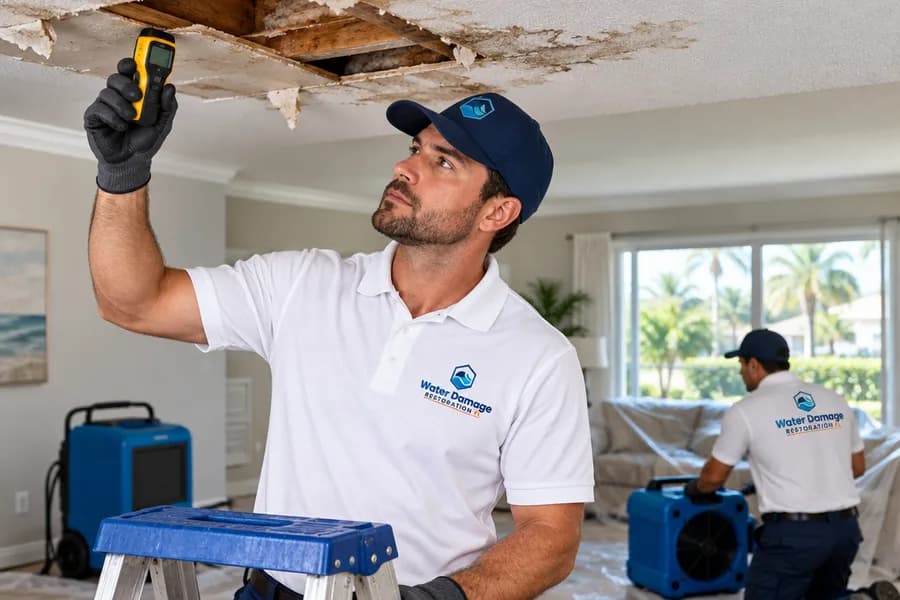
From stained ceilings to active drips and sagging drywall, our crews handle ceiling water damage across Florida — 24/7 for active leaks — finding the source, drying the structure, and restoring the ceiling.
More Leak / Plumbing-Related Water Damage services
- Burst Pipe Water Damage
- Broken Pipe Water Damage
- Water Heater Leak
- Appliance Water Damage
- Roof Leak Water Damage
Request this service
Tell us what happened and we'll follow up to confirm next steps.
Frequently asked questions
Yes. A bulging ceiling is holding water and can fail suddenly. Stay out from underneath it, move valuables from the area if safe, and call for help promptly so the trapped water can be relieved safely.
Water coming from above — a roof leak, a pipe or appliance on the floor above, or an overflowing bathroom. The stain is often the first visible sign of a leak that started out of sight, so the source needs to be found.
Not reliably. Painting hides the stain but leaves any trapped moisture and possible mold behind, and the stain often bleeds back through. The area needs to be dried, and damaged drywall repaired, before refinishing.
Yes. We use moisture meters and thermal imaging to trace the water to its source and to the full extent above the ceiling, so the repair addresses the cause and not just the symptom.
Not always, but it's possible if the leak was ongoing. Damp ceiling drywall and insulation can grow mold within days. We check for it and address any we find during the drying and repairs.
Still have a question? Call us at (904) 555-0100