
Flooded Basement Water Removal in Florida
Flooded basement water removal is the pumping out and clearing of water from a flooded basement. Our our crews use submersible pumps and extractors to remove the water fast, then dry the space — because a flooded basement soaks framing, subfloor, and stored belongings the longer it sits.
What to expect during a basement pump-out
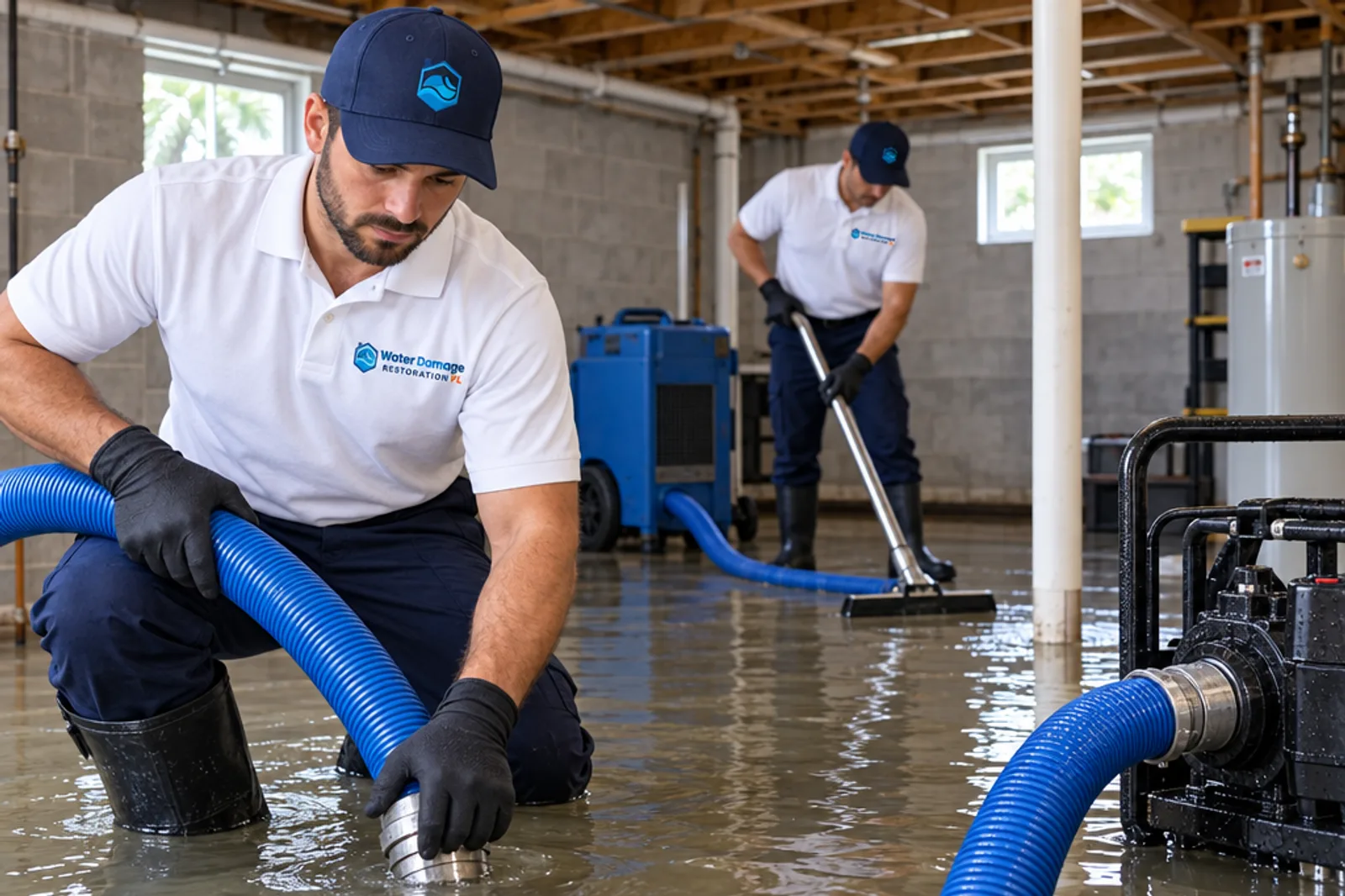
A flooded basement pump-out is a bigger operation than clearing a wet room upstairs, and knowing how it unfolds helps set expectations for the day. It's a sequence built around volume, contamination, and the enclosed nature of the space.
The crew first assesses safety — standing basement water often sits near electrical sources and may be contaminated — then uses submersible pumps to move the deep water out quickly. Extractors and wet vacuums clear what the pumps leave behind, and any mud, debris, or contaminated porous materials are removed. Because basements are enclosed and humid, powerful dehumidification is set up alongside air movers, and the framing, subfloor, and lower walls are checked with moisture meters. The pump-out is the visible, urgent part; the thorough drying that follows is what actually returns the basement to normal.
The equipment a flooded basement demands
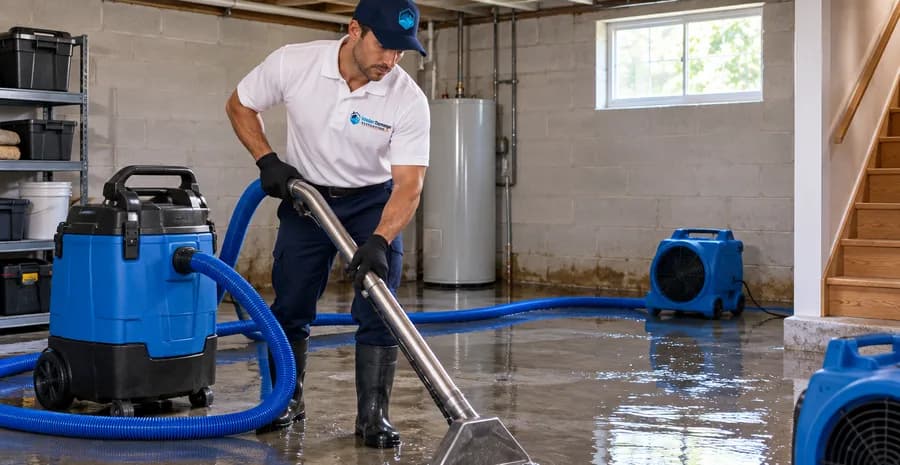
A flooded basement is a different challenge from a wet room upstairs. It often holds a large volume of deep standing water, it's enclosed, and it's the lowest point in the building, so the water has nowhere to drain on its own. That combination calls for equipment built for volume and depth.
Clearing one effectively usually means bringing several tools to bear:
- Submersible pumps to move deep standing water out quickly.
- Truck-mounted and portable extractors for the water pumps leave behind.
- Wet vacuums for detailing along walls and in corners.
- Commercial dehumidifiers to fight the high humidity of an enclosed space.
- Moisture meters to check framing, subfloor, and lower walls for absorbed water.
Why flooded basements are urgent
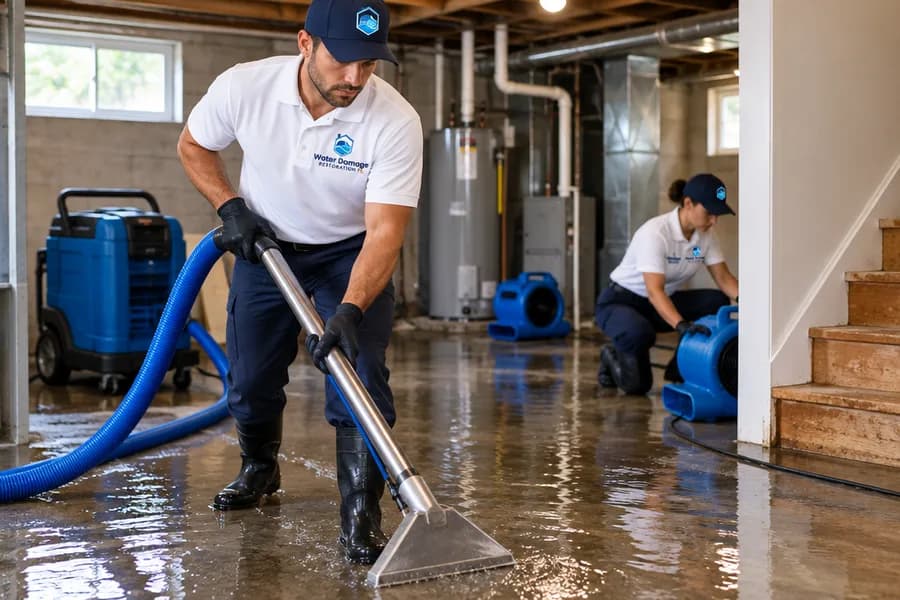
A basement is the lowest point in a building, so it's where water collects and where standing water does the most hidden harm. Water there soaks into framing, insulation, and subfloor, and creates the damp, dark, still conditions mold needs. Basements also often hold stored belongings that are at immediate risk.
Because of all that, a flooded basement is one of the situations where fast water removal matters most.
How we pump out a flooded basement
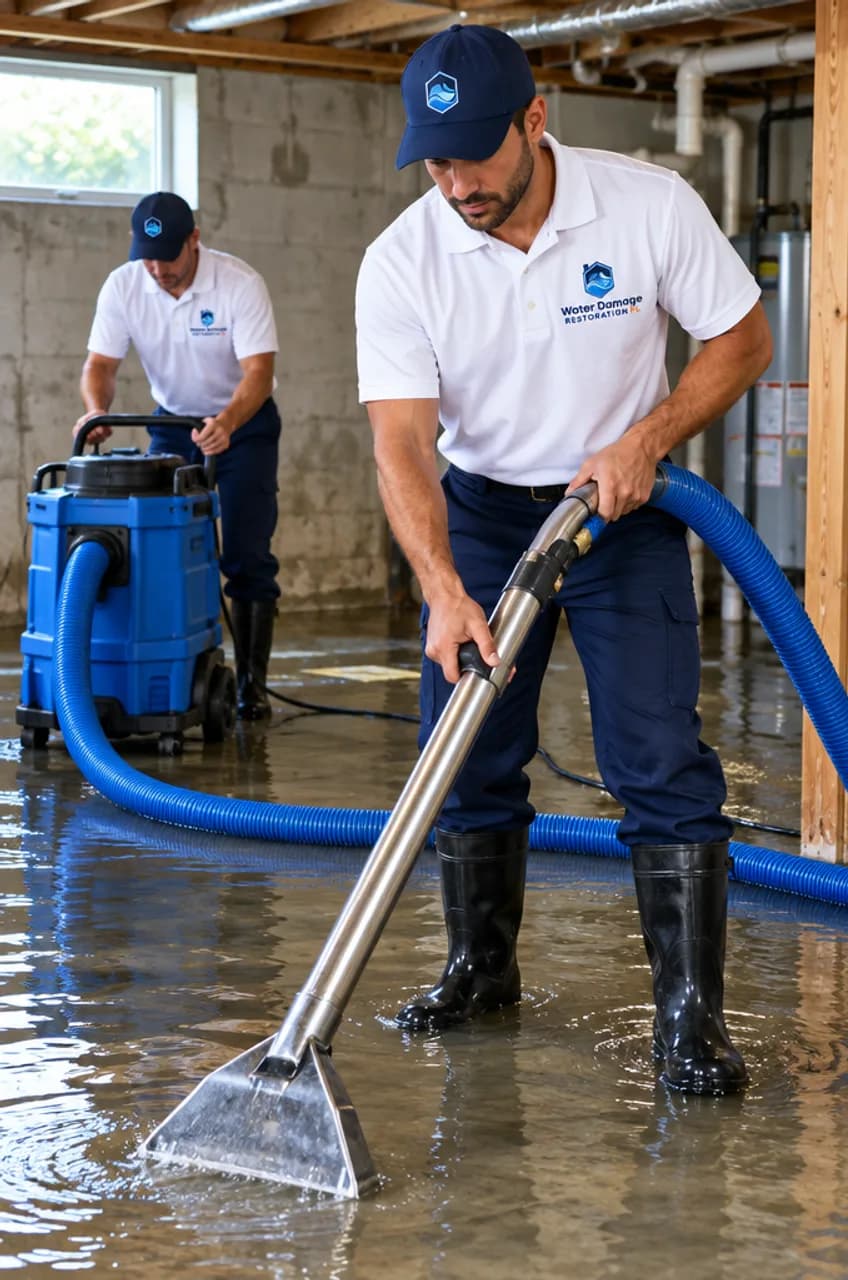
Removing basement water safely and quickly takes the right equipment and sequence:
- Submersible pumps to move deep standing water out fast.
- Truck-mounted and portable extractors for the water pumps leave behind.
- Wet vacuums for detail work along walls and in corners.
- Moisture meters to check framing, subfloor, and lower walls for absorbed water.
Common causes of basement flooding
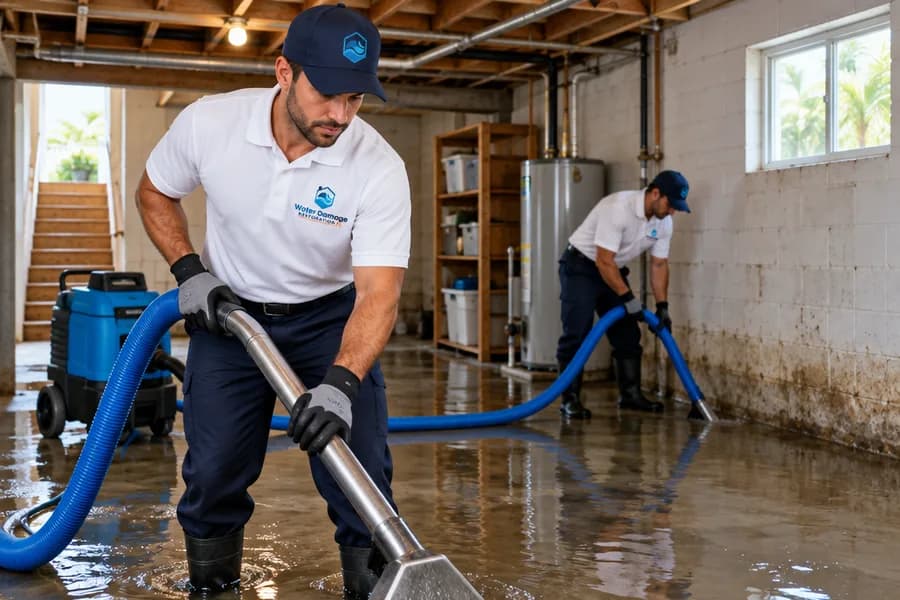
Basement flooding in communities across Florida comes from a range of sources, and the cause affects how contaminated the water is:
- Heavy rain and storm water entering through walls or windows.
- Sump pump failures during a storm.
- Burst pipes and failed water heaters located in the basement.
- Sewer and drain backups, which bring contaminated black water.
- Foundation seepage and hydrostatic pressure after prolonged rain.
Watching for contaminated water
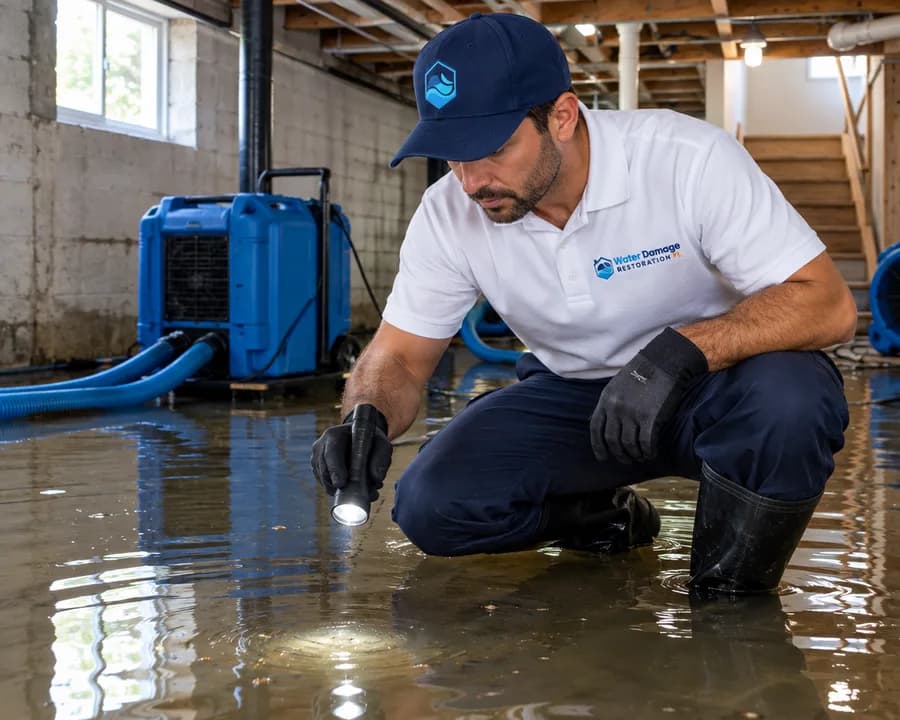
Basement flood water is often contaminated — especially when it comes from storm runoff or a sewer backup. Our technicians identify the water category before removal so it's handled safely, with protective equipment and proper disposal of porous materials that soaked it up.
Contaminated water is never simply dried in place, and belongings soaked by black water are documented and, where necessary, discarded rather than salvaged unsafely.
Drying the basement after removal
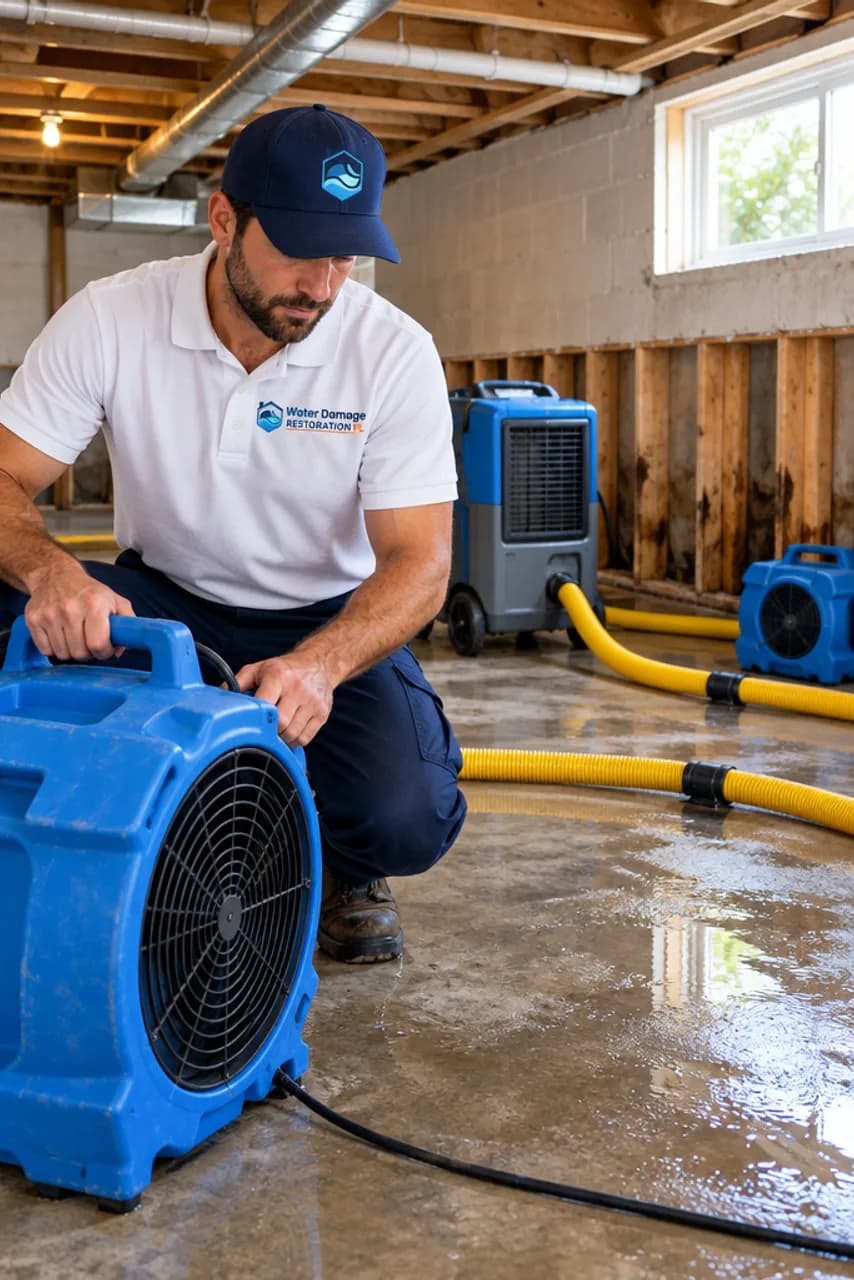
Pumping out the water is only the start. Basements dry slowly because they're enclosed, humid, and full of moisture-holding materials, so thorough drying with dehumidifiers and air movers is essential. We keep the equipment running until moisture readings in the framing, subfloor, and walls reach their targets, so the basement is genuinely dry rather than just emptied of standing water.
More Water Extraction & Removal services
View all Water Extraction & Removal servicesRequest this service
Tell us what happened and we'll follow up to confirm next steps.
Frequently asked questions
We use submersible pumps to move the deep standing water out fast, then extractors and wet vacuums for what remains. After removal, dehumidifiers and air movers dry the framing, subfloor, and walls.
Often, yes — especially when it comes from storm runoff or a sewer backup. We identify the water category first and handle contaminated water safely, with protective equipment and proper disposal of soaked porous materials.
Basements dry slowly because they're enclosed and humid, so drying often takes several days to a week or more. We dry to moisture targets rather than a fixed schedule, monitoring until materials are genuinely dry.
It depends on the material and the water. Hard, non-porous items can usually be cleaned. Porous items soaked by contaminated water often can't be saved safely. We document everything and advise honestly.
Removal and drying address the current flood, but preventing another one may require fixing the source — a failed sump pump, a plumbing issue, or drainage and seepage problems. We'll point out what we see.
Still have a question? Call us at (904) 555-0100