Toilet Overflow Cleanup in Florida
Toilet overflow cleanup is the cleaning and sanitizing of an area after a toilet overflows. Our our crews handle it based on the water involved — clean overflow water is straightforward, but any overflow containing waste is treated as contaminated black water requiring disinfection.
Checking for damage the overflow left behind
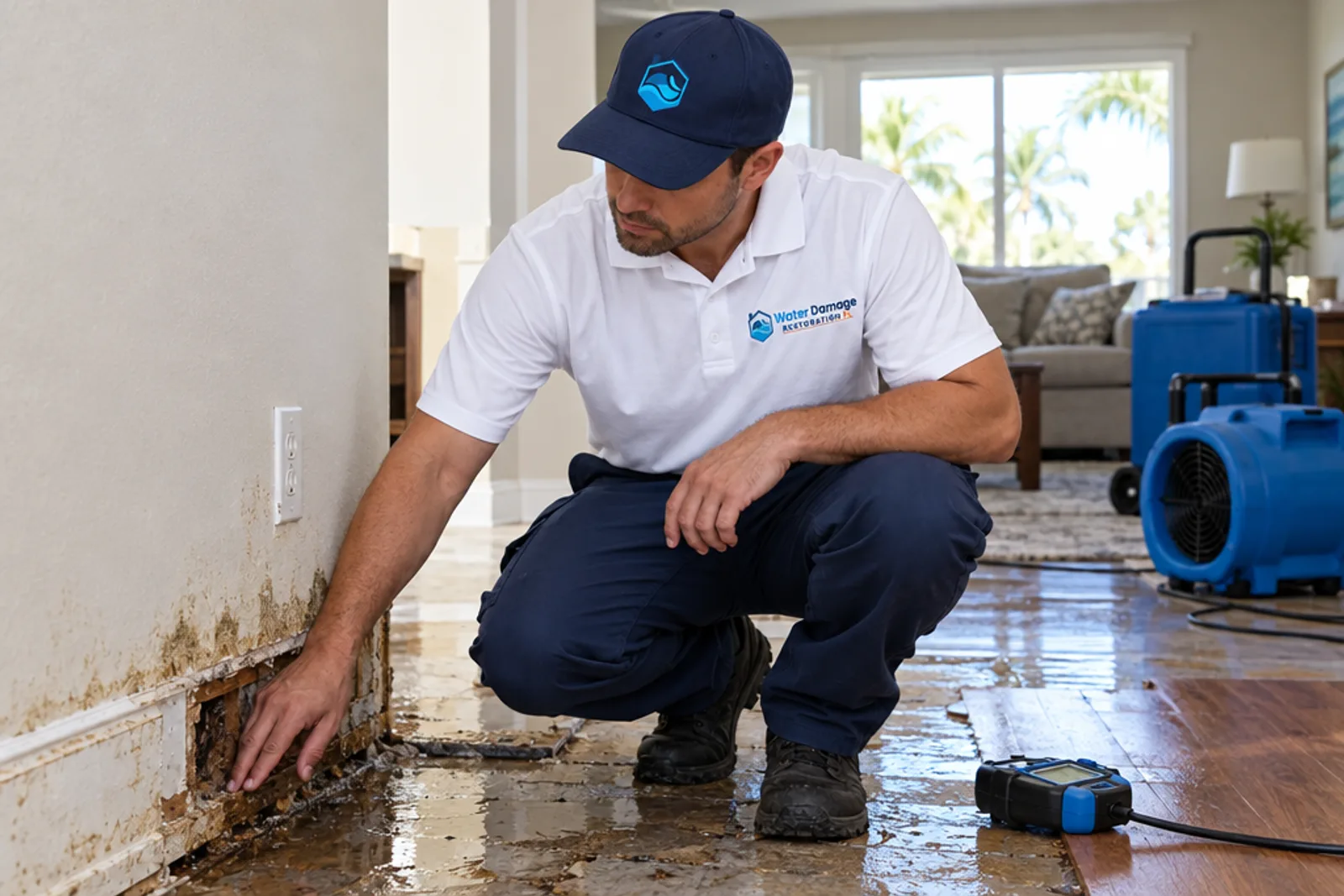
A toilet overflow often spreads further than it first appears, so part of a proper cleanup is checking where the water went beyond the visible puddle. The bathroom floor is just the starting point.
Overflow water runs across the floor and can seep under tile or vinyl, into the subfloor, and out into adjacent rooms through the doorway. On an upper floor, it can travel down to the ceiling below. Our technicians check the surrounding materials with moisture meters to find water that soaked in out of sight, because a floor that feels dry on top can hide a wet subfloor. Finding and drying that hidden moisture is what prevents the warping, staining, and mold that a quick surface mop-up would leave behind — especially when the overflow was contaminated.
Clean overflow or contaminated? Why it matters
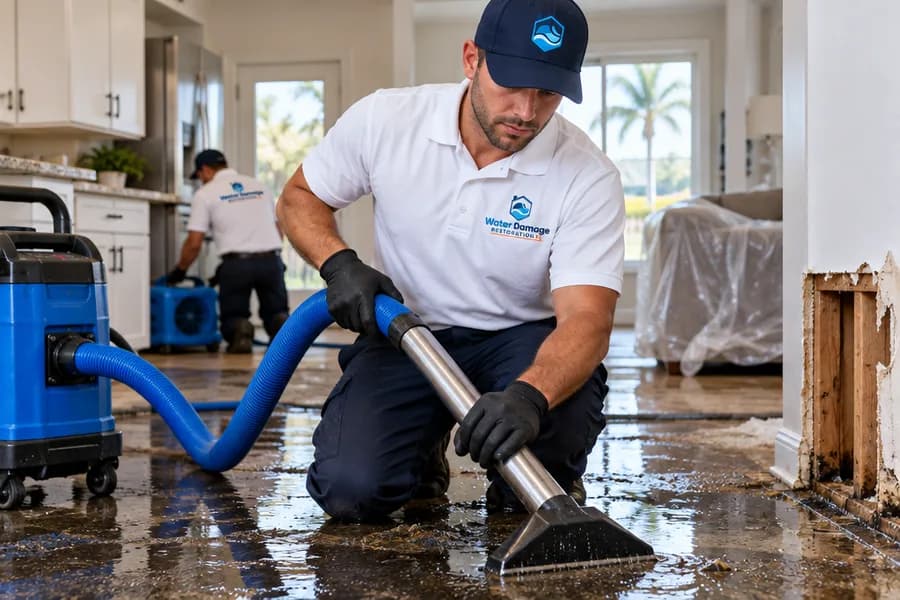
The first thing that shapes a toilet overflow cleanup is what actually overflowed. A clean-water overflow from the supply side — the tank or fill line — is Category 1 and relatively simple to handle. But an overflow that contains waste, or one pushed up by a sewer backup, is Category 3 black water and a genuine health hazard.
That distinction changes everything downstream: the safety precautions, whether materials can be cleaned or must be removed, and whether disinfection and deodorizing are needed. Treating a contaminated overflow like a clean one is how pathogens and odor get left behind.
For that reason, our technicians identify the water type first and clean accordingly, rather than assuming every overflow is the same.
Not all toilet overflows are equal
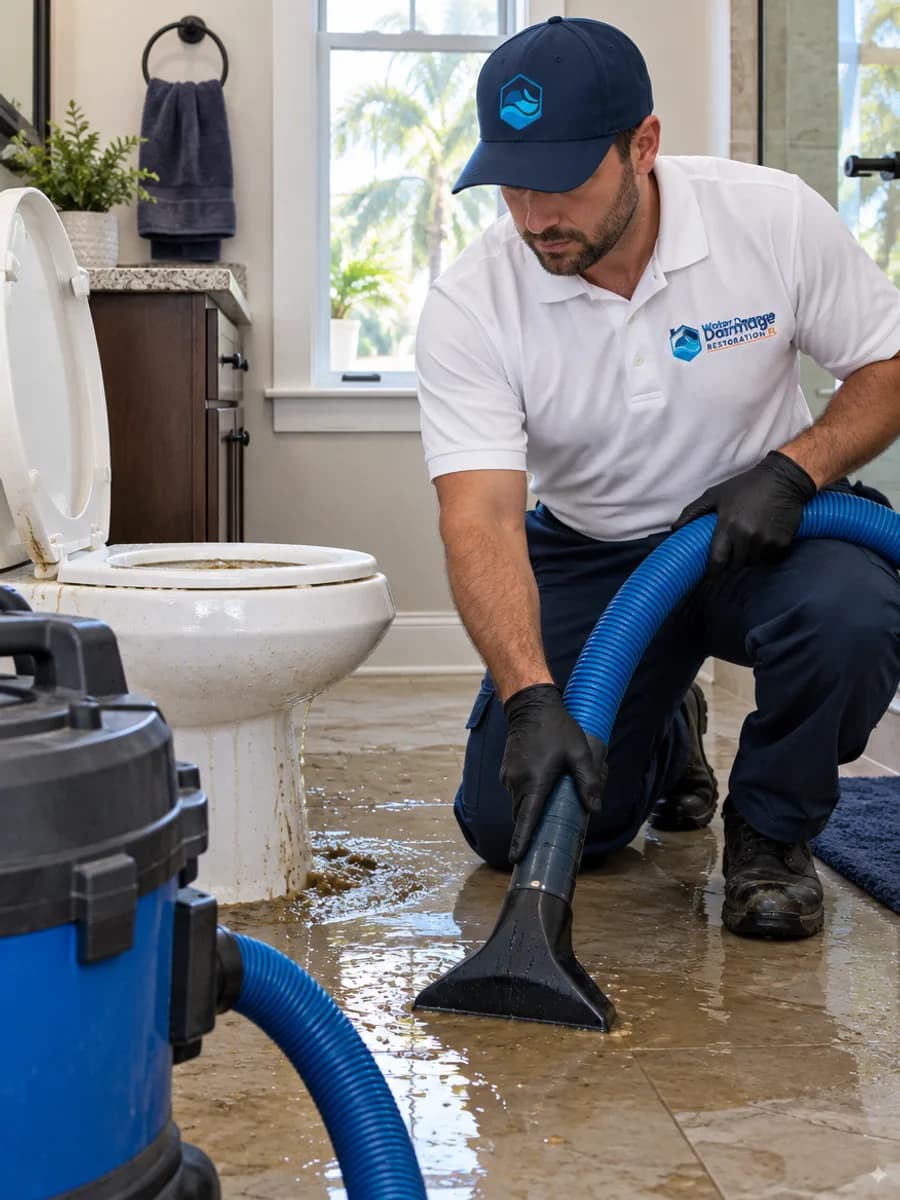
How a toilet overflow is handled depends entirely on what overflowed. A clean-water overflow from the supply side is Category 1 and relatively simple. But an overflow that contains waste, or one caused by a sewer backup, is Category 3 black water — a health hazard that requires the same careful, protected cleanup as any sewage spill.
Because the difference matters so much, our technicians identify the water type first and clean accordingly.
How we clean up a toilet overflow
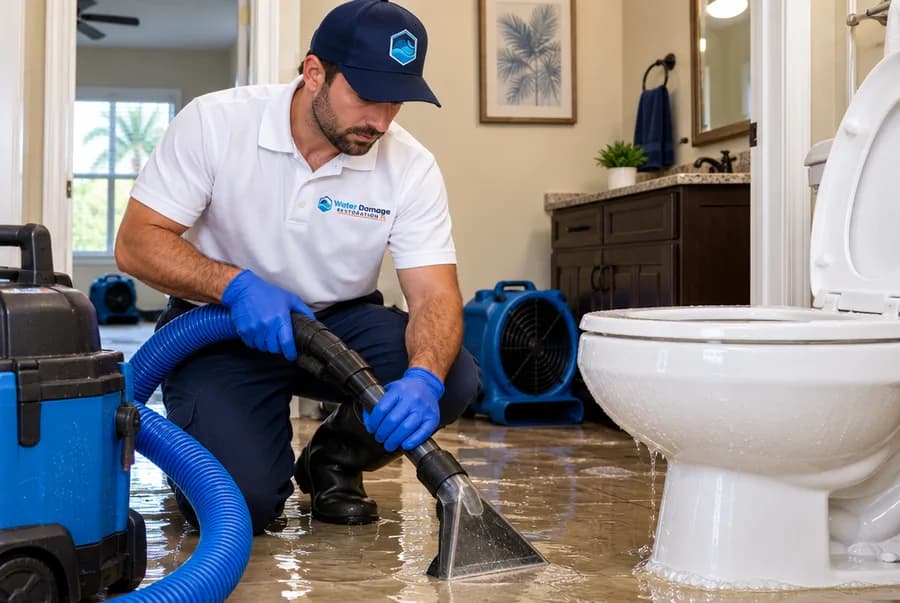
Cleanup adapts to the contamination level, but generally follows this path:
- Stop the water and contain the area.
- Remove the standing water and any waste.
- Remove porous materials soaked by contaminated water.
- Clean and disinfect hard surfaces, including the floor around the toilet.
- Dry the area and deodorize if needed.
Watching for hidden water damage
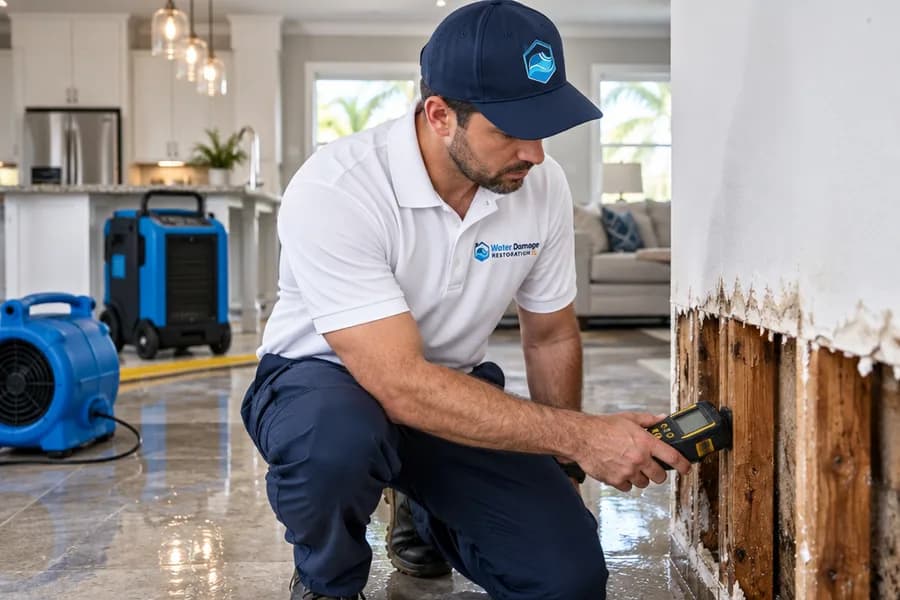
Toilet overflows often send water spreading across the bathroom floor and into adjacent rooms, where it can seep under flooring, into the subfloor, and through to the ceiling below on an upper floor. The visible water is frequently not the full extent.
Our technicians check surrounding materials with moisture meters so hidden water is found and dried, preventing the warping, staining, and mold that trapped moisture causes.
Sanitizing after a contaminated overflow
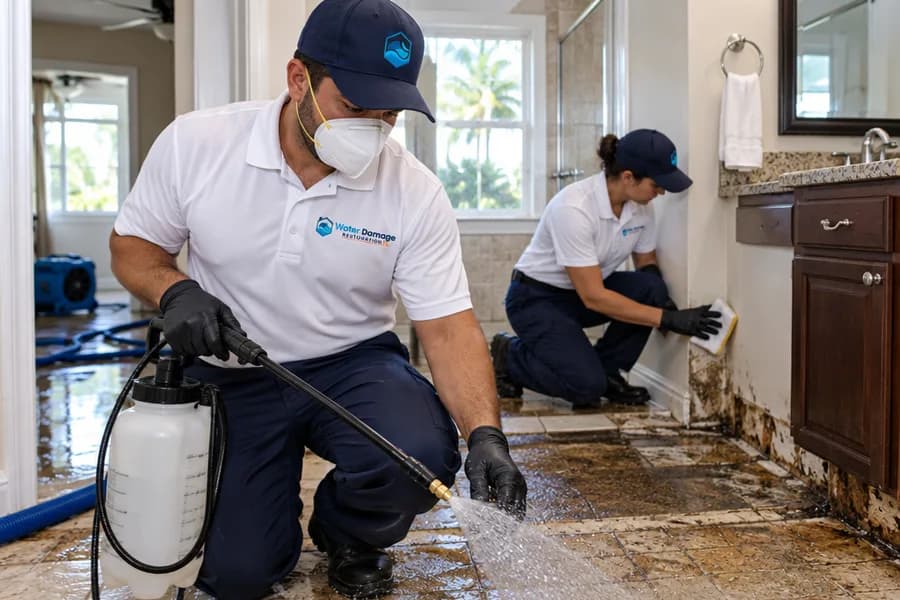
When the overflow contained waste, sanitizing is the critical step. Affected hard surfaces are cleaned and disinfected with antimicrobial products, contaminated porous materials are removed, and the area is deodorized to eliminate the smell at its source. Thorough drying follows to prevent mold across Florida's humidity.
For a clean-water overflow, the focus shifts to fast, complete drying to protect the flooring and subfloor.
Fast toilet overflow cleanup across Florida
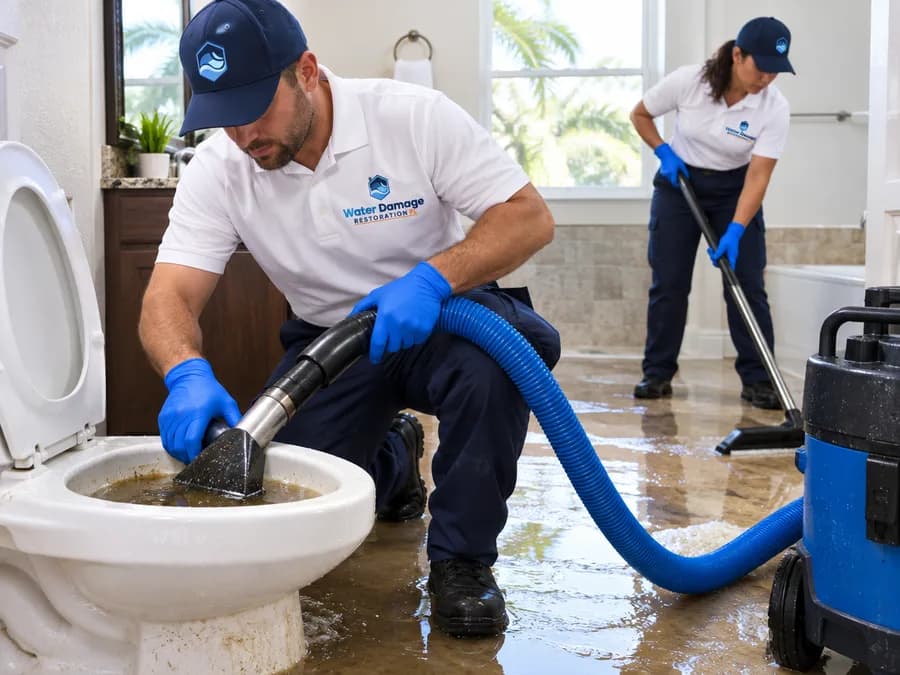
Whether it's a clean overflow or a contaminated one, prompt cleanup limits the damage and, when waste is involved, the health risk. Our crews respond across Florida — 24/7 when it's an emergency.
More Sewage Damage services
View all Sewage Damage servicesRequest this service
Tell us what happened and we'll follow up to confirm next steps.
Frequently asked questions
For a clean-water overflow you caught immediately, careful DIY cleanup may be fine. But any overflow containing waste — or one from a sewer backup — is contaminated Category 3 water that should be handled with protective equipment and disinfection. And because overflow water often spreads under flooring out of sight, professional moisture checks help catch hidden damage.
It depends on the water. A clean-water overflow is low-risk, but any overflow containing waste — or one caused by a sewer backup — is Category 3 black water carrying pathogens and should be handled with protective equipment and disinfection.
Stop the water by turning off the supply valve behind the toilet, keep people away from contaminated water, and don't spread it around. For anything involving waste, call for professional cleanup rather than mopping it up yourself.
Yes. Overflow water can seep under flooring and into the subfloor, and on an upper floor it can reach the ceiling below. We check surrounding materials with moisture meters to find and dry hidden water.
Hard, sealed flooring can usually be cleaned and disinfected. Porous materials soaked by contaminated water may need removal. We assess the flooring and subfloor and advise on what can be saved.
After removing contamination and disinfecting, we deodorize to address the odor at its source, and thorough drying removes the moisture that would otherwise sustain the smell and encourage mold.
Still have a question? Call us at (904) 555-0100