Sewer Backup Cleanup in Florida
Sewer backup cleanup is the cleanup after a sewer line backup affects a home or building. Our our crews safely remove the contaminated water, disinfect, and dry the space — treating a sewer backup as the Category 3 black-water hazard it is.
How we contain a sewer backup
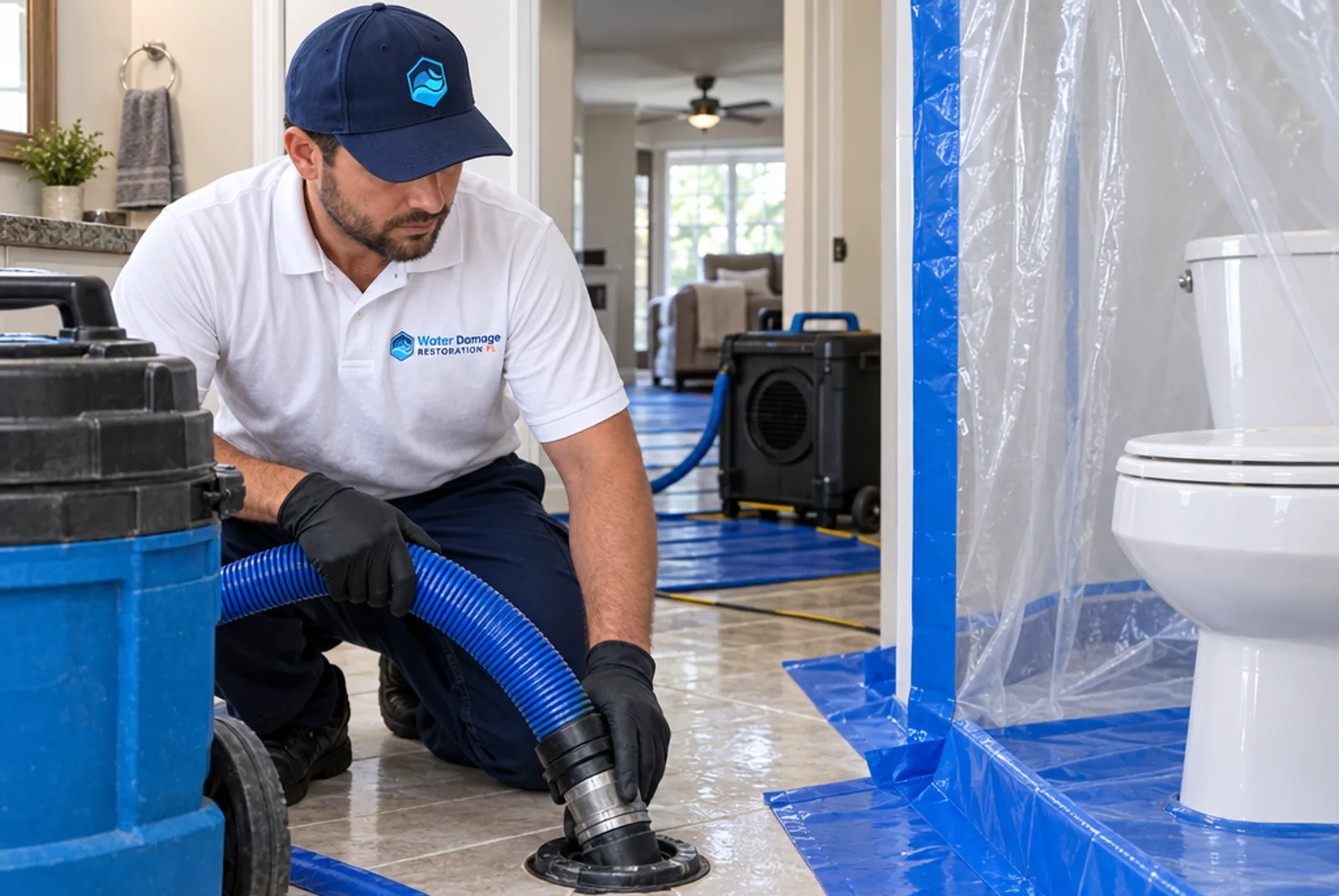
Containment is the first priority in a sewer backup, because the water is heavily contaminated and often affects a larger area than a single fixture. Stopping the spread protects the rest of the property and everyone in it.
Our crew seals off the affected area so contaminated water and airborne particles can't reach clean spaces, and works in protective equipment throughout. Because a sewer backup originates in the main line, it can affect several drains and rooms at once, so containment is paired with mapping how far the water and contamination traveled. Only within that contained, controlled zone is the water removed, materials taken out, and surfaces disinfected. This careful setup is what keeps a serious but localized hazard from becoming a whole-property contamination problem.
Getting rid of the odor after a sewer backup
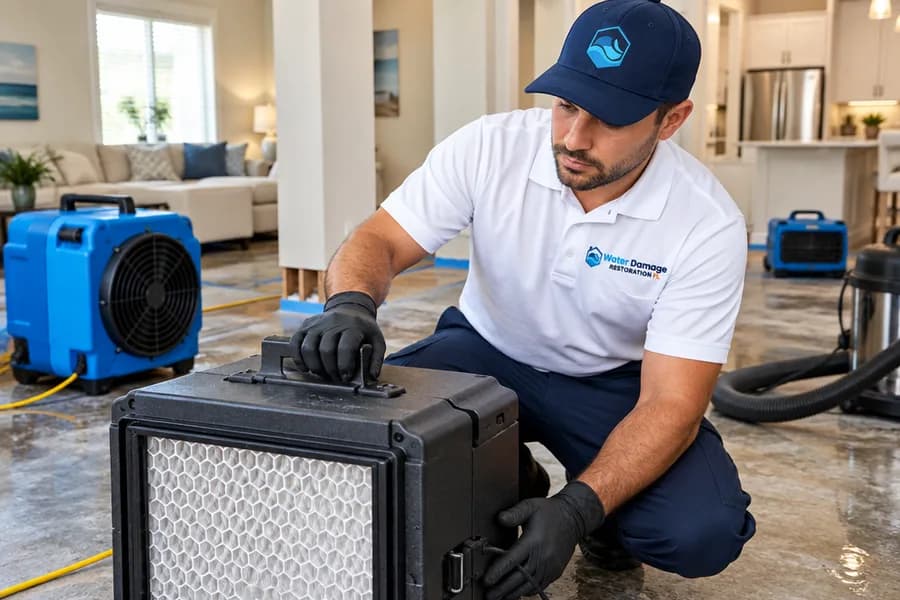
A sewer backup leaves behind a strong, persistent odor along with the contamination, and simply masking it doesn't work — the smell comes back until its source is gone. Effective odor removal is really about thorough cleanup: getting rid of the contaminated water and materials, disinfecting the surfaces, and drying everything completely.
Only once the source is addressed does deodorizing make sense. We treat the affected areas to neutralize odor rather than cover it, and because sewer smell tends to linger in porous materials, removing the contaminated ones is often the biggest single factor in clearing the air.
Thorough drying plays a part too, since leftover moisture across Florida's humidity sustains both odor and mold. A space that's been decontaminated, dried, and deodorized is one that no longer smells of the backup.
How a sewer line backup happens
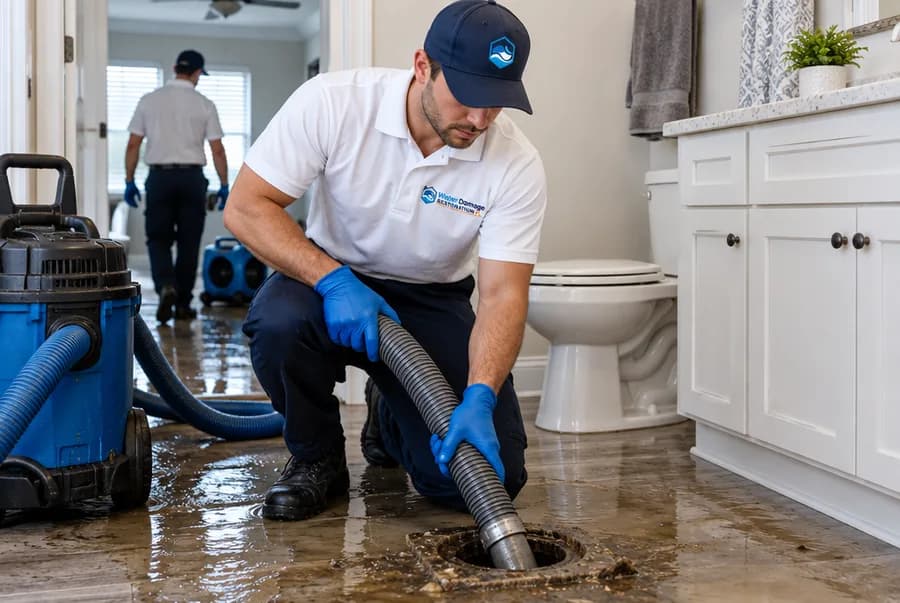
A sewer backup originates in the main sewer line rather than a single fixture, which often means a larger volume of contaminated water and multiple affected drains. Causes include line blockages, tree-root intrusion, collapsed or aging pipes, and overwhelmed municipal sewers during heavy Florida rain and storms.
Because it comes from the sewer, the water is heavily contaminated black water that requires professional, protected cleanup.
Our sewer backup cleanup steps
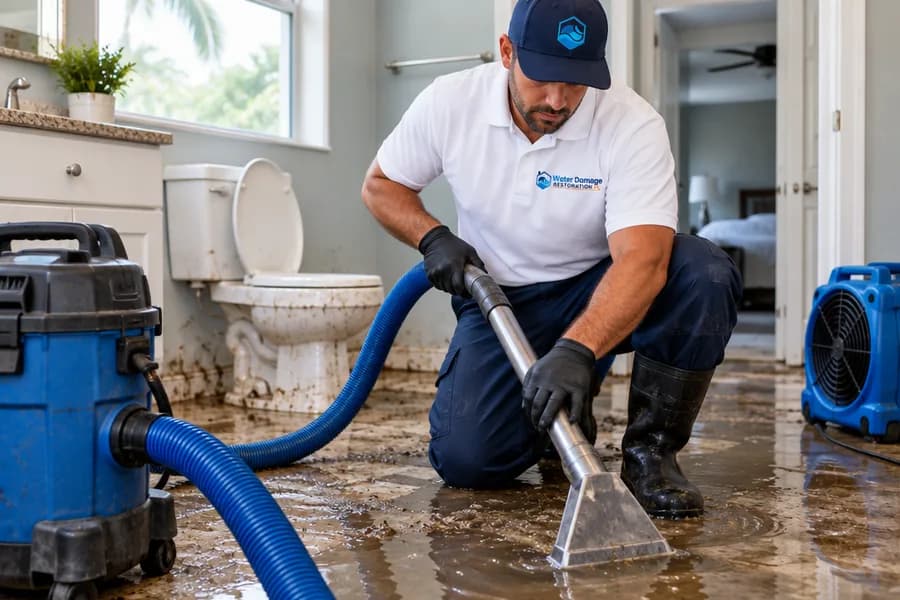
Cleanup is handled with safety and thoroughness as the priorities:
- Contain the affected area to prevent contamination from spreading.
- Remove contaminated water and solids from all affected areas.
- Remove porous materials that soaked up the black water.
- Clean and disinfect hard surfaces with antimicrobial products.
- Dry the structure and deodorize to eliminate the odor.
Why sewer backups spread widely
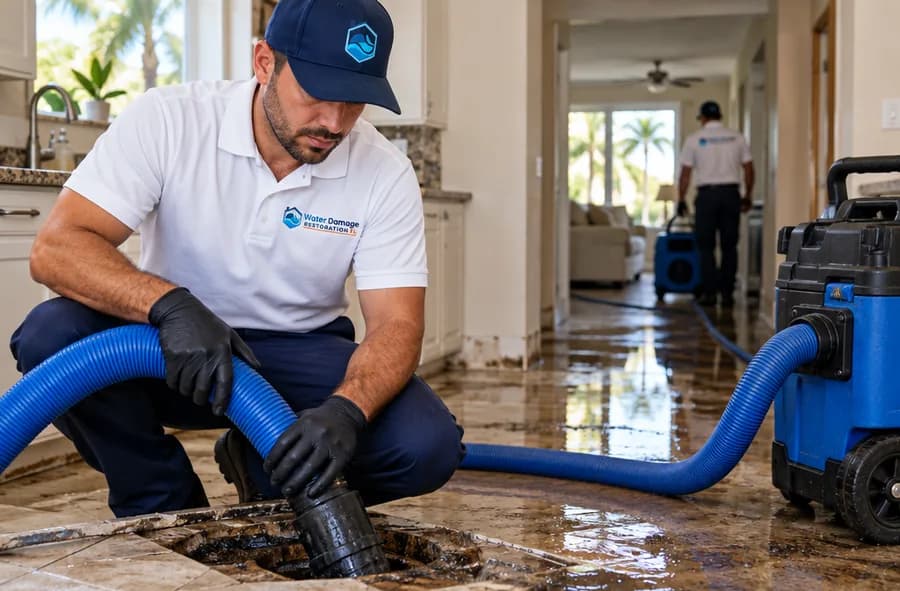
Because the backup starts in the main line, it can affect several fixtures and rooms at once, and the contaminated water travels along the path of least resistance — under flooring, into wall cavities, and across whole areas. That makes containment and thorough moisture mapping especially important.
Our technicians identify how far the contamination and water have traveled, so cleanup and disinfection reach everywhere they went, not just the obvious spots.
Decontaminating and drying the structure
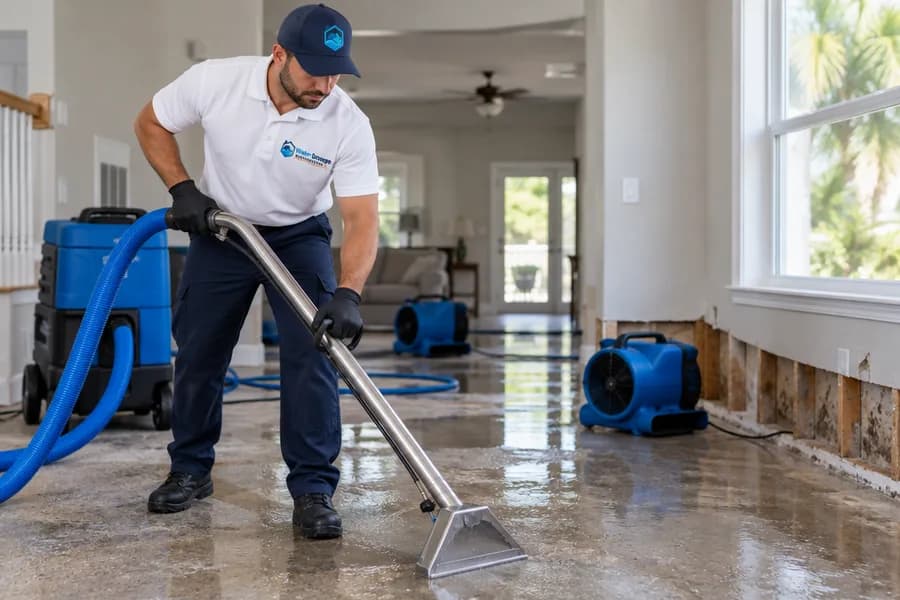
After removal, the affected surfaces are cleaned and disinfected, and the structure is dried with dehumidifiers and air movers until moisture readings reach their targets. Deodorizing addresses the strong sewer smell at its source. In Florida's humid climate, thorough drying is critical to prevent mold from developing on top of the contamination.
The aim is a fully decontaminated, dried, and deodorized space, ready for any repairs.
24/7 sewer backup response across Florida
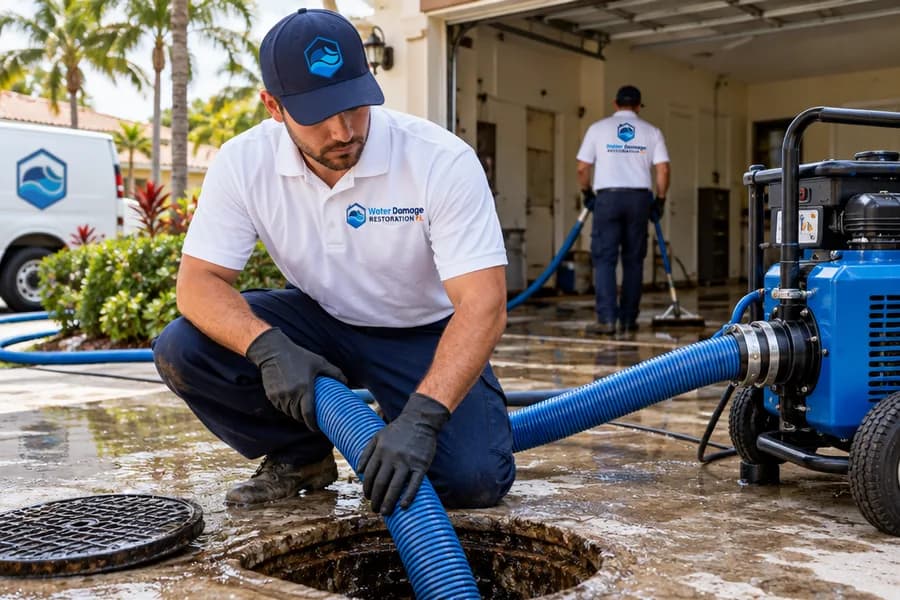
A sewer backup is an urgent health hazard, so our crews respond around the clock across Florida. Fast containment and removal limit how far the contamination spreads through the property.
More Sewage Damage services
View all Sewage Damage servicesRequest this service
Tell us what happened and we'll follow up to confirm next steps.
Frequently asked questions
The terms overlap. A sewer backup usually refers to contamination originating in the main sewer line, which can affect multiple fixtures and larger areas, while a sewage backup can describe any contaminated wastewater entering the property. Both are Category 3 hazards handled the same careful way.
It depends on where the blockage originates. A problem in your private lateral line is typically the property owner's responsibility, while one in the municipal main may involve the city. The cleanup itself requires professional handling regardless.
Sewer water is Category 3 black water containing bacteria and pathogens that can cause illness. It should never be handled without protection and disinfection, which is why professional cleanup is strongly recommended.
It depends on how far the contamination spread and how much material must be removed and dried. Cleanup and disinfection may take a day or more, with drying continuing for several days. We give a realistic timeline after assessing the property.
Many policies exclude sewer backup unless you carry a specific backup endorsement. Coverage varies and is determined by your insurer; we document thoroughly to support your claim.
Still have a question? Call us at (904) 555-0100