Appliance Water Damage in Florida
Appliance water damage restoration handles leaks from washing machines, dishwashers, refrigerators, and similar appliances. Our our crews extract the water, dry the surrounding structure, and repair the damage — including the hidden moisture appliances often leave behind cabinets and floors.
Why appliance leaks often go undetected
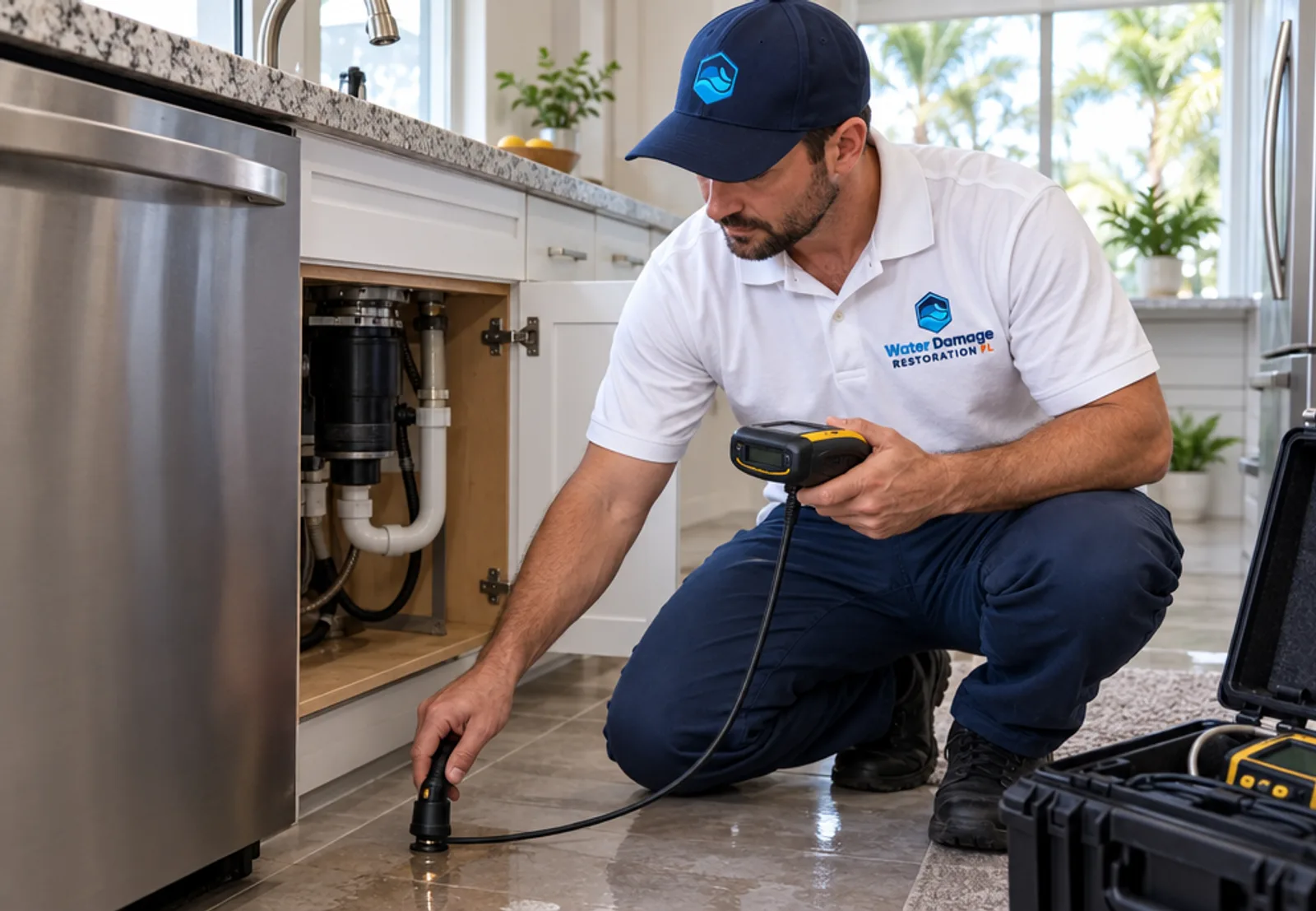
One of the trickiest things about appliance leaks is how long they can hide. Appliances sit flush against walls and under counters, so a slow leak drips into a space no one sees until the damage works its way out.
A refrigerator's ice-maker line or a dishwasher can seep quietly for weeks or months, soaking the subfloor and the base of the cabinets before a soft spot in the floor, a warped cabinet, or a musty smell finally gives it away. By then the moisture has usually spread beyond the appliance itself. This is why a small puddle or a faint odor near an appliance is worth investigating promptly — the visible sign is often the last symptom of a problem that started out of sight, and catching it early keeps a minor repair from becoming a major one.
Reducing the risk of appliance leaks
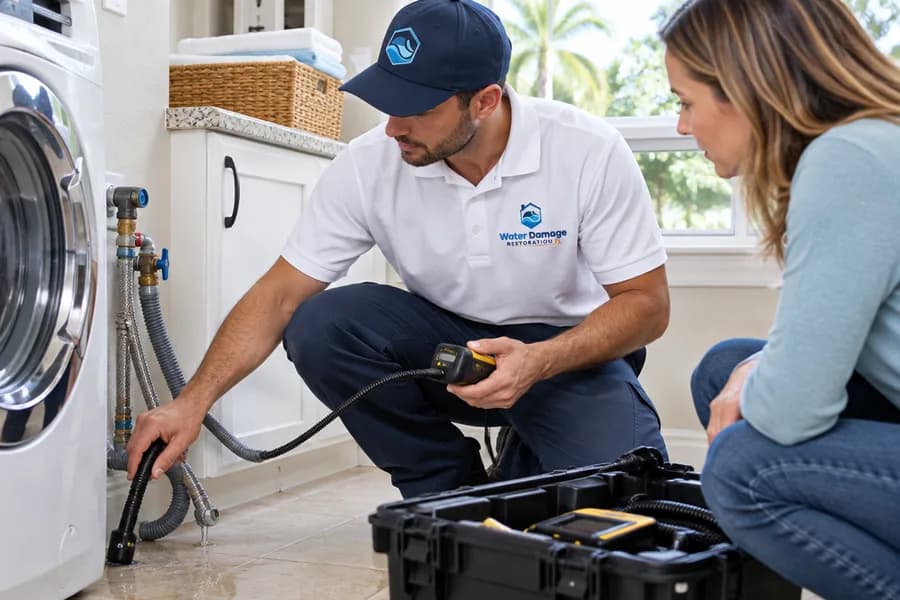
Appliance leaks are among the more preventable sources of water damage, because the failure points are usually known and checkable. Most start at a hose, a connection, or a drain line that wears out, loosens, or clogs over time.
A little routine attention goes a long way:
- Replace rubber washing-machine supply hoses with braided stainless steel, and swap them every few years.
- Check under sinks, dishwashers, and refrigerators periodically for dampness or corrosion.
- Keep an eye on refrigerator ice-maker and water lines, a common slow-leak source.
- Don't ignore a small puddle or a musty smell near an appliance.
Common appliance leaks
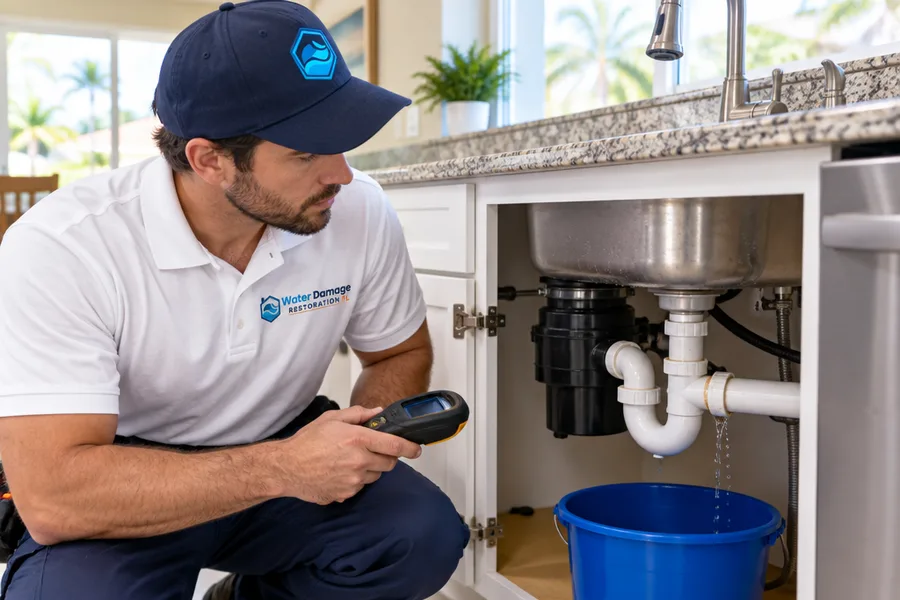
Household appliances are connected to water lines and drains, which makes them a frequent source of water damage. A supply hose ruptures behind a washing machine, a dishwasher leaks under the counter, a refrigerator's ice-maker line fails, or a drain backs up. Some releases are sudden; many are slow leaks that go unnoticed until the floor or cabinet shows damage.
Because appliances sit against walls and under counters, their leaks often spread into hidden areas before they're discovered.
Restoring appliance water damage
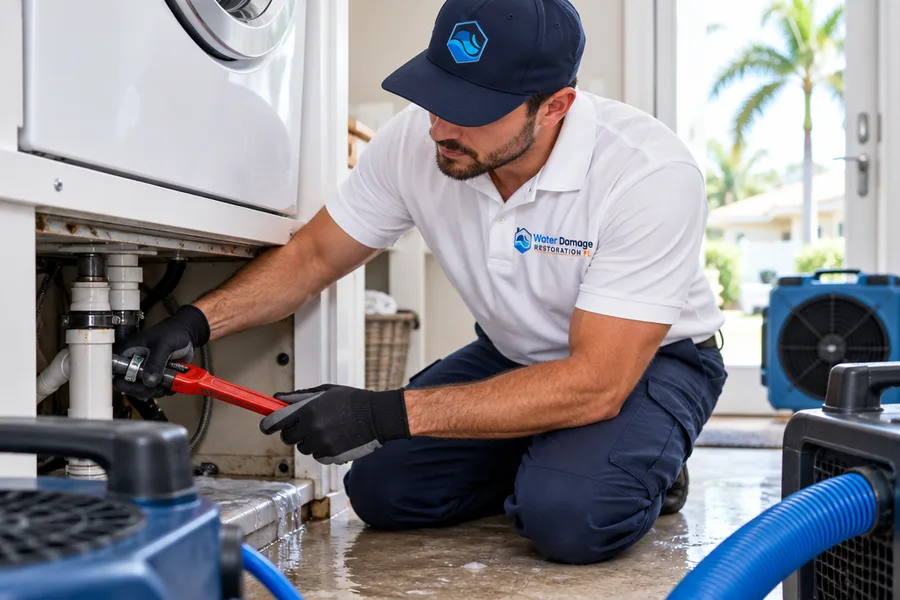
After the appliance and its water supply are shut off, restoration follows a clear path:
- Extract standing water from the affected area.
- Check behind and under the appliance, cabinets, and flooring for hidden moisture.
- Remove unsalvageable wet materials.
- Dry the structure with air movers and dehumidifiers.
- Repair damaged flooring, cabinets, and drywall.
The hidden damage behind appliances
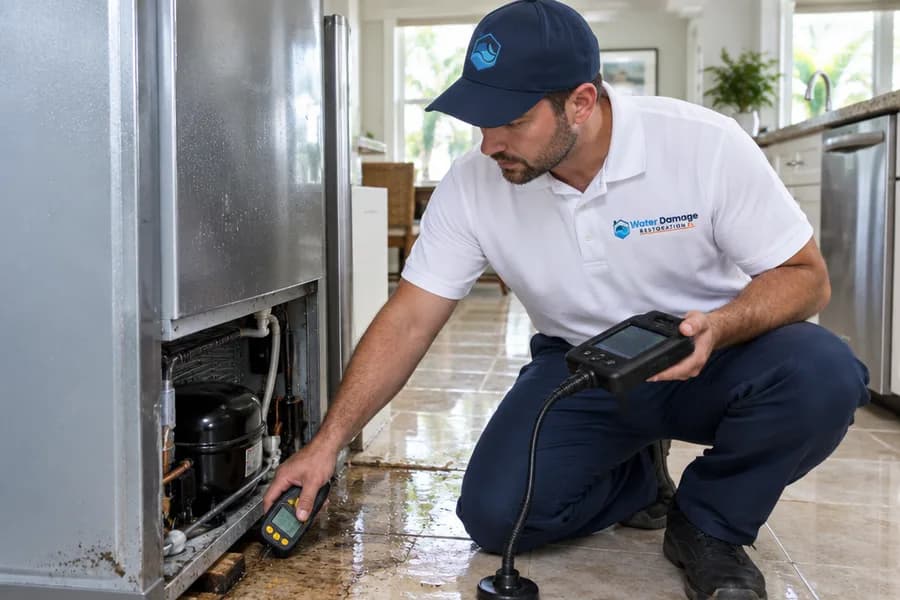
The trickiest part of an appliance leak is where the water goes. It runs under the appliance and adjacent cabinets, soaks the subfloor, and wicks into the lower drywall — all out of sight. A slow refrigerator or dishwasher leak can quietly damage the floor for months before anyone notices a soft spot or a smell.
Our technicians pull the moisture picture together with meters and thermal cameras, so drying and repairs address the full extent, not just the visible area.
Kitchens, laundry rooms, and what's underneath
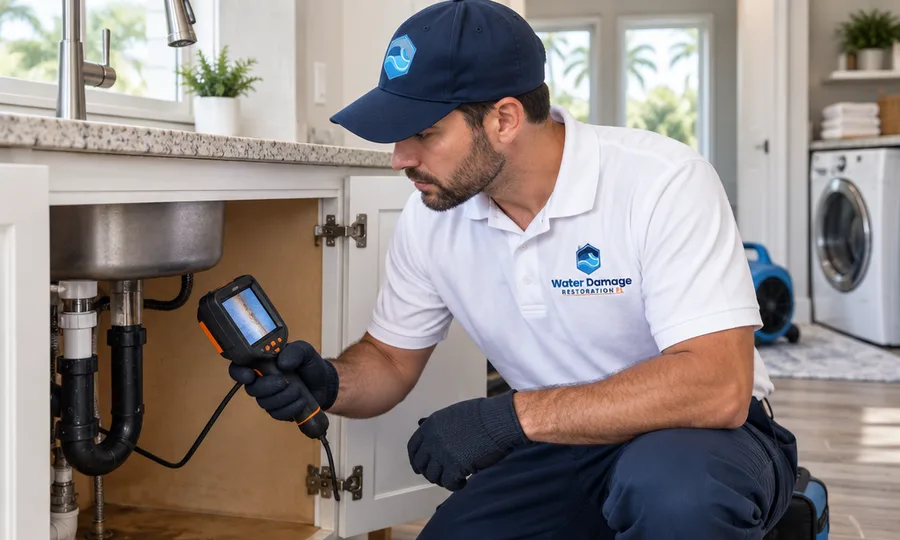
Kitchens and laundry rooms concentrate the risk because that's where the water-connected appliances live. Cabinets, countertops, and flooring in these rooms are the materials most often affected, and the cabinets themselves can trap moisture against the wall and floor.
We assess what can be dried and saved versus what needs replacing, and dry the subfloor beneath — the area most likely to be overlooked and most likely to cause lasting problems.
Appliance leak restoration across Florida
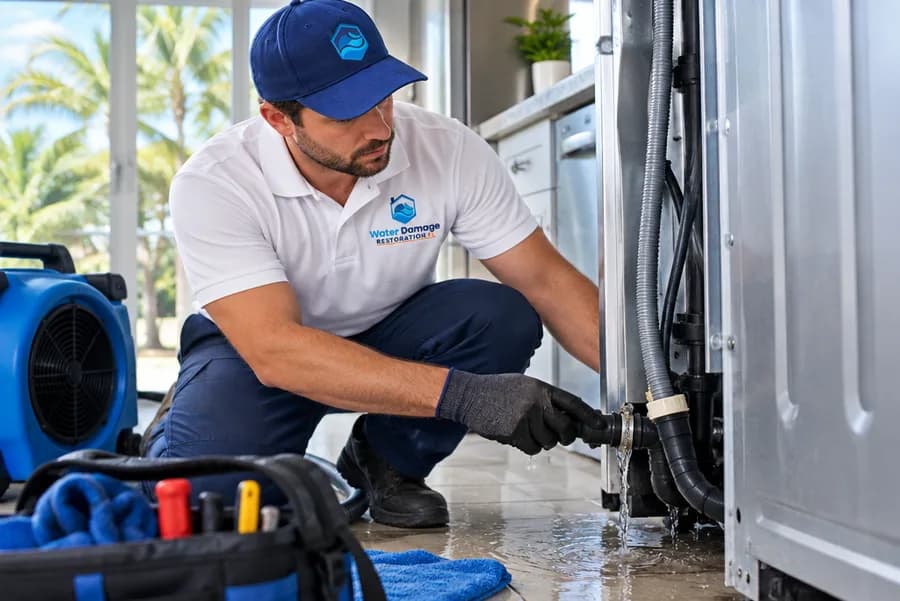
Whether it's a sudden hose burst or a slow leak you just found, our crews handle appliance water damage across Florida — responding 24/7 when it's an active emergency.
More Leak / Plumbing-Related Water Damage services
- Burst Pipe Water Damage
- Broken Pipe Water Damage
- Water Heater Leak
- Ceiling Water Damage
- Roof Leak Water Damage
Request this service
Tell us what happened and we'll follow up to confirm next steps.
Frequently asked questions
Washing machines (especially supply hoses), dishwashers, refrigerators with ice makers, and water heaters are the most common. Their water connections and drains can leak suddenly or slowly.
Watch for water or discoloration around or under the appliance, a soft or warped floor nearby, a musty smell, or warped cabinet bases. Slow leaks are often found only when the damage shows.
Sudden, accidental leaks are often covered, while gradual leaks that were neglected may be excluded as maintenance. Your insurer decides; we document the loss thoroughly to support your claim.
Yes. Appliance leaks often soak the subfloor and lower cabinets out of sight. We locate that hidden moisture with meters and thermal cameras and dry those areas so nothing is left to cause damage later.
Yes. A slow leak trapped under an appliance or cabinet can stay wet for a long time and grow mold. If we find mold, we address it alongside the drying and repairs.
Still have a question? Call us at (904) 555-0100