Structural Drying in Florida
Structural drying is the controlled drying of walls, subfloors, and framing to prevent lasting damage after water intrusion. Our our crews dry the building's structure — not just its surfaces — to measured moisture targets, because trapped moisture in framing and subfloor causes the worst long-term problems.
Surface-dry vs. structurally dry
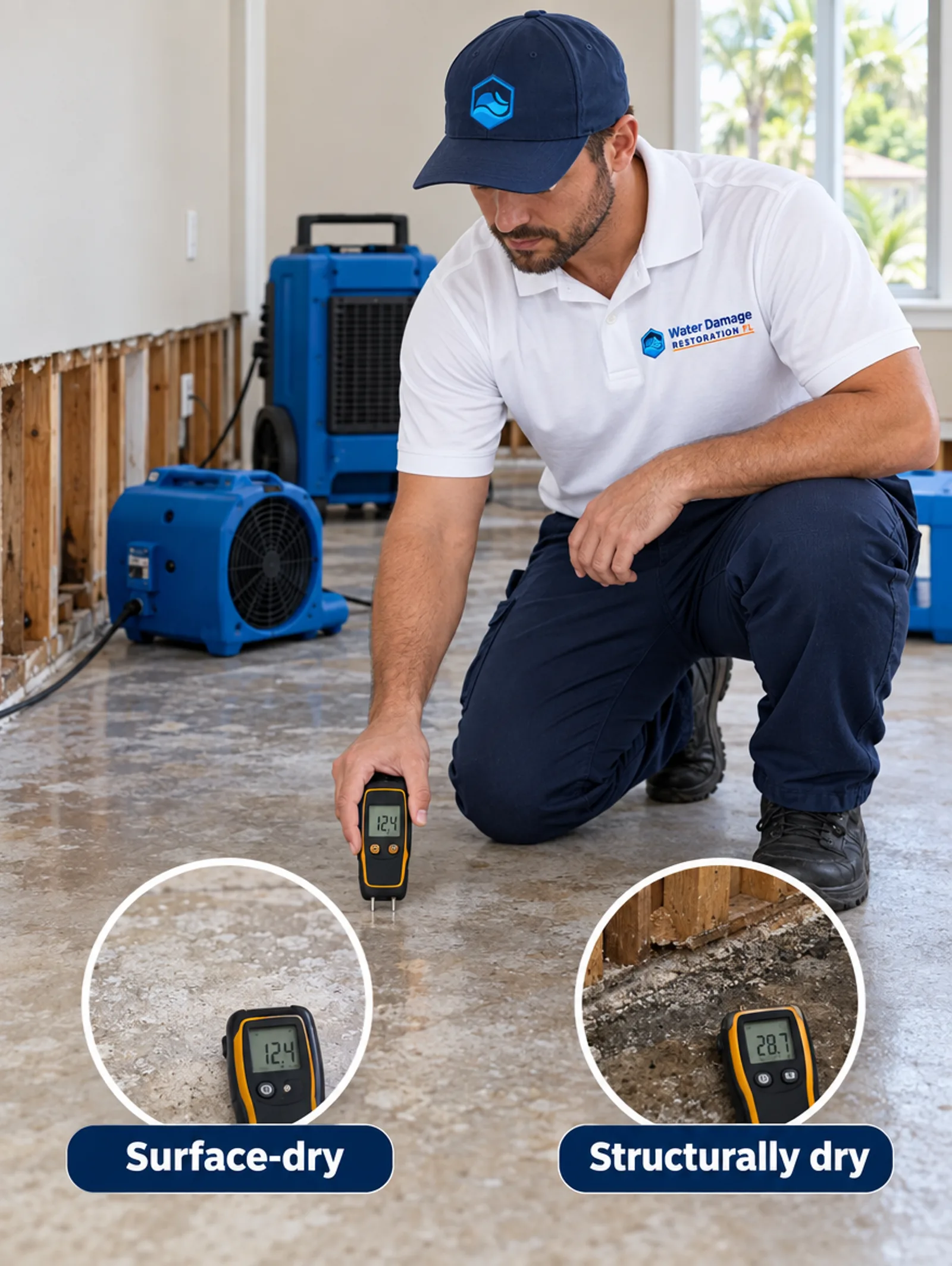
The distinction at the heart of structural drying is the gap between a surface that feels dry and a structure that actually is. Drywall can feel dry to the hand while the framing behind it and the subfloor beneath it still hold significant moisture — enough to warp wood, corrode fasteners, and grow mold over the following weeks.
Structural drying targets that hidden moisture specifically. Rather than trust how a surface feels, technicians measure the moisture content of the structural materials themselves and dry until those readings, not appearances, confirm the job is done. It's why a room that looks fine can still be actively drying, and why professional drying doesn't stop at the surface.
How long structural drying takes
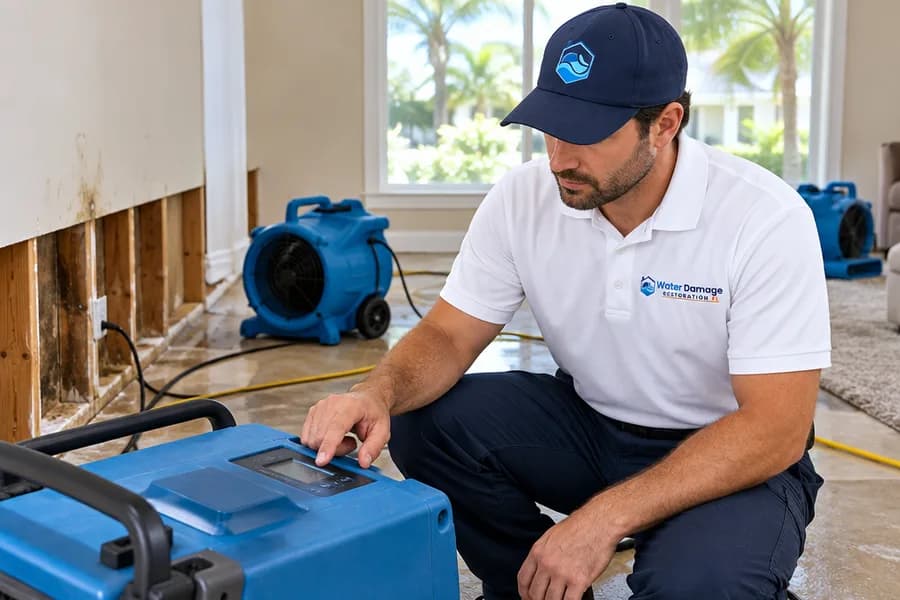
Most structural drying takes three to five days, but it's driven by conditions rather than a fixed schedule. How saturated the framing and subfloor are, which materials are involved, the size of the affected area, and the ambient humidity all affect the pace — dense materials like solid wood and concrete give up moisture slowly.
Rather than pull equipment on a set day, we work toward moisture targets and let the readings decide. Some materials reach their goal quickly while others in the same space take longer, so the drying continues until the slowest of them is genuinely dry.
That measured approach can feel slower than expected, but stopping early to save a day is exactly what leads to warping and mold weeks later. Drying to the target is what makes the result last.
What structural drying means
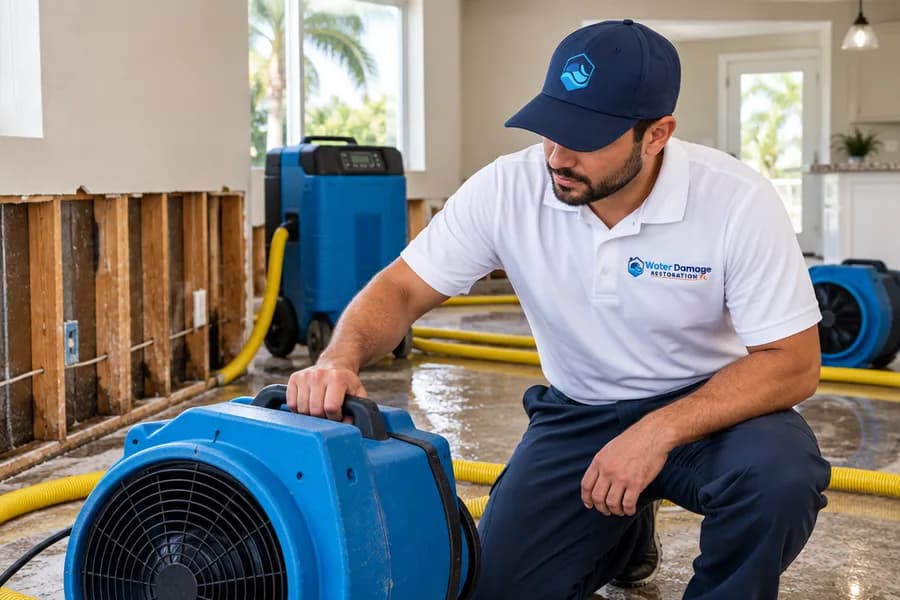
Structural drying targets the bones of the building: framing, sheathing, subfloor, and the wall cavities behind the finishes. These are the materials where trapped moisture does the most serious, lasting damage — rot, warping, and mold that undermines the structure itself.
It's a step beyond surface drying. The surface can look and feel dry while the structure behind it is still wet, which is exactly the situation structural drying is designed to resolve.
How we dry the structure
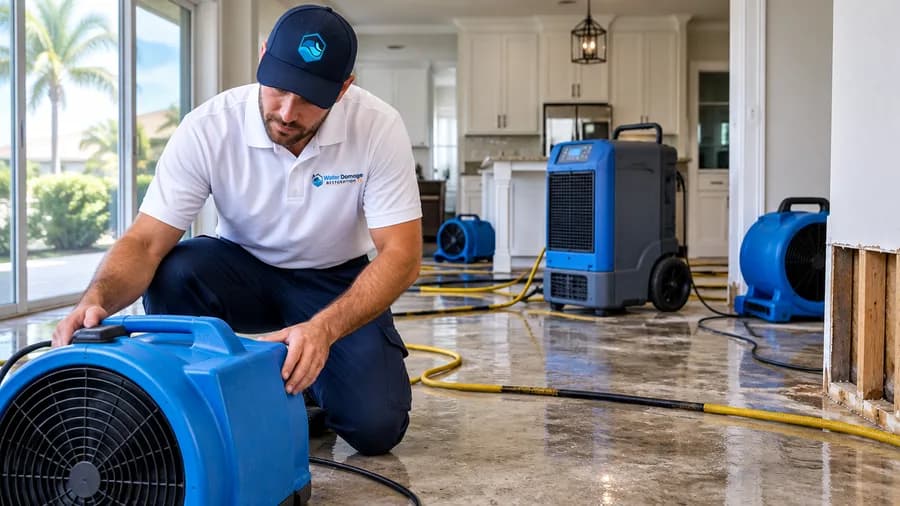
Drying the structure takes the right equipment placed strategically:
- Air movers positioned to sweep air across and into wet assemblies.
- Commercial dehumidifiers to pull the released moisture out of the air.
- Specialty systems to dry wall cavities and enclosed spaces directly.
- Moisture meters and thermal cameras to locate wet framing and confirm progress.
Drying inside walls and under floors
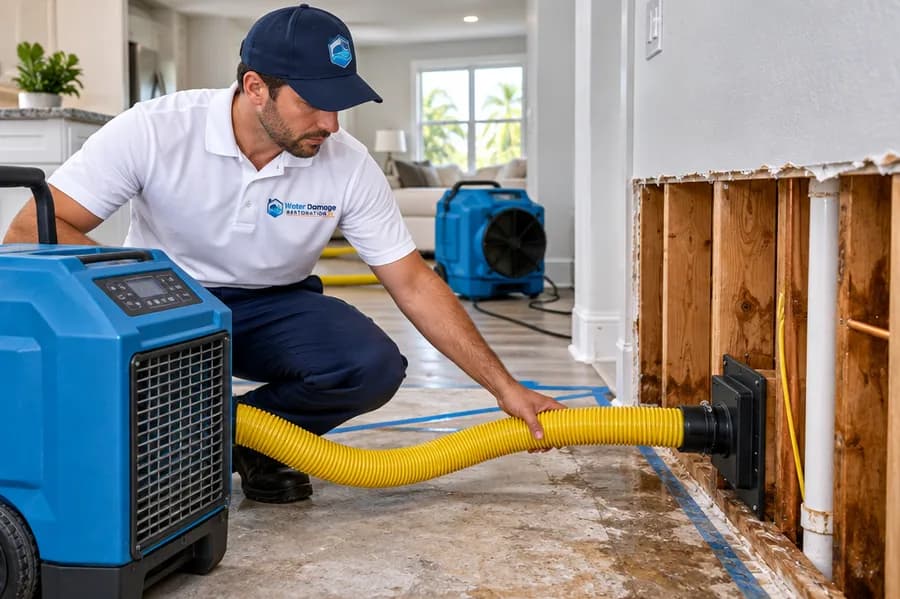
The hardest moisture to reach is inside wall cavities and beneath flooring, and it's also the most damaging if left. Rather than assume a wall is dry because the drywall feels dry, we measure the framing and cavity directly, and use specialty drying methods to move air into those enclosed spaces where needed.
This is what separates structural drying from simply running fans in a room — it dries the parts of the building you can't see.
Drying to a target, verified by readings
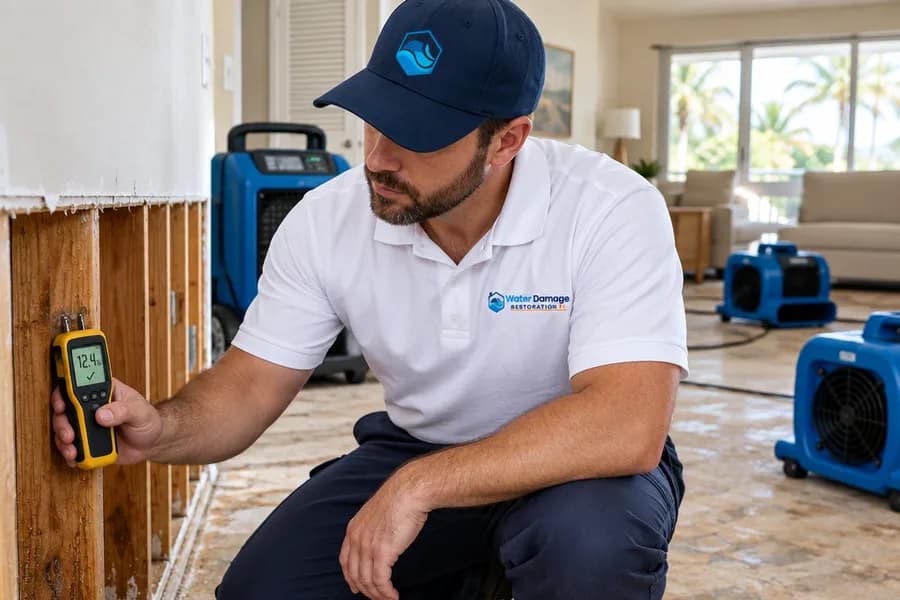
Structural drying is guided by moisture targets set from unaffected areas of the same property. Our technicians take readings throughout and keep the equipment running until the framing, subfloor, and other structural materials reach their goals.
Because it's measured, you know the structure is genuinely dry before repairs begin — not just dry to the touch.
Why it matters most in Florida
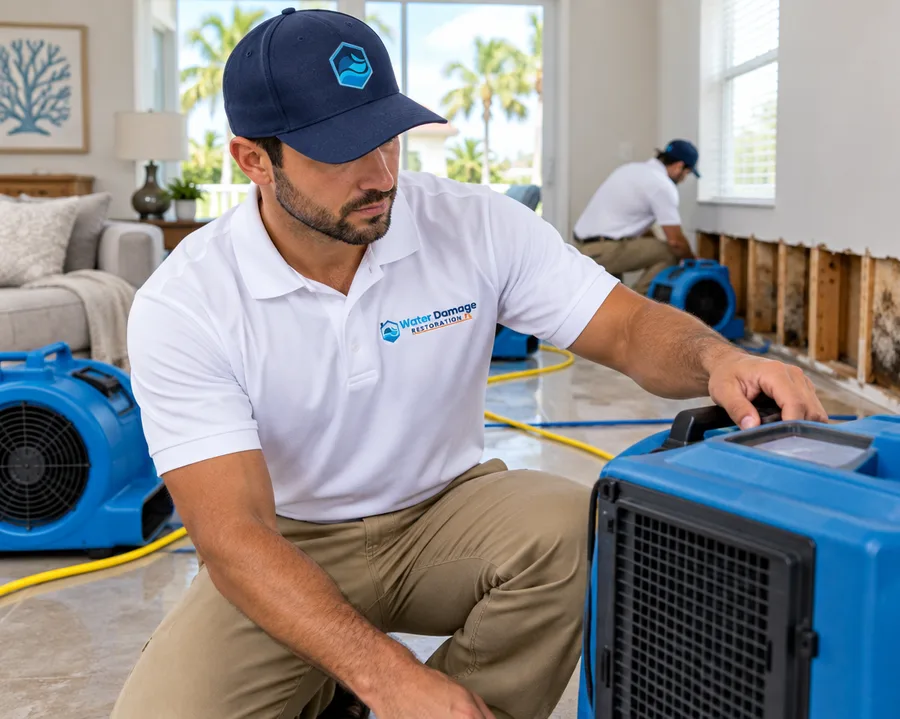
Florida's humidity slows drying and accelerates mold, so structural drying is both harder and more important here. Trapped moisture in framing and subfloor can quietly cause rot and mold long after a loss, which is why we dry the structure thoroughly and verify it before closing anything back up.
More Drying & Dehumidification services
View all Drying & Dehumidification servicesRequest this service
Tell us what happened and we'll follow up to confirm next steps.
Frequently asked questions
It's the controlled drying of the building's structure — framing, subfloor, sheathing, and wall cavities — to prevent the rot, warping, and mold that trapped moisture causes. It goes beyond drying visible surfaces.
Typically three to five days, though heavily saturated framing and humid conditions can extend it. We dry to moisture targets rather than a fixed schedule, monitoring until the structure reaches its goals.
We measure the cavity with moisture meters and, where needed, use specialty systems to move air into the wall directly. Sometimes small openings are made to dry the cavity, then repaired afterward.
We take moisture readings from the framing and subfloor and compare them to unaffected areas of the same property. When they reach their target, the structure is considered dry — a measured result.
Air-drying is slow and unreliable, especially in Florida's humidity, and it rarely reaches moisture trapped inside walls and subfloors. That leftover moisture is what causes rot and mold, which controlled structural drying prevents.
Still have a question? Call us at (904) 555-0100