
Dehumidification in Florida
Dehumidification is the lowering of indoor humidity to support drying and discourage mold growth after water damage. Our our crews use commercial dehumidifiers to pull moisture out of the air — a critical step in a humid climate, where high humidity keeps materials wet and feeds mold.
Signs a space isn't being dehumidified enough
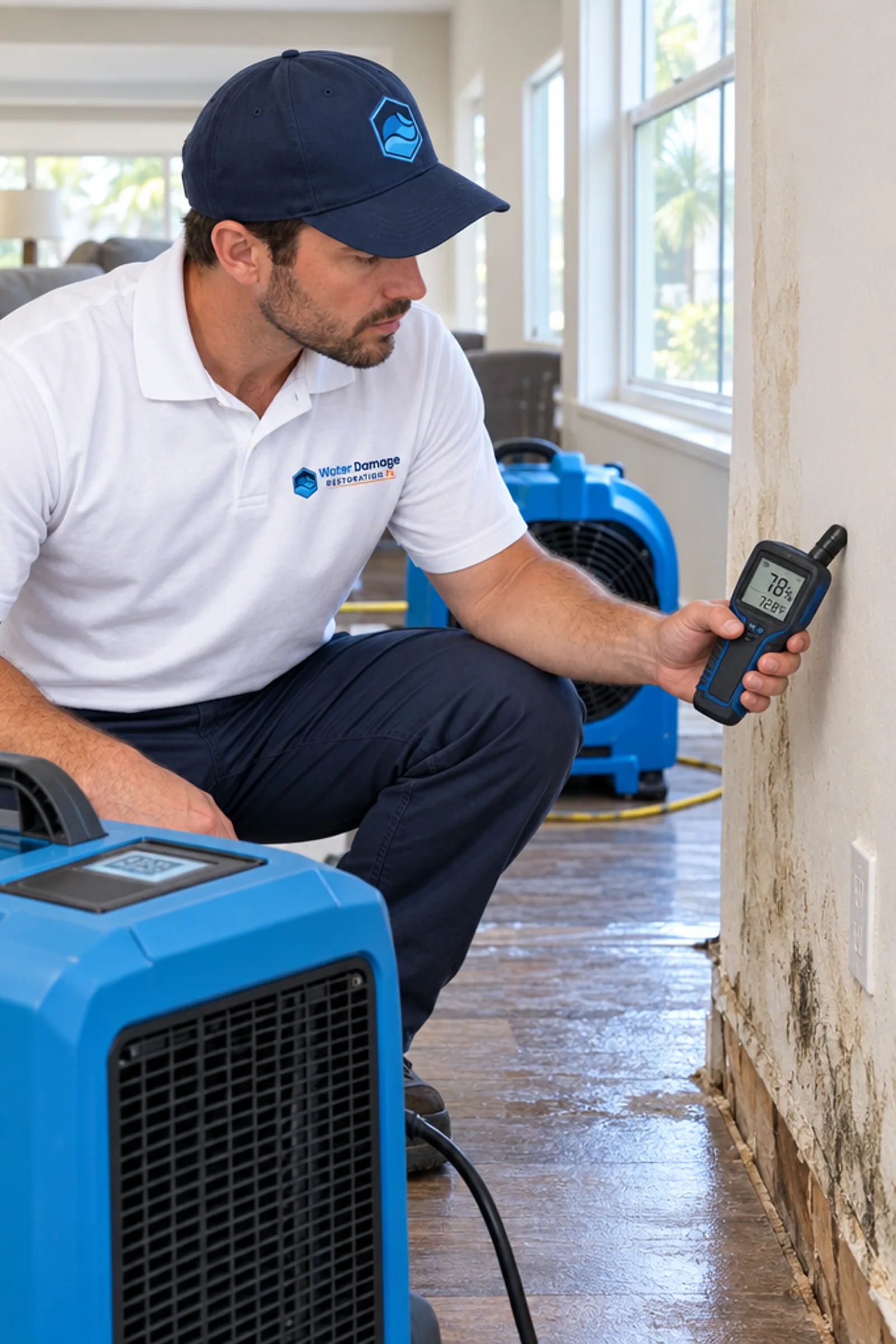
Under-powered dehumidification is a common reason a space seems to dry slowly or never quite finishes. When the air isn't being dried fast enough to keep up with the moisture evaporating from materials, the humidity stays high and drying stalls. A few signs point to it:
- Condensation forming on windows, metal, or cool surfaces.
- A space that stays humid or clammy despite fans running.
- A persistent damp smell that isn't clearing.
- Materials that feel like they've stopped drying partway.
Choosing the right dehumidifier for the job
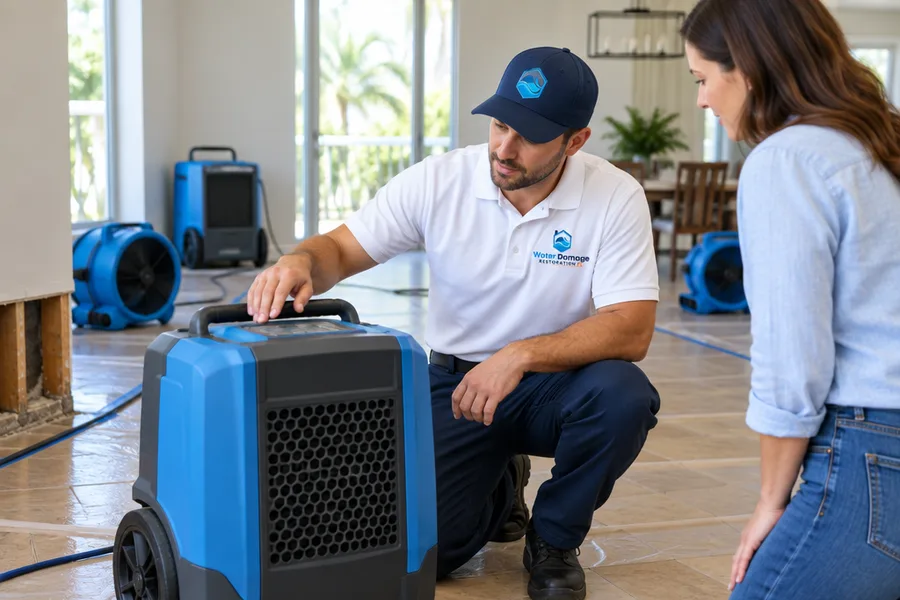
Not all dehumidification is the same, and matching the equipment to the conditions makes a real difference in how fast a space dries. The two main types of commercial dehumidifier work differently and suit different situations.
Our crews size and select units based on the space and the moisture load:
- Refrigerant dehumidifiers condense moisture out of the air and work well in typical warm, humid conditions like Florida's.
- Desiccant dehumidifiers absorb moisture and excel in cooler air or when very low humidity is needed to dry stubborn materials.
- Units are sized to the volume of the affected space, not just plugged in and hoped for.
- Output is monitored so humidity is actually driven down and held there, not allowed to rebound.
Why humidity control matters after water damage
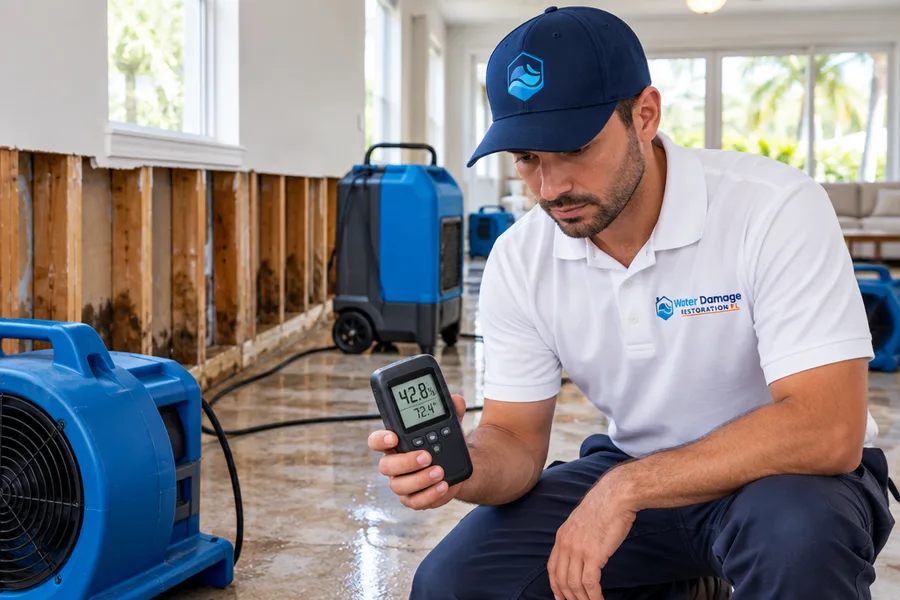
When materials give up their moisture during drying, that water goes into the air. If the air isn't dried too, the humidity climbs and the moisture simply resettles onto other surfaces — or never leaves the space at all. Dehumidification is what removes that airborne moisture so drying actually progresses.
In a humid climate like Florida's, this step is doubly important, because the outside air is already carrying a heavy moisture load.
How commercial dehumidifiers work
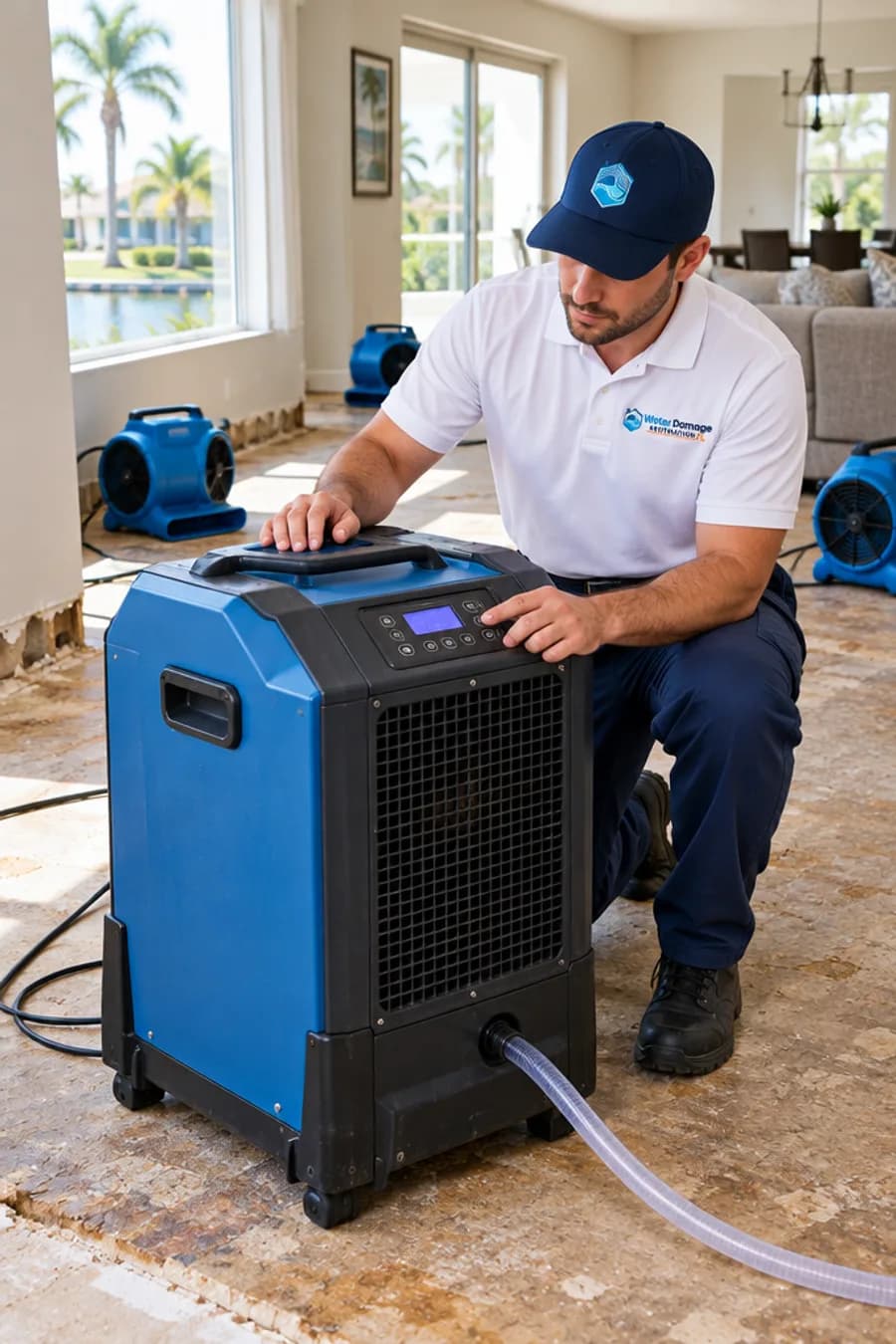
Commercial dehumidifiers are far more powerful than household units and come in types suited to different conditions:
- Refrigerant dehumidifiers condense moisture out of the air in typical conditions.
- Desiccant dehumidifiers absorb moisture and excel in cooler or very low-humidity drying.
- Units are sized to the volume of the space and the moisture load.
- Output is monitored so humidity is driven down and held there.
Dehumidification works with air movers
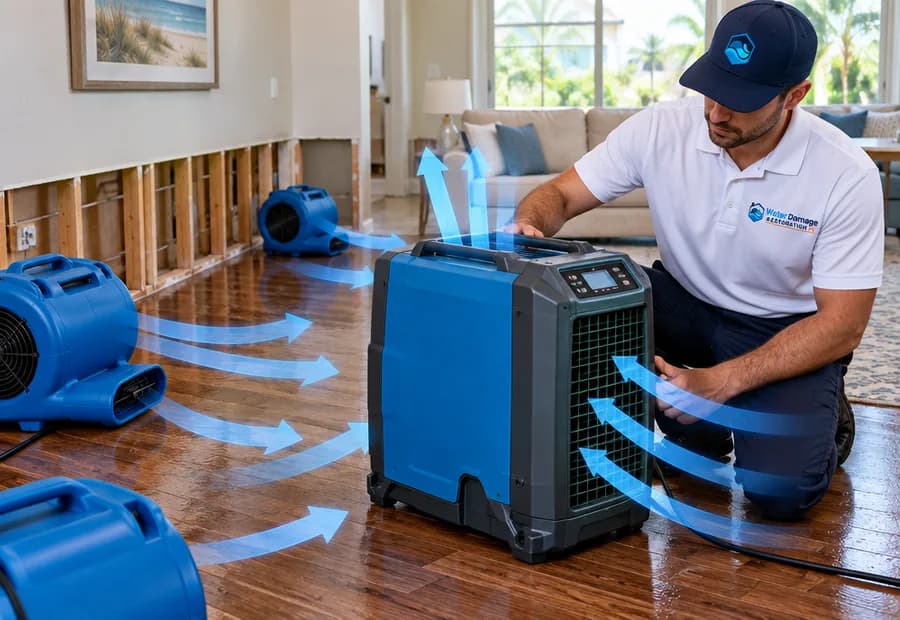
Dehumidification rarely works alone. Air movers push air across wet materials to speed evaporation, moving moisture into the air, and dehumidifiers then remove it. One without the other is far less effective — air movers alone just raise the humidity, and dehumidifiers alone dry the air slowly without drawing moisture out of materials.
Balancing the two, sized to the space, is what creates efficient drying conditions.
Discouraging mold with humidity control
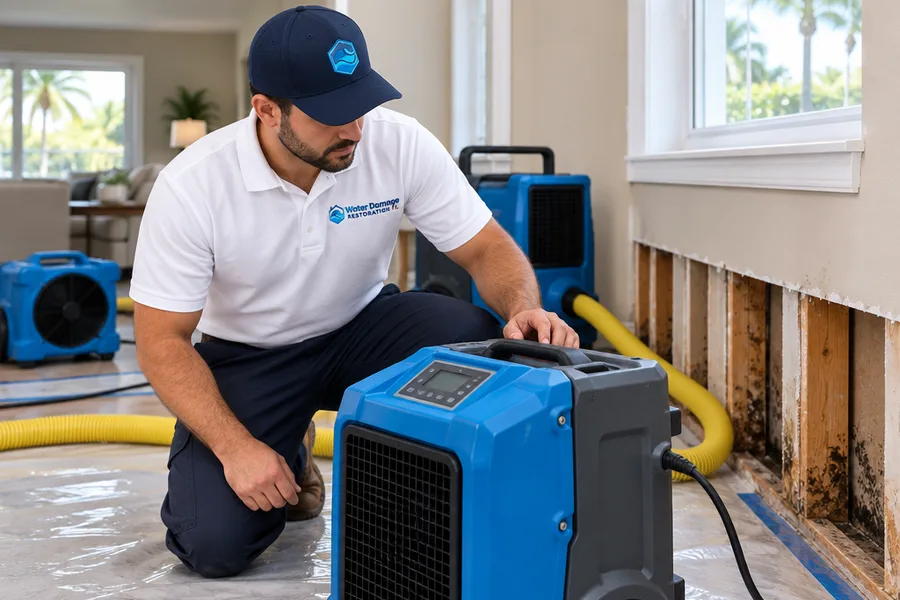
Mold needs moisture, and elevated indoor humidity is an open invitation — it keeps materials damp and creates surface condensation even on areas the original water never touched. Bringing humidity down and holding it there removes those conditions across the whole space, not just the wet spot.
That's why dehumidification is a core part of both drying a loss and preventing mold from spreading beyond it.
Dehumidification across Florida
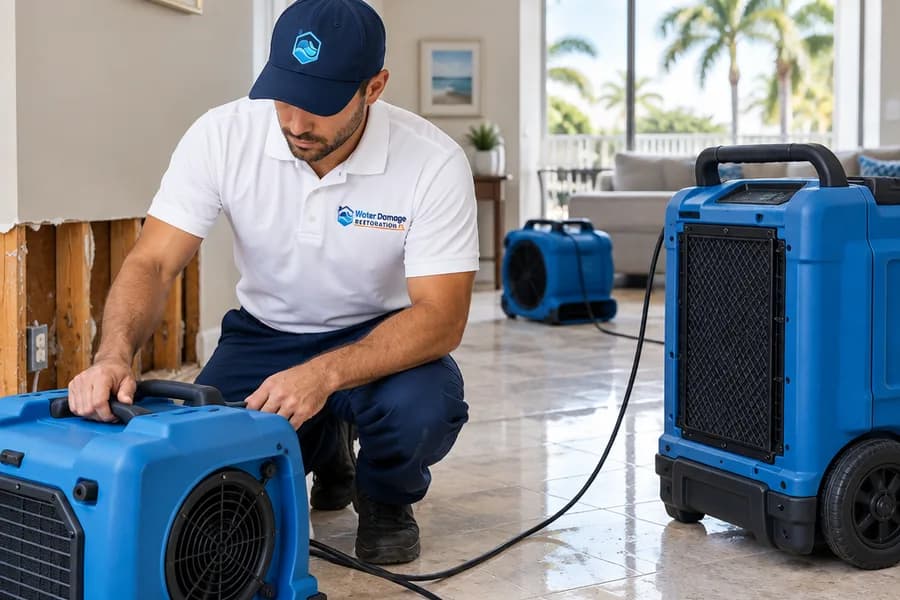
Our crews provide dehumidification as part of water damage drying across Florida. In a region where humidity is a year-round factor, controlling the air's moisture is often the deciding factor between a property that dries properly and one that stays damp.
More Drying & Dehumidification services
View all Drying & Dehumidification servicesRequest this service
Tell us what happened and we'll follow up to confirm next steps.
Frequently asked questions
A fan moves air and speeds evaporation, pushing moisture off surfaces into the air; a dehumidifier removes that moisture from the air so it doesn't resettle. They do opposite halves of the job and work best together — a fan without a dehumidifier just relocates the moisture, especially in Florida's humidity.
As materials dry, their moisture goes into the air. Dehumidification removes that airborne moisture so it doesn't resettle on other surfaces, which is what lets drying actually progress — especially in humid climates.
No. Air movers speed evaporation but push moisture into the air, raising humidity. Without dehumidifiers to remove it, that moisture just resettles. The two work together for effective drying.
Rarely for water damage. Household units can't handle the moisture load of a real loss. Commercial refrigerant and desiccant dehumidifiers remove far more moisture and are sized to the space.
Mold needs moisture. Elevated humidity keeps materials damp and can cause condensation even where the original water didn't reach. Lowering and holding humidity removes those conditions across the whole space.
They run continuously until moisture readings reach their targets, typically several days. Stopping early lets humidity rebound and slows drying, so they stay on throughout the drying period.
Still have a question? Call us at (904) 555-0100