
Black Mold Removal in Florida
Black mold removal is the safe removal of dark-colored mold growth from walls, ceilings, and other surfaces. Our our crews contain the area, use HEPA filtration, and remove the growth carefully — then address the moisture source, because any mold, regardless of color, comes back without it.
What to do if you find dark mold
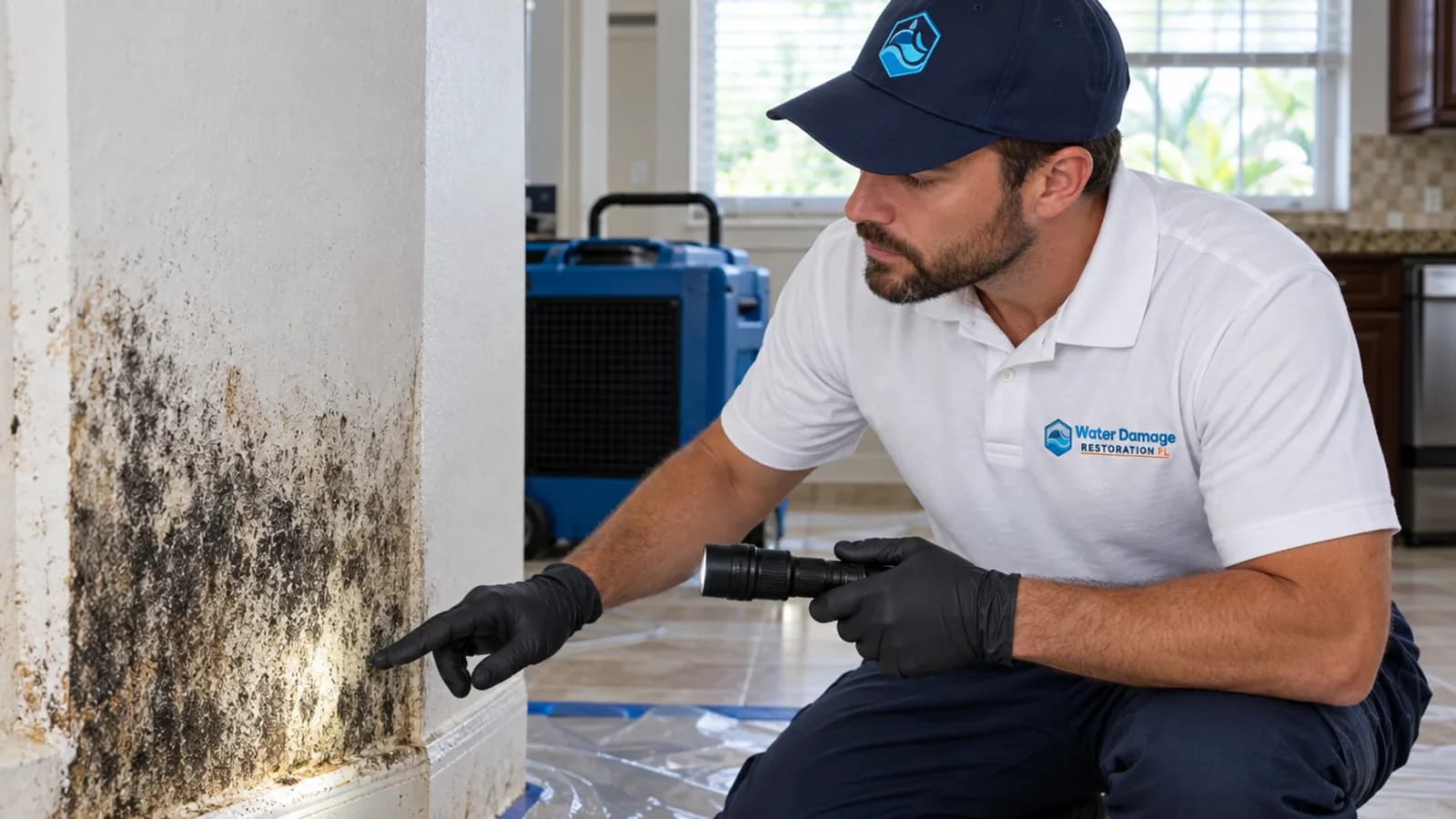
Finding dark mold is unsettling, but a measured response protects both your health and your property better than either panic or ignoring it. The right first steps are mostly about not making it worse.
- Don't disturb it — scrubbing, sanding, or tearing at it releases spores that spread the problem.
- Don't try to mask it or paint over it; that leaves the growth and its moisture behind.
- Keep the area ventilated to itself and limit foot traffic through it.
- Look for the moisture source — a leak, condensation, or humidity — since that's what's feeding it.
- For anything beyond a small surface spot, arrange a professional assessment.
Keeping dark mold from coming back
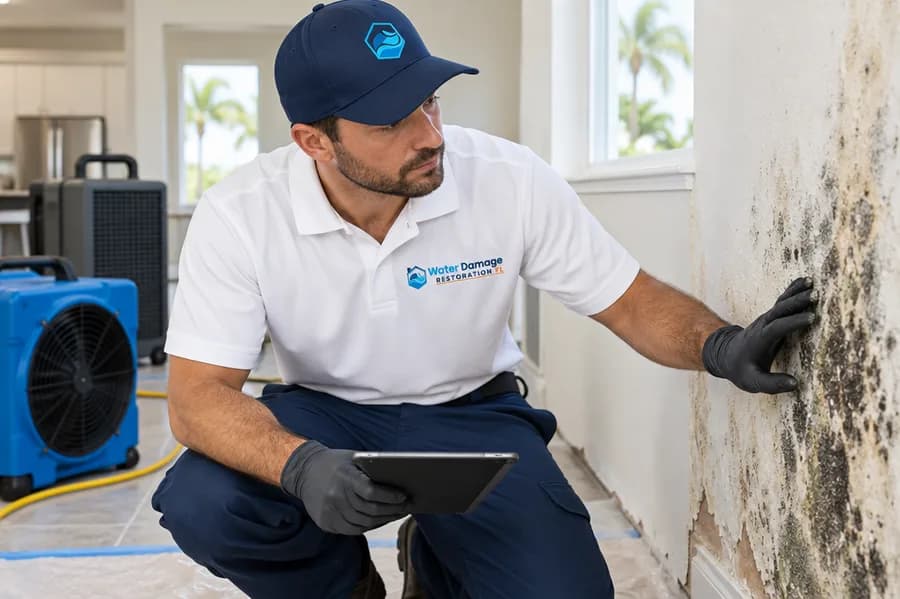
Removing dark mold is only half the job; keeping it gone is the other half, and that comes down to moisture. All mold — regardless of color — grows because a surface stays damp, so the growth will simply return if the underlying dampness isn't corrected.
That source might be an active leak, condensation around windows or plumbing, poor drainage, or high indoor humidity. Part of a proper removal is finding it, fixing or flagging it, and drying the area to normal levels so the conditions mold needs are no longer there.
In Florida's humid climate this step is especially important, because ambient moisture alone can sustain growth. Controlling it is what turns a removal into a lasting result rather than a recurring chore.
What 'black mold' really means
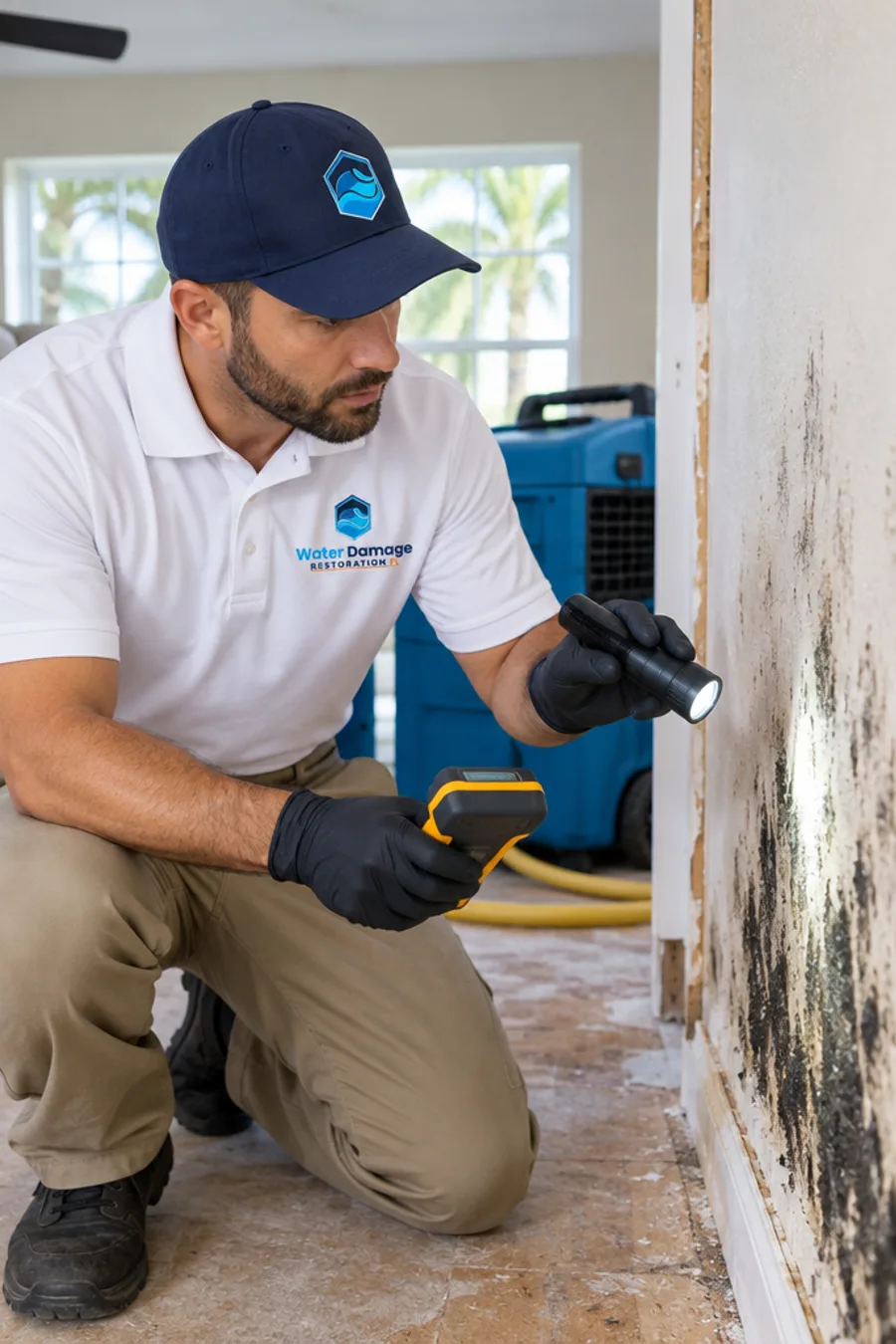
'Black mold' is a common term for dark-colored mold growth, and it often causes concern. In practice, mold color isn't a reliable indicator of risk — many molds appear dark, and what matters is that significant indoor growth should be removed safely regardless of its color.
Rather than focus on identifying a species by appearance, we treat visible mold growth as something to contain, remove, and address at its moisture source.
Removing dark mold safely
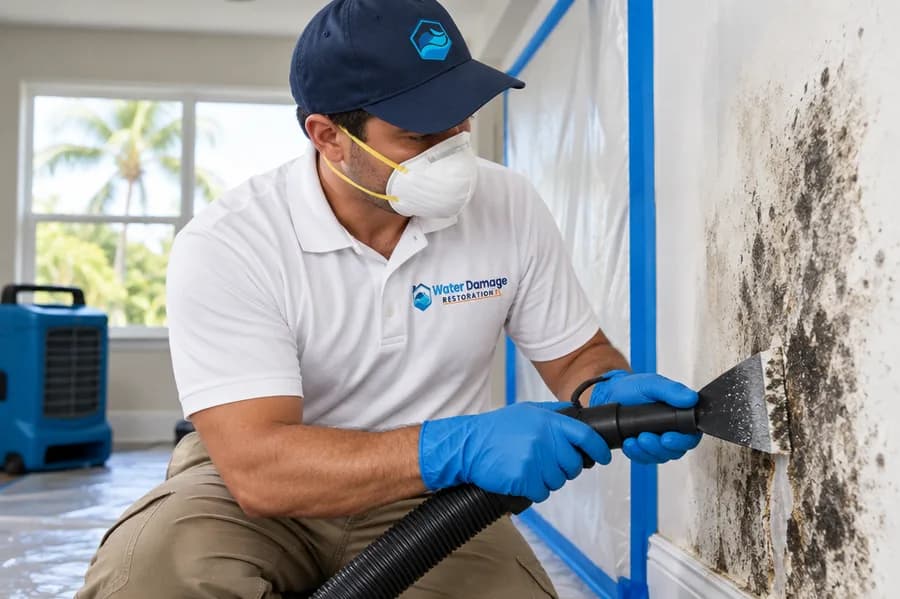
Safe removal of any significant mold growth follows the same careful process:
- Contain the affected area to prevent spores from spreading.
- Run HEPA air filtration to capture airborne spores.
- Remove mold-affected porous materials that can't be cleaned.
- Clean and treat salvageable hard surfaces.
- HEPA-vacuum and wipe down to capture residual spores.
Why disturbing it makes things worse
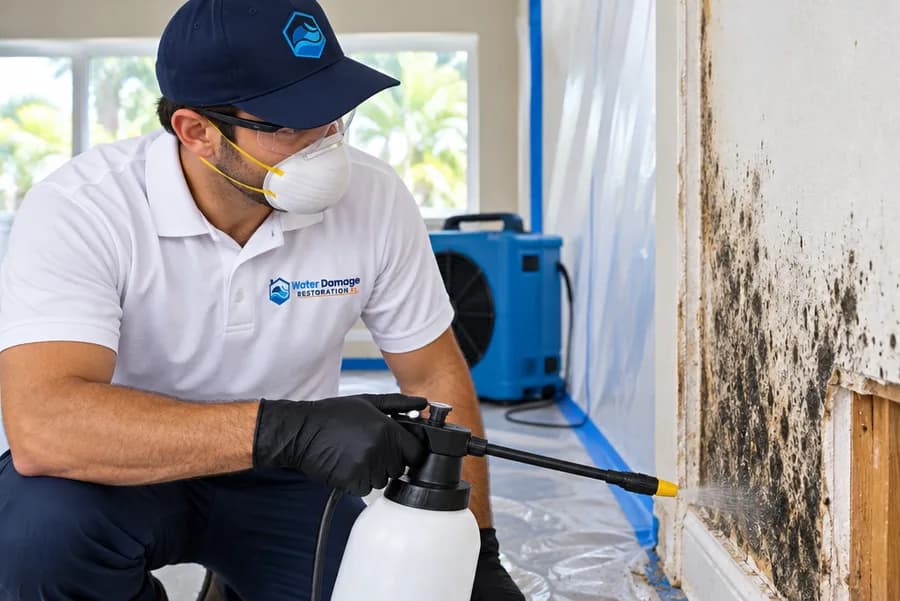
Scrubbing, sanding, or tearing out dark mold without precautions releases spores into the air, spreading the problem to clean areas of the property. This is the main reason DIY attempts on larger growth often backfire.
Contained, methodical removal with HEPA filtration keeps the spores isolated to the work area, which is what makes professional removal safer and more effective.
The moisture behind the growth
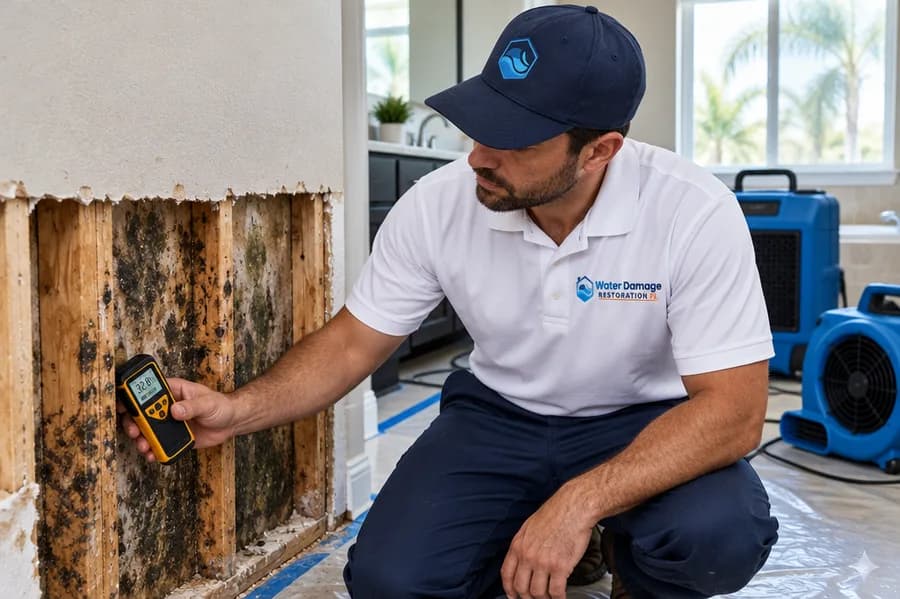
Dark mold, like all mold, grows because of moisture — a leak, condensation, or high humidity. Removing the visible growth without correcting that source guarantees it returns. Our removal is paired with finding and addressing the dampness, then drying the area and verifying it with moisture readings.
In Florida's humid climate, controlling that moisture is what keeps the growth from coming back.
Black mold removal across Florida
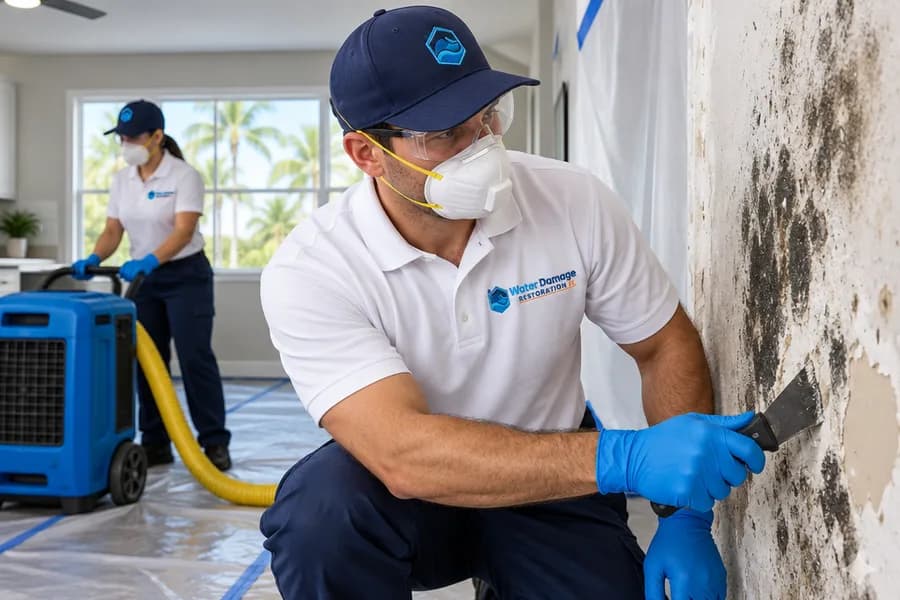
Our crews provide safe removal of dark mold growth for homes and businesses across Florida. We focus on removing it properly and correcting the moisture behind it, so the result lasts rather than reappearing weeks later.
More Mold Remediation services
View all Mold Remediation servicesRequest this service
Tell us what happened and we'll follow up to confirm next steps.
Frequently asked questions
Yes, if the moisture that feeds it is corrected. Removing the growth is straightforward; keeping it gone depends on fixing the leak, condensation, or humidity behind it and drying the area. Because spores are always present in the air, the goal is to return mold to normal, safe levels and remove the conditions it needs — not to sterilize.
Color isn't a reliable indicator of risk, and many molds appear dark. Any significant indoor growth should be removed safely regardless of color. We treat visible mold as something to contain, remove, and address at its source. For health concerns, consult a doctor.
Very small surface spots can sometimes be cleaned, but disturbing larger dark-mold growth without containment spreads spores and often worsens the problem. Professional removal contains the area and uses HEPA filtration.
Because the moisture source hasn't been addressed. All mold needs moisture, so removing the growth without correcting the leak, condensation, or humidity behind it leads to regrowth. We address both.
Hard, non-porous surfaces like sealed wood, tile, metal, and glass can usually be cleaned and treated. Porous materials the mold grew into — drywall, insulation, carpet — typically have to be removed.
We contain the work area and run HEPA air filtration to capture airborne spores, then use careful removal practices so disturbed mold doesn't travel to clean parts of the property.
Still have a question? Call us at (904) 555-0100