Water Removal in Florida
Water removal is the clearing of unwanted water from a property so the drying process can begin. Our our crews remove water quickly with pumps and extractors, 24/7, because getting the water out fast is what limits damage and shortens the entire restoration.
What happens after the water is removed
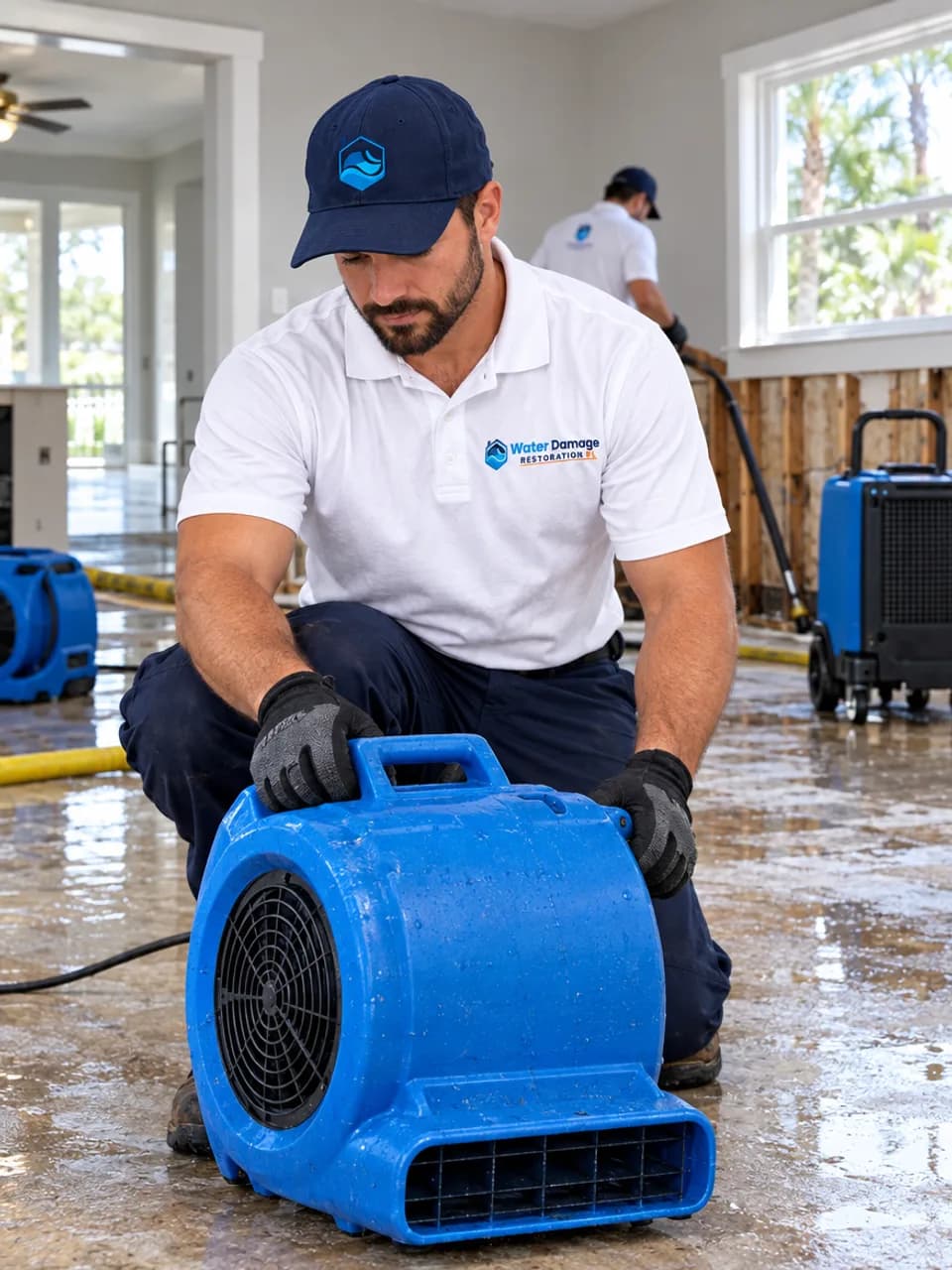
Getting the water out is the first and most urgent step, but it's the start of the process, not the end. Knowing what follows helps explain why removal alone doesn't finish the job.
Once the standing and absorbed water is cleared, the focus shifts to the moisture left behind in materials and the air. Air movers speed evaporation from wet surfaces while dehumidifiers pull that moisture out of the air, and the drying continues to measured targets rather than appearances. If any materials were removed or damaged, cleaning and repairs follow. We move straight from removal into drying so the property isn't left partly wet — the point where a lot of DIY efforts stop too early, leaving hidden moisture to cause warping and mold weeks later.
Why professional removal reaches more water
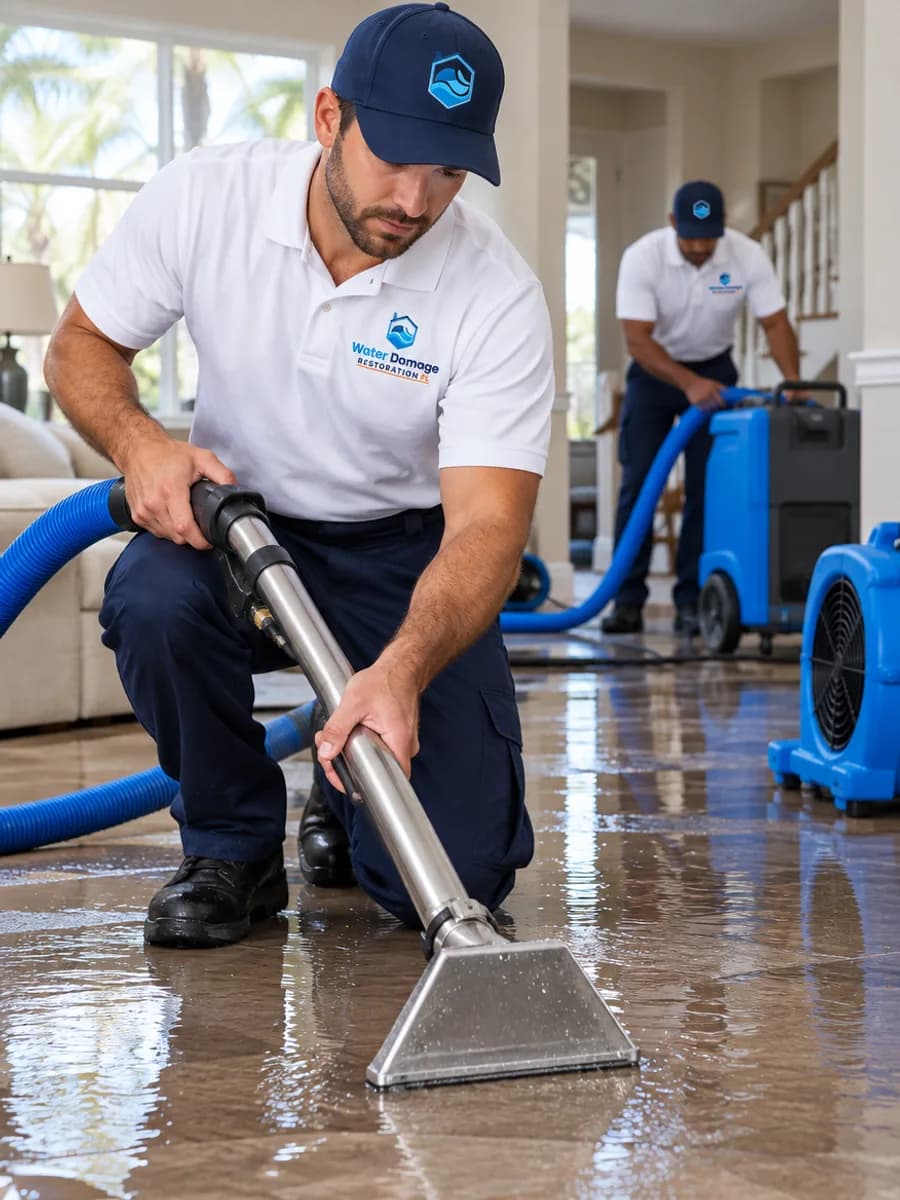
The difference between household tools and professional equipment isn't just speed — it's how much water actually gets removed. A mop or shop vac clears what's on the surface; truck-mounted extractors and submersible pumps move large volumes fast and pull water out of the materials it has soaked into.
Just as important is finding the water that isn't visible. Much of what causes long-term damage sits under flooring, inside walls, and in subfloors, where surface tools can't reach and where the eye can't see it. Moisture meters and thermal cameras locate it so it can be removed and dried.
Removing more water, from more places, is what limits the damage — and it's the main reason a serious loss is worth handling professionally rather than by hand.
The first step in every water damage job
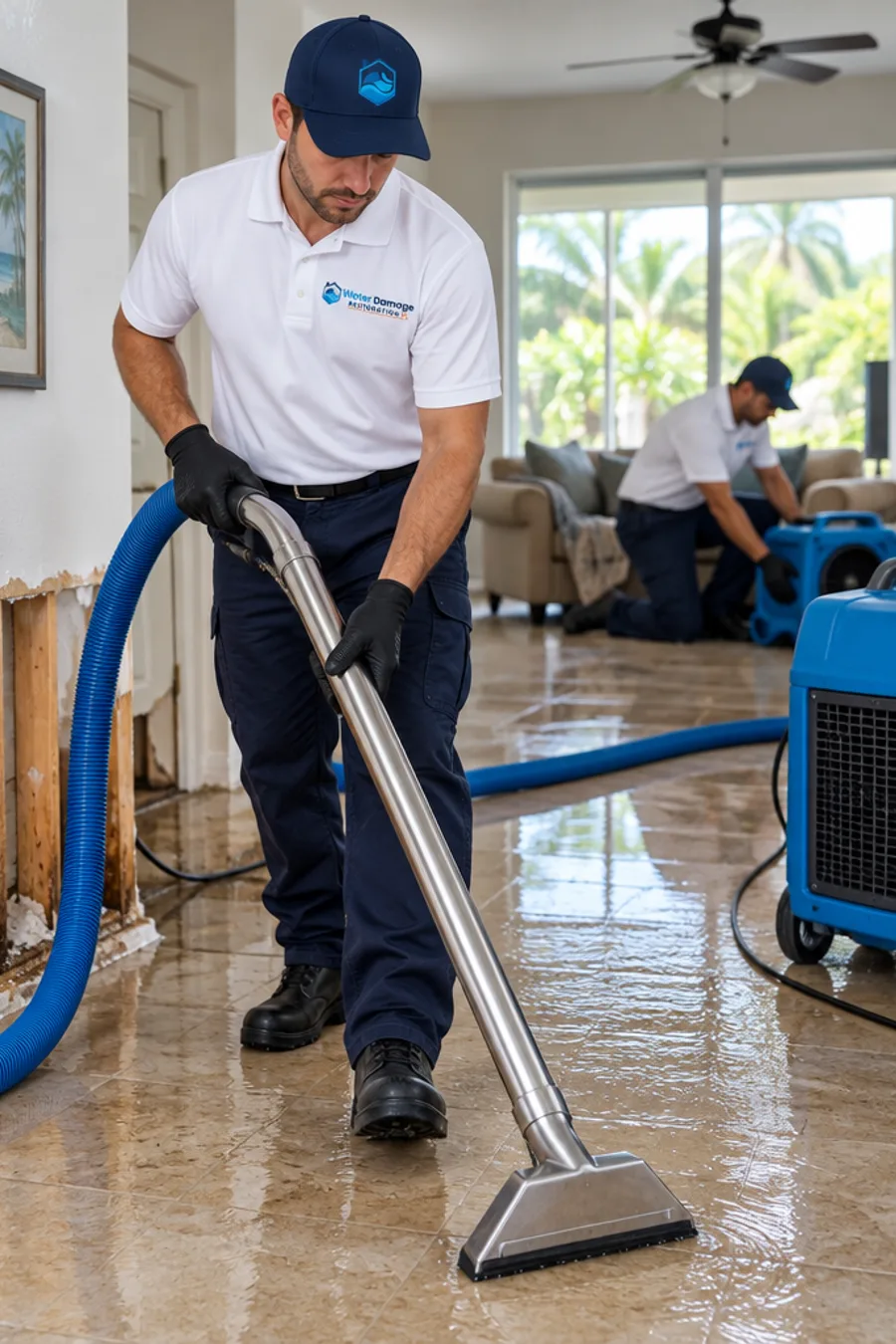
Water removal is where restoration begins. Until the water is gone, materials can't dry and the damage keeps spreading — into walls, subfloors, and the air itself. Prompt removal draws a line under the loss and makes everything that follows faster and more effective.
It's the reason our crews prioritize water removal on arrival, before moving on to drying, cleaning, and repairs.
How we remove water quickly
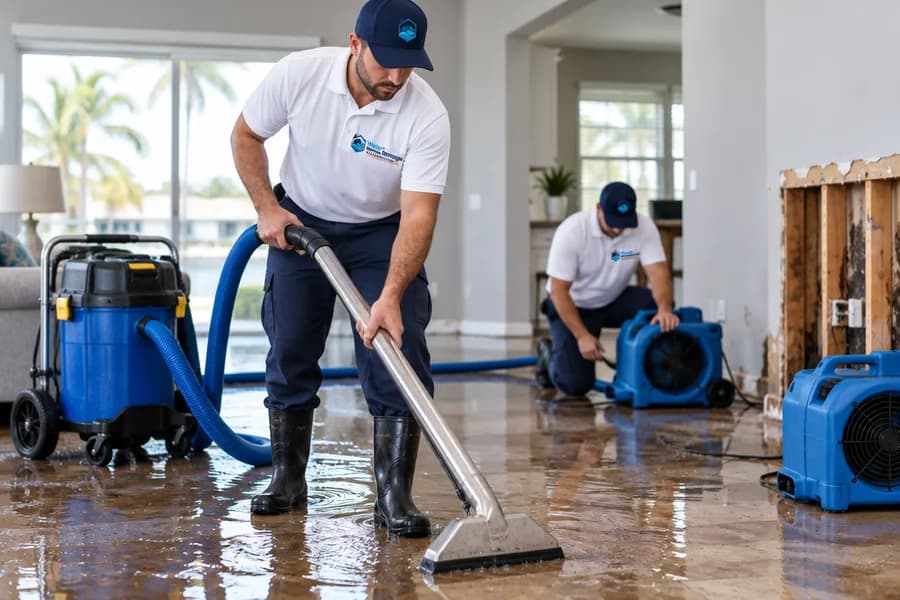
The right method depends on how much water there is and where it has collected:
- Submersible pumps for deep standing water.
- Truck-mounted and portable extractors for carpet, pad, and hard floors.
- Wet vacuums for detail work in tight spaces.
- Moisture meters and thermal cameras to find hidden water.
Reaching the water you can't see
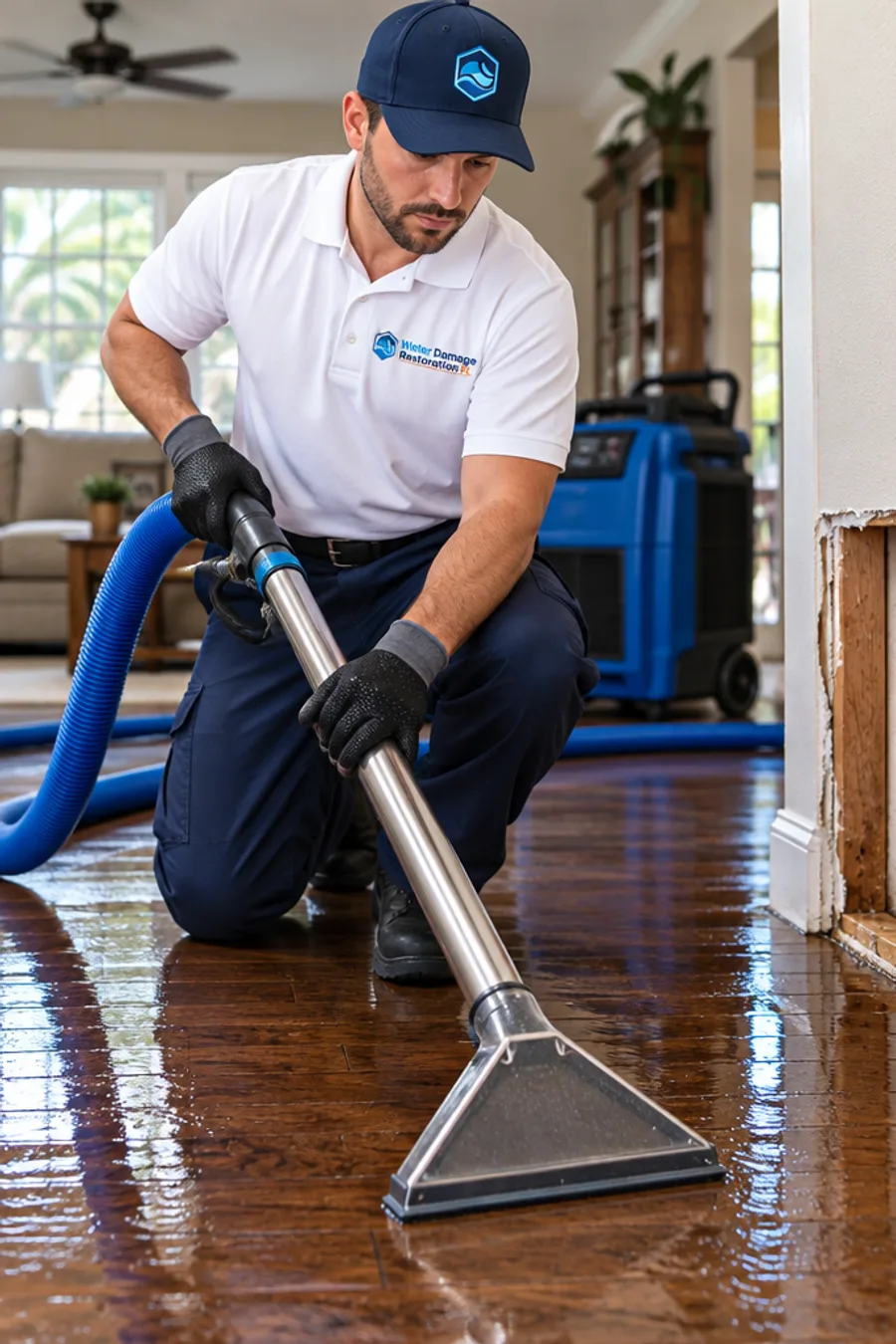
Much of the water in a loss is out of sight — under flooring, inside wall cavities, and in subfloors and crawl spaces. Removing only the visible water leaves those hidden pockets to cause damage and mold long after the surface looks dry.
We map where water has actually traveled with moisture meters and thermal imaging, so removal is complete rather than just cosmetic.
Clean, gray, and black water removal
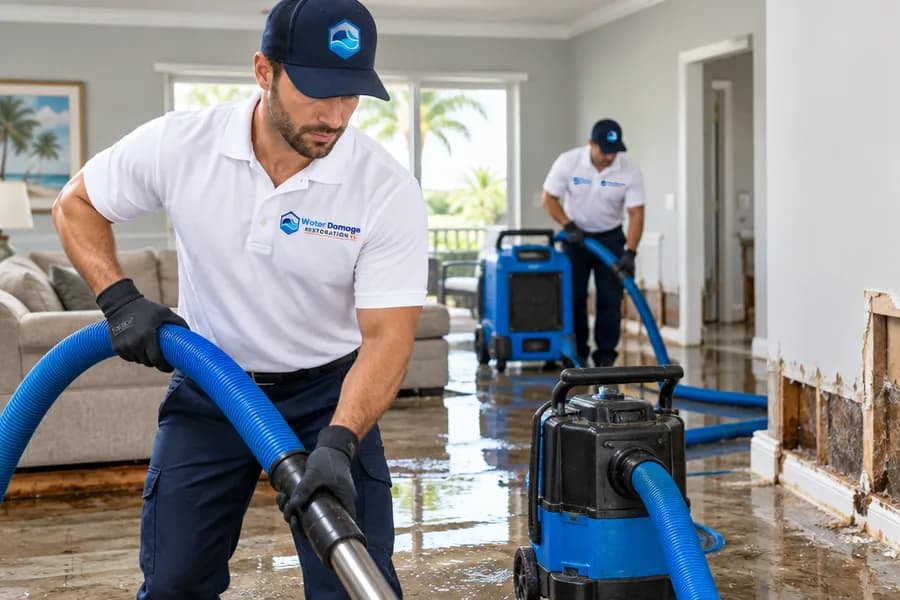
How water is removed depends on what's in it. Clean water from a supply line is straightforward; gray water from appliances or overflows carries some contamination; black water from sewage or flooding is a health hazard requiring protective equipment and careful disposal.
Our technicians identify the water category first so removal is safe as well as thorough, and so nothing contaminated is simply dried in place.
Removal leads straight into drying
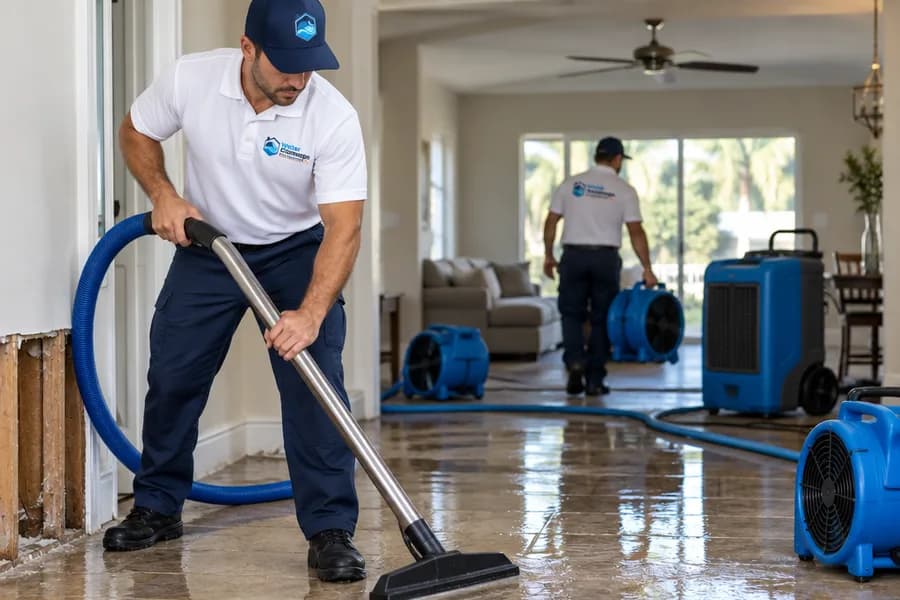
Removal and drying are distinct but connected. Removal clears the standing and absorbed water; drying then pulls the remaining moisture out of materials with air movers and dehumidifiers. We move directly from one to the other so the property isn't left partly wet, keeping the process fast and thorough.
More Water Extraction & Removal services
View all Water Extraction & Removal servicesRequest this service
Tell us what happened and we'll follow up to confirm next steps.
Frequently asked questions
Yes. Much of the water in a loss soaks into subfloors, wall cavities, and crawl spaces where it isn't visible. We use moisture meters and thermal cameras to map where it traveled, then remove and dry those hidden areas — not just the pools you can see — so nothing is left to cause damage later.
We dispatch crews 24/7 and prioritize removal on arrival. How long it takes depends on the volume and access, but removing water quickly is exactly what limits the damage.
Submersible pumps for deep water, truck-mounted and portable extractors for carpet and hard floors, and wet vacuums for detail work — plus moisture meters and thermal cameras to find hidden water.
Yes. We map where water has traveled with moisture meters and thermal imaging and remove it from those hidden areas, not just the visible pools, so nothing is left to cause damage later.
No. Removal clears standing and absorbed water; drying removes the moisture left inside materials afterward. Both are needed, and we handle them together.
Sudden, accidental water damage is often covered, while gradual leaks and outside flooding may not be. We document the loss thoroughly and can work with your adjuster, but coverage decisions rest with your insurer.
Still have a question? Call us at (904) 555-0100