One of the first questions people ask after a leak or flood is what it's going to cost to put things right. It's a fair question, and an uncomfortable one, because the honest answer is that water damage restoration doesn't have a single price. What you pay depends on how much water there is, how far it spread, how clean or contaminated it is, and how much material has to be dried or replaced.
This guide breaks down the factors that move the price up or down, gives realistic general ranges, and explains the single biggest thing you can do to keep the cost as low as possible.
What determines the cost of water damage restoration
Rather than a flat fee, restoration is priced around the scope of the work. A few factors do most of the heavy lifting:
- The volume of water and the area affected — one wet room is far less than a whole floor.
- The category of water — clean water from a supply line is simpler than gray water, and both are far less involved than contaminated Category 3 black water from sewage or flooding.
- The class of damage — how much material is wet and how deeply it's saturated (Class 1 through Class 4).
- How long the water sat before drying began, which affects how much can be saved versus replaced.
- The materials involved — hardwood, plaster, and tile are more demanding than carpet and drywall.
- Whether repairs and reconstruction are needed after drying.
Because these stack, the same-size leak can cost very different amounts depending on what the water touched and how quickly it was addressed.
General price ranges to expect

As broad industry context — not a quote — smaller clean-water losses confined to one area tend to fall at the lower end, while large or contaminated losses that require material removal and rebuilding run much higher. Category 3 losses cost more because of the protective handling, disposal, and disinfection involved, and because more porous material usually has to be removed.
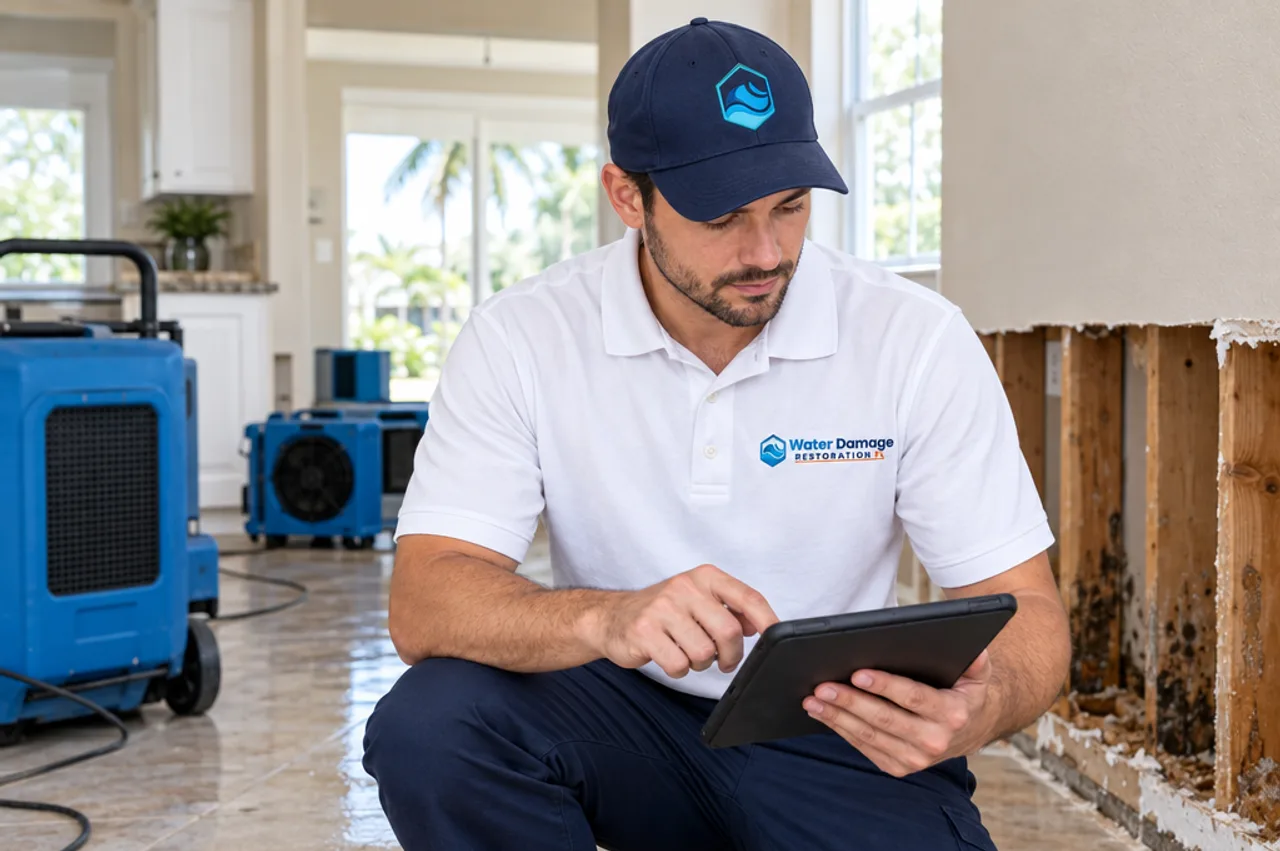
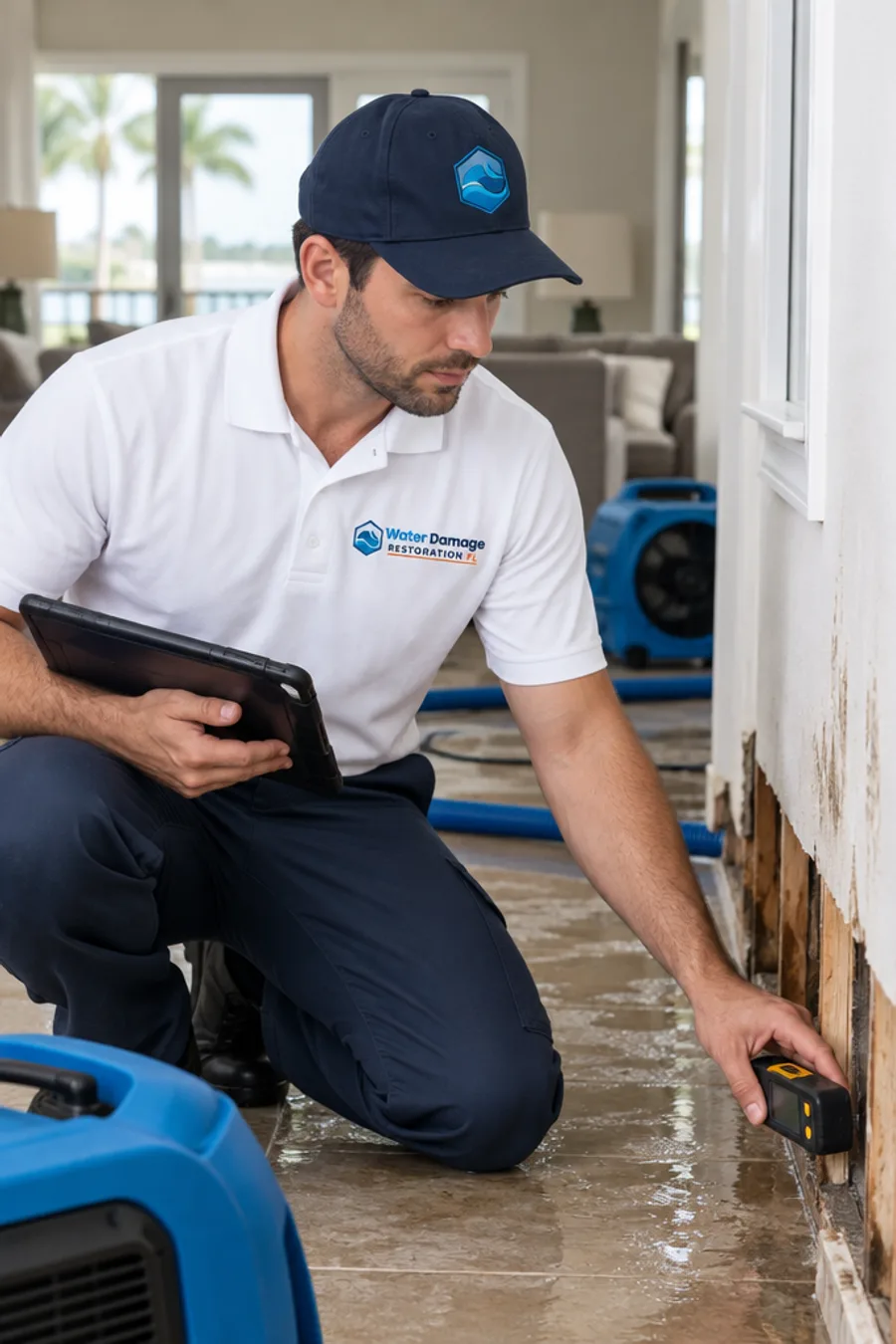
The only way to get a real number for your situation is an on-site assessment, where the affected areas can be inspected and moisture-mapped. If you're dealing with active water, our team can assess water damage restoration across Florida and document everything for your claim.
The extraction and drying stages
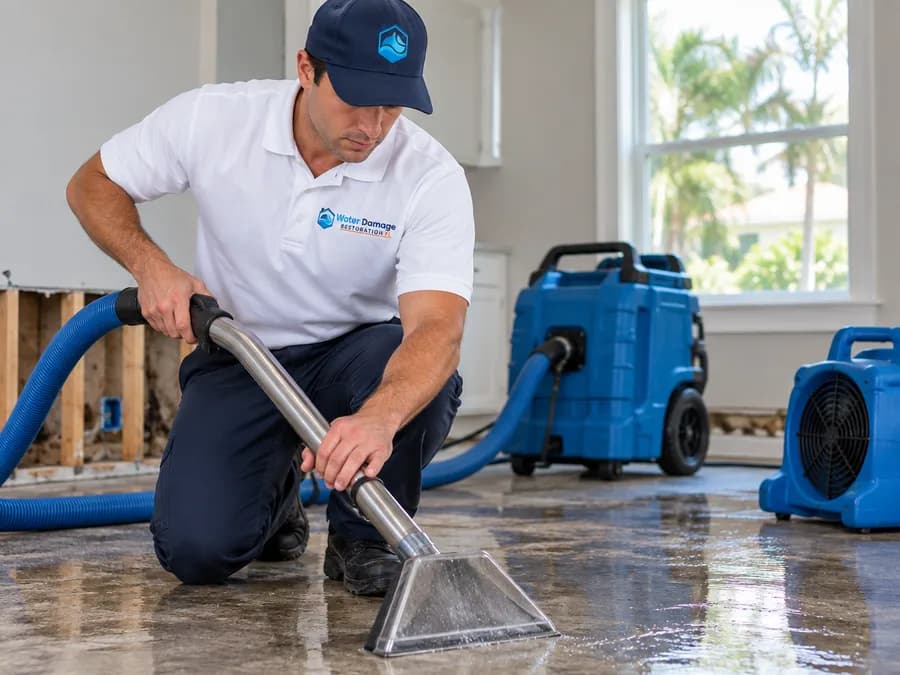
Two stages make up much of the labor and equipment cost: extraction and drying. Water extraction removes standing and absorbed water quickly, and the more that's pulled out up front, the less has to be dried. Drying then runs air movers and dehumidifiers, usually for three to five days, until materials reach their moisture targets.
This is also where acting fast pays off directly: thorough early extraction can take days off the drying timeline and reduce how much material has to be replaced.
How to keep water damage costs down
You have more influence on the final bill than you might think, mostly in the first hours:
- Act immediately — the longer water sits, the more it spreads and the higher the mold risk, both of which raise costs.
- Shut off the water source and, if safe, move valuables out of the water.
- Document the damage with photos before cleanup for your insurance claim.
- Don't rely on household fans alone; incomplete drying leads to warping and mold that cost more to fix later.
- Get moisture mapped so hidden water isn't missed and doesn't resurface as a bigger problem.
In Florida's humidity, mold can begin within 24 to 48 hours, so speed is the single most effective cost control there is.
Does insurance affect what you pay?
Often, yes. Sudden, accidental water damage — a burst pipe or an appliance failure — is frequently covered by homeowners insurance, which can leave you responsible for only your deductible. Gradual leaks and outside flooding are treated differently. We cover this in detail in our guide on whether homeowners insurance covers water damage, but the practical point is that thorough documentation supports your claim regardless of the outcome.
How the water category changes the price
One factor deserves special attention because it can swing the cost dramatically: how contaminated the water is. Clean water from a supply line is the least expensive to deal with, because materials can often be dried in place and saved. Gray water from an appliance or overflow adds caution and some material removal. Category 3 black water — from sewage or flooding — is the most expensive, because it requires protective equipment, containment, disinfection, and the disposal of porous materials that can't be sanitized.
This is why two losses of the same size can cost very differently. A clean-water leak that soaks a room is a far smaller job than the same room hit by a sewage backup, where much of the material has to be removed and replaced rather than dried and kept.
The real cost of waiting to call
If there's one lever that most affects the final bill, it's how quickly the response begins. Water spreads and soaks deeper every hour, and mold can start within 24 to 48 hours — faster in Florida's humidity. A loss addressed within hours often means drying and saving materials; the same loss left overnight can mean removing and replacing them, plus mold remediation on top.
In practical terms, the cost curve rises with time. Calling as soon as you discover the damage isn't just about limiting stress — it's one of the most reliable ways to keep the number down.
What a restoration estimate usually includes
A thorough estimate is built from the actual scope of work, not a flat rate. It typically accounts for water extraction, the equipment and days of structural drying, any material removal and disposal, cleaning and sanitizing, and the repairs or reconstruction needed afterward. Contaminated-water losses add protective handling and disposal. Because the scope is only clear after inspection and moisture mapping, a real number comes from an on-site assessment — and the documentation that assessment produces is what supports your insurance claim.
Factors that can increase the cost
Beyond the basics, several specifics push a restoration bill higher. It's worth knowing them so an estimate makes sense rather than feeling arbitrary:
- Contaminated water — Category 2 or 3 water requires protective handling, disposal, and disinfection.
- Large or multi-room losses — more area means more equipment and more drying days.
- Hard-to-dry materials — hardwood, plaster, and concrete take longer and sometimes need specialty equipment.
- Hidden and hard-to-reach water — inside walls, under floors, or in crawl spaces.
- Delayed response — water that sat longer means more material to remove and possible mold.
- Reconstruction scope — replacing flooring, cabinetry, or structural elements adds to the total.
- Salvage and cleaning of contents — furniture and belongings that need separate attention.
Questions to ask before work begins
A few questions up front help you understand what you're paying for and avoid surprises:
- Will you provide a written scope of work and estimate after inspecting the property?
- Do you document the loss with photos and moisture readings for my insurance?
- What's included in the price, and what would be billed separately?
- How do you determine when the structure is fully dry?
- Do you handle the repairs and reconstruction, or just the drying?
Why the cheapest quote isn't always the best
When you're facing an unexpected bill, the lowest number is tempting — but water damage is one area where cutting corners tends to cost more later. A quote that skips proper drying verification, or that dries surfaces without reaching moisture trapped in walls and subfloors, can leave you paying again when warping or mold appears weeks later. The better measure of value is thoroughness: extraction that reaches hidden water, drying confirmed by moisture readings, and clear documentation. Done right the first time, restoration is a single expense rather than a recurring one.