
Wet Carpet Drying in Florida
Wet carpet drying is the drying of wet carpet and padding after a leak or flood. Our our crews extract the water and dry the carpet, pad, and subfloor to measured targets — because carpet holds water deep in its fibers, where it causes odor and mold if not dried quickly and thoroughly.
What to expect when we dry your carpet
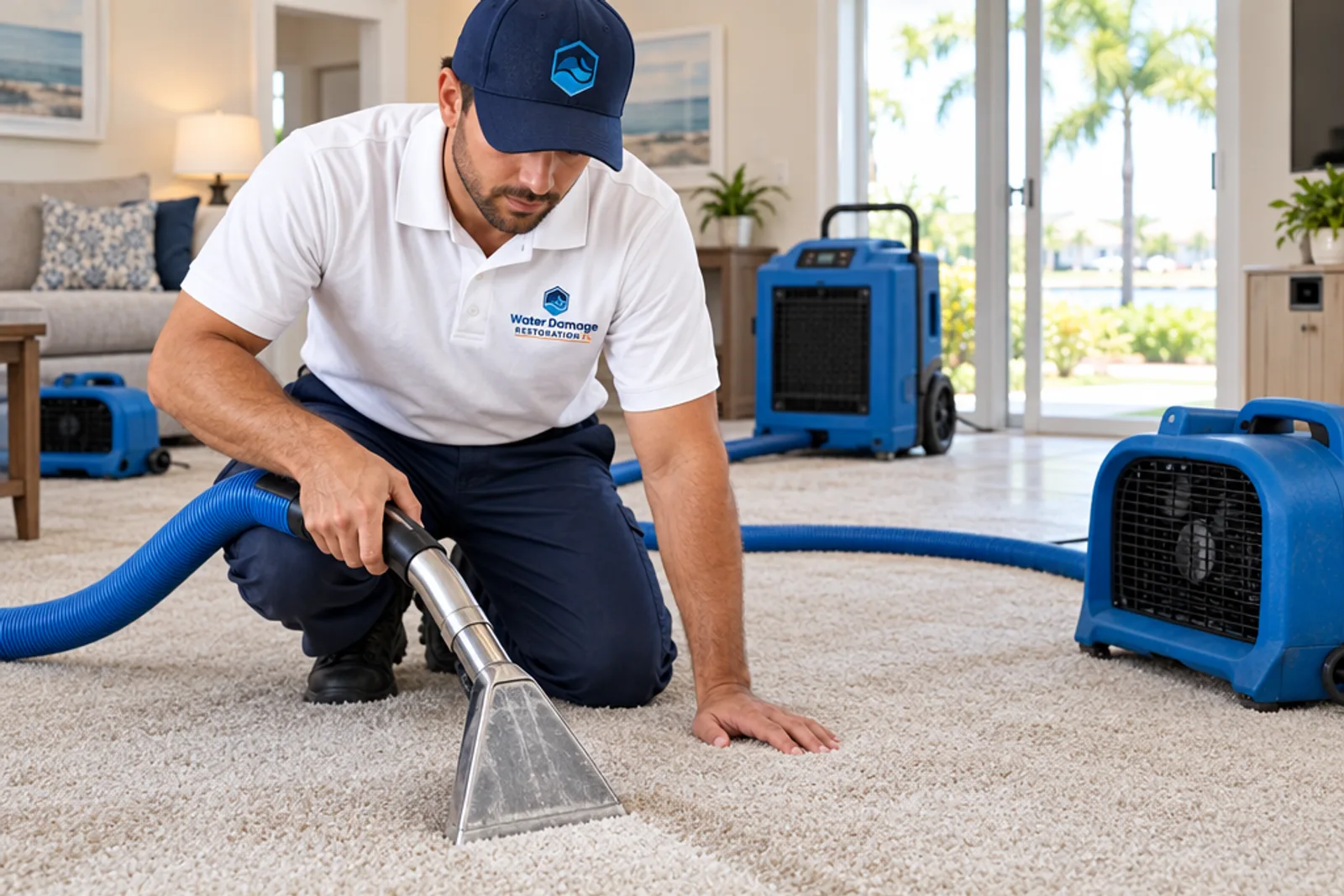
Drying wet carpet is a multi-step process, and knowing the sequence helps you understand what's happening and why it takes the form it does. It's rarely as simple as pointing a fan at the floor.
A typical wet-carpet drying goes like this: first, as much water as possible is extracted from the carpet and pad with powerful equipment. If the pad is saturated, it's usually pulled and replaced, since it holds water and dries too slowly to save. The carpet is then floated or lifted where needed so air can move across and beneath it, with air movers and dehumidifiers running together. Throughout, moisture readings on the carpet, pad area, and subfloor confirm progress — and the equipment stays until they reach their targets, not just until the surface feels dry.
Why the carpet pad usually has to go
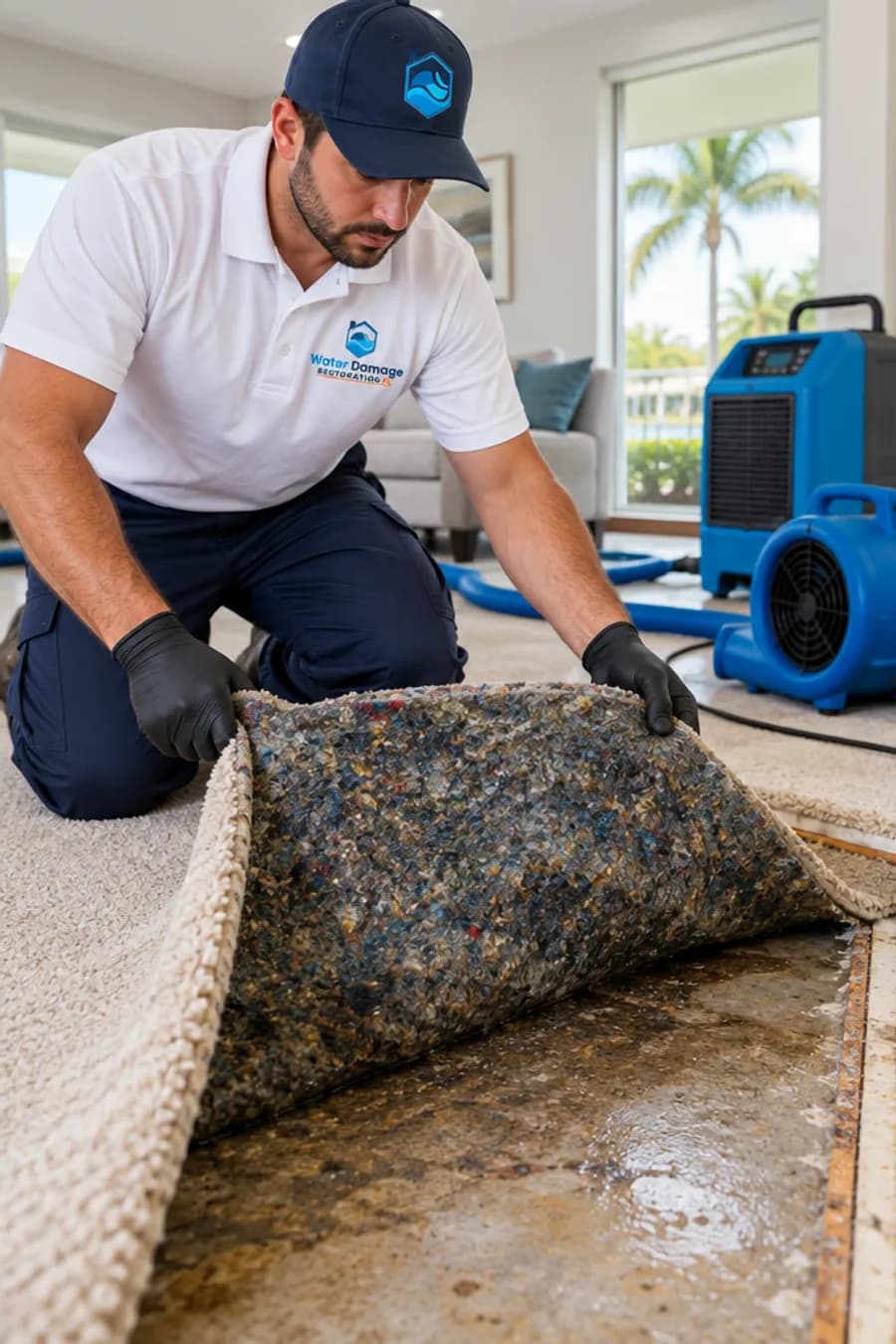
One of the first decisions in drying wet carpet is what to do about the pad underneath, and more often than not it has to be replaced. The pad is designed to be soft and absorbent, which means it soaks up and holds a large amount of water and dries very slowly — far slower than the carpet above it.
Trying to dry a saturated pad in place tends to leave moisture trapped against the subfloor, which is exactly where odor and mold take hold. Replacing the pad is usually faster and more reliable than fighting to dry it, and it lets us dry the subfloor directly.
The carpet itself is a different question — if the water was clean and drying started quickly, it can often be saved even when the pad is replaced. We assess both and recommend the approach that gives the best, most reliable result.
Why wet carpet needs fast attention
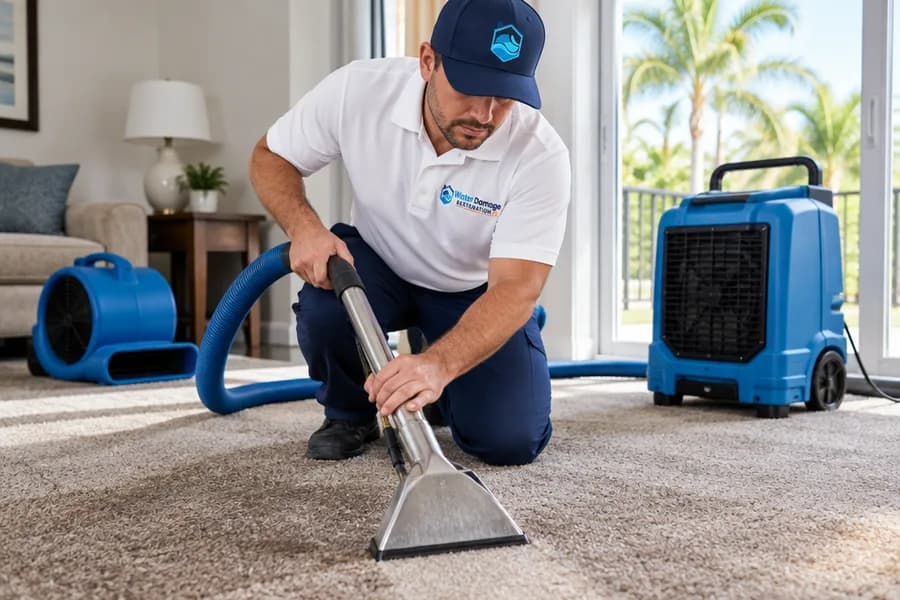
Carpet and its pad soak up and hold a large amount of water, and they stay wet long after the surface feels only damp. That trapped moisture is a common source of musty odors and mold, and across Florida's humidity it can start causing problems within a day or two.
Drying wet carpet quickly and thoroughly is what gives it the best chance of being saved rather than replaced.
Extraction first, then drying
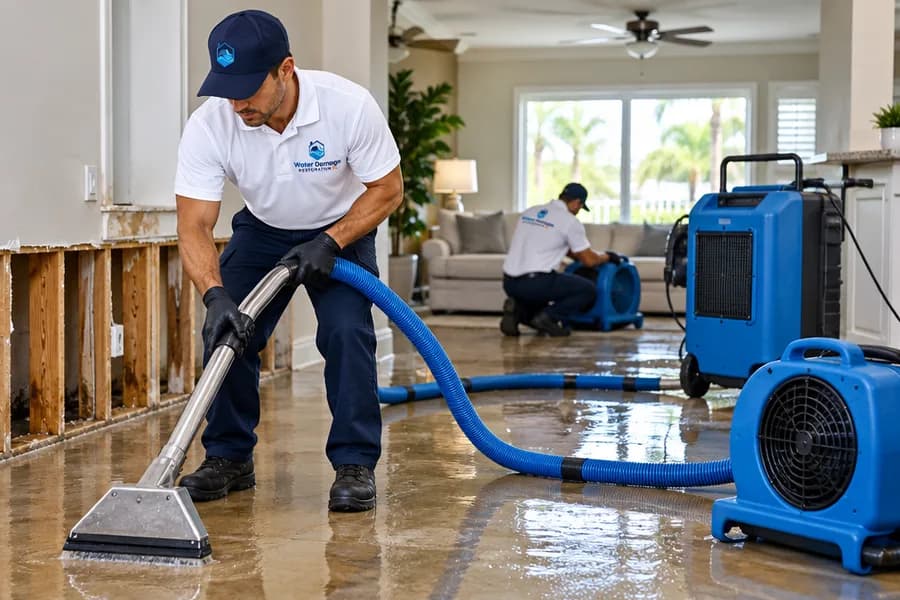
Effective carpet drying starts with getting as much water out as possible:
- Extract water from the carpet and pad with powerful extractors.
- Remove and replace saturated pad where needed, since it holds so much water.
- Direct airflow across and, where appropriate, beneath the carpet with air movers.
- Run dehumidifiers to pull the released moisture out of the air.
- Verify with moisture meters that carpet, pad area, and subfloor are dry.
Don't forget the subfloor
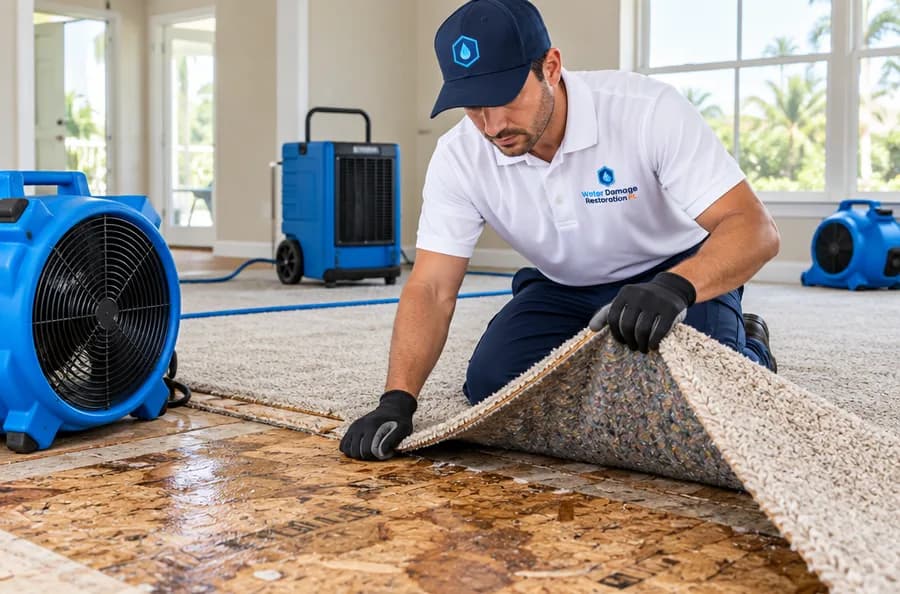
The carpet you can see is only the top layer. Beneath it, the pad acts like a sponge and the subfloor can absorb water and stay wet. Drying only the carpet surface leaves that hidden moisture to cause warping, staining, and mold.
Our technicians check the subfloor with moisture meters and dry it directly where needed, because a carpet that feels dry on top can still be sitting on a wet subfloor.
Can your carpet be saved?
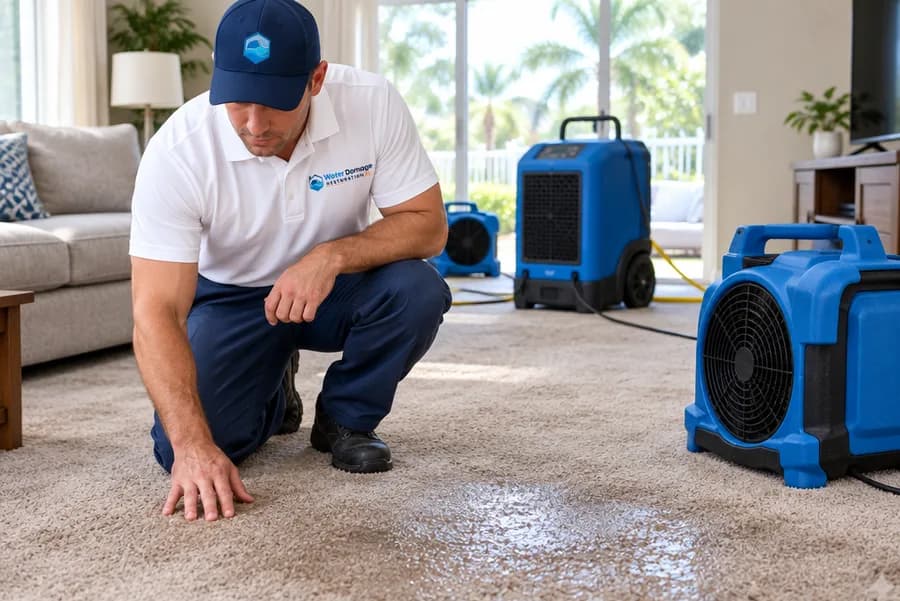
It depends on how clean the water was and how quickly drying began. Carpet soaked by clean water and dried promptly can often be saved, though the pad usually has to be replaced. Carpet soaked by contaminated gray or black water generally can't be saved safely and should be removed.
We assess the water category and the extent of saturation, then give you an honest recommendation rather than drying carpet that should be replaced.
Wet carpet drying across Florida
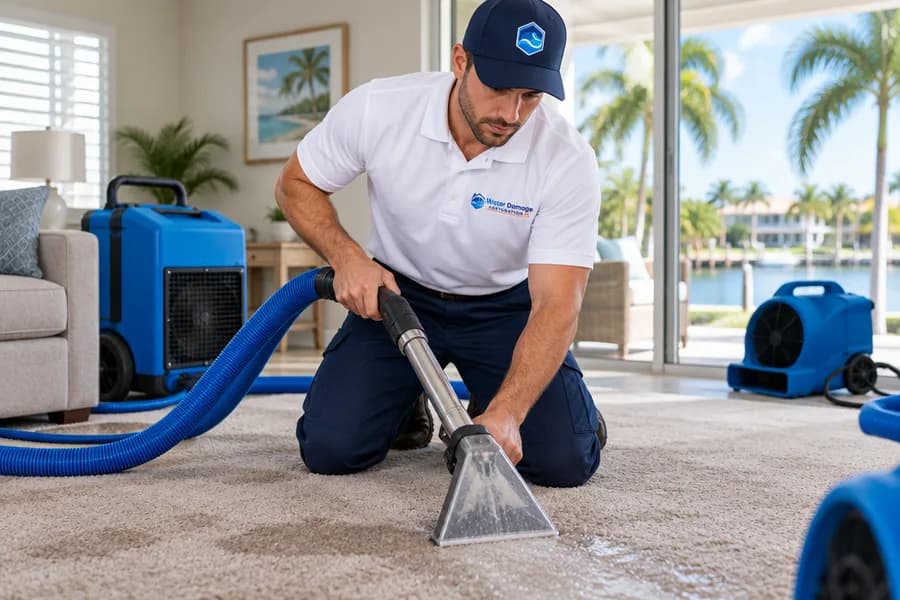
Our crews provide wet carpet drying across Florida, responding quickly because the speed of drying is what determines whether carpet can be saved and whether mold takes hold.
More Drying & Dehumidification services
View all Drying & Dehumidification servicesRequest this service
Tell us what happened and we'll follow up to confirm next steps.
Frequently asked questions
Often, if the water was clean and drying started quickly. The pad underneath usually needs replacing, and carpet soaked by contaminated water generally can't be saved safely. We assess and recommend honestly.
We extract as much water as possible, replace saturated pad where needed, direct airflow across and sometimes beneath the carpet with air movers, and run dehumidifiers. We verify the carpet, pad area, and subfloor are dry with meters.
Often, yes. Water passes through carpet and pad into the subfloor, which can stay wet even when the carpet feels dry. We check the subfloor with moisture meters and dry it directly where needed.
It can if it isn't dried quickly and thoroughly. Trapped moisture in carpet and pad is a common source of musty odors and mold. Fast extraction and complete drying is what prevents it.
As soon as possible. Carpet holds water and stays wet a long time, and the mold risk climbs within 24 to 48 hours. The sooner drying begins, the better the chance of saving the carpet.
Still have a question? Call us at (904) 555-0100