
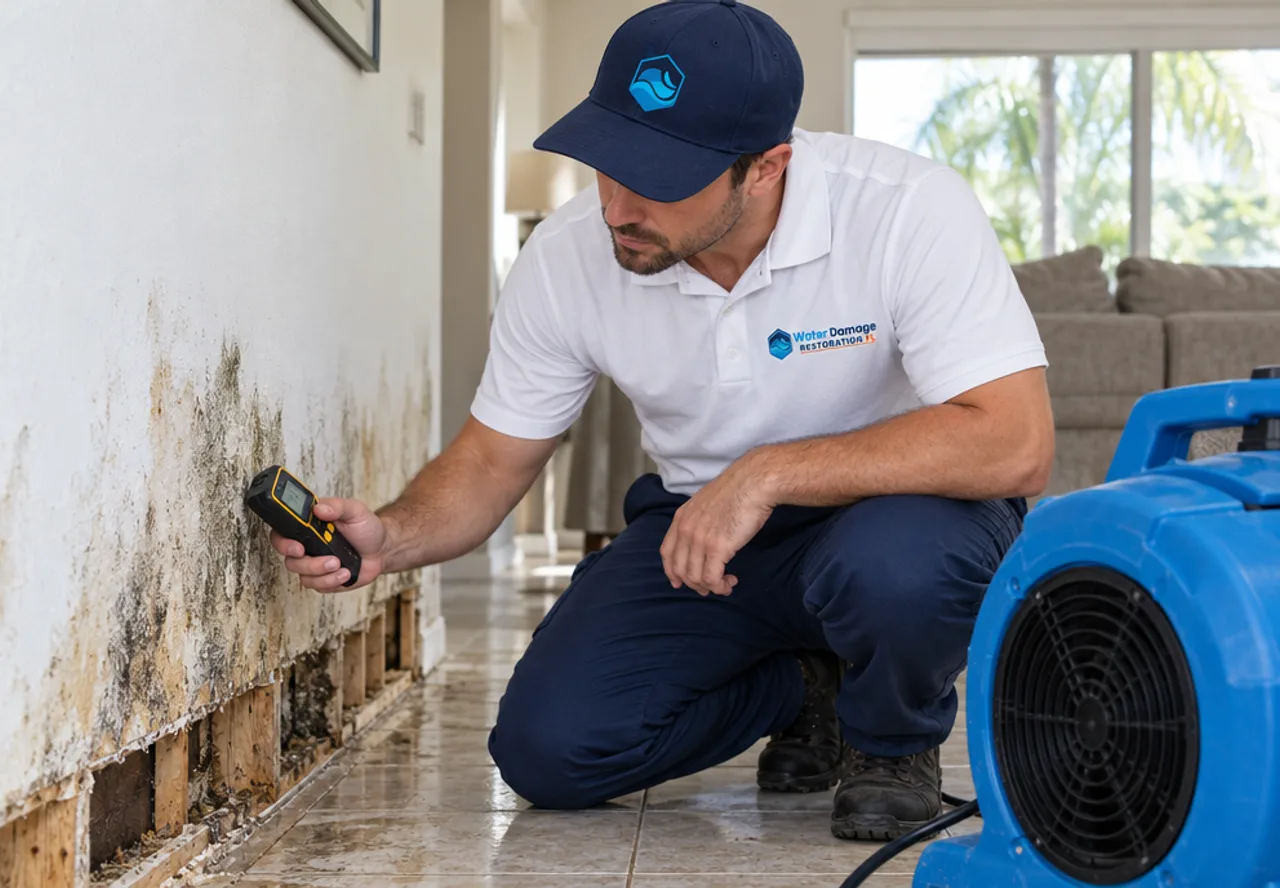
You know the smell — damp, earthy, a little stale. A musty odor in a home almost always means the same thing: moisture is present where it shouldn't be, and something is growing on it. It's one of the most useful early-warning signs there is, because it often shows up before any visible damage. The key is to treat it as a clue to investigate, not just an odor to cover up.
What actually causes the smell
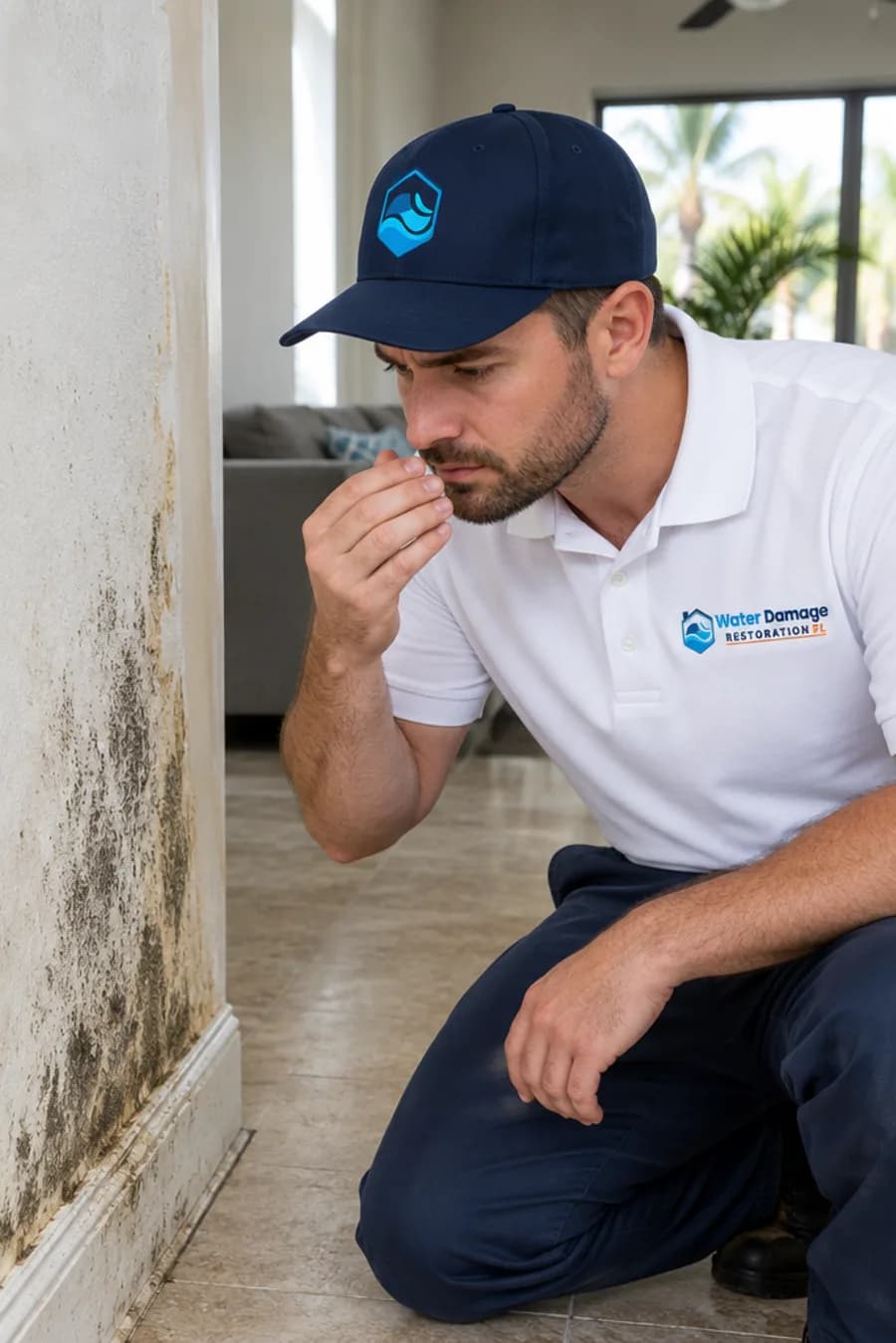
That musty smell comes from microbial growth — mold and mildew — releasing compounds as they grow on damp material. In other words, the odor is a byproduct of moisture plus something for mold to feed on, like drywall, wood, carpet, or dust. Where there's a persistent musty smell, there's almost always excess moisture behind it.
Common sources of a musty smell
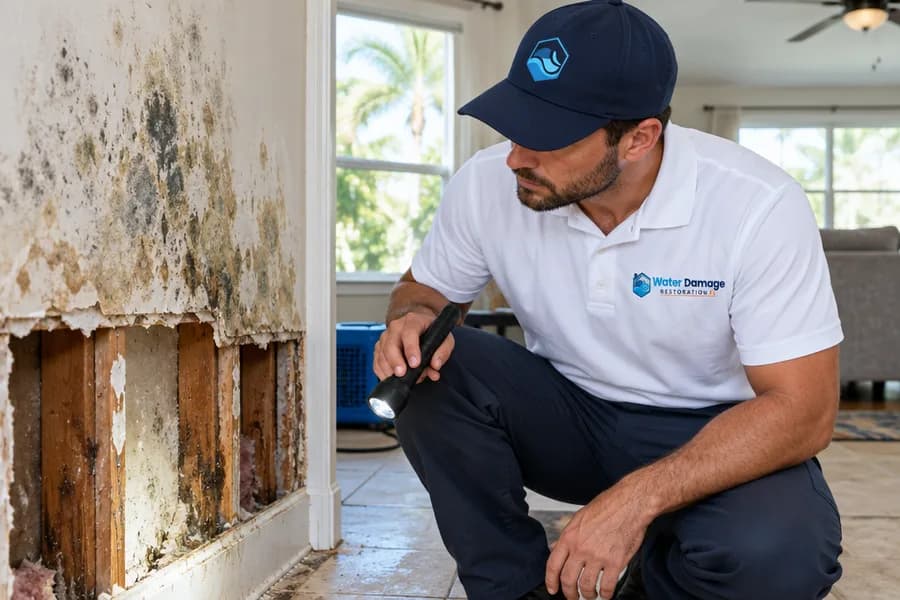
- A hidden leak inside a wall, under a floor, or above a ceiling.
- Water damage that wasn't fully dried, leaving moisture in materials.
- High indoor humidity, a constant factor in Florida.
- Damp basements, crawl spaces, and closets with poor airflow.
- Wet carpet and pad that were never properly dried.
- Condensation around HVAC systems and windows.
Why masking the smell never works
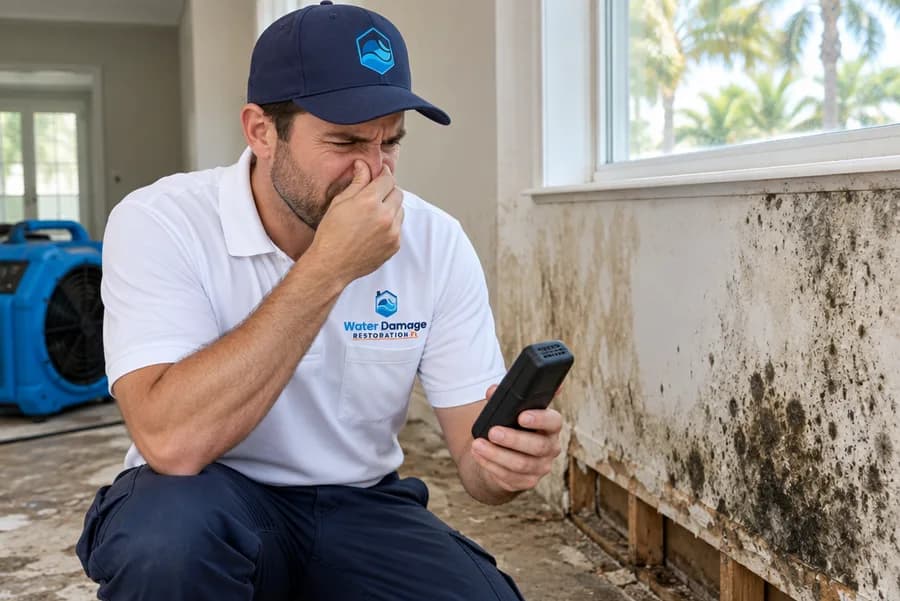
Air fresheners, candles, and sprays might cover a musty smell for a while, but it always comes back — because the source is still there. As long as the moisture and growth remain, they keep producing the odor. Masking it also means ignoring a warning sign that could point to hidden water damage or mold quietly spreading. The only real fix is to remove the source.
How to actually get rid of it
Eliminating a musty smell means dealing with the moisture and the growth behind it:
- Find the moisture source — a leak, humidity, or poor drainage — and correct it.
- Dry the affected materials completely, not just the surface.
- Remove materials too far gone to salvage, like saturated carpet pad.
- Address any mold growth with proper containment.
- Improve airflow and control humidity to prevent it returning.
Because the smell so often signals hidden moisture, a good first step is finding out where it's coming from. If it followed a leak or flood, the issue may be incomplete drying and dehumidification. If there's visible growth or the smell is strong and persistent, it may be time for mold remediation, which removes the growth and fixes the moisture source.
When to take it seriously
A faint, occasional smell that clears with ventilation may just be a stuffy room. But a persistent musty odor — especially one tied to a specific area, or one that appeared after water damage — is worth investigating. It's frequently the first sign of a problem that's cheaper and easier to fix early. Our guide on signs of hidden water damage covers the other clues to look for alongside the smell.
Musty smell vs. other household odors
Not every unpleasant smell is a moisture problem, so it helps to distinguish a musty odor from the rest. A musty smell is damp, earthy, and stale — it tends to be strongest in one area, worsens in humid weather or when a space is closed up, and returns after you air it out. That's different from a garbage or drain smell (usually sharper and tied to a specific fixture), or a general staleness that clears with ventilation. The persistent, localized, damp quality is the signature of microbial growth feeding on moisture.
How to track down the source
Finding where a musty smell comes from is a process of narrowing down:
- Notice where the smell is strongest and when — near a particular wall, room, or vent.
- Check the usual damp spots: under sinks, around windows, in closets, and near past leaks.
- Look for visual clues — staining, bubbling paint, or soft drywall — in that area.
- Consider recent water events that might not have fully dried.
- If you can't find it, moisture meters and thermal imaging can locate dampness behind surfaces.
When a musty smell means mold
Because a musty smell comes from microbial growth, a persistent one usually means mold or mildew is present — even if you can't see it. If the smell is strong, keeps returning, or is tied to an area with past water damage, it's worth treating as a possible mold problem rather than just an odor. At that point, addressing it means finding and fixing the moisture and removing the growth, not masking the smell — which only hides a warning sign while the problem continues.
Where musty smells hide, room by room
Tracking a musty smell is easier when you know the usual hiding spots in each area:
- Bathrooms — behind and under the vanity, around the tub and shower, and in the exhaust area.
- Kitchen — under the sink and behind the dishwasher and refrigerator.
- Laundry room — around the washer connections and in the humid air near the dryer.
- Basements and crawl spaces — where dampness and poor airflow combine.
- Closets on exterior walls — where condensation and still air meet.
- Around the HVAC air handler and vents — where condensation collects.
Quick fixes vs. real solutions
It's worth being clear about what actually works. Air fresheners, candles, charcoal bags, and ventilation can mask or temporarily reduce a musty smell, but none remove its source, so it returns. The real solution is always the same: find and correct the moisture, dry the affected materials completely, remove anything too far gone to salvage, and address any mold growth. A dehumidifier can genuinely help by lowering the humidity that feeds the growth, but only alongside fixing the underlying moisture — not as a substitute for it.
When the smell means it's time to call
A faint odor that clears with airing out may just be a stuffy room. But call for a professional assessment when the smell is strong, persistent, tied to a specific area, or connected to past water damage — and especially if you also see staining, soft drywall, or visible growth. At that point the musty smell is likely signaling hidden moisture or mold that needs finding and fixing, and catching it early is far easier than dealing with a spread-out problem later.