
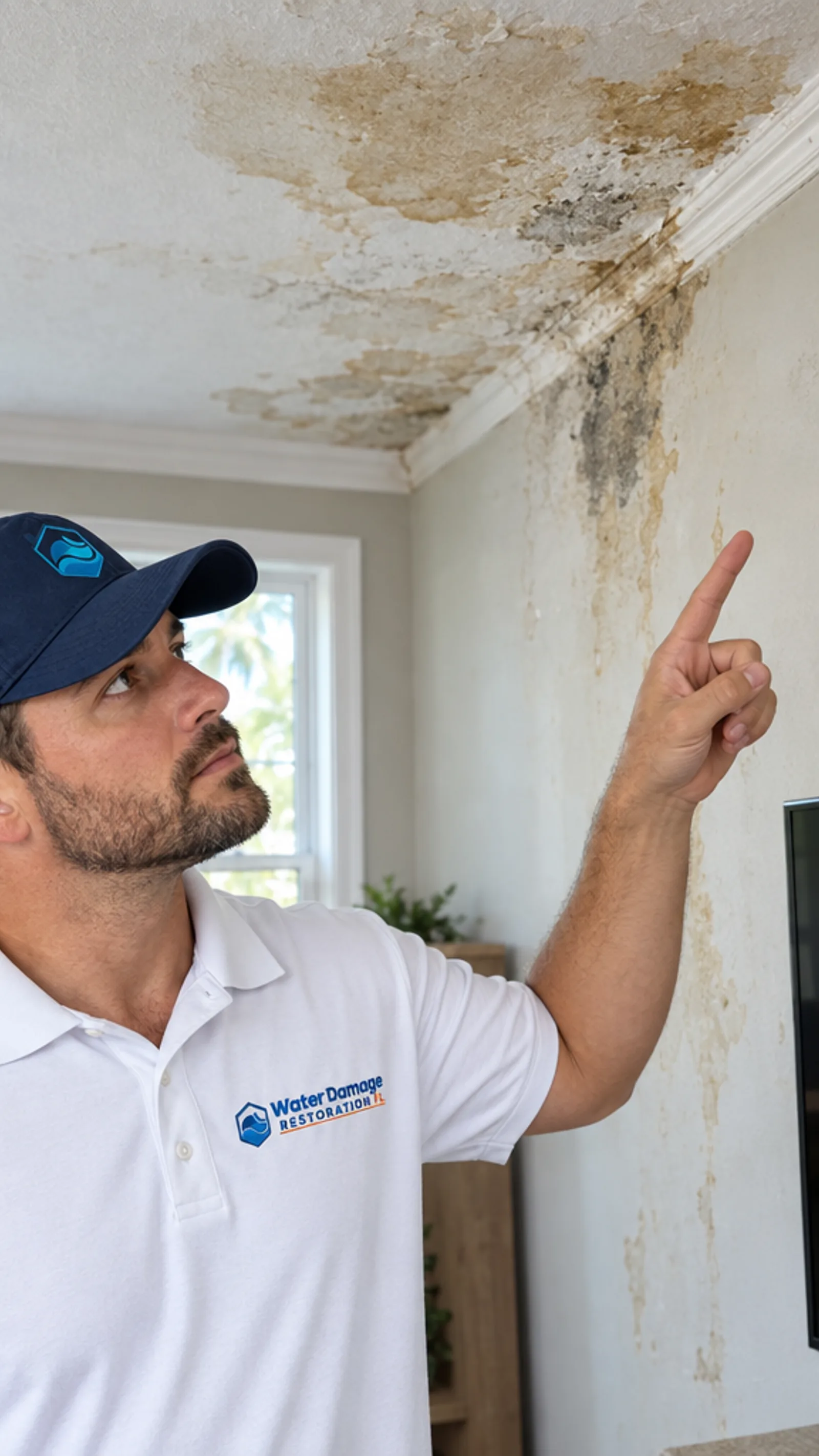
The most damaging water problems are often the ones you can't see. A slow leak inside a wall or above a ceiling can soak framing, insulation, and drywall for weeks or months before anything shows on the surface — and by the time it does, the damage, and often mold, is well established. Knowing the early warning signs lets you catch a hidden leak before it becomes a major repair.
Why hidden water damage is so common
Water travels. It follows pipes, framing, and gravity, and it surfaces far from its source. A stain on a ceiling might come from a roof leak, a bathroom above, or a pipe running through the joists. Because the water spreads out of sight, the visible sign is usually the last symptom, not the first — which is exactly why paying attention to subtle clues matters.
Visual signs to watch for
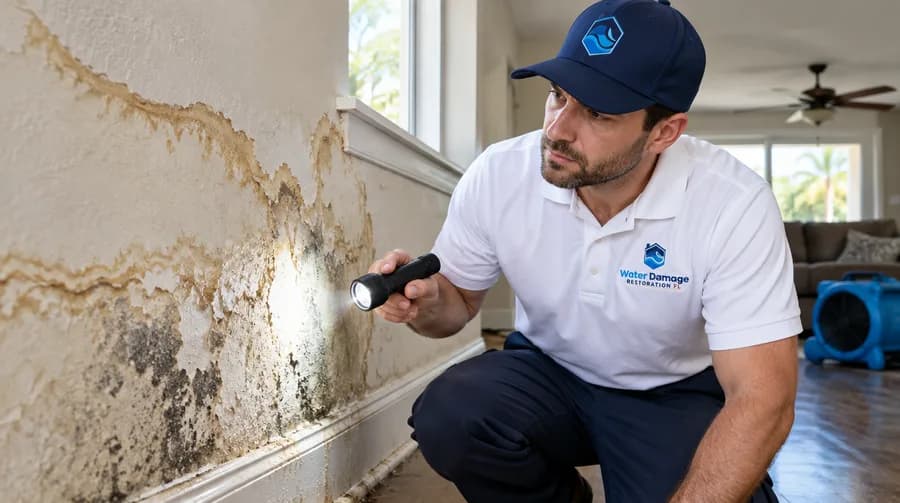
- Water stains or discoloration on walls or ceilings, often yellowish or brownish rings.
- Bubbling, peeling, or cracking paint.
- Drywall that looks sagging, swollen, or feels soft to the touch.
- Warped or cupping flooring with no obvious spill.
- Baseboards or trim pulling away from the wall.
Signs you can smell and feel
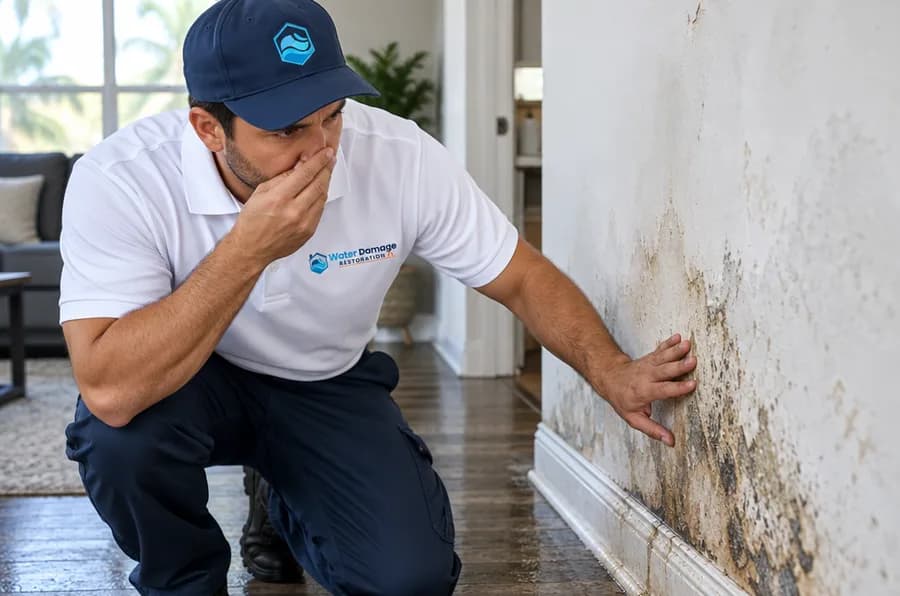
Some of the earliest clues aren't visual at all:
- A persistent musty or damp smell in one area — often the very first sign.
- A room that feels unusually humid or clammy.
- Cool, damp spots on a wall.
- Increased allergy-like symptoms indoors (worth noting, though a doctor addresses health questions).
That musty smell is worth taking seriously — it often means moisture and possibly mold are present before anything is visible. We cover it in our post on what causes a musty smell.
The clue in your water bill
One overlooked sign of a hidden leak is an unexplained rise in your water bill. If your usage jumps without a change in habits, water is going somewhere — and a hidden supply-line leak is a common culprit. It's a good prompt to look closer, especially combined with any of the other signs.
Why catching it early matters so much
A hidden leak doesn't stay small. Left alone, it soaks more material, spreads farther, and gives mold time to establish — mold can begin within 24 to 48 hours on wet materials, and hidden leaks often stay wet far longer. What could have been a minor repair becomes drywall replacement, structural drying, and remediation. Catching it early is the difference between a small fix and a big one.
How hidden moisture is found and fixed
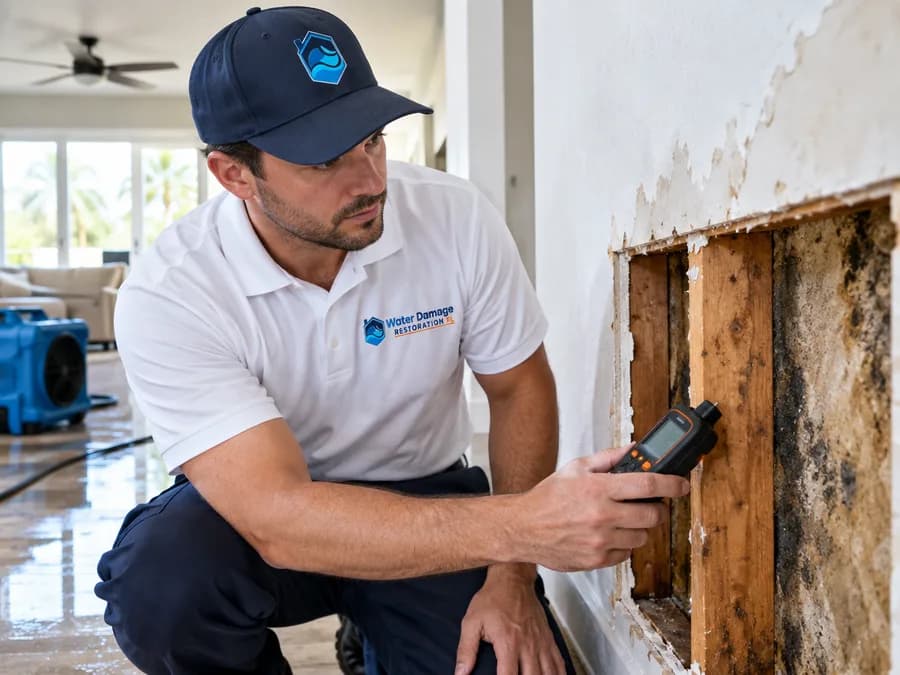
You can watch for the signs, but confirming a hidden leak takes the right tools. Moisture meters measure how wet materials actually are, and thermal cameras reveal cool, damp areas behind surfaces that aren't visible to the eye. If you suspect hidden water damage, our team can trace it and handle the resulting leak and plumbing water damage — drying the structure and repairing what the water affected. Even after a leak you've already dried yourself, a moisture check can confirm nothing was left behind.
Where hidden leaks most often start
Hidden water damage usually traces back to a familiar set of sources. Supply lines and pipe fittings inside walls fail slowly. Drain lines under sinks and behind toilets seep. Roof flashing and worn seals let storm water into the attic. Appliance connections behind refrigerators and dishwashers drip unseen. In Florida, clogged AC condensate lines are a frequent culprit, overflowing into ceilings and walls. Knowing these common origins tells you where to look first when a warning sign appears.
A room-by-room check
A periodic walk-through catches problems while they're small:
- Bathrooms — check around the tub, shower, and toilet base, and the ceiling below an upstairs bath.
- Kitchen and laundry — look under the sink and behind the dishwasher, fridge, and washer.
- Ceilings — scan for rings, sagging, or discoloration, especially under bathrooms and the roof.
- Exterior walls and windows — feel for damp, cool spots and check for peeling paint.
- Attic and around the AC air handler — look for stains, damp insulation, and condensate overflow.
What to do when you suspect hidden damage
If the signs point to a hidden leak, don't paint over it or wait and see. Note what you're seeing and where, check for the likely source, and get the area assessed with moisture meters and thermal imaging — the only reliable way to confirm water inside walls and how far it has spread. Catching it early keeps a small repair from becoming drywall replacement, structural drying, and mold remediation later. Even a leak you've already dried yourself is worth a quick moisture check to be sure nothing was left behind.
Tools professionals use to find hidden water
When the signs point to hidden water but you can't see it, professionals rely on tools that reveal what the eye can't:
- Moisture meters — measure the actual moisture content of walls, floors, and framing.
- Thermal (infrared) cameras — reveal cool, damp areas behind surfaces without opening them.
- Hygrometers — track humidity in the air of a suspect space.
- Borescopes — small cameras that peek inside wall cavities through tiny openings.
These let a technician map where water has traveled and confirm the full extent, so drying and repairs cover everywhere it reached — not just the visible stain.
Hidden damage after a storm
Storms are a common source of hidden water damage, because wind-driven rain and roof leaks put water into the attic and walls before anything shows inside. After a significant storm, it's worth checking the attic for damp insulation or staining, scanning ceilings for new marks, and watching for a musty smell in the days that follow. Storm-related hidden damage often reveals itself slowly, so a problem that seems minor right after the storm can grow if the moisture isn't found and dried.
The real cost of ignoring the signs
It's easy to tell yourself a small stain or faint smell will sort itself out, but hidden water doesn't resolve on its own — it spreads. A leak caught early might mean drying a small area and a minor repair. The same leak ignored for weeks can mean replacing soaked drywall and insulation, structural drying, and mold remediation. The signs are the cheap early-warning system; acting on them is what keeps a hidden leak from becoming a major, costly project.