Water Damage Drying in Florida
Water damage drying is the drying of a property and its contents after water damage. Our our crews use air movers and commercial dehumidifiers to bring materials and belongings back to normal moisture levels — verified with readings — after the standing water has been removed.
A typical drying timeline, day by day
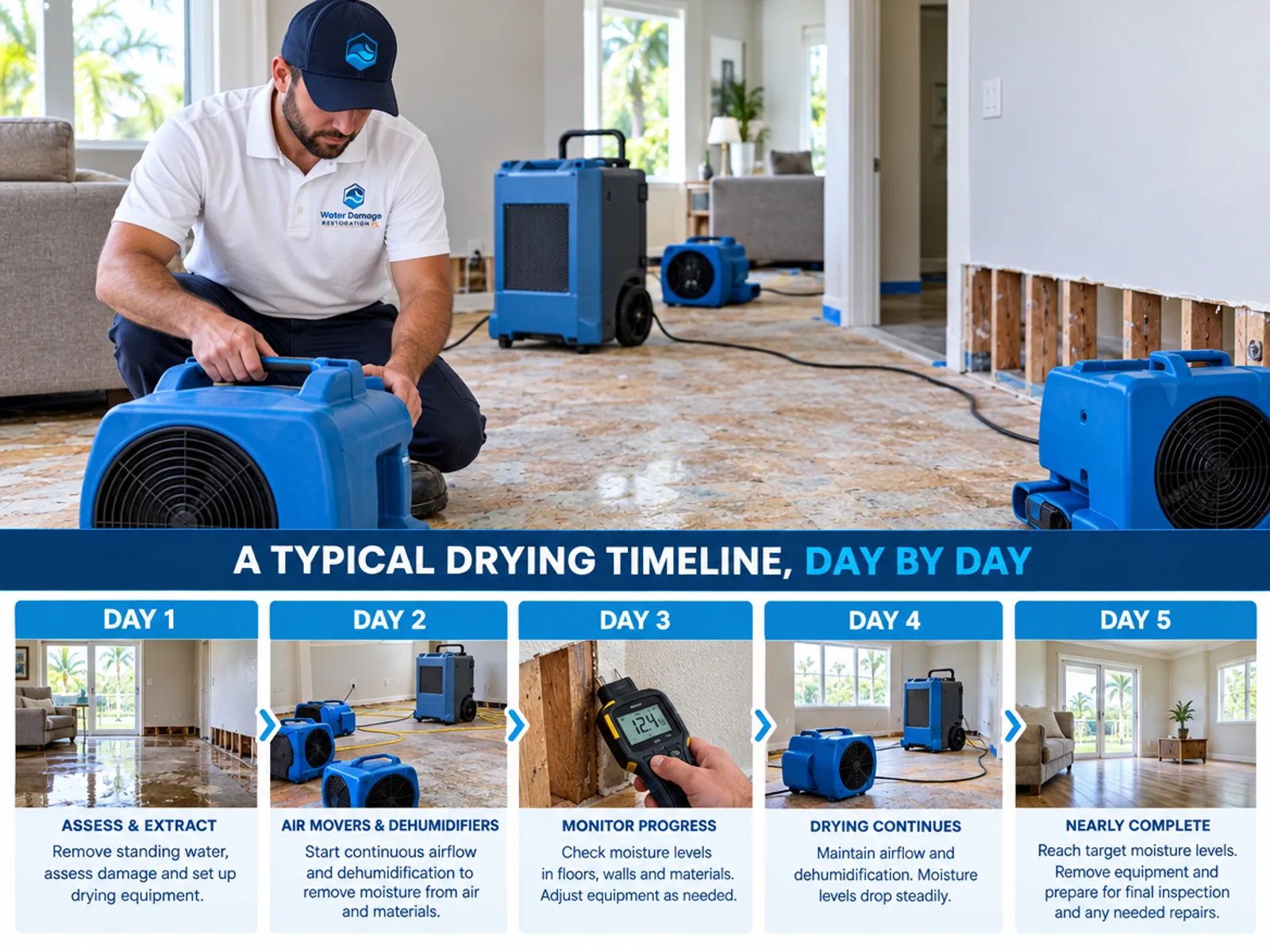
Knowing roughly how drying unfolds helps set expectations for the days after a water loss. While every job differs, most follow a recognizable arc:
- Day 1 — equipment is placed, baseline moisture readings are taken, and the fastest evaporation begins as air movers and dehumidifiers start work.
- Days 2-3 — moisture readings are checked and logged, and equipment is repositioned as surfaces dry and the harder-to-reach materials give up their water.
- Days 4-5 — the last stubborn materials, like framing and subfloor, reach their targets; readings are verified against unaffected areas.
- Completion — once materials hit their drying goals, equipment is removed and any repairs can begin.
Why household fans aren't enough
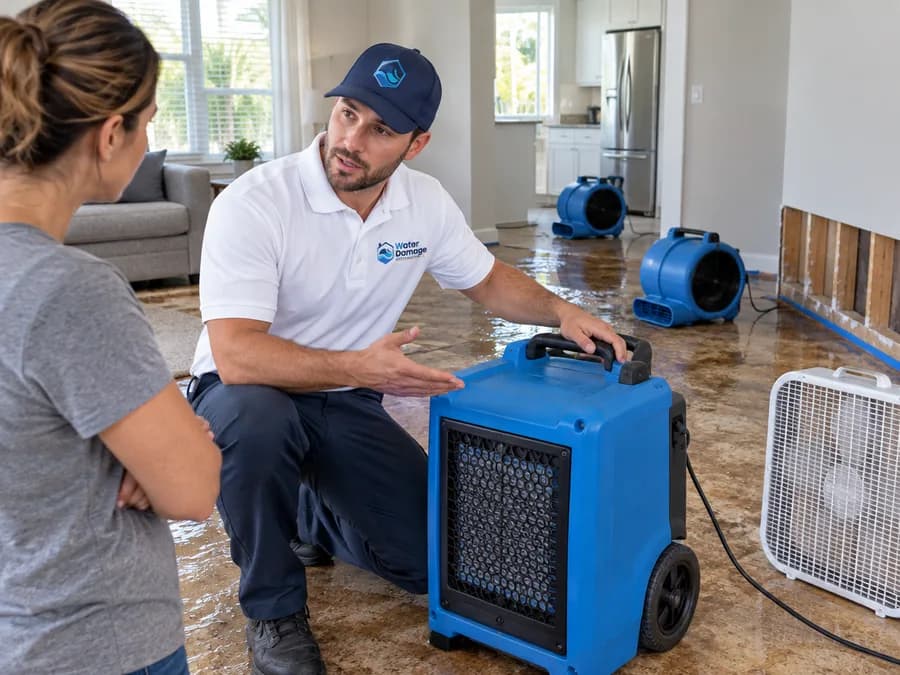
After a leak, it's tempting to point a few box fans at the wet area and open the windows. Fans do move air, but they don't remove moisture from the air the way commercial dehumidifiers do — and without that, the moisture evaporating from your walls and floor simply resettles somewhere else in the room.
In Florida's humid climate the problem is worse, because opening windows on a humid day can pull more moisture in than it lets out. Fans also can't reach the water trapped inside wall cavities, under flooring, and in subfloors, which is where the damaging moisture usually hides.
Professional drying pairs airflow with dehumidification and moisture monitoring, so the water actually leaves the building rather than just moving around inside it. That's the difference between a space that looks dry and one that is dry.
Drying after the water is gone
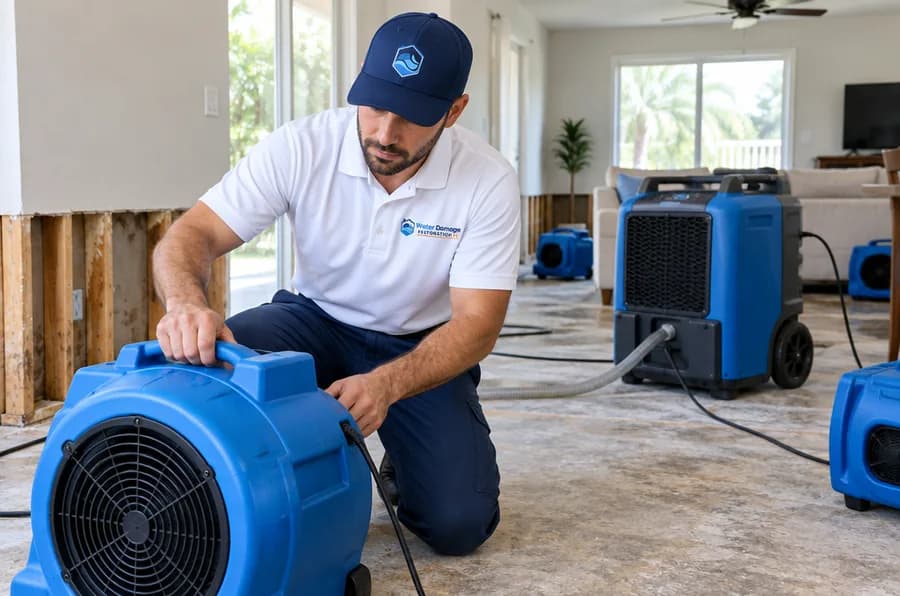
Removing standing water is only part of the job. Drying is what handles the moisture that remains soaked into materials and held in the air. Without it, a property that looks dry can still develop warping, staining, and mold in the days and weeks that follow.
Water damage drying covers both the structure and the contents, bringing everything back to a stable, normal moisture level.
How the drying process works
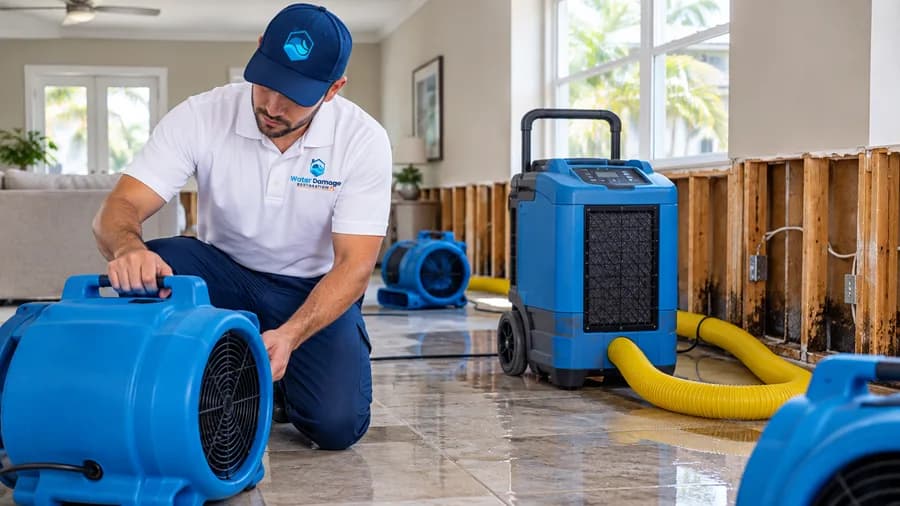
Drying is a controlled process, not just running fans:
- Air movers accelerate evaporation from wet surfaces.
- Dehumidifiers remove the released moisture from the air.
- Moisture meters track progress across materials.
- Equipment is adjusted daily as materials dry.
Drying different materials
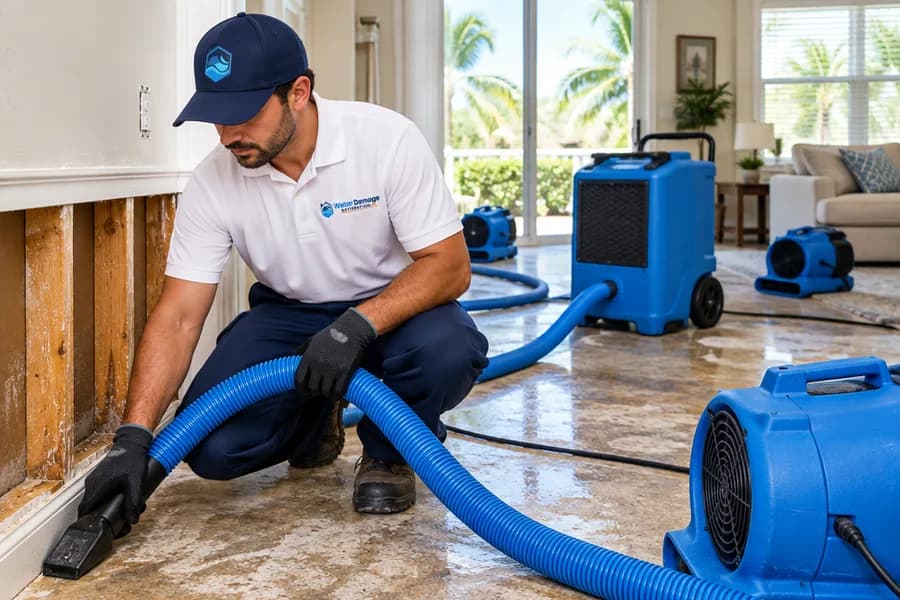
Materials release moisture at very different rates, so each needs the right approach. Drywall and insulation dry relatively quickly once airflow reaches them, though saturated insulation often has to be removed. Wood and engineered flooring hold moisture stubbornly and may need specialty mats. Concrete releases moisture slowly for a long time.
Matching the method to the material — and to how wet it actually is — is why professional drying reaches areas that fans alone never will.
Drying your contents too
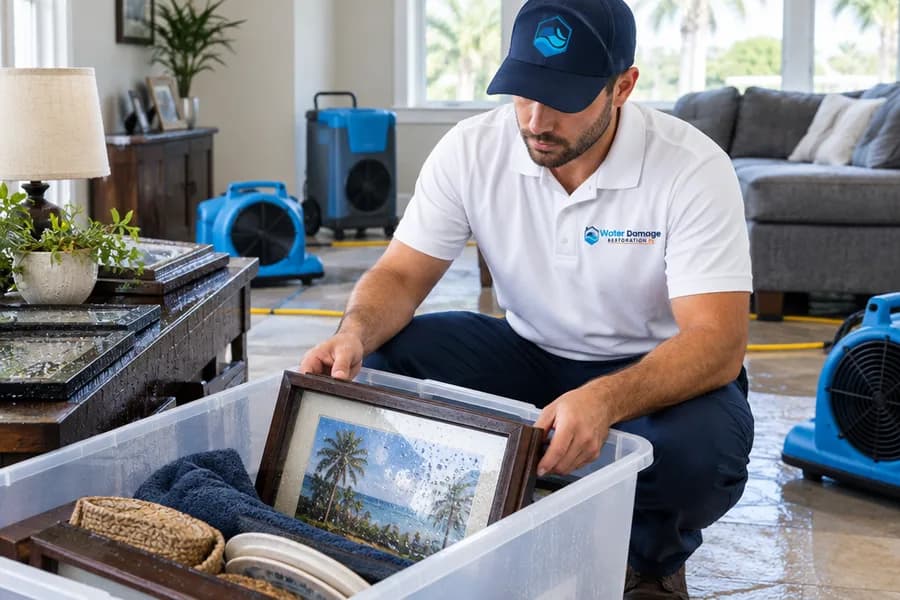
Water damage affects belongings as well as the building. Where possible, our crews dry and salvage furniture, documents, and other contents alongside the structure, advising honestly on what can be saved versus what's beyond recovery.
The goal is to restore as much of your property as safely possible, rather than replacing items that could have been dried.
Verified drying across Florida
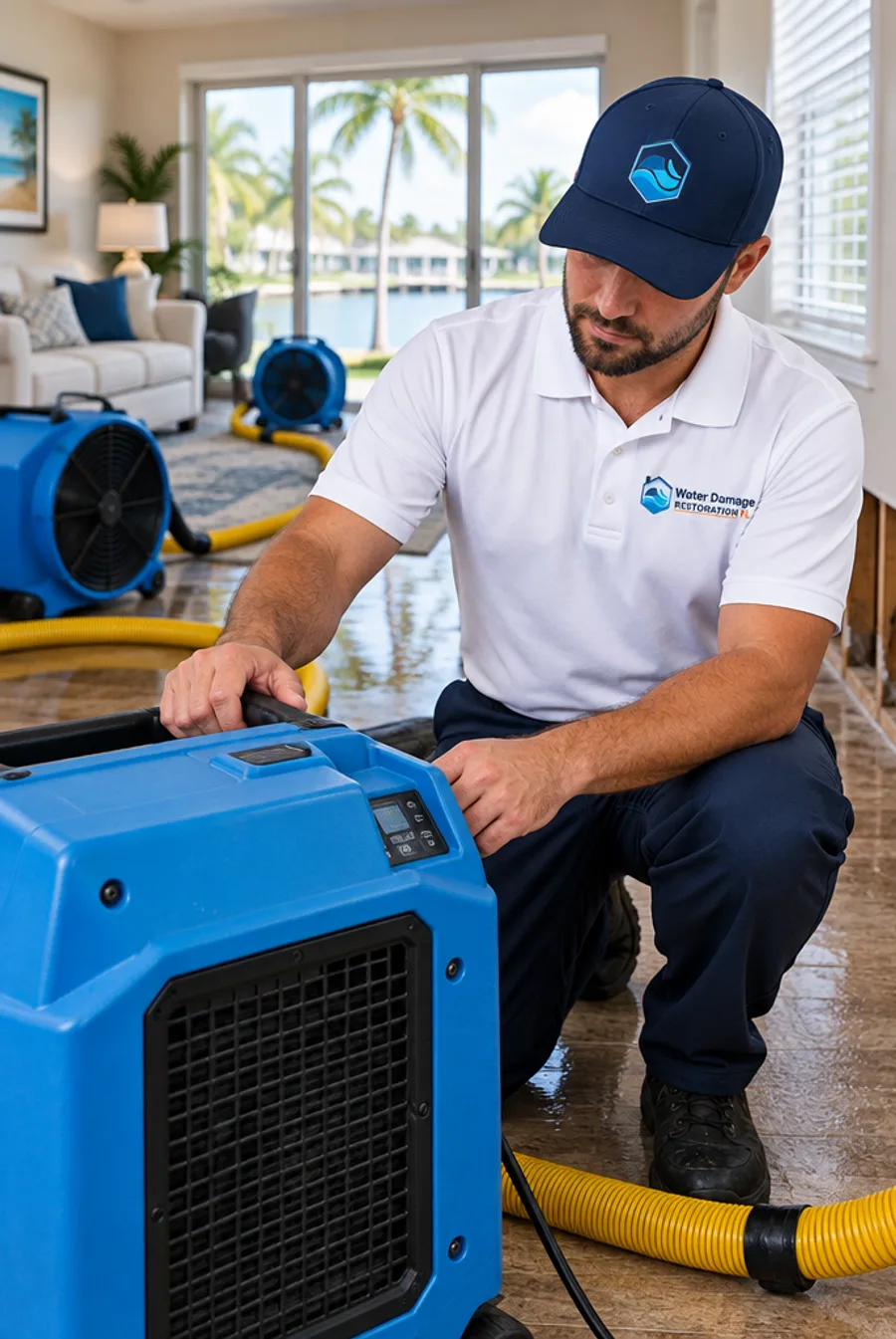
Our crews provide water damage drying across Florida. Because Florida's humidity works against natural drying, we manage the environment and verify results with moisture readings, so materials reach their targets rather than staying quietly wet.
More Drying & Dehumidification services
View all Drying & Dehumidification servicesRequest this service
Tell us what happened and we'll follow up to confirm next steps.
Frequently asked questions
Most residential drying takes three to five days, depending on how much water there was, which materials are wet, and the humidity. We dry to moisture targets and monitor with meters rather than working to a fixed schedule.
Both, where possible. We dry and salvage furniture, documents, and other contents alongside the structure, and advise honestly on what can be saved versus what's beyond recovery.
Materials hold and release moisture differently — drywall dries fairly quickly, wood flooring slowly, concrete very slowly. We match the drying method to each material and monitor until it reaches its target.
Yes. Surfaces can feel dry while materials underneath and inside walls are still wet. That hidden moisture causes warping and mold, which is why drying is verified with meters, not by touch.
No — drying works best when the equipment runs continuously. Turning it off slows the process and raises the mold risk. We place equipment to minimize disruption and explain how long it needs to run.
Still have a question? Call us at (904) 555-0100