
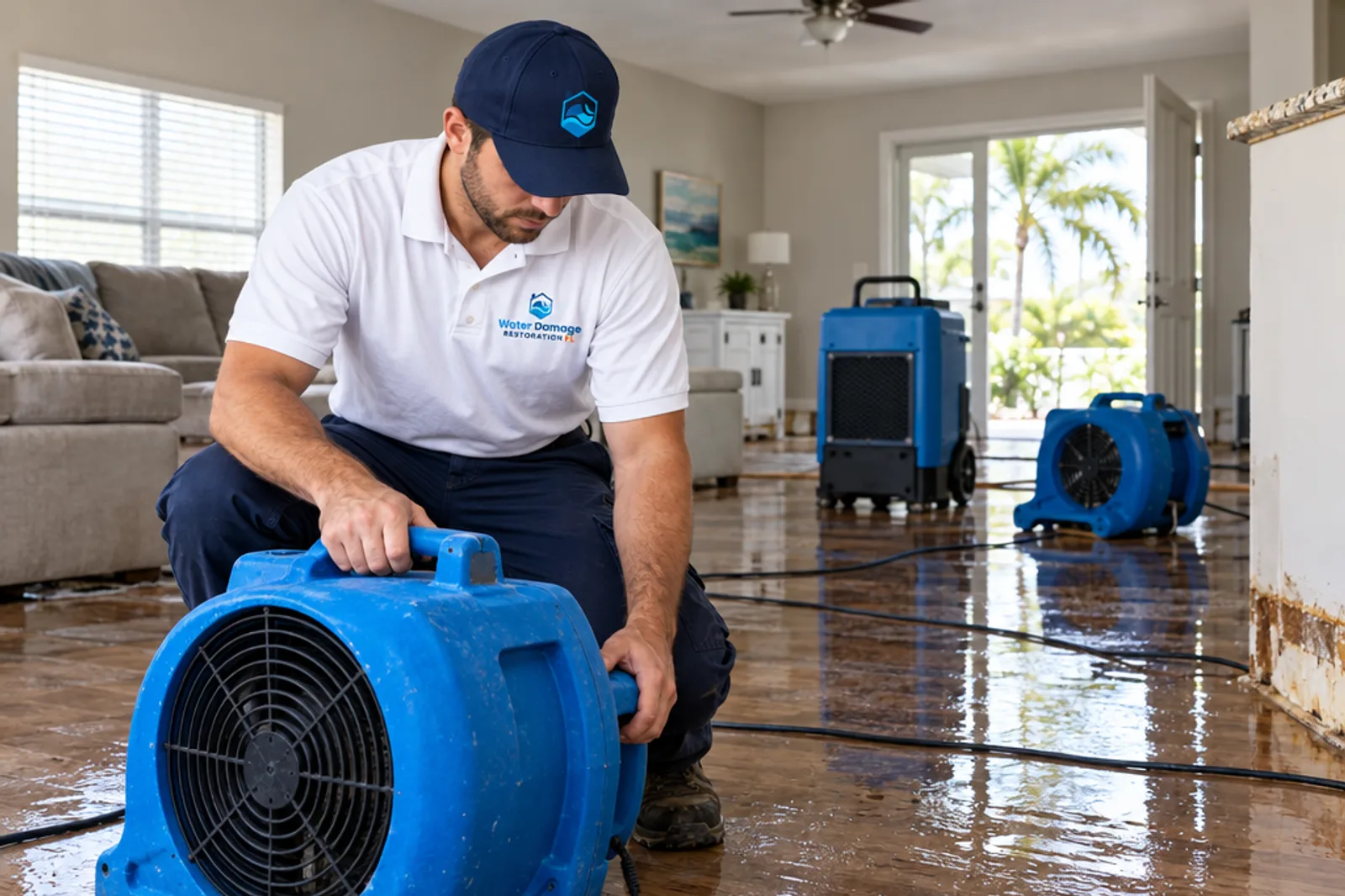
A flooded room is stressful, and the instinct is to grab towels and box fans and start drying. That instinct is right, but the details matter — especially the difference between drying the surface and drying the structure. Here's how to approach a flooded room safely and effectively, and how to know when it's a job for professional equipment.
First, make sure it's safe
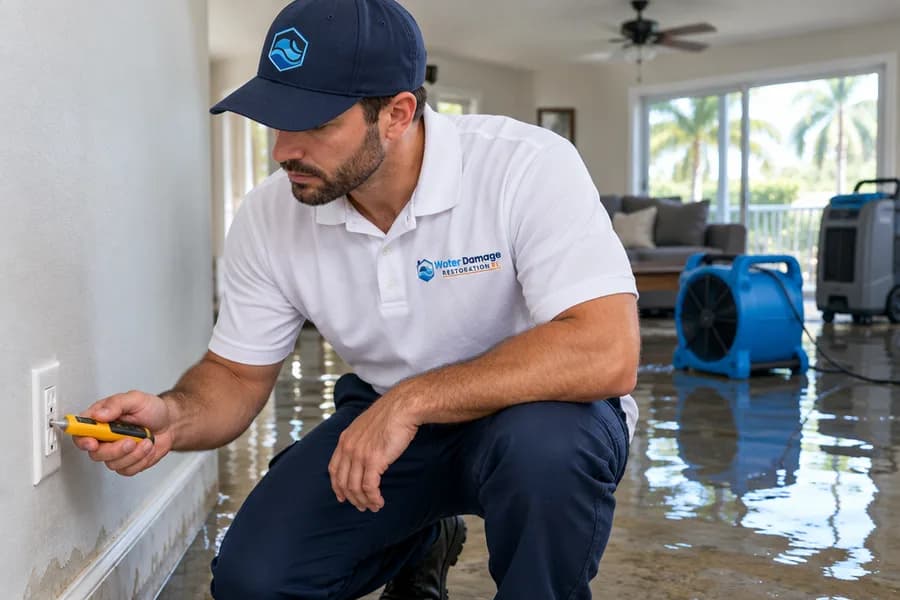
Before anything else, safety. Water and electricity are a dangerous combination, and floodwater can be contaminated.
- If water is near outlets, appliances, or the electrical panel, cut power to the area before entering — if you can reach the panel safely.
- Treat floodwater from outside or a backup as potentially contaminated; avoid contact and don't wade through it barefoot.
- Watch for hidden hazards under the water, like debris or unstable flooring.
- If the water is deep or contaminated, don't attempt it yourself.
Remove the water
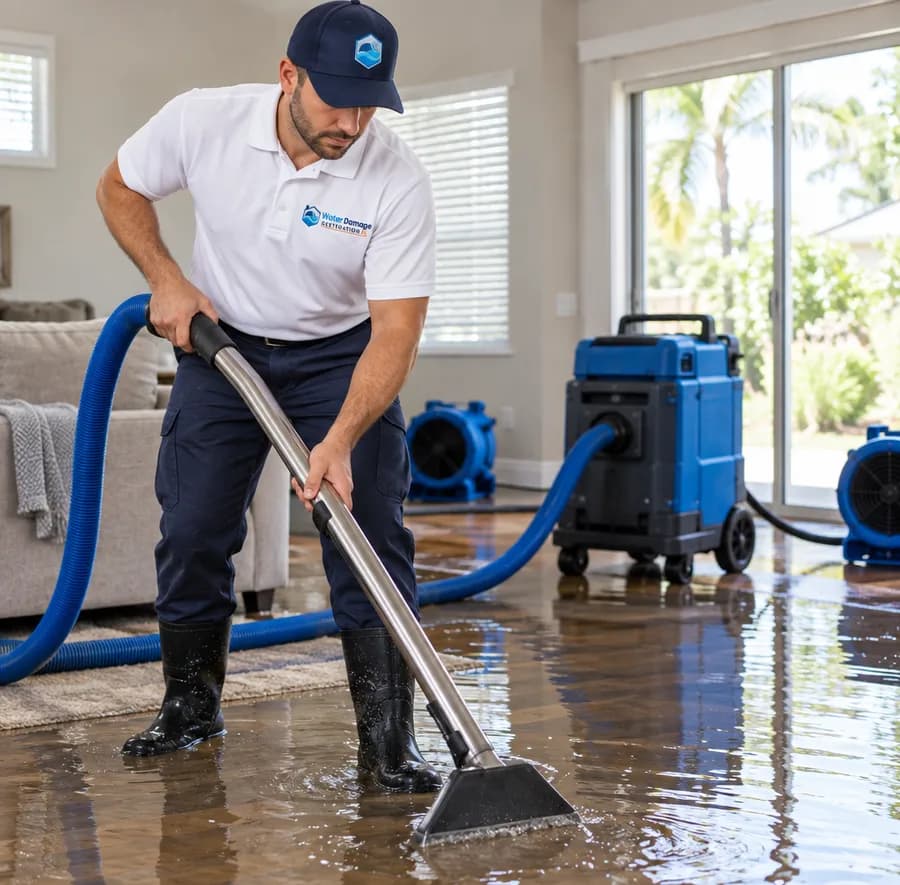
Drying can't start until standing water is gone. For a small amount of clean water, a wet vacuum, mops, and towels may be enough. For anything more, you need real extraction — pumps and extractors that move volume and pull water out of carpet and materials. This is the point where a serious flood outgrows household tools, and where professional water extraction makes the biggest difference.
Get air moving and moisture out
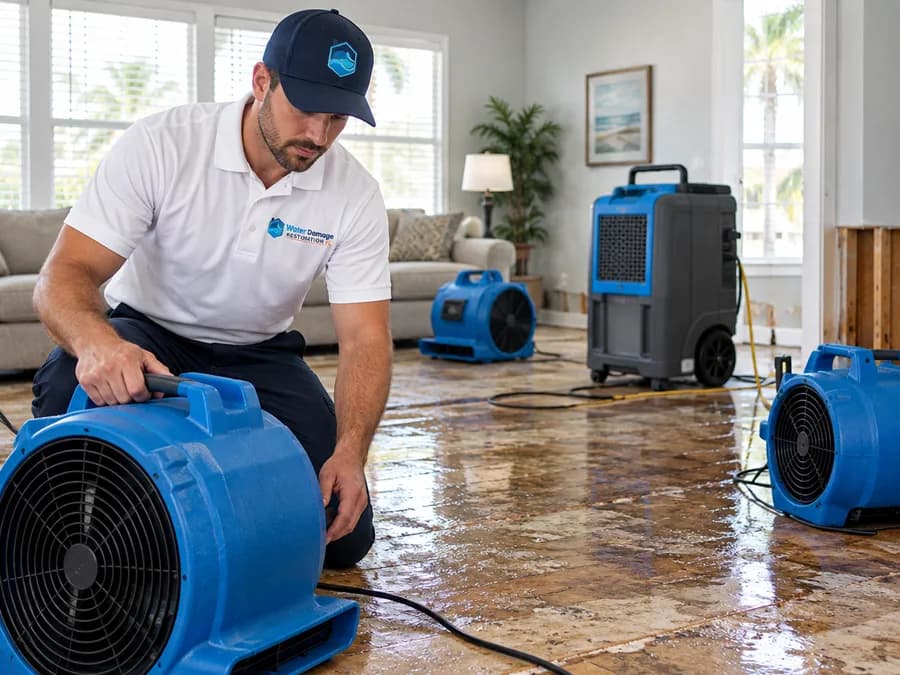
Once the standing water is cleared, drying is about two things working together: moving air across wet surfaces to speed evaporation, and removing that moisture from the air so it doesn't resettle. Fans handle the first; you need a dehumidifier for the second.
This is where a lot of DIY drying falls short in Florida. Opening the windows on a humid day can actually pull more moisture in, and box fans without dehumidification just move damp air around. Effective drying manages the environment, which is what proper drying and dehumidification equipment is built to do.
Don't forget what you can't see
The biggest mistake in drying a flooded room is stopping when the surface feels dry. Water soaks into baseboards, wicks up drywall, gets under flooring, and settles into the subfloor — and that hidden moisture is what causes warping, staining, and mold later. Carpet is especially deceptive, since the pad underneath holds water long after the surface seems dry.
Moisture meters are the only reliable way to know whether materials are actually dry, which is why professional drying works to measured targets rather than appearances.
When to call for help
A small clean-water spill you catch immediately is often manageable yourself. Call for professional help when:
- The water was more than a minor amount or sat for a while.
- The floodwater may be contaminated (from outside, or a backup).
- Carpet, walls, or flooring are saturated.
- There's a musty smell or any sign the room isn't drying.
- You want to be sure hidden moisture isn't left behind.
In Florida's humidity, mold can begin within 24 to 48 hours, so if there's any doubt about whether a flooded room is truly drying, it's worth getting it assessed before that window closes.
Drying different parts of the room
A flooded room isn't uniform — different surfaces need different attention, and treating them all the same is a common mistake. Hard floors dry relatively quickly once water is off the surface, but water can slip into seams and reach the subfloor. Carpet hides water in its pad and needs extraction before airflow does any good. Walls wick moisture upward, so the bottom of the drywall and the baseboard often stay wet after the visible water is gone.
Effective drying directs airflow across all these surfaces while a dehumidifier removes the moisture from the air, and it doesn't stop until each material — not just the ones that dry fastest — has reached a normal level.
Common drying mistakes to avoid
A few missteps turn a manageable job into a bigger one:
- Stopping when the surface feels dry, while walls and subfloor are still wet.
- Relying on fans alone with no dehumidifier, so moisture just resettles.
- Opening windows on a humid day, which can add moisture rather than remove it.
- Leaving wet carpet pad in place instead of extracting or replacing it.
- Ignoring the smell — a musty odor means moisture is still present.
When to stop and call for help
Knowing your limits matters. Call for professional help if the water was contaminated, if it sat for a while, if carpet or walls are saturated, if a musty smell develops, or if the room simply isn't drying despite your efforts. In Florida's humidity, the window before mold starts is short, so if there's any doubt about whether you're winning the drying battle, it's worth getting it assessed rather than discovering a mold problem later.
The equipment that makes drying work
Effective drying comes down to the right tools working together, and it's worth knowing what each does:
- Extractors and wet vacuums — remove standing and absorbed water before drying starts.
- Air movers — push air across wet surfaces to speed evaporation into the air.
- Dehumidifiers — pull that moisture out of the air so it doesn't resettle.
- Moisture meters — measure progress and confirm when materials are dry.
- Thermal cameras — reveal damp areas hidden behind surfaces.
How long a flooded room takes to dry
Most flooded rooms take three to five days to dry properly with good equipment, though it depends on how much water there was, which materials got wet, and the humidity. Hard materials like solid wood and concrete take longer, and Florida's humid air slows everything down. Rather than a fixed schedule, drying should continue until moisture readings confirm the materials — including the ones you can't see, like subfloor and the base of walls — have returned to normal. Pulling the equipment early because a surface feels dry is the most common way drying goes wrong.
Preventing mold while you dry
Since mold is the main risk of a flooded room, drying is really mold prevention in action. A few things keep it at bay:
- Start drying as fast as possible — the 24-to-48-hour window is short.
- Remove saturated materials like carpet pad that can't dry quickly.
- Run dehumidification, not just fans, to actually lower the moisture.
- Dry the hidden areas — inside walls and under floors — not just the surface.
- Confirm dryness with readings before considering the job done.