Storm Water Damage in Florida
Storm water damage restoration addresses water that enters a property during storms and heavy rain. Our our crews remove the water, dry the structure, and repair the damage — handling storm water safely, since it often carries outside contaminants.
Wind-driven rain vs. rising water
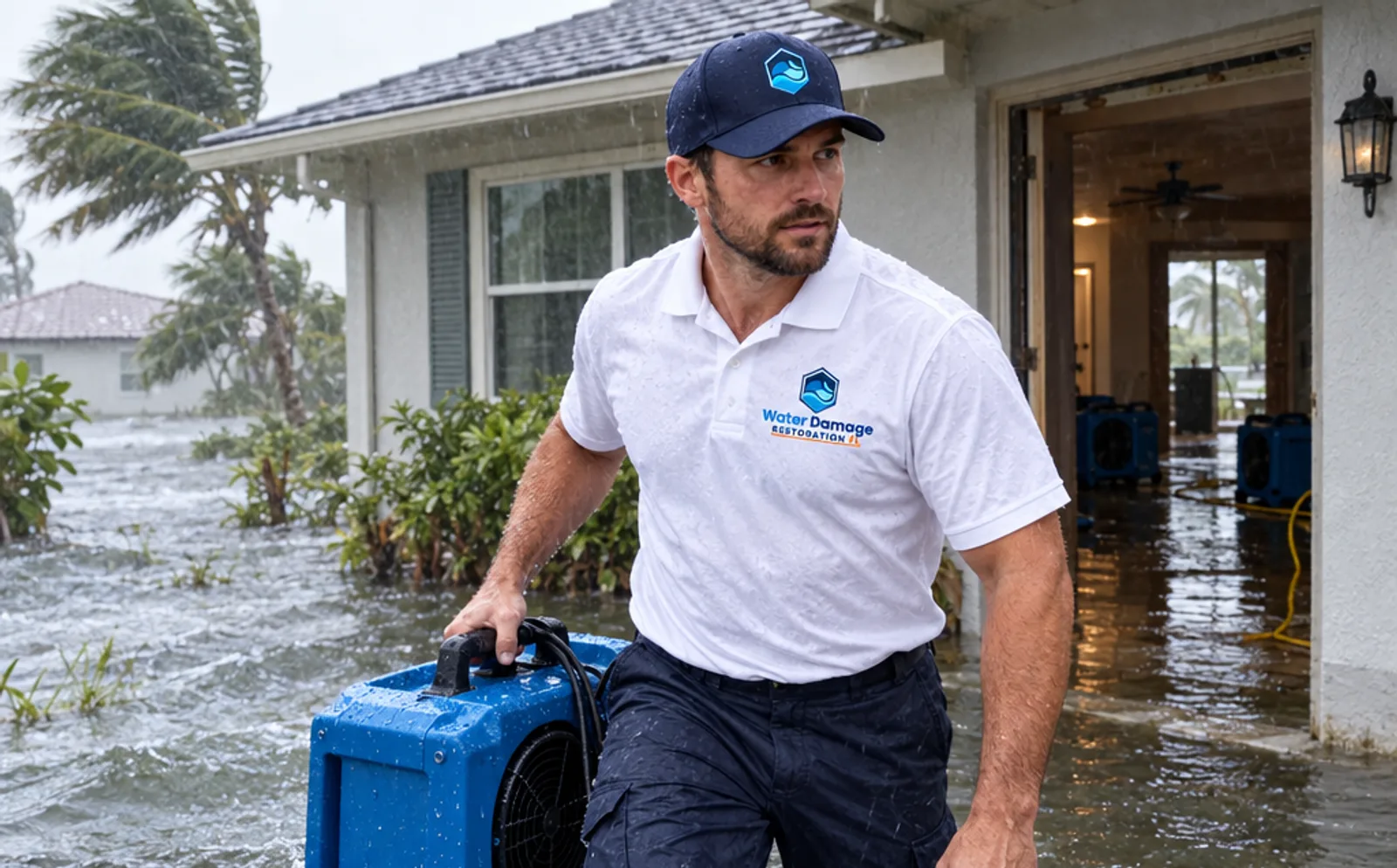
Storm water enters a property in two broadly different ways, and the difference matters for both the cleanup and your insurance. Understanding which you're dealing with shapes the response.
| Wind-driven rain | Rising water / surge | |
|---|---|---|
| Entry point | Roof, windows, doors | Ground level, from outside |
| Contamination | Often less contaminated | Usually Category 3 black water |
| Typical coverage | May fall under homeowners | Usually needs flood insurance |
| Cleanup | Dry, repair, watch for mold | Remove contaminated materials, sanitize |
Why Florida sees so much storm water damage
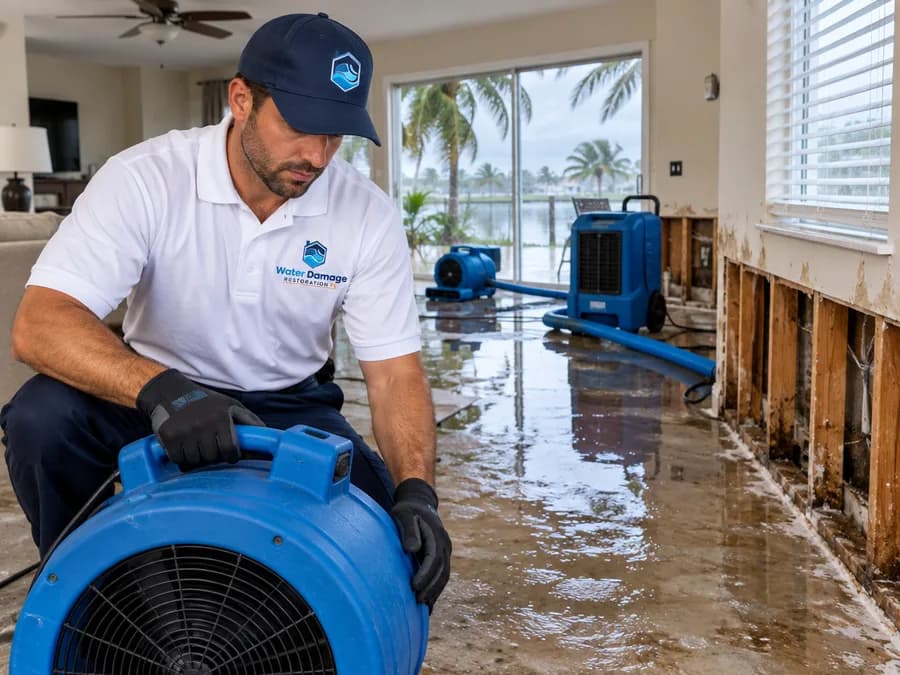
Storm water intrusion is a recurring reality in Northeast Florida, not a rare event. The region sits in the path of heavy summer thunderstorms, tropical systems, and hurricanes, and its low-lying, coastal geography makes it prone to both wind-driven rain and rising water.
That exposure means storm water finds many paths inside — through roofs stressed by high winds, around windows and doors, up from overwhelmed drainage, and in from surge near the water. Because these events often affect many properties at once, a fast local response is harder to come by and more valuable when you have it.
Living with that risk is part of owning property here, which is why we're set up to respond quickly across the area when storms drive water into homes and businesses.
How storms drive water into your property
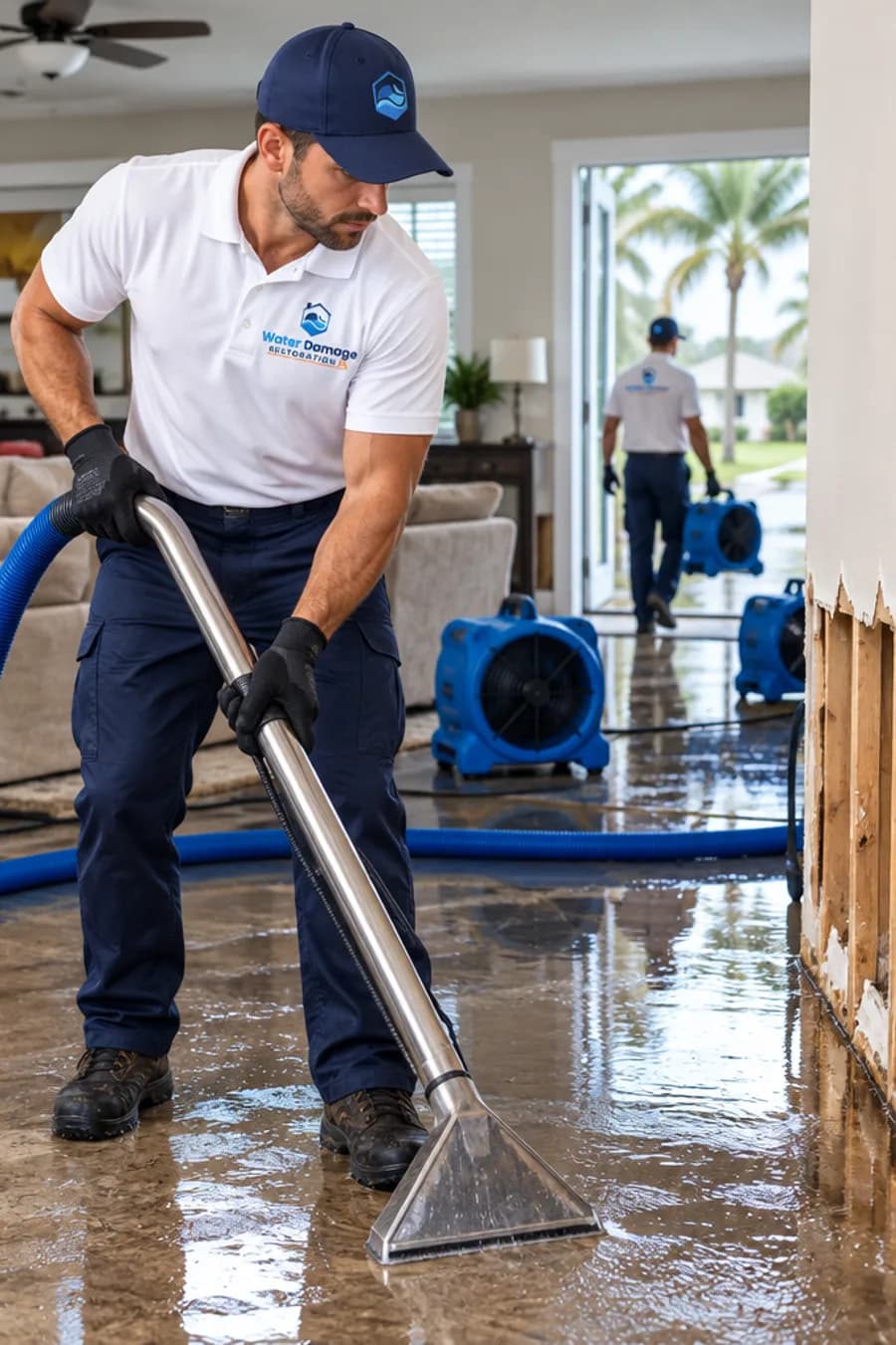
Florida's heavy rain, tropical systems, and storm surge push water into buildings in ways a normal day never does. Wind-driven rain finds its way through the roof, around windows and doors, and under thresholds. Rising water and surge enter at ground level. Overwhelmed drainage backs up.
However it gets in, storm water spreads fast and often carries dirt and contaminants from outside, so it needs prompt, careful handling.
What storm water damage restoration covers
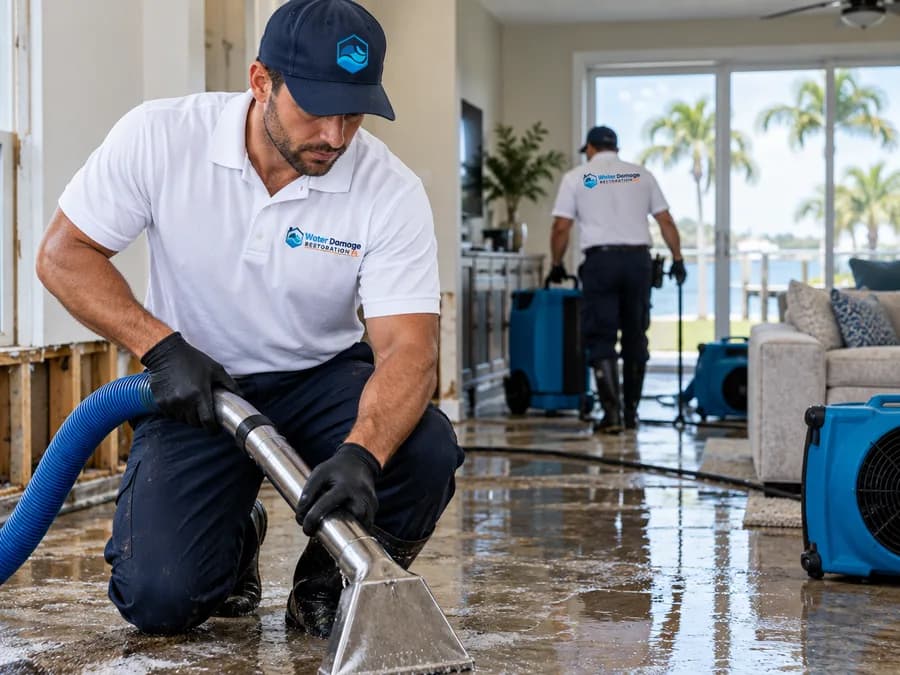
Restoring a property after storm water intrusion follows the same core stages as other water losses, adapted for outside water:
- Removing standing water and any mud or debris carried in.
- Removing porous materials soaked by contaminated water.
- Cleaning and sanitizing affected surfaces.
- Structural drying with dehumidifiers and air movers.
- Repairs to drywall, flooring, and finishes.
Treating storm water as potentially contaminated
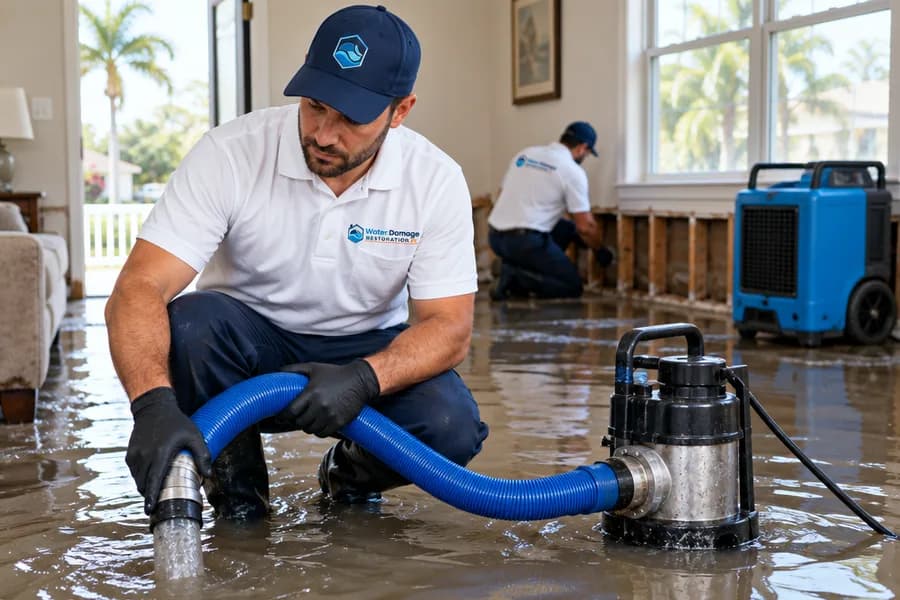
Because storm water comes from outside, it can carry bacteria, chemicals, and debris, and surge or flood water is usually Category 3 black water. Our technicians assess the contamination level and handle the water accordingly — with containment, protective equipment, and disposal of porous materials that can't be cleaned safely.
Water intrusion that's purely wind-driven rain from a clean source may be less contaminated, but it's still assessed rather than assumed.
Why fast response matters after a storm
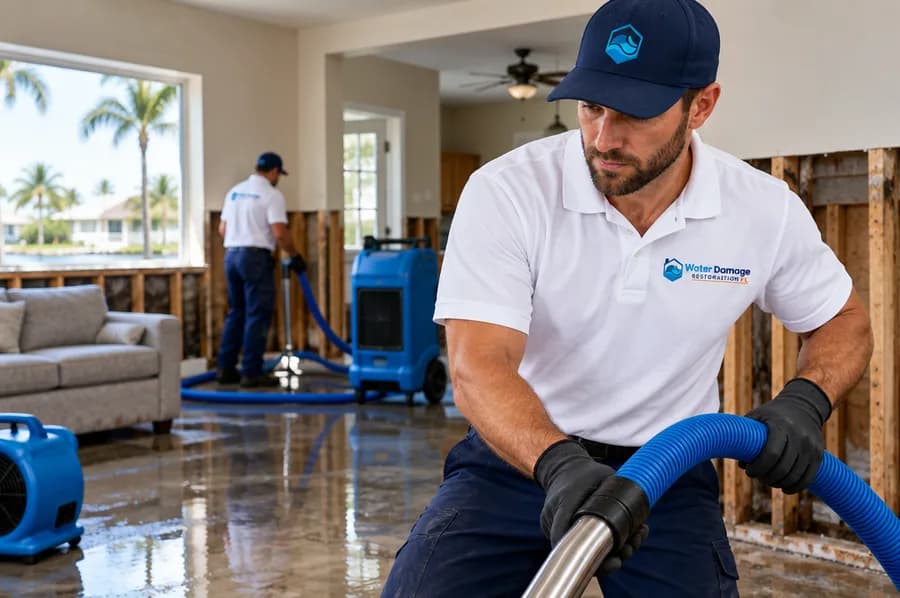
After a storm, water keeps soaking into the structure and mold can begin within 24 to 48 hours, accelerated by Florida heat and humidity. Fast water removal and drying protect the building and contents, and quick action on temporary measures — like clearing standing water and starting to dry — prevents a larger repair down the line.
Thorough documentation from the start also supports your insurance claim.
Storm-ready crews across Florida
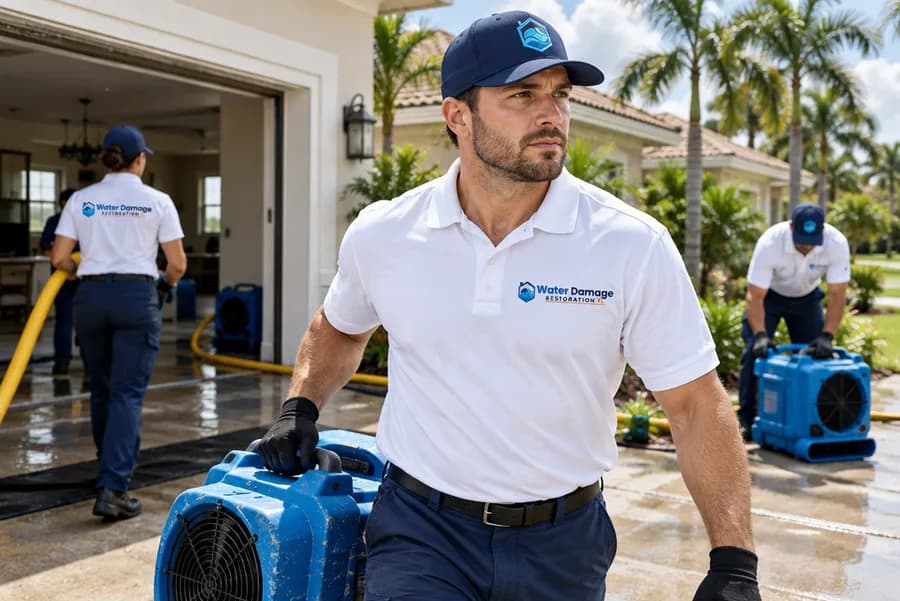
Severe weather affects many properties at once, so a fast, local response matters. Our crews serve Florida, your area, and surrounding communities, and because we're based in the region we can reach affected properties when demand spikes after a storm — rather than dispatching from out of the area.
More Flood Damage Restoration services
View all Flood Damage Restoration servicesRequest this service
Tell us what happened and we'll follow up to confirm next steps.
Frequently asked questions
As soon as it's safe. Storm water keeps soaking into the structure, and mold can begin within 24 to 48 hours — faster in Florida's heat and humidity. Prompt removal and drying protect the property and limit the repair, so quick action on tarping and water removal prevents a much larger problem.
If it's safe, avoid contact with the water (it may be contaminated), turn off power to affected areas, and document the damage with photos. Then call for professional restoration to remove the water and dry the structure before mold sets in.
It depends on how the water entered. Wind-driven rain through a storm-damaged roof may be covered by a homeowners policy, while rising water or surge usually requires separate flood insurance. Your insurer makes the determination; we document thoroughly to support your claim.
It can be. Storm water comes from outside and may carry bacteria and debris, and surge or flood water is typically Category 3 black water. We assess the contamination level and handle the water safely rather than assuming it's clean.
As soon as it's safe. Water keeps soaking into the structure and mold can start within 24 to 48 hours, faster in Florida's climate. Prompt removal and drying protect the property and limit the repair.
Yes. We manage the full process — water removal, cleaning, drying, and the repairs to drywall, flooring, and finishes — so the property is returned to its pre-storm condition by a single team.
Still have a question? Call us at (904) 555-0100