
Flooring Repair in Florida
Flooring repair after water damage is the repairing or replacing of flooring affected by water. Our our crews restore hardwood, laminate, tile, and the subfloor beneath — after drying — since flooring hides water underneath and each type responds to water differently.
How long does flooring repair take?
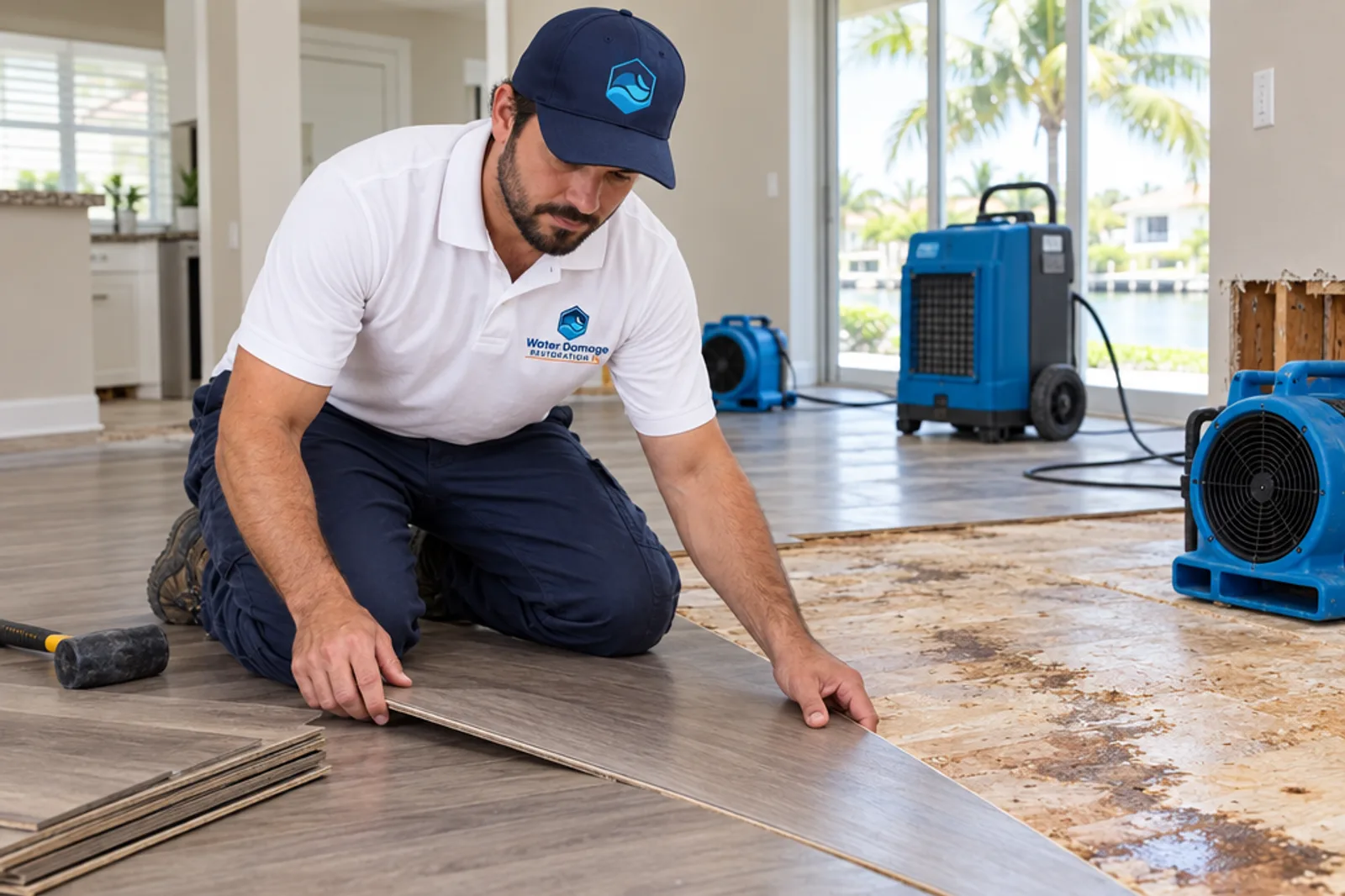
Flooring repair timelines depend on the material and how much of it — and the subfloor beneath — was affected. The drying that has to happen first is often the longest part.
Before any new flooring goes down, the subfloor must reach its moisture targets, which for a saturated area can take several days. Once it's dry, the repair itself varies: patching a section of flooring is quick, while replacing a whole room's floor, or repairing subfloor, takes longer. Materials matter too — tile involves setting and grout curing, while click-together vinyl or laminate installs faster. Because rushing this stage means installing over damp material and ruining the new floor from below, we let the subfloor readings, not a deadline, decide when the floor goes back down.
Choosing replacement flooring after water damage
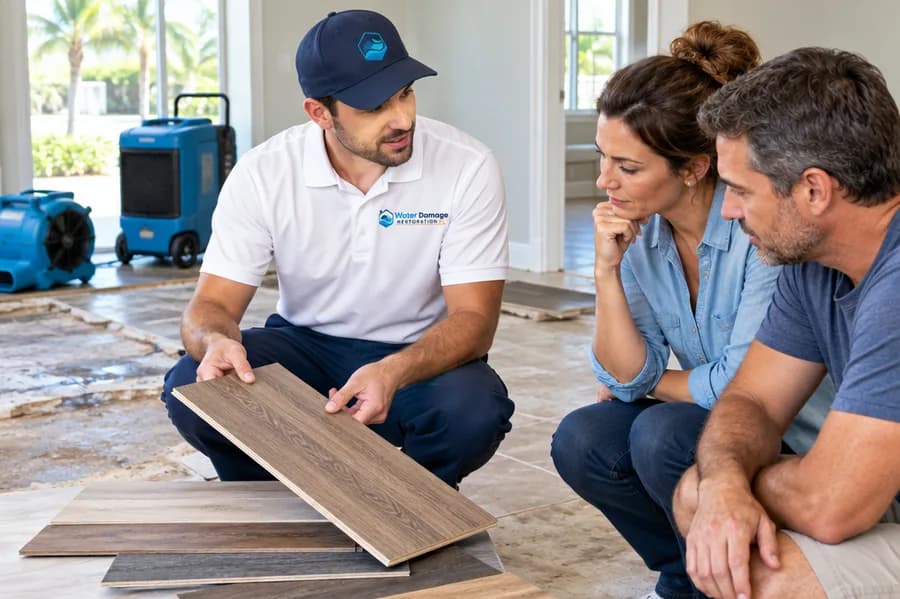
When flooring can't be saved, replacing it is a chance to think about how the new floor will hold up — especially in a humid, flood-prone region like Northeast Florida. Some materials tolerate moisture far better than others, and that's worth weighing alongside look and budget.
A few considerations come up often:
- Tile and luxury vinyl handle moisture well and are popular in flood-prone areas.
- Engineered wood tolerates humidity better than solid hardwood.
- Laminate is budget-friendly but vulnerable to water, so it may not be ideal in a room that's flooded before.
- Whatever goes down, the subfloor must be dry and sound first.
How water affects different floors
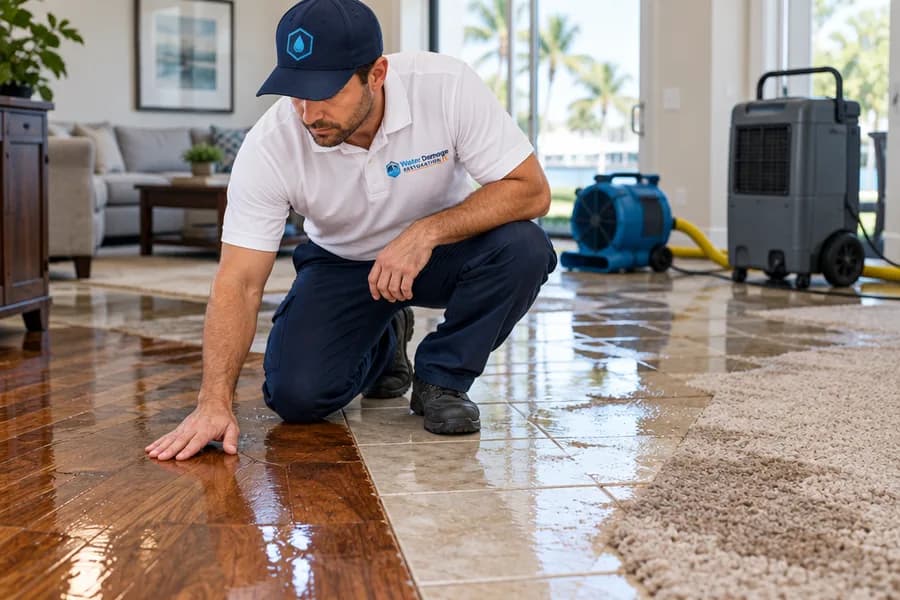
Flooring reacts to water in very different ways depending on the material. Hardwood cups, warps, and buckles as it absorbs moisture. Laminate swells and delaminates and usually can't be saved. Tile itself resists water, but moisture travels through grout to the subfloor below. Vinyl can trap water underneath it.
In every case, the flooring you can see is only part of the story — the subfloor beneath is often wet and is what really has to be dried and, if necessary, repaired.
Repair or replace by flooring type
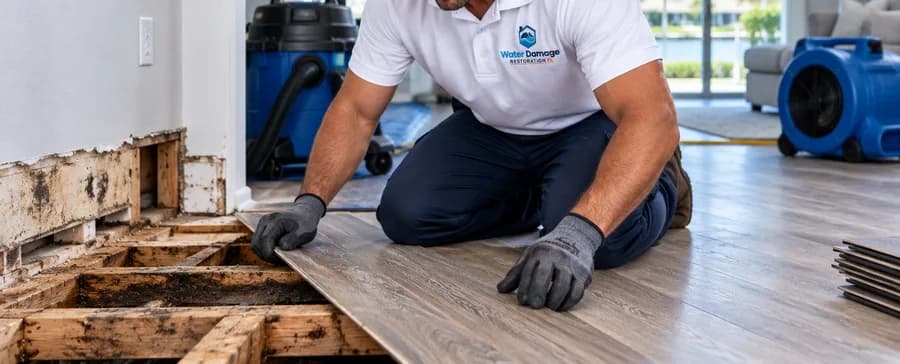
We assess each floor to determine what can be saved:
- Hardwood that's cupped but not badly warped can sometimes be dried and refinished.
- Severely warped or buckled wood, and swollen laminate, are typically replaced.
- Tile may be salvageable, but the subfloor beneath often needs drying or repair.
- Vinyl and the pad or underlayment beneath are checked for trapped water.
The subfloor underneath
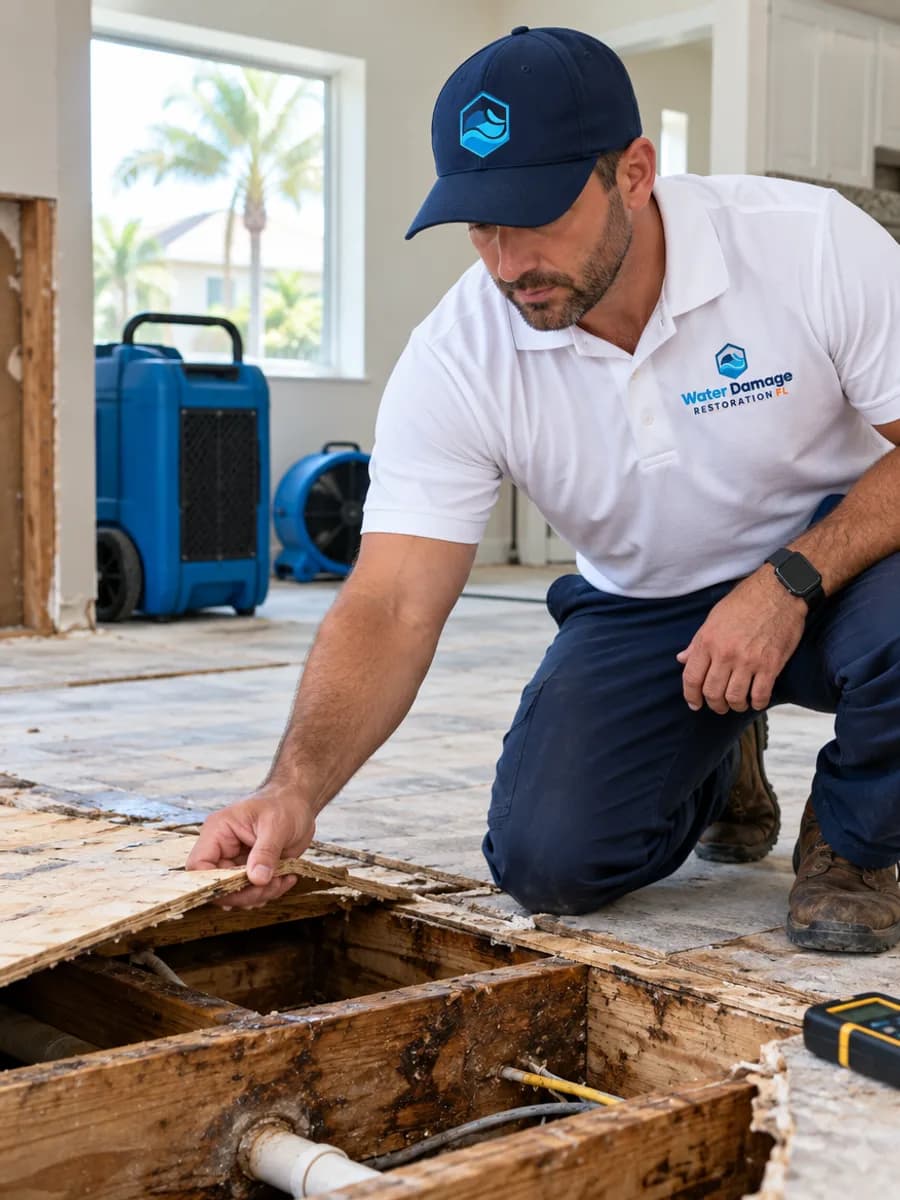
The subfloor is the part of flooring repair that's easiest to overlook and most important to get right. Water passes through the visible flooring and soaks the subfloor, which can stay wet, warp, and grow mold even after the surface looks fine.
We check the subfloor with moisture meters and dry or repair it before new flooring goes down, because installing over a wet subfloor leads straight to warping and mold under the new floor.
Drying before repair
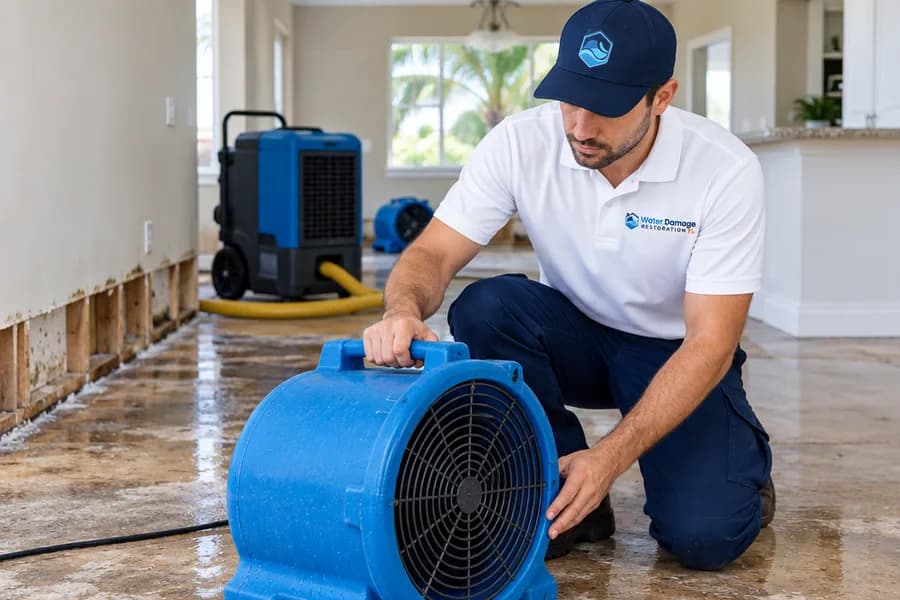
As with all water damage repair, drying comes first. Flooring and subfloor are dried to moisture targets and verified with readings before any repair or replacement. Laying new flooring over damp material traps moisture and ruins the new floor from below.
Because we handle drying and flooring repair together, the new floor goes down on a structure we know is dry.
Flooring repair across Florida
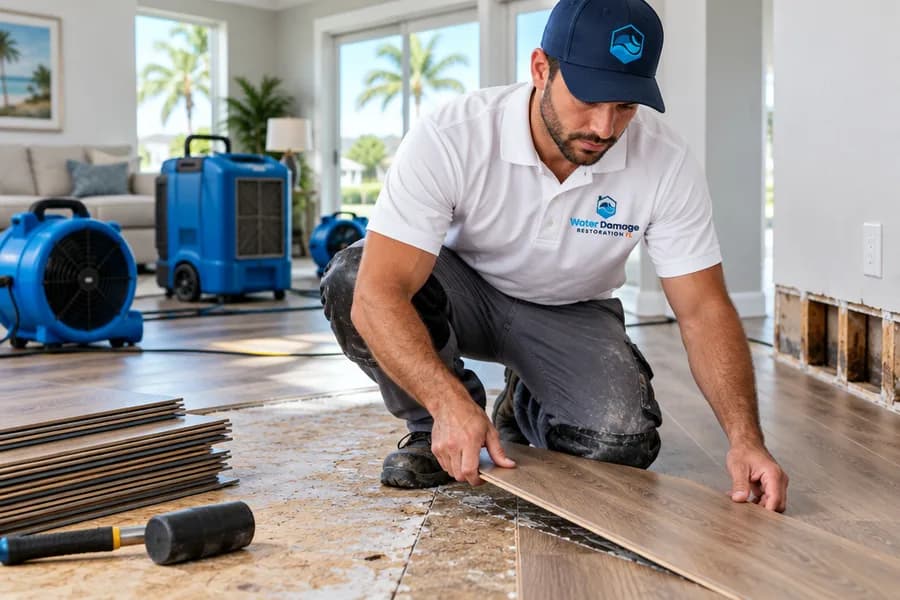
Our crews repair and replace water-damaged flooring for homes and businesses across Florida — hardwood, laminate, tile, and vinyl — always after drying the subfloor, so the finished floor lasts.
More Repair & Reconstruction services
View all Repair & Reconstruction servicesRequest this service
Tell us what happened and we'll follow up to confirm next steps.
Frequently asked questions
Sometimes. Hardwood that's cupped but caught and dried quickly can often be refinished, while severely warped or buckled wood is usually replaced. We assess the extent and dry it before deciding.
Usually not. Laminate swells and delaminates when it absorbs water and typically can't be restored, so it's generally replaced. We check the subfloor beneath and dry it before installing new flooring.
Because water travels through grout to the subfloor, which can stay wet and grow mold even when the tile is undamaged. We check the subfloor with moisture meters and dry or repair it as needed.
Not until the subfloor is dry. Installing over a wet subfloor traps moisture and ruins the new floor from below. We dry to moisture targets and verify with readings before laying new flooring.
Yes. We dry the flooring and subfloor to their targets and then repair or replace the floor, so it's one coordinated process on a structure we know is dry.
Still have a question? Call us at (904) 555-0100