Flood Water Removal in Florida
Flood water removal is the removal of flood water from the interior of a property. Our our crews pump and extract flood water quickly and safely — treating it as contaminated — because standing flood water spreads damage and contamination the longer it stays.
What to expect during flood water removal
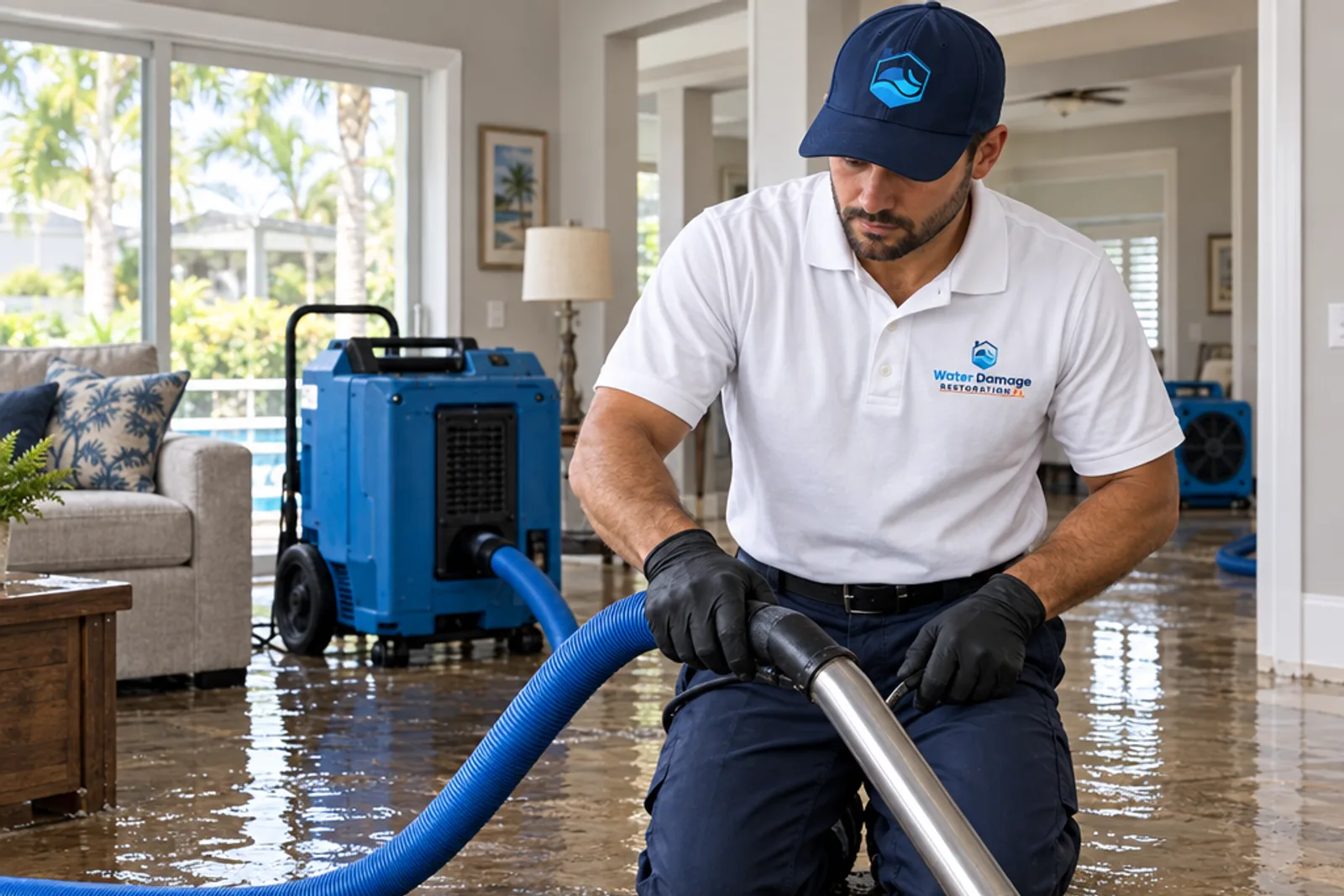
Flood water removal is fast-moving and, because the water is usually contaminated, handled with clear safety precautions from the start. Knowing the shape of it helps set expectations for a stressful day.
On arrival, the crew assesses the contamination level and makes the area safe, then uses submersible pumps to clear deep standing water quickly, followed by extractors for water absorbed into floors and materials. As the visible water comes out, moisture meters and thermal imaging locate where it has traveled beyond the obvious, so removal reaches the hidden pockets under floors and inside walls. Throughout, protective equipment is used and the loss is documented for your claim. Removal is the first phase — cleaning, sanitizing, and drying follow to return the property to a safe, dry condition.
How far flood water really spreads
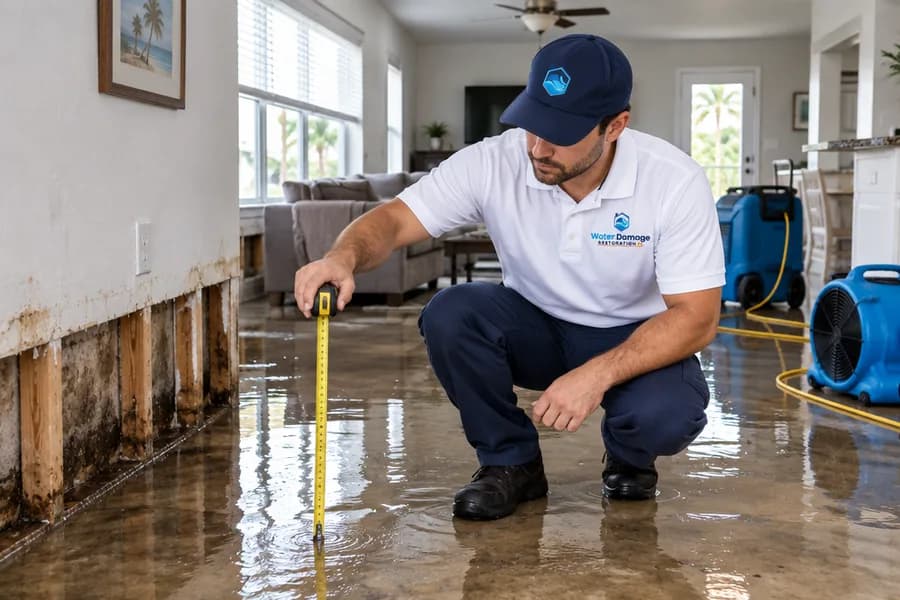
One of the reasons flood water removal takes specialized attention is how far the water travels. Flooding rarely stays in one room — it flows along the floor into hallways and adjacent spaces, wicks up into walls, seeps under flooring, and settles into subfloor and crawl spaces well beyond where it first entered.
That means the visible water is almost never the full picture. Removing only what you can see leaves saturated materials behind that go on causing damage and feeding mold. We map where the water has actually gone with moisture meters and thermal imaging, then remove it from those hidden areas as well as the obvious pools.
Reaching all of it is what separates a thorough flood water removal from a cosmetic one that leaves problems behind the walls.
Getting flood water out fast
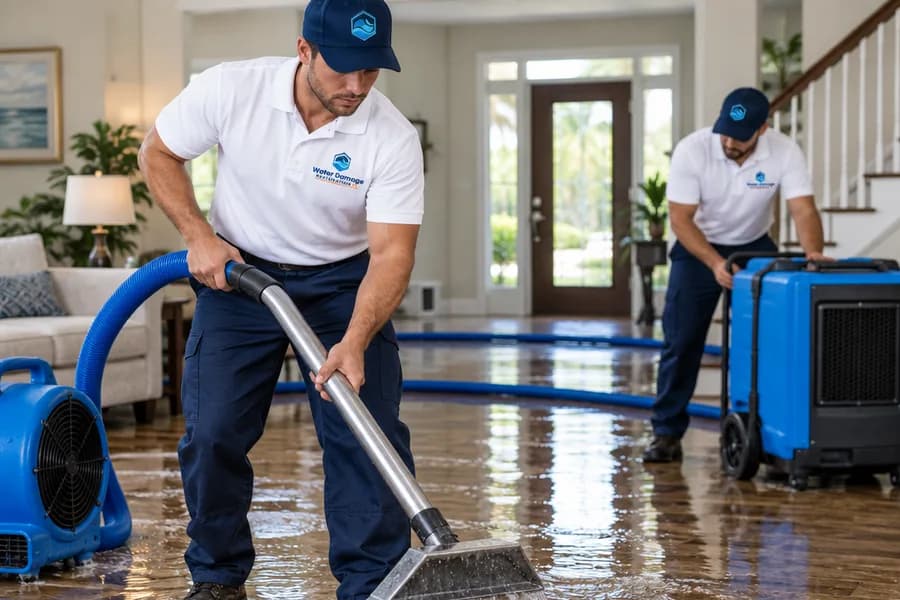
When flood water is standing inside a property, removing it is the urgent first priority. Every hour it sits, it soaks deeper into the structure, spreads contamination, and raises the humidity that carries the problem into unaffected areas. Removing it quickly limits how far the damage goes.
Because flood water is usually contaminated, removal is done with safety in mind from the start — not just speed.
The equipment we use for flood water
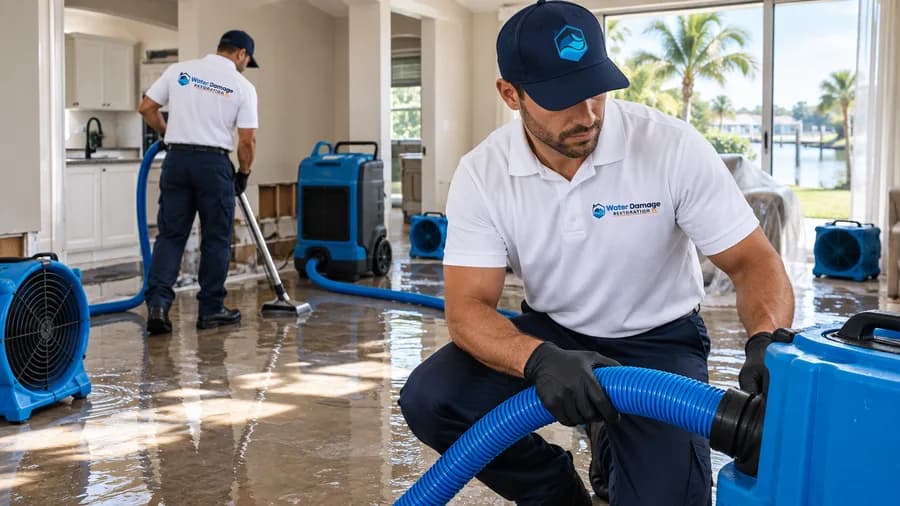
Flood water often means large volumes, so removal relies on high-capacity equipment:
- Submersible pumps for deep standing water.
- Truck-mounted extractors for water absorbed into floors and carpet.
- Wet vacuums for detail work along walls and in corners.
- Moisture meters to find water that traveled beyond the visible area.
Handling contaminated flood water
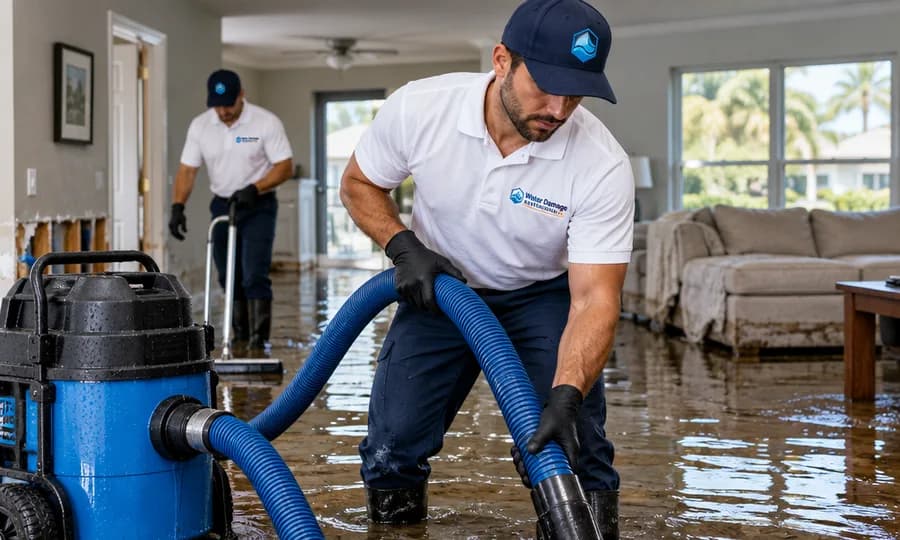
Flood and storm water frequently carries bacteria, chemicals, and sewage, which makes safe handling essential. Our technicians assess the contamination level first, contain the area, and use appropriate protective equipment. Porous materials the water soaked are removed rather than dried in place, because they can't be sanitized reliably.
Treating flood water as contaminated from the outset is what keeps a cleanup from becoming a health hazard.
Finding water beyond the obvious
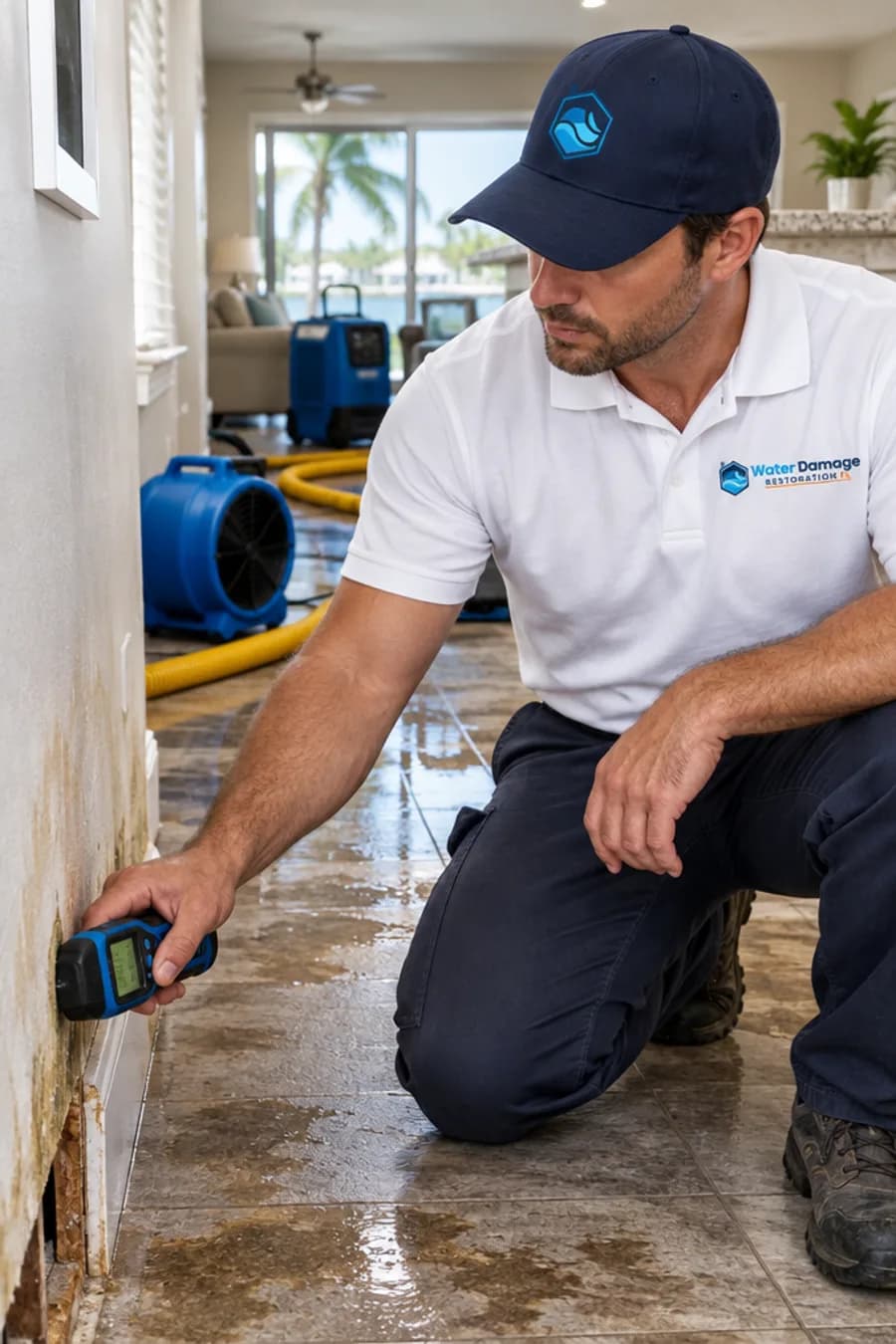
Flood water spreads under flooring, into wall cavities, and through subfloors, so the visible water is rarely the full extent. We use moisture meters and thermal imaging to track where it has traveled and remove it from those hidden areas, preventing the damage and mold that trapped moisture would otherwise cause.
From removal to drying and restoration
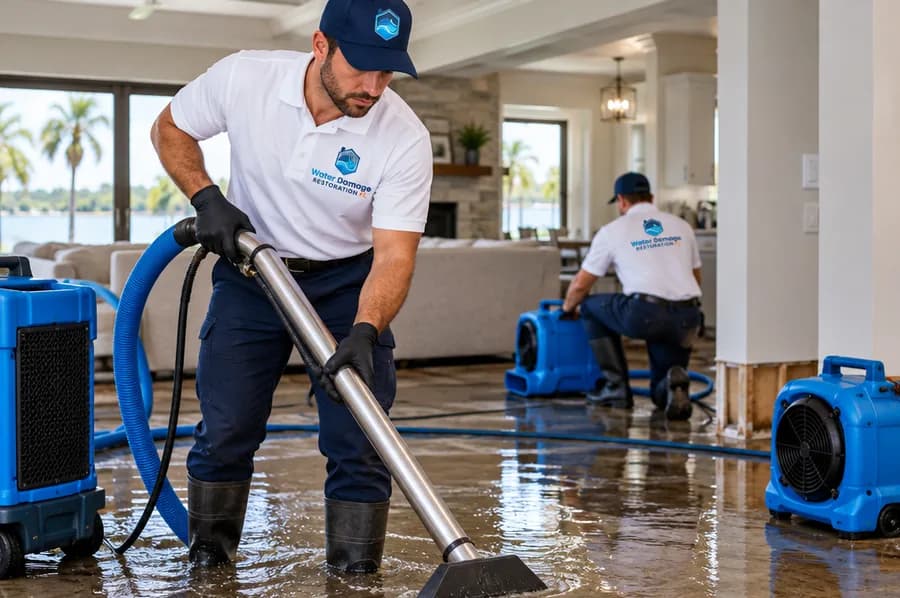
Removing the flood water is the start of a longer process. Once it's out, the structure is cleaned, sanitized, and dried with dehumidifiers and air movers, and any materials that were removed are repaired or rebuilt. We handle the full path so the property is returned to a safe, dry, restored condition.
More Flood Damage Restoration services
View all Flood Damage Restoration servicesRequest this service
Tell us what happened and we'll follow up to confirm next steps.
Frequently asked questions
As fast as possible. Standing flood water spreads contamination and soaks into the structure continuously, and mold can begin within 24 to 48 hours. Rapid removal limits the overall damage.
Usually. Flood and storm water is typically Category 3 black water carrying bacteria and possibly sewage. We handle it with protective equipment and dispose of porous materials it soaked, rather than drying them in place.
Yes. We use moisture meters and thermal imaging to find water that traveled under flooring, into walls, and through subfloors, and remove it from those hidden areas so it doesn't cause damage later.
The structure is cleaned, sanitized, and dried with dehumidifiers and air movers, and any removed materials are repaired or rebuilt. Removal is the first step in returning the property to a safe, dry condition.
It's generally not recommended. Flood water may be contaminated and can hide electrical hazards, and household tools can't move the volume or reach hidden water. Professional removal is safer and far more effective.
Still have a question? Call us at (904) 555-0100