Roof Leak Water Damage in Florida
Roof leak water damage restoration addresses the interior water damage from a leaking roof. Our our crews dry the attic, ceilings, and walls the water reached, prevent mold, and repair the interior damage — important in a region where heavy rain and storms test every roof.
The path a roof leak takes through a home
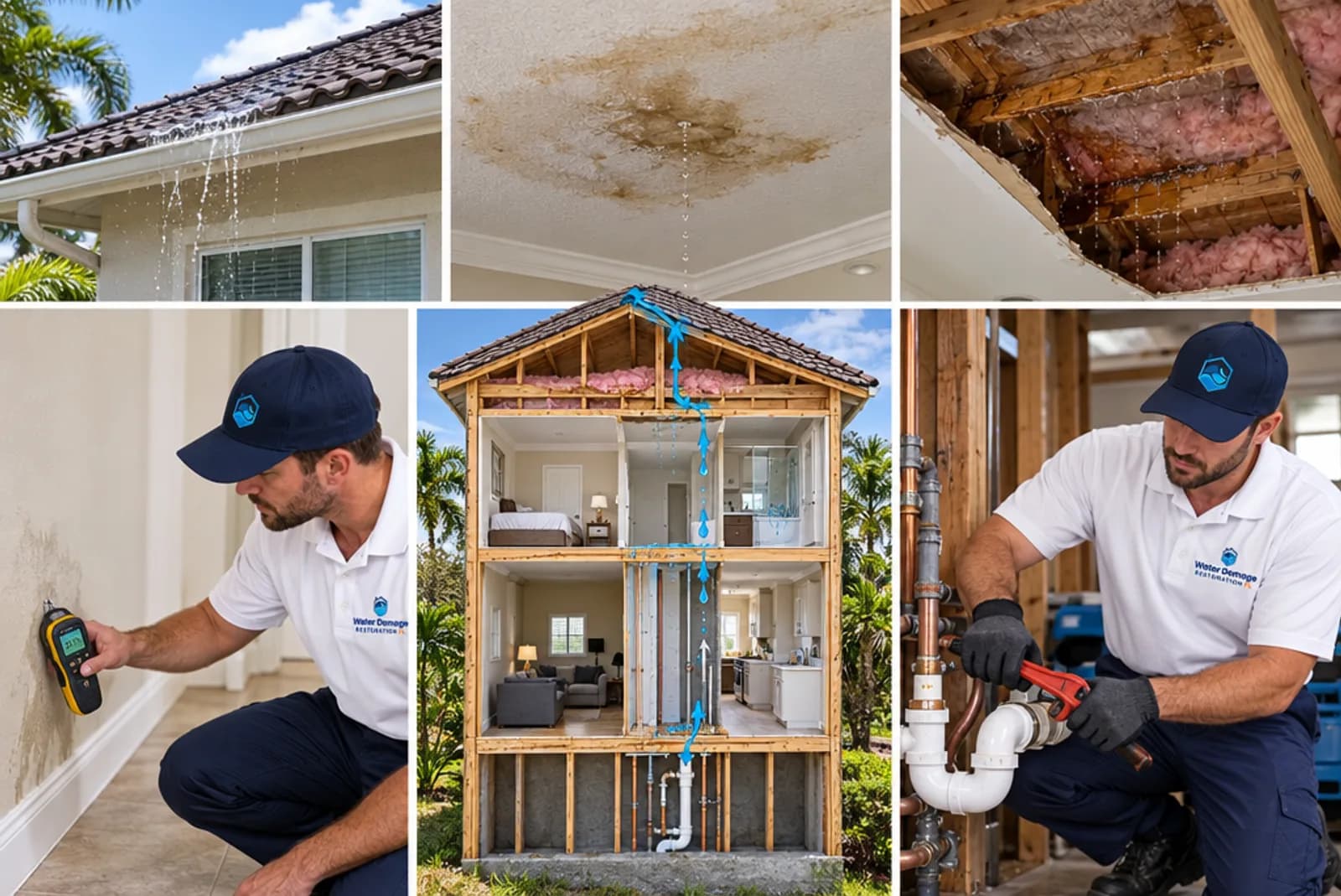
Understanding how roof-leak water travels explains why the interior damage often appears far from where the roof actually failed. Water rarely drops straight down from the leak to the ceiling below.
It typically enters the attic first, where it soaks insulation and runs along the framing, following the slope of rafters and the path of least resistance. It can travel a considerable distance before it finds a low point and works down into a ceiling or runs down inside a wall. That's why a ceiling stain in one room can trace back to a roof problem several feet away, and why the attic is the first place to assess. Following that path — rather than just treating the visible stain — is what makes a roof-leak restoration address the full extent of the damage.
Why roof leaks peak in Florida's storm season
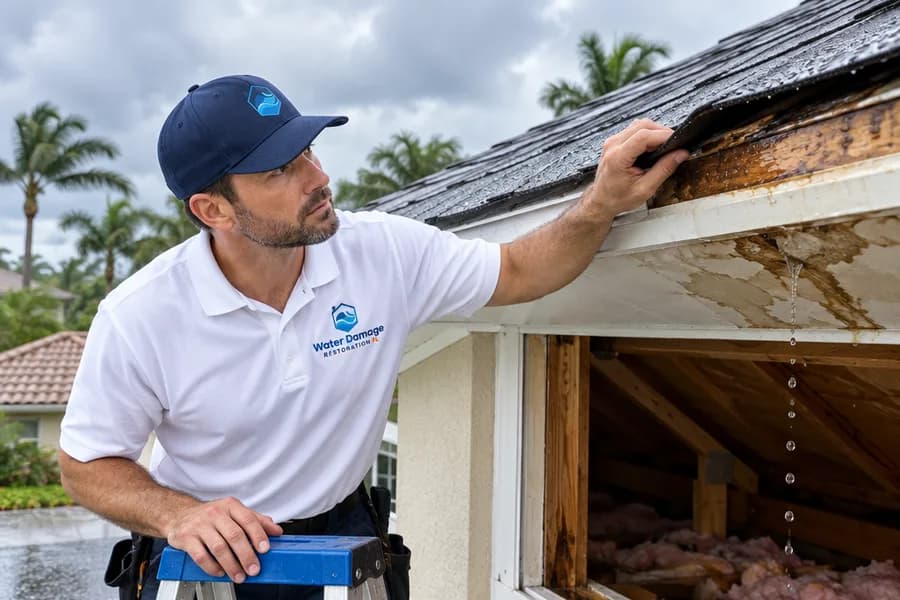
Roof leaks are a year-round possibility, but Florida's weather concentrates them. The summer and fall storm season brings heavy, wind-driven rain and tropical systems that test every roof, and it only takes a lifted shingle, failed flashing, or a small gap for water to find its way into the attic.
Wind-driven rain is especially good at finding weaknesses, pushing water sideways and upward into places a gentle rain never reaches. A roof that stays dry through ordinary weather can leak badly in a storm — and because the water enters the attic first, the interior damage often shows up after the storm has passed.
That seasonal pattern is why we see roof-leak interior damage spike after storms, and why acting quickly to dry the attic and structure matters so much before mold sets in.
How roof leaks damage the interior
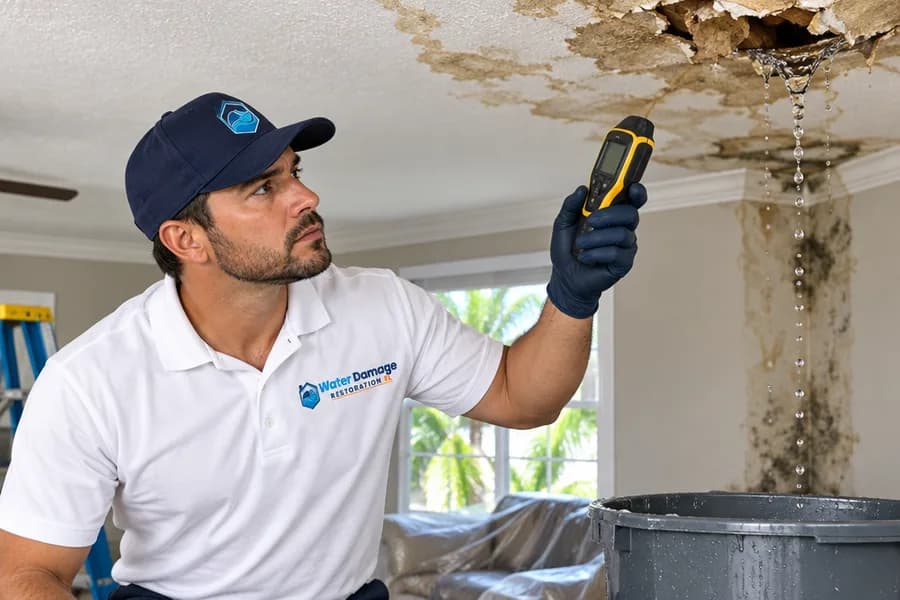
A roof leak lets water into the attic and the structure below, where it soaks insulation, runs along framing, and shows up as stained or sagging ceilings and walls. In Florida's frequent heavy rain and storms, even a small roofing flaw can admit a lot of water over time.
We handle the interior water damage a roof leak causes — the attic, ceilings, walls, and insulation the water affected once the roof itself is repaired or temporarily covered.
Restoring roof leak damage inside
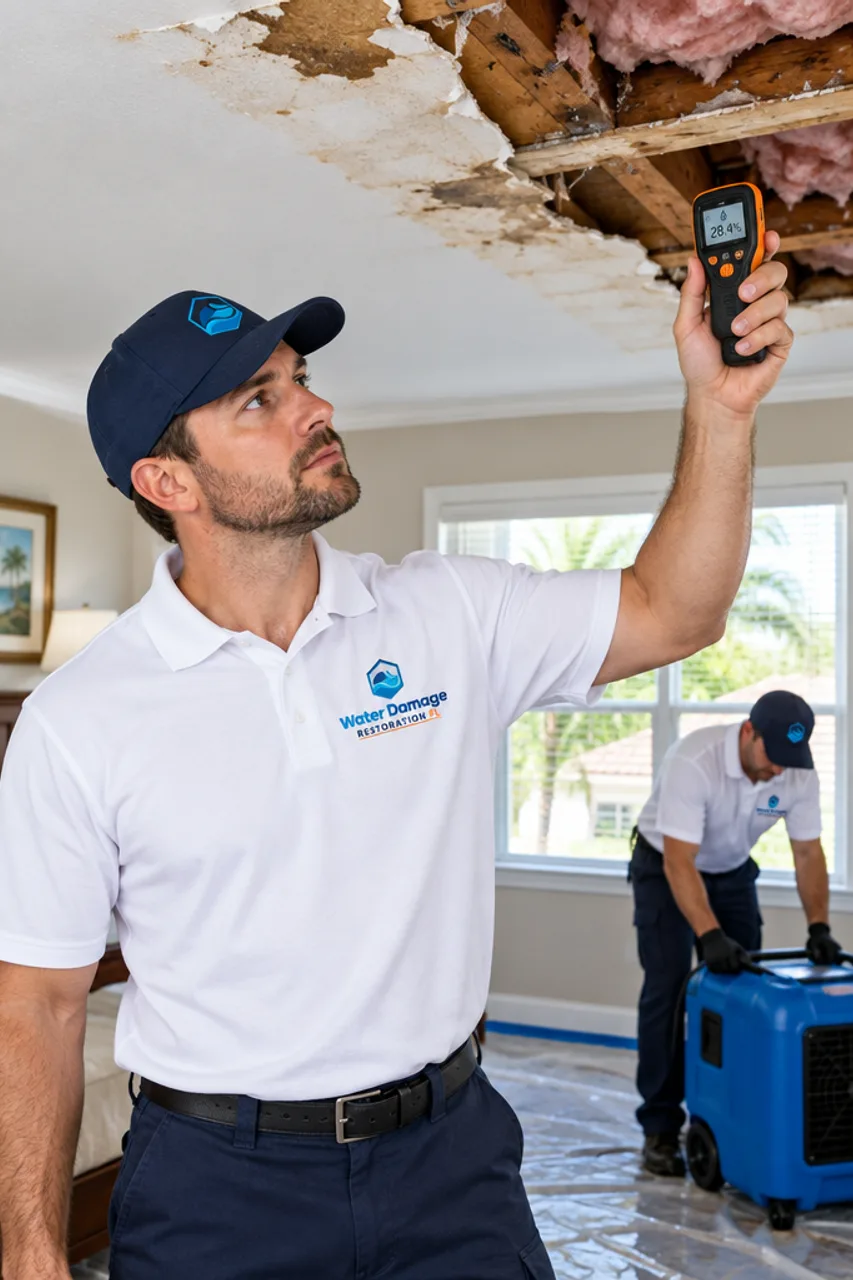
Interior restoration follows the water's path down from the roof:
- Trace the water's extent with moisture meters and thermal imaging.
- Dry the attic, insulation, ceilings, and walls the water reached.
- Remove saturated insulation and drywall that can't be saved.
- Treat for mold if the leak was ongoing.
- Repair and refinish the affected ceilings and walls.
Why roof leaks often go unnoticed
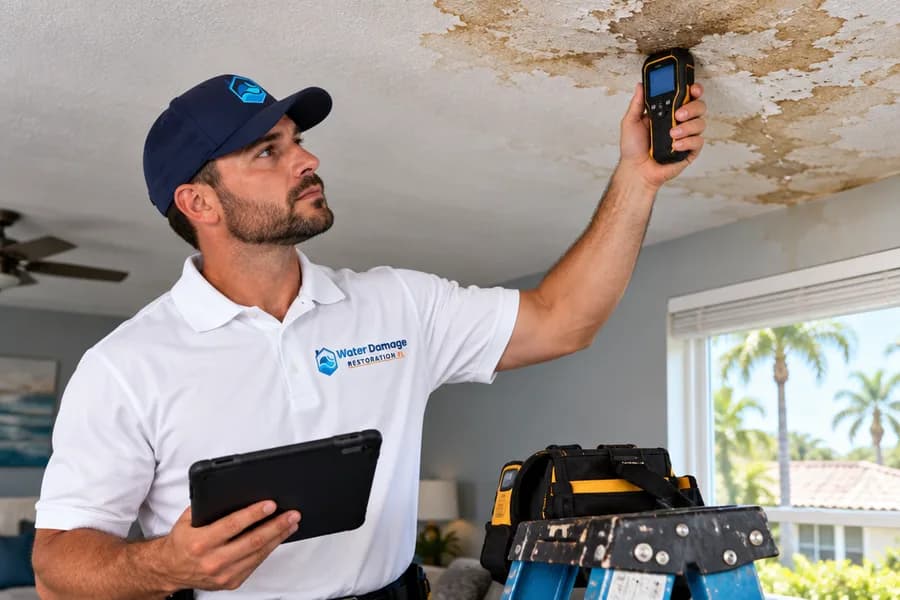
Roof leaks are frequently slow and hidden. Water enters the attic and soaks insulation and framing for a long time before it works its way down to a visible ceiling stain. By then the moisture has usually spread, and mold may have started in the dark, humid attic space.
Our technicians assess the full extent in the attic and below, so drying and repairs cover everywhere the water traveled — not just the ceiling stain that finally revealed the problem.
Attic drying and mold prevention
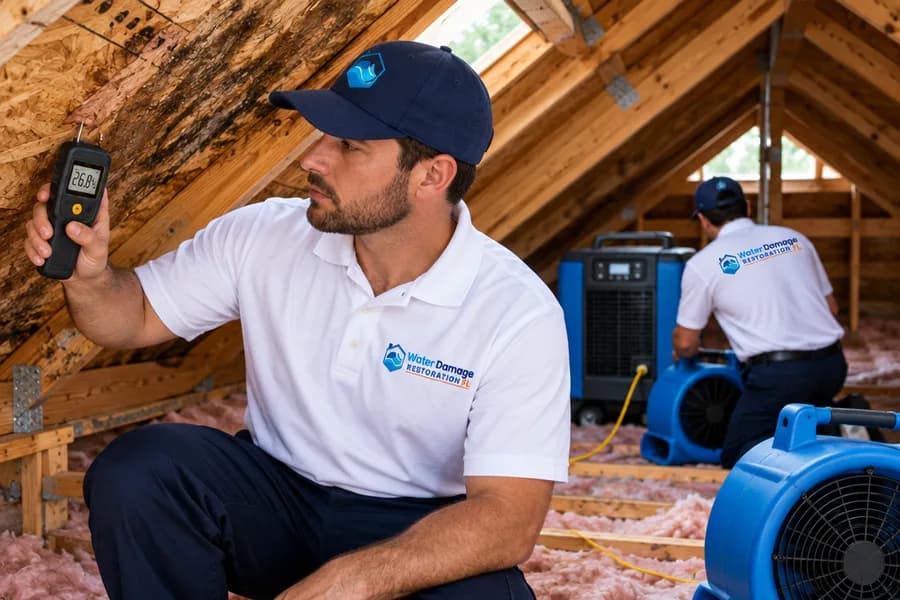
The attic is where roof-leak damage concentrates and where mold is most likely, because it's dark, often humid, and full of moisture-holding insulation. Drying the attic thoroughly — and removing insulation too saturated to save — is central to a proper roof-leak restoration.
In Florida's climate, prompt attic drying is one of the most effective ways to keep a roof leak from turning into a mold problem.
Roof leak restoration across Florida
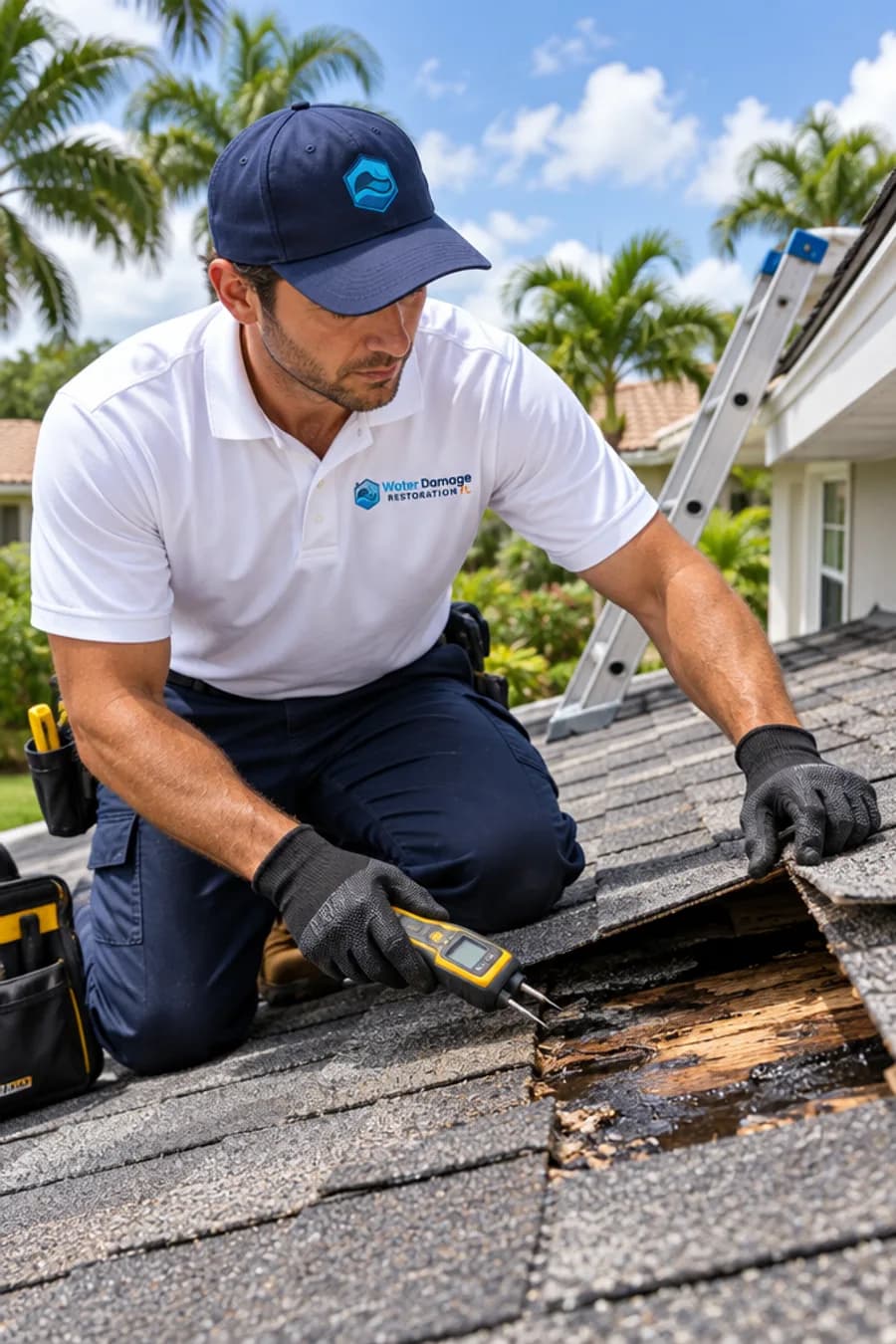
After storms and during the rainy season, roof leaks are common across Florida. Our crews handle the interior water damage for homes and businesses across Florida, responding quickly to dry the structure before the damage and mold spread.
More Leak / Plumbing-Related Water Damage services
- Burst Pipe Water Damage
- Broken Pipe Water Damage
- Water Heater Leak
- Appliance Water Damage
- Ceiling Water Damage
Request this service
Tell us what happened and we'll follow up to confirm next steps.
Frequently asked questions
We restore the interior water damage a roof leak causes — drying the attic, ceilings, and walls and repairing the interior. Fixing the roof is a roofing repair; we can help coordinate that and often recommend a temporary cover to stop the water first.
Common signs are ceiling stains, damp or sagging ceilings, water spots on upper walls, and a musty smell in the attic. Because roof leaks are often slow, the interior signs may appear well after the leak begins.
Sudden storm damage to the roof that lets water in is often covered, while leaks from long-term wear or lack of maintenance may be excluded. Your insurer determines coverage; we document the interior loss thoroughly to support your claim.
The attic is where roof-leak water collects first and where mold is most likely, because it's dark, humid, and full of insulation. Drying the attic thoroughly and removing saturated insulation is central to preventing mold.
Yes, and it's common because roof leaks are often slow and hidden in the attic. Mold can begin within days on wet insulation and framing. We check for it and address any we find during the drying and repairs.
Still have a question? Call us at (904) 555-0100