Water Damage Mold in Florida
Water damage mold is the mold growth that follows a leak, flood, or other water damage. Our our crews remove it safely and, because it's driven by leftover moisture, dry and correct the source at the same time — the only way to keep water-related mold from returning.
Signs mold has followed your water damage
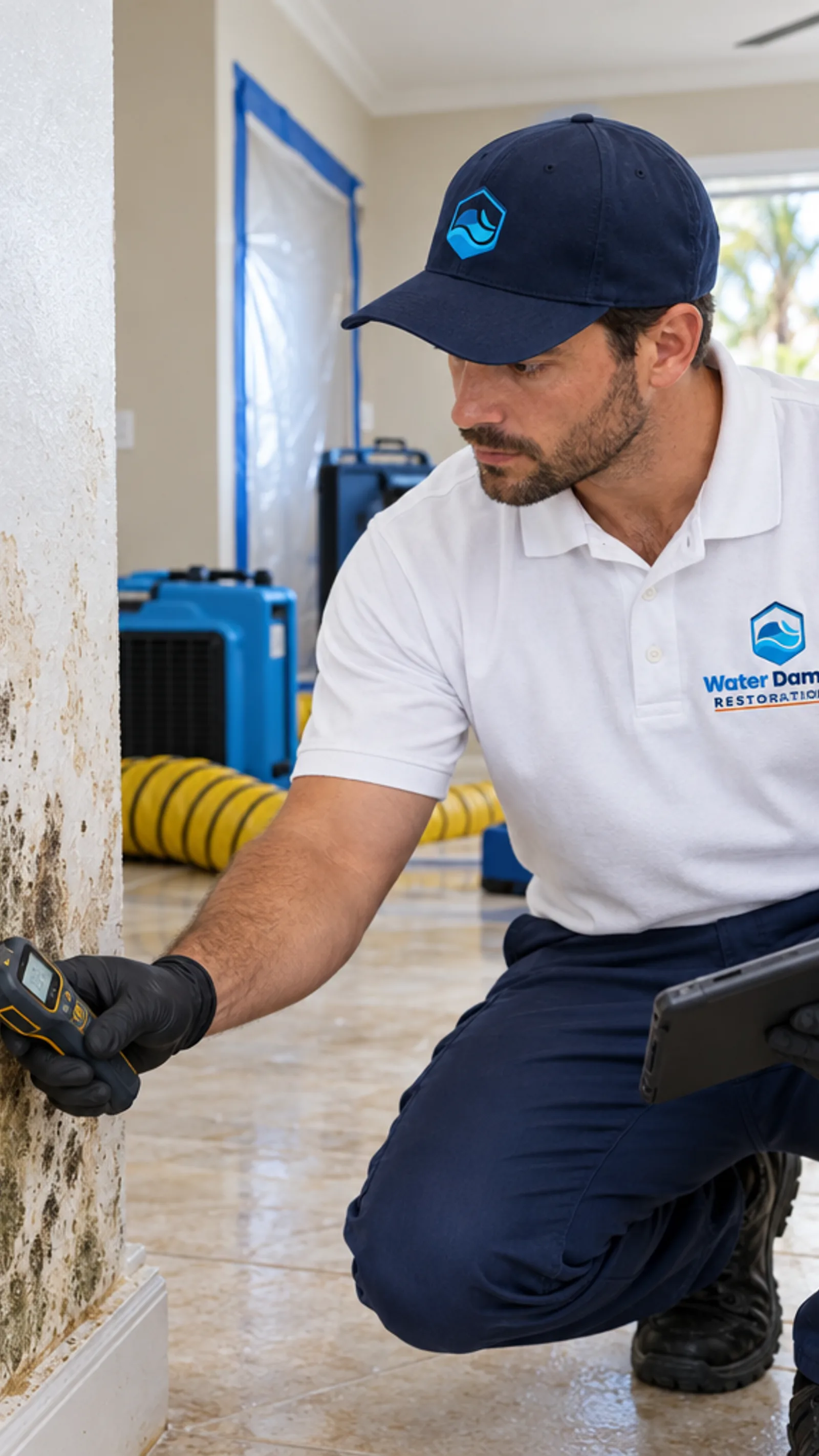
After a leak or flood that wasn't fully dried, it helps to know what to watch for, since water-damage mold often starts out of sight. A few signs suggest moisture stayed behind long enough for mold to take hold:
- A musty or earthy smell in the area that was affected.
- Discoloration or staining on walls, ceilings, or flooring after the water dried.
- Paint that bubbles or drywall that stays soft near the old water line.
- Worsening indoor allergy-like symptoms (a doctor addresses health questions).
- Any area where drying was rushed or done with household fans alone.
The 24-to-48-hour window that matters most
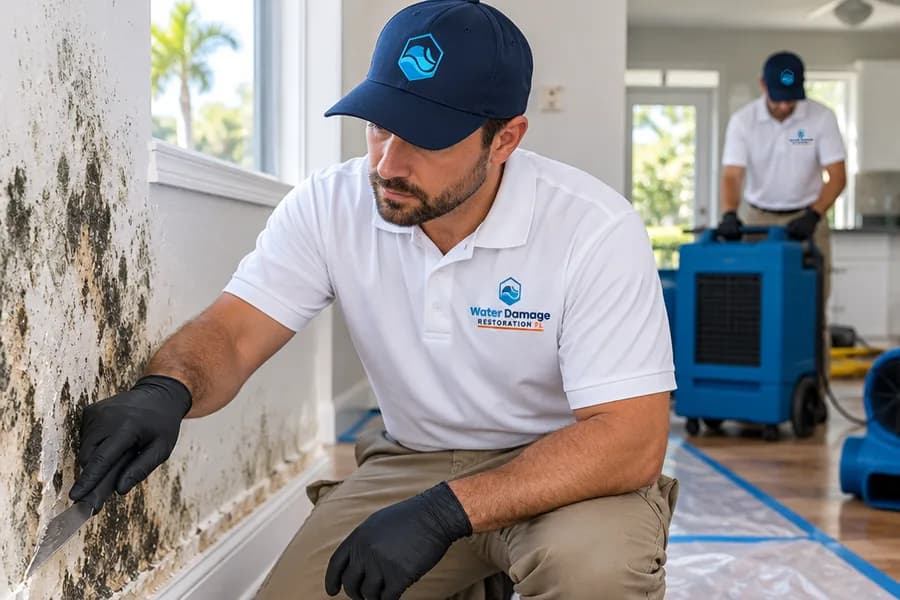
There's a reason restoration crews move so fast on water damage: mold can begin to grow on wet materials within roughly 24 to 48 hours, and Florida's warmth and humidity can shorten that window further. The first day or two after a leak or flood is the period where prevention is still easy.
Inside that window, thorough drying can stop mold before it ever starts. Past it, the odds shift — spores that have settled on damp drywall, insulation, or framing begin to establish, and the job moves from prevention to remediation.
That's why the best defense against water-damage mold is simply drying quickly and completely. When a leak is dried to its moisture targets in those first couple of days, mold usually never gets its foothold.
How water damage leads to mold
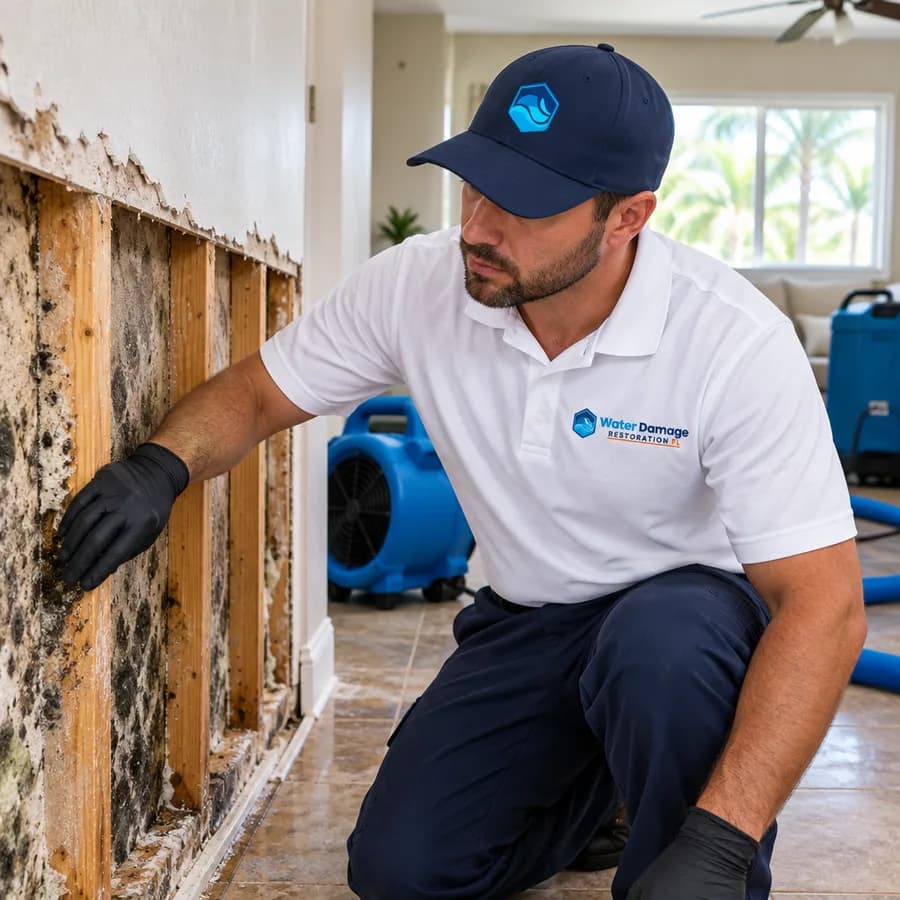
Mold that follows water damage is a moisture problem first and a mold problem second. When water isn't removed and dried quickly and completely, the leftover moisture in materials creates ideal conditions for spores to take hold — often within 24 to 48 hours, and faster across Florida's humidity.
That's why water-related mold so often appears after a leak that was only partly dried, or a flood where hidden moisture stayed behind.
Removing mold and drying together
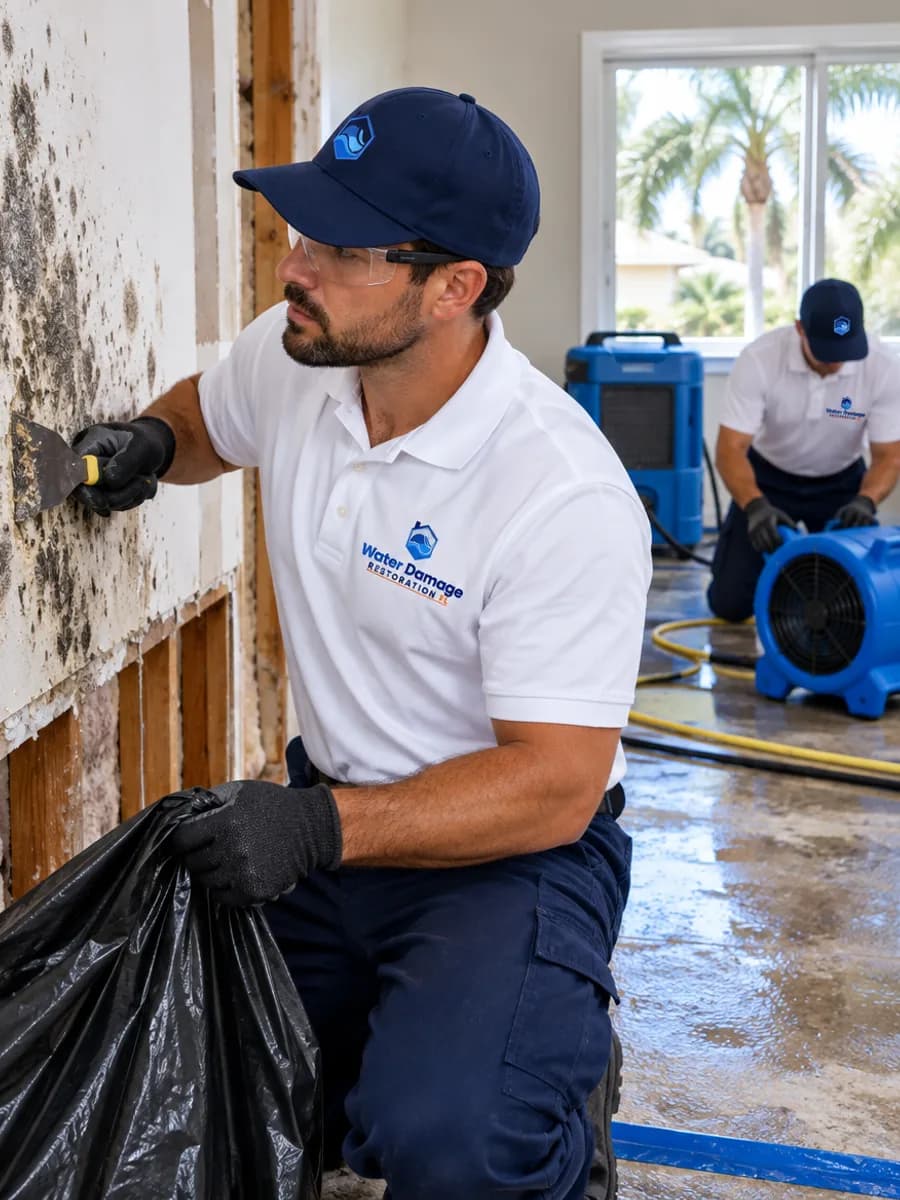
Because water-damage mold is tied directly to moisture, removal and drying go hand in hand:
- Locate the mold and the remaining moisture with meters and thermal cameras.
- Contain the area and run HEPA air filtration.
- Remove mold-affected materials that can't be cleaned.
- Dry the structure to moisture targets so mold loses its conditions.
- Clean salvageable surfaces and correct the water source.
Finding mold hidden by water damage
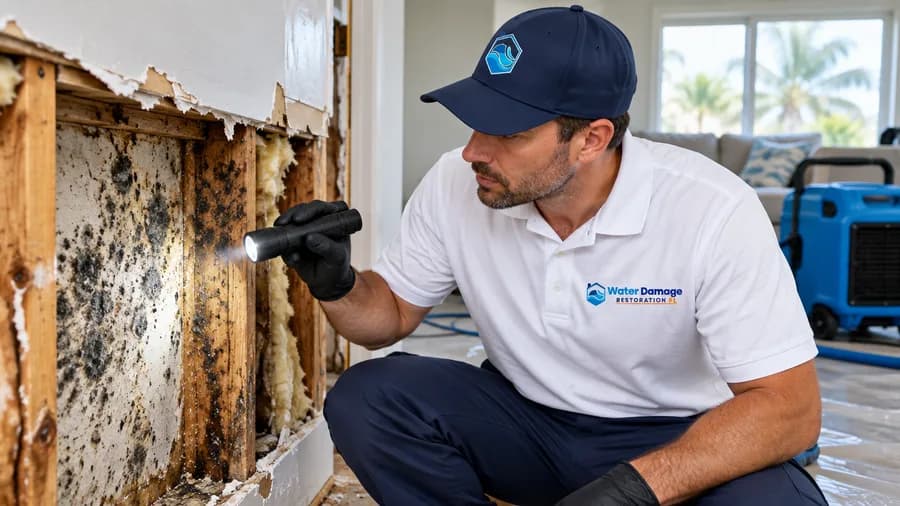
Water travels into hidden spaces, and the mold that follows often grows there too — inside wall cavities, under flooring, in insulation, and above ceilings. The visible spot is frequently smaller than the actual growth.
Our technicians map the moisture to find where mold is likely and assess the full extent, so remediation reaches everywhere the water — and the mold — went, not just the obvious area.
Why drying is the key to prevention
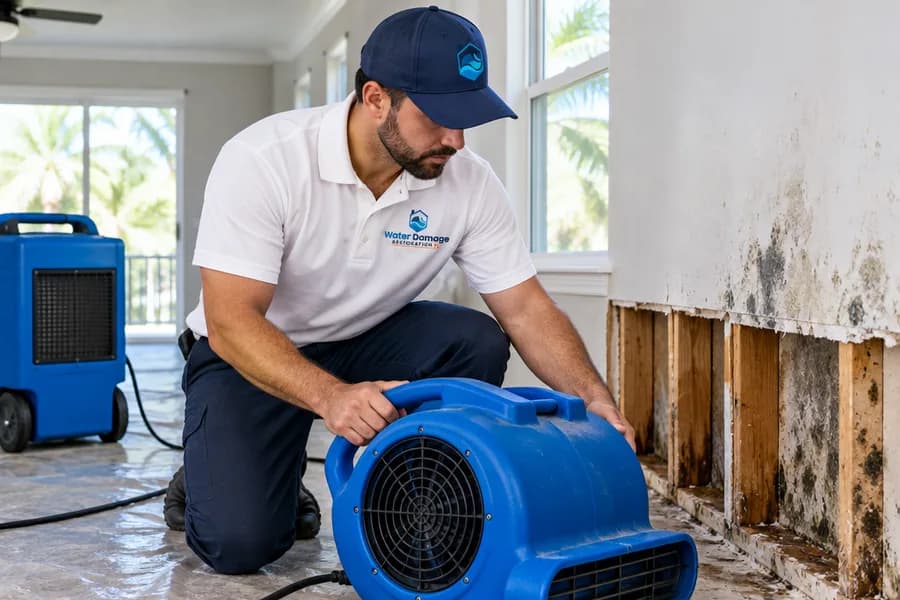
With water-damage mold, drying isn't a separate concern — it's the core of the solution. Remove the mold but leave materials damp, and it returns. Dry the structure to its targets and correct the source, and the conditions mold needs are gone.
This is why we treat water-damage mold as a combined remediation-and-drying job rather than one or the other.
Water damage mold service across Florida
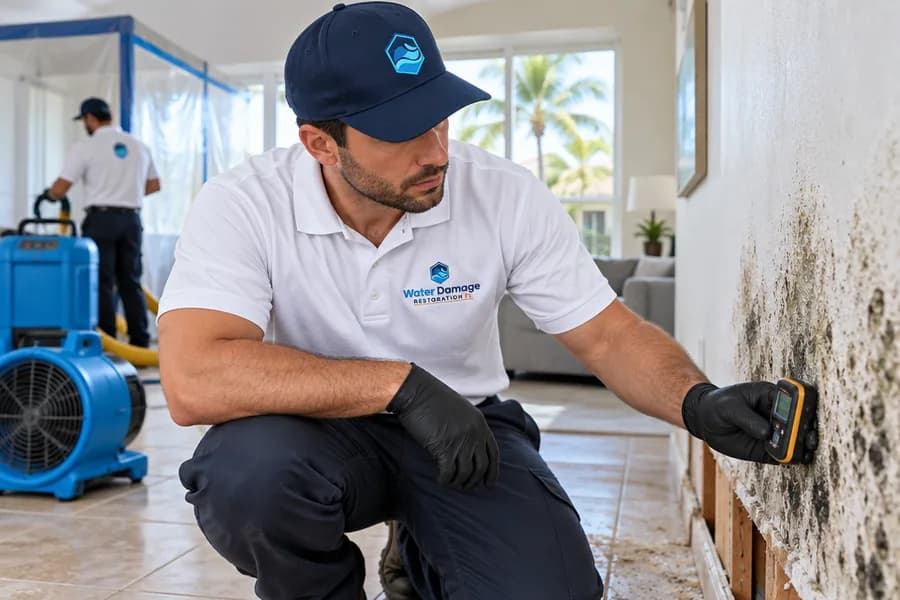
Our crews handle water-damage mold for homes and businesses across Florida. Whether the mold followed a recent leak or an older one that stayed damp, we remove it and address the moisture — so the fix lasts in Florida's humid climate.
More Mold Remediation services
View all Mold Remediation servicesRequest this service
Tell us what happened and we'll follow up to confirm next steps.
Frequently asked questions
Mold can begin within 24 to 48 hours on wet materials, and Florida's humidity can shorten that window. That's why fast, complete drying after water damage is the best way to prevent it.
Not necessarily, but the risk is real if the area wasn't fully dried. Signs include a musty smell, discoloration, and damp materials. An inspection can confirm whether mold is present and find the moisture behind it.
Yes, and that's the right approach. Water-damage mold is driven by leftover moisture, so we contain and remove the mold while drying the structure to moisture targets and correcting the source.
Not if the materials are dried to their targets and the water source is corrected. Removing mold without drying leaves the moisture that caused it, so drying is essential to prevention.
Mold resulting from a covered, sudden water loss may be covered, while mold from a slow or neglected leak is often excluded. Your insurer determines coverage; we document the loss thoroughly to support your claim.
Still have a question? Call us at (904) 555-0100