Sewage Damage Cleanup in Florida
Sewage damage cleanup is the safe removal, sanitizing, and drying of areas affected by a sewage backup or contaminated black water. Our our crews handle sewage as the Category 3 health hazard it is — with protective equipment, containment, and thorough disinfection — so the space is made safe, not just dry.
Common causes of sewage backups
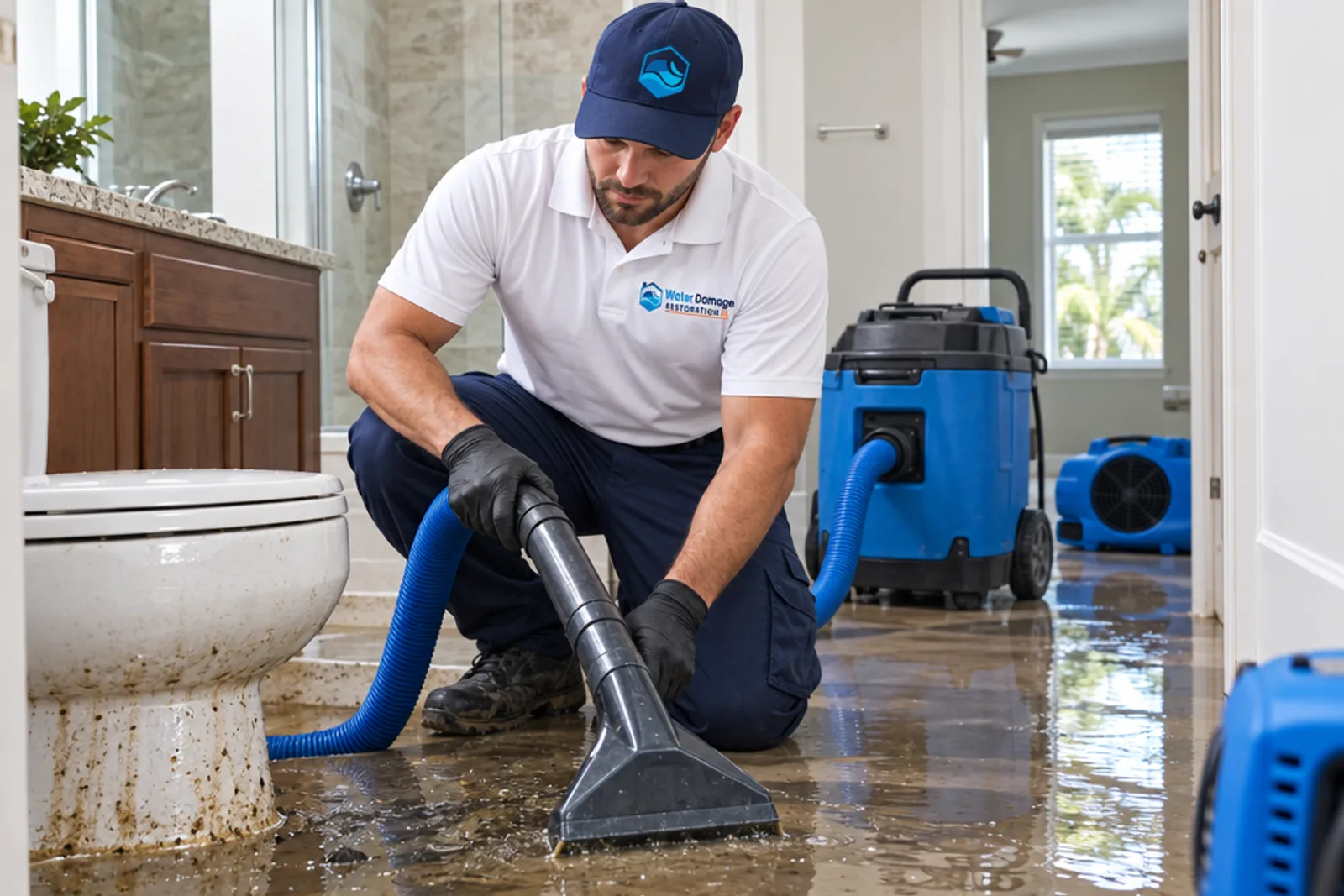
Sewage problems usually trace back to a blockage or failure in the plumbing. Clogs deep in the line, tree roots working into pipes, aging or collapsed drains, and grease or flushed items that shouldn't be there all force wastewater back into the property. In communities across Florida, heavy rain and storms also overwhelm municipal sewers, pushing sewage up through the lowest drains.
Knowing the cause matters for the cleanup, because it affects how much contaminated water there is and how far it spread. But regardless of the source, the water itself is handled the same careful way — as a Category 3 health hazard.
Staying safe around a sewage spill
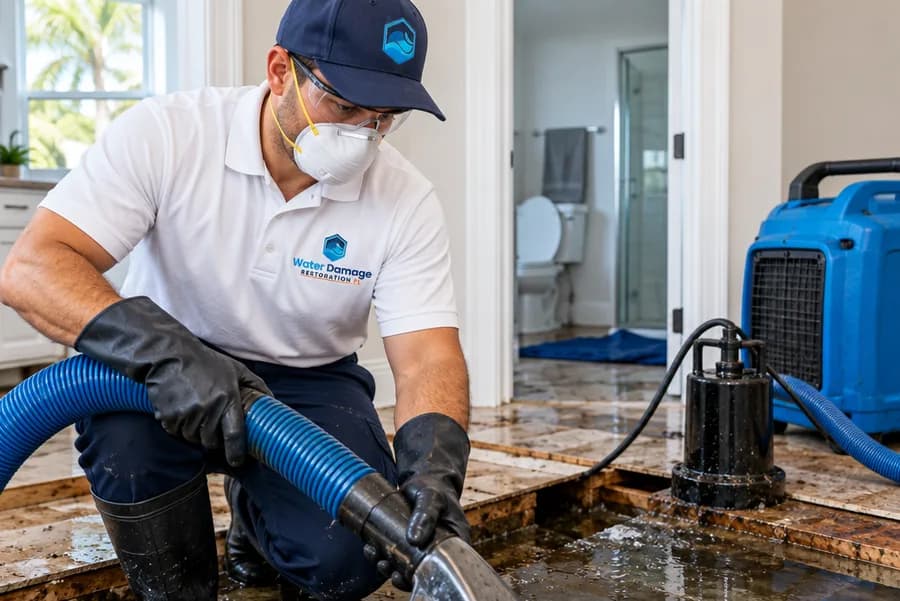
Until a sewage spill is cleaned up, the safest thing to do is stay away from it. Keep people and pets clear of the contaminated area, avoid using any plumbing that drains toward the backup, and don't try to clean black water yourself without protection. Sewage can also hide electrical hazards where it meets outlets or appliances.
If you can do so safely, take photos for your records and note what was affected. Then leave the removal and disinfection to trained technicians with the right protective equipment — it's the part of the job most likely to cause illness if handled the wrong way.
Why sewage is treated as a health hazard
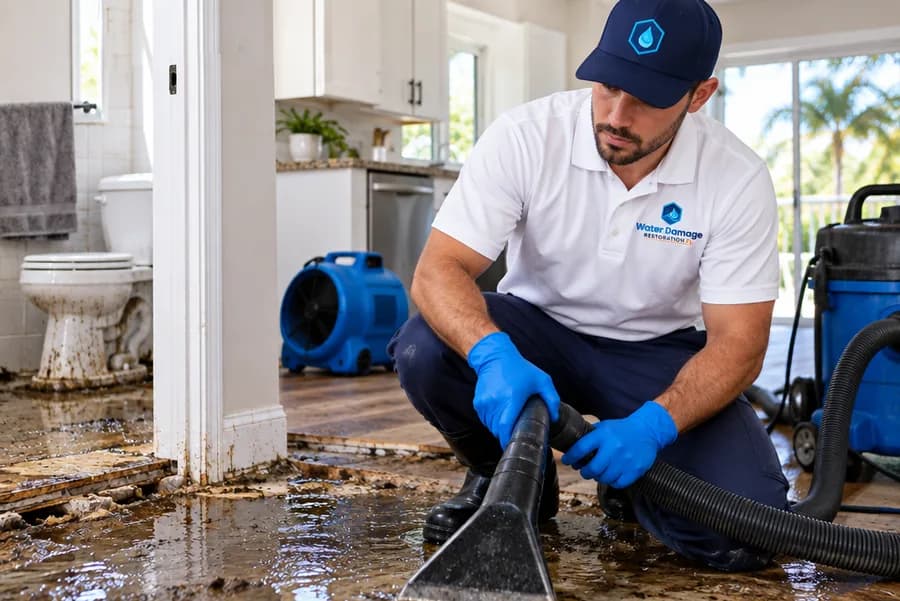
Sewage and black water contain bacteria, viruses, and other contaminants that make them dangerous to handle without protection. This is Category 3 water — the most contaminated classification — and it calls for a fundamentally different approach than a clean-water leak.
The goal of sewage cleanup isn't only to remove the water and dry the space. It's to decontaminate the area so it's genuinely safe to use again, which is why this work should be left to trained technicians with the right equipment.
Our sewage cleanup process
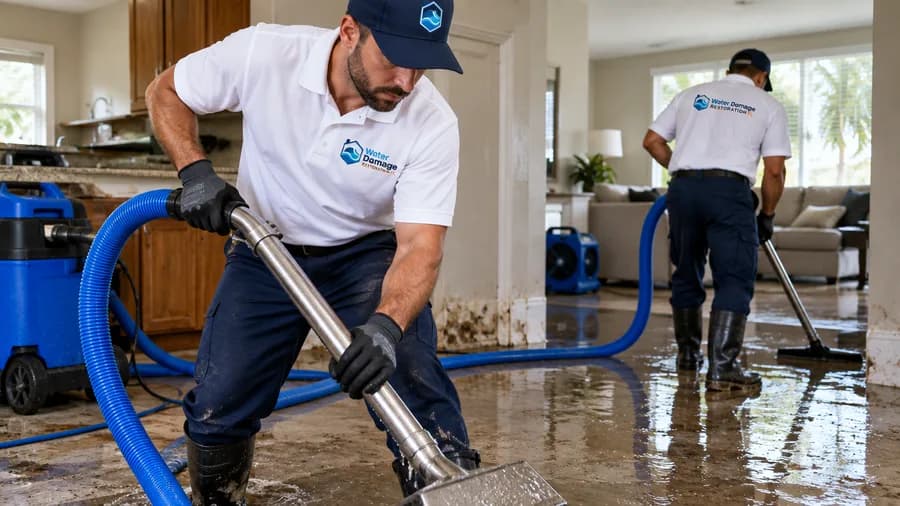
Sewage cleanup follows a careful, safety-first sequence:
- Assess the contamination and contain the affected area to prevent spread.
- Remove sewage, contaminated water, and solid waste.
- Remove porous materials the sewage soaked — carpet, pad, drywall, insulation.
- Clean and disinfect all affected hard surfaces with antimicrobial products.
- Dry the structure with dehumidifiers and air movers.
- Deodorize to remove lingering sewage odor.
What has to be removed after a sewage backup
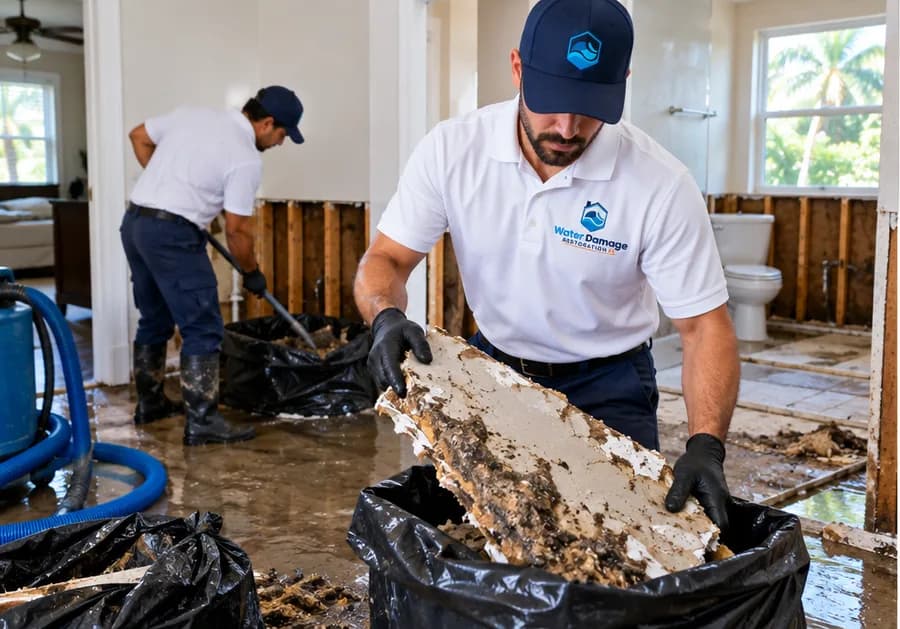
Porous materials that absorb contaminated water generally cannot be sanitized reliably and have to be removed. That typically includes carpet and pad, the lower portion of drywall, insulation, and particleboard. Hard, non-porous surfaces — sealed floors, tile, metal, glass — can usually be cleaned and disinfected.
We document what's removed before disposal so you have clear records for your insurance claim, and we advise honestly on what can be safely saved.
Sewage (black water) vs. clean-water cleanup
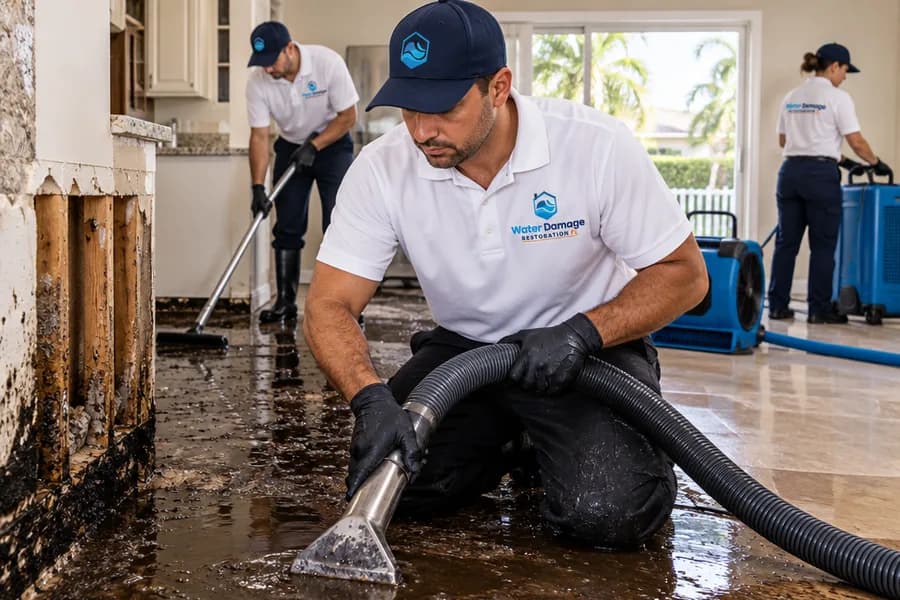
The contamination level changes how the entire job is handled. This comparison shows why sewage cleanup is a specialized service.
| Sewage / black water | Clean-water leak | |
|---|---|---|
| Water category | Category 3 (contaminated) | Category 1 (clean) |
| Safety | PPE and containment required | Standard handling |
| Material removal | Porous materials removed | Often dried in place |
| Final step | Disinfection and deodorizing | Drying |
Odor, sanitizing, and making the space safe
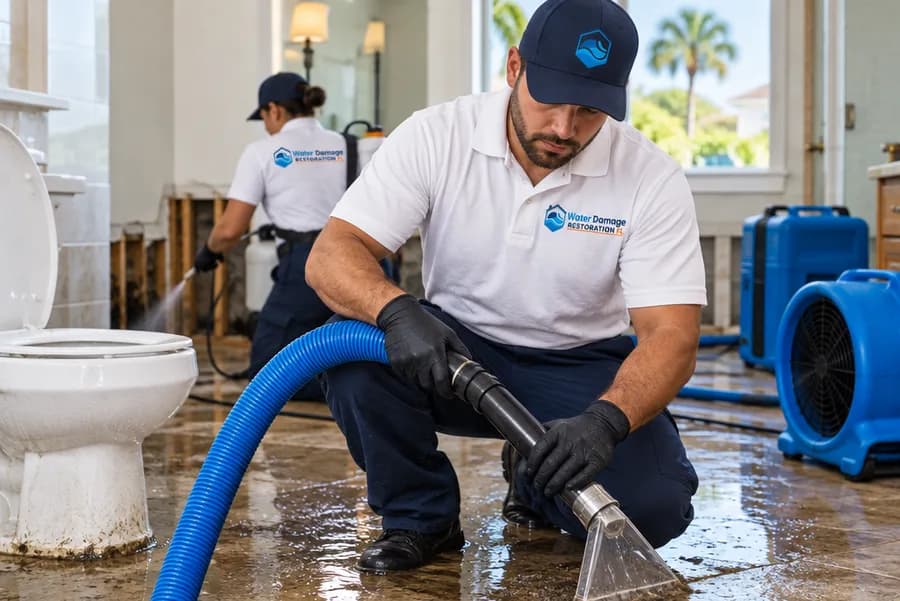
Sewage leaves behind both contamination and a strong, persistent odor. After removal, affected surfaces are cleaned and disinfected with antimicrobial products, and the area is deodorized to address the smell at its source rather than masking it. Thorough drying follows, which is essential across Florida's humidity to discourage mold.
The result is a space that has been decontaminated, dried, and deodorized — restored to a safe, usable condition.
24/7 sewage cleanup across Florida
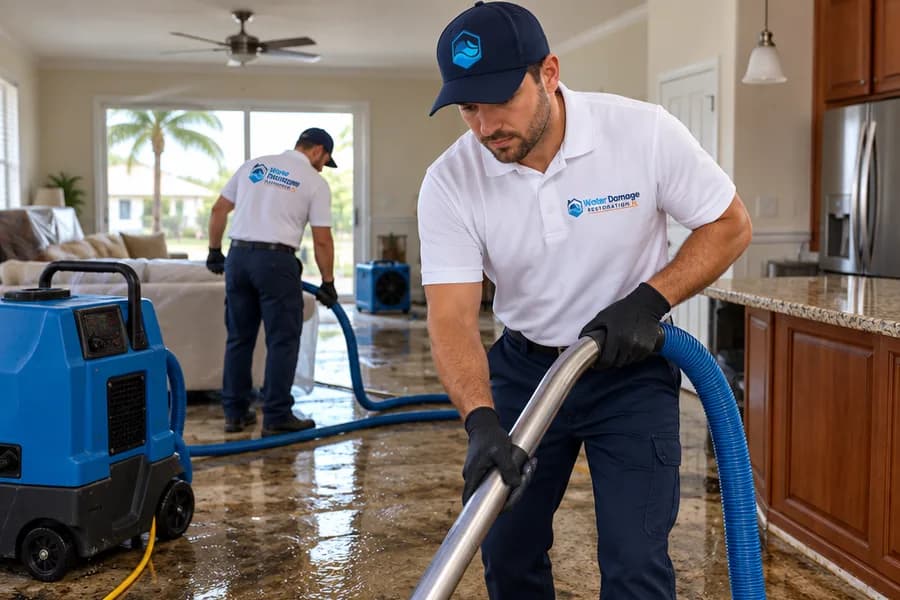
A sewage backup is both a health hazard and an emergency, so our crews respond around the clock across Florida. The faster contaminated water is contained and removed, the less it spreads and the safer the cleanup.
Sewage Damage services
Sewage Cleanup
Removing sewage and cleaning and sanitizing affected areas.
Learn moreSewage Backup Cleanup
Cleaning up after sewage backs up into a property through drains or fixtures.
Learn moreSewer Backup Cleanup
Cleanup after a sewer line backup affects a home or building.
Learn moreBlack Water Cleanup
Handling heavily contaminated water with appropriate safety precautions.
Learn moreToilet Overflow Cleanup
Cleaning and sanitizing after a toilet overflow.
Learn more
Frequently asked questions
We contain the affected area, remove sewage and contaminated water and solids, take out porous materials that can't be sanitized, then clean and disinfect hard surfaces, dry the structure, and deodorize. The goal is to decontaminate the space, not just dry it.
Yes. Sewage is Category 3 black water containing bacteria, viruses, and other contaminants that can cause illness. It should be handled with protective equipment and proper disinfection, which is why professional cleanup is strongly recommended.
Responsibility depends on the source — a backup from your own plumbing is typically the property owner's responsibility, while one originating in the municipal main may involve the city. Regardless, the cleanup itself requires safe, professional handling.
Cost depends on the size of the affected area, how far the contamination spread, and how much material must be removed. We assess on site and document everything for your insurance claim. Acting quickly usually limits the spread and the cost.
Many homeowners policies exclude sewer backup unless you have a specific backup endorsement, though coverage varies. Your insurer makes the determination; we document the loss thoroughly to support your claim.
It depends on the extent and location of the contamination. Small, contained backups may allow you to stay clear of the affected area, but larger ones can make it safest to stay elsewhere until decontamination and drying are complete. We'll advise based on the situation.
Still have a question? Call us at (904) 555-0100
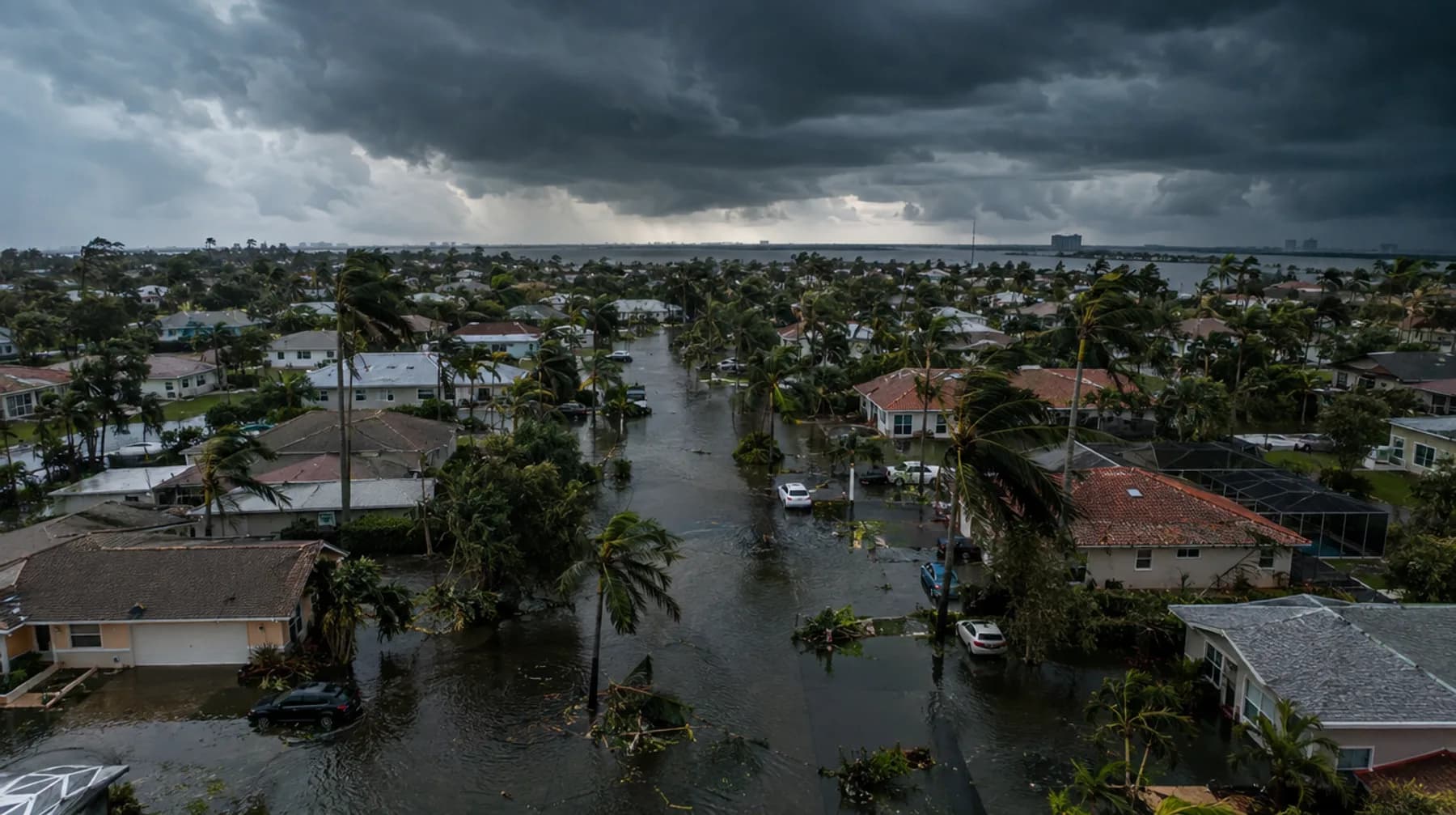
Damage doesn't wait for business hours — neither do we
Whether it's the middle of the night or a holiday weekend, our team is ready to respond and start stabilizing your property.