Water Mitigation in Florida
Water mitigation is the emergency work that stops water damage from getting worse — before the full restoration begins. Our our crews move fast to halt the spread: extracting standing water, removing at-risk materials, and setting drying equipment so a bad situation doesn't become a much larger one.
The equipment behind fast mitigation
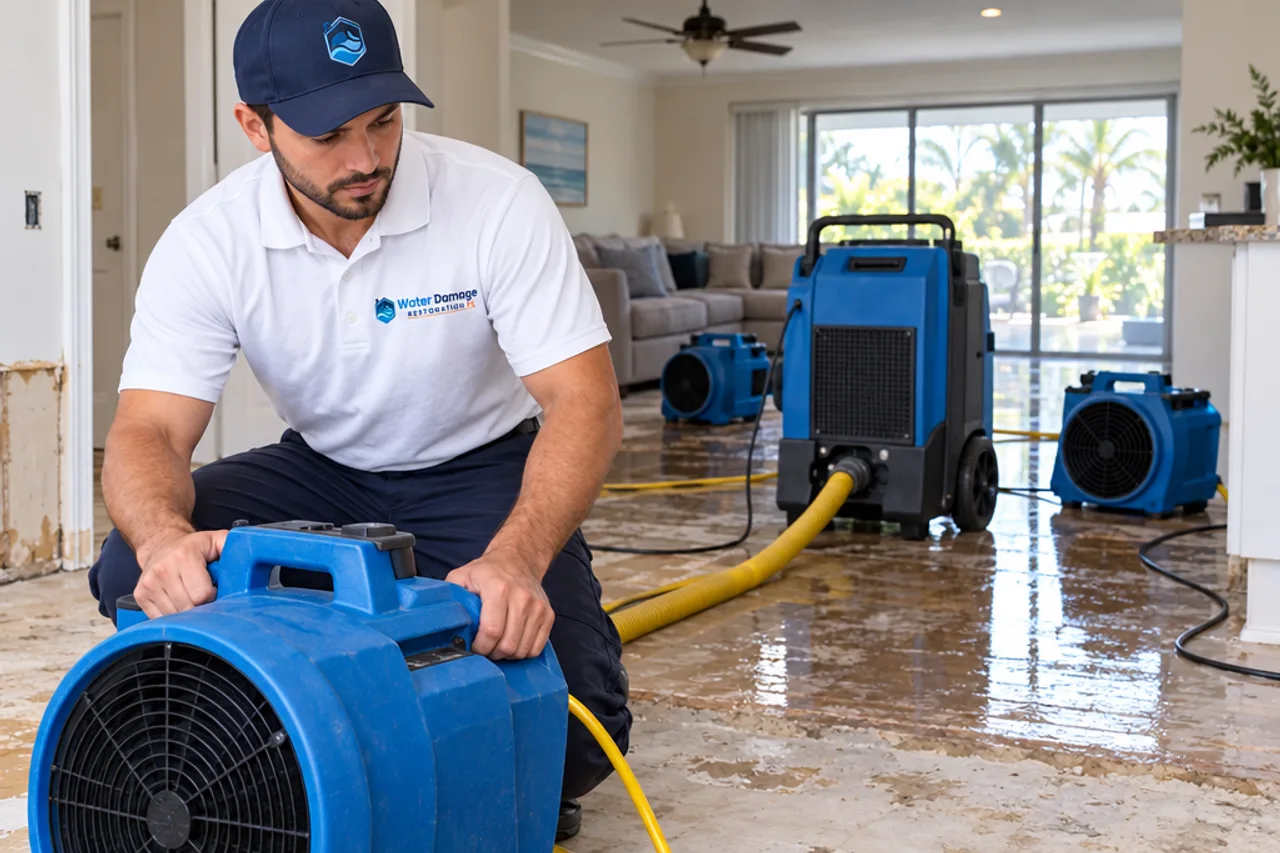
Mitigation is only as fast as the tools brought to bear, so our crews arrive equipped to move immediately rather than assess and come back. The equipment is chosen to do the two things mitigation needs most: get water out and get drying started.
On a typical mitigation that includes:
- Submersible pumps and extractors to clear standing water quickly.
- Air movers to begin evaporating moisture from wet surfaces right away.
- Commercial dehumidifiers to pull that moisture out of the air.
- Moisture meters and thermal cameras to find where water has spread.
- Containment materials to stop the damage from reaching clean areas.
What water mitigation means
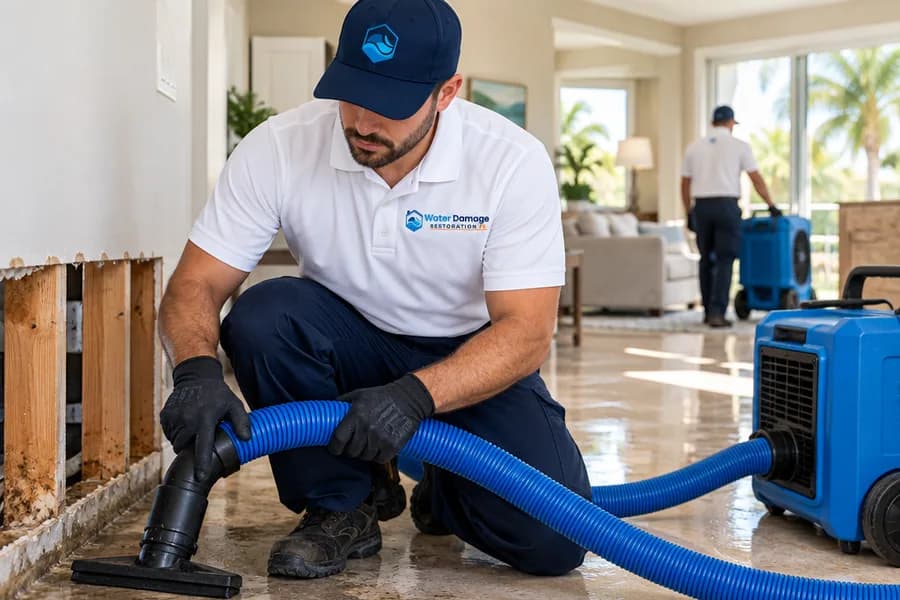
Mitigation is about containment and speed. When water is actively spreading through a property, every hour it sits means more soaked drywall, more warped flooring, and a higher mold risk. Mitigation is the set of immediate steps that draw a line under the damage so restoration can start from a stable point.
It's the first phase of nearly every water damage job, and it typically includes:
- Stopping or isolating the water source where possible.
- Extracting standing water quickly with pumps and extractors.
- Moving furniture and contents out of harm's way.
- Removing saturated materials that would otherwise keep spreading moisture.
- Placing air movers and dehumidifiers to begin drying right away.
Common water emergencies that need mitigation
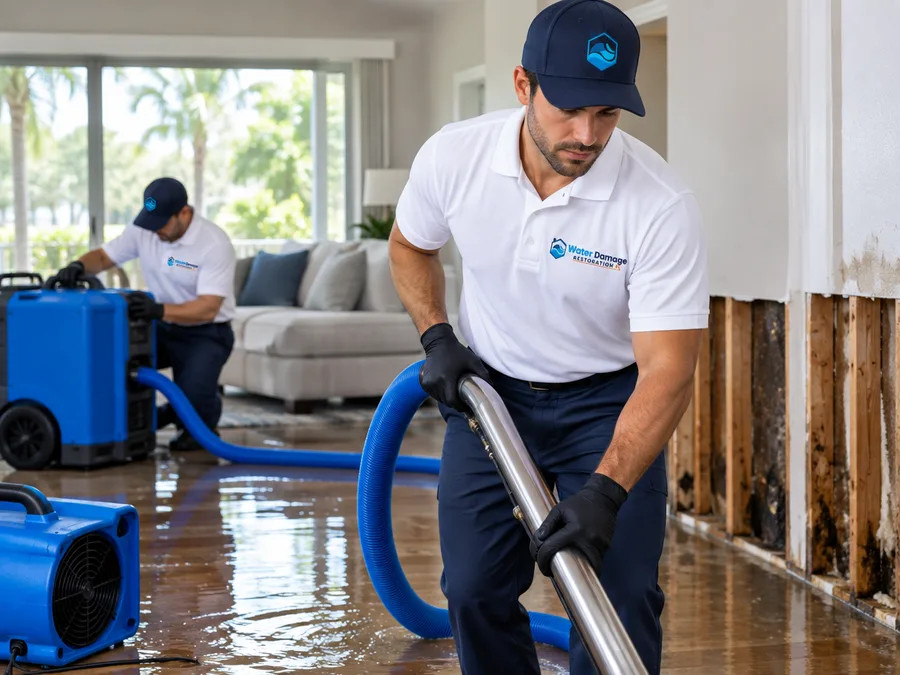
Mitigation is the right first call any time water is actively spreading or a large volume has been released. In Florida, the situations we respond to most often include:
- Burst or frozen-then-thawed pipes releasing water under pressure.
- Water heater tank failures flooding a garage, closet, or utility room.
- Supply-line and appliance hose ruptures behind washers and dishwashers.
- Overflowing tubs, sinks, and toilets.
- Storm-driven rain and flooding entering through the roof, doors, or windows.
Water mitigation vs. water damage restoration
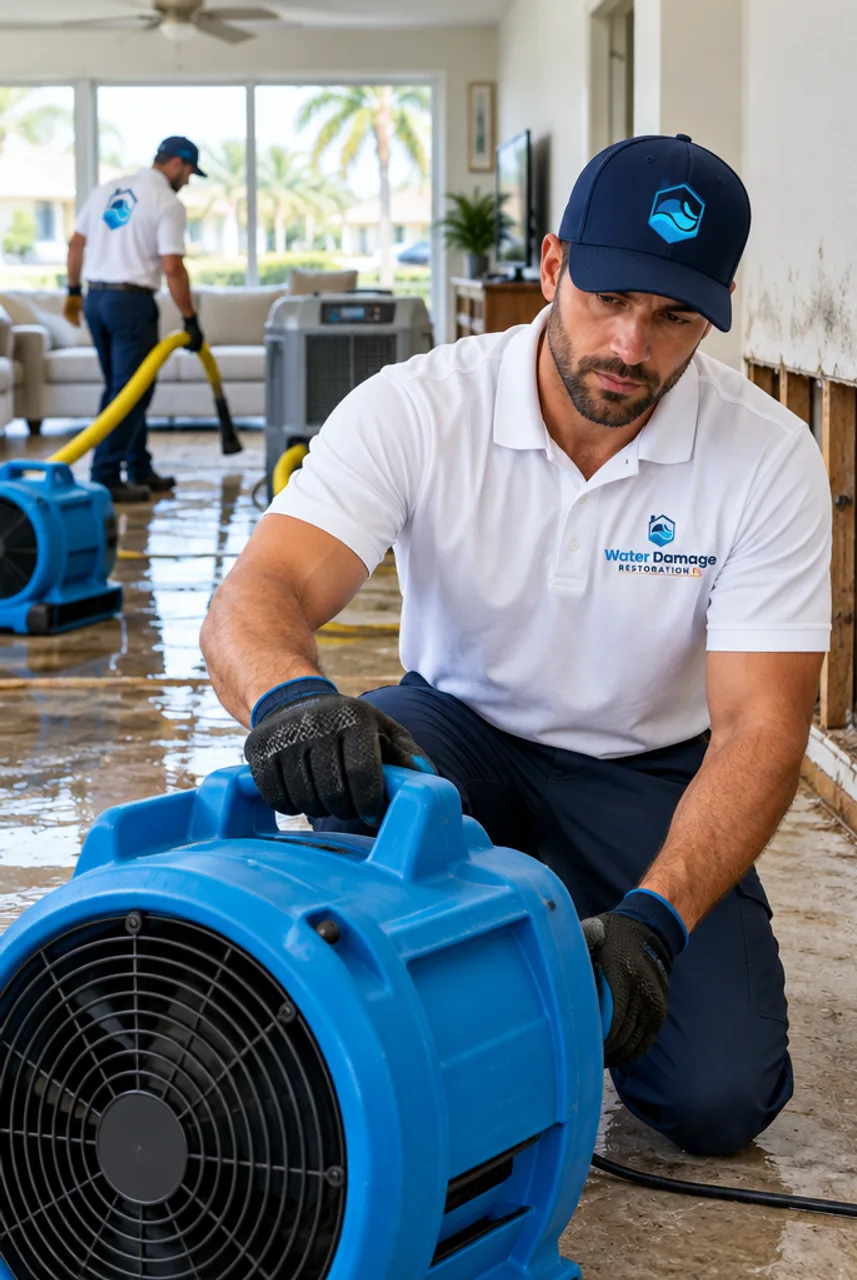
Mitigation and restoration are two halves of the same job. Mitigation is the emergency response that limits the damage; restoration is the longer process of drying, cleaning, and rebuilding afterward. On most losses you need both — mitigation first to stabilize things, then restoration to make the property whole.
| Water mitigation | Water damage restoration | |
|---|---|---|
| Focus | Preventing further damage | Repairing existing damage |
| Timing | Immediate / emergency | After mitigation |
| Examples | Extraction, tarping, board-up | Drying, drywall, flooring, paint |
How fast mitigation protects your property
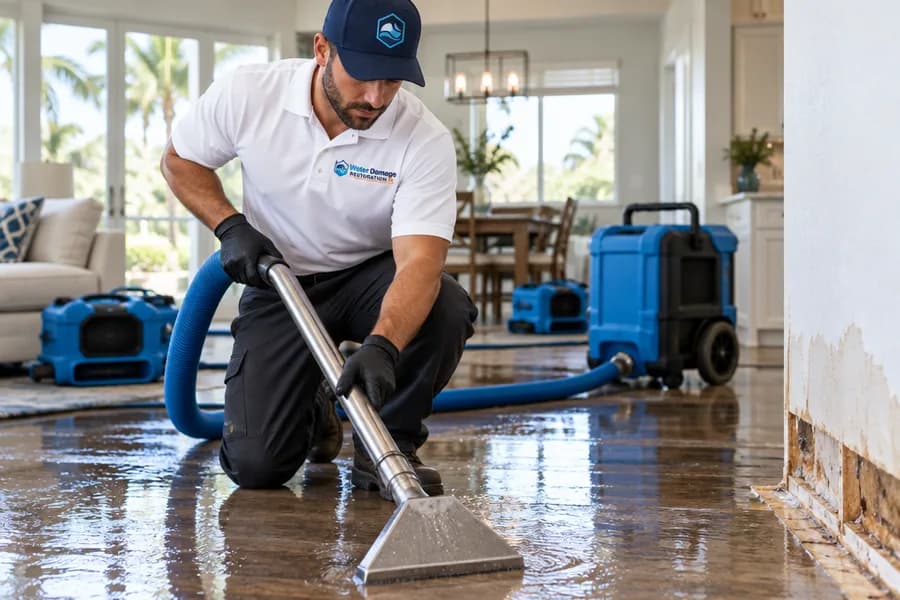
The value of mitigation is measured in what it prevents. Quick extraction keeps water from wicking into walls and subfloors. Early dehumidification keeps moisture from settling into materials across the rest of the building. Removing soaked, unsalvageable materials early stops them from acting as a moisture reservoir.
Together, those steps often mean the difference between a few days of drying and weeks of repairs — and between saving your flooring and replacing it. Insurance policies also generally expect you to take reasonable steps to prevent further damage, so prompt mitigation supports your claim as well as your property.
What mitigation looks like on site
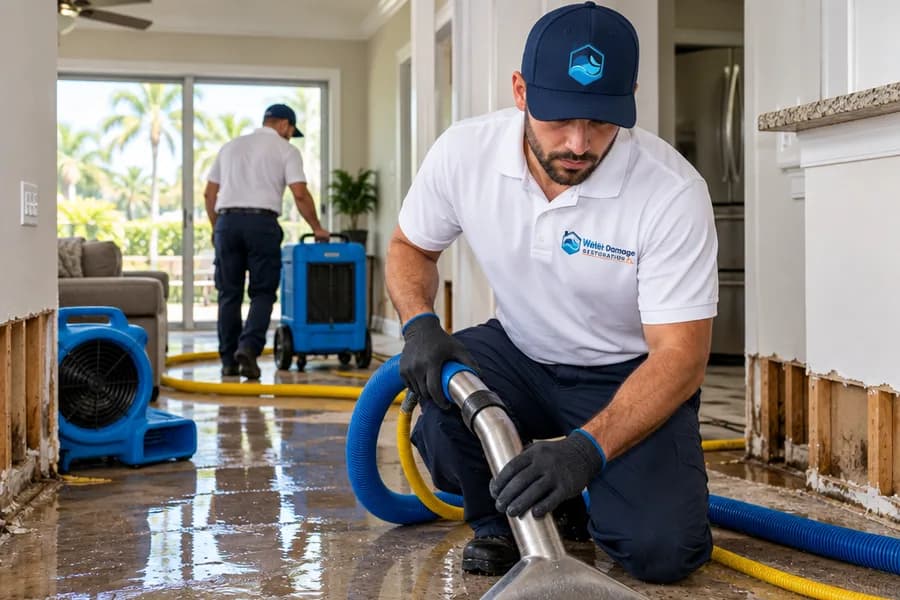
When our crew arrives, the first move is to make the area safe and stop the water at its source if it's still flowing. From there we extract standing water, pull back or remove soaked materials that can't be saved, and set air movers and dehumidifiers to start pulling moisture out immediately. We document conditions and moisture readings throughout, so there's a clear record of the loss from the very first hour.
Because those first hours matter so much, mitigation is deliberately fast and focused — the detailed drying, cleaning, and rebuilding come next, once the situation is stable.
Available 24/7 across Florida
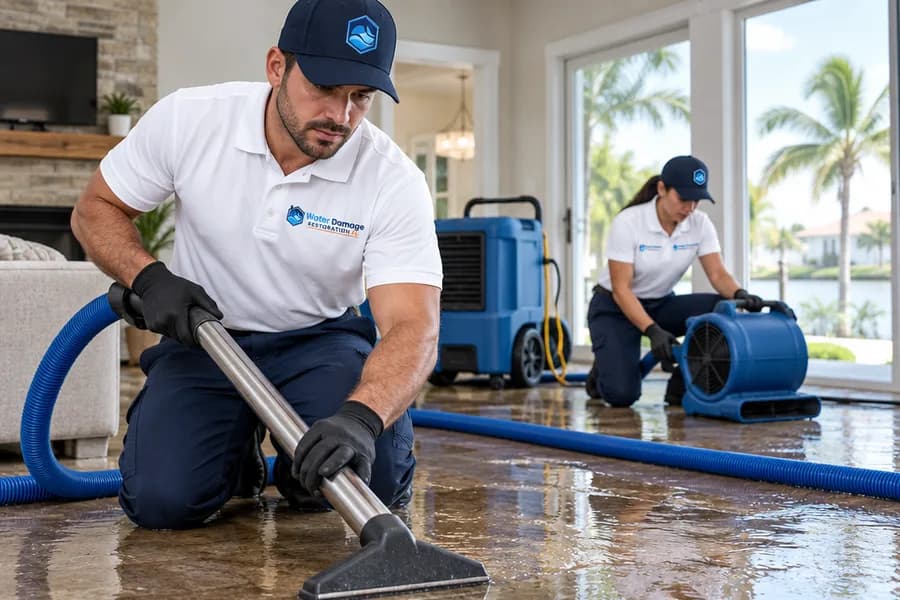
Water emergencies don't wait for business hours, so neither do we. Our crews respond around the clock across Florida to begin mitigation as soon as possible after you call. The faster we're on site, the more of your property we can protect.
More Water Damage Restoration services
View all Water Damage Restoration servicesRequest this service
Tell us what happened and we'll follow up to confirm next steps.
Frequently asked questions
Mitigation is the emergency work that stops water damage from spreading — extraction, removing at-risk materials, and starting to dry. Restoration is the longer process that follows: fully drying the structure, cleaning, and repairing or rebuilding. Most jobs need mitigation first, then restoration.
As fast as possible. Water keeps spreading and soaking into materials until it's removed, and mold can begin within 24 to 48 hours. Rapid mitigation is what limits the overall damage, which is why we respond 24/7.
It significantly reduces the risk. By removing water and lowering moisture quickly, mitigation removes the conditions mold needs. If materials stay wet long enough for mold to establish, remediation may still be required — another reason speed matters.
Usually, yes. Mitigation stabilizes the situation and limits damage, but any materials that were removed or damaged still need to be dried, cleaned, and repaired during the restoration phase. We handle the full sequence so there's a single point of contact.
Yes. We document the loss with photos and moisture readings and can communicate directly with your adjuster about the scope of work. Coverage and claim decisions rest with your insurance provider.
Still have a question? Call us at (904) 555-0100