Water Extraction & Removal in Florida
Water extraction and removal is the powered clearing of standing water from floors, carpets, and basements using pumps and extractors. In Florida, our crews remove water fast — the earliest and most important step in limiting water damage — then move straight into drying.
How long extraction takes and what affects it
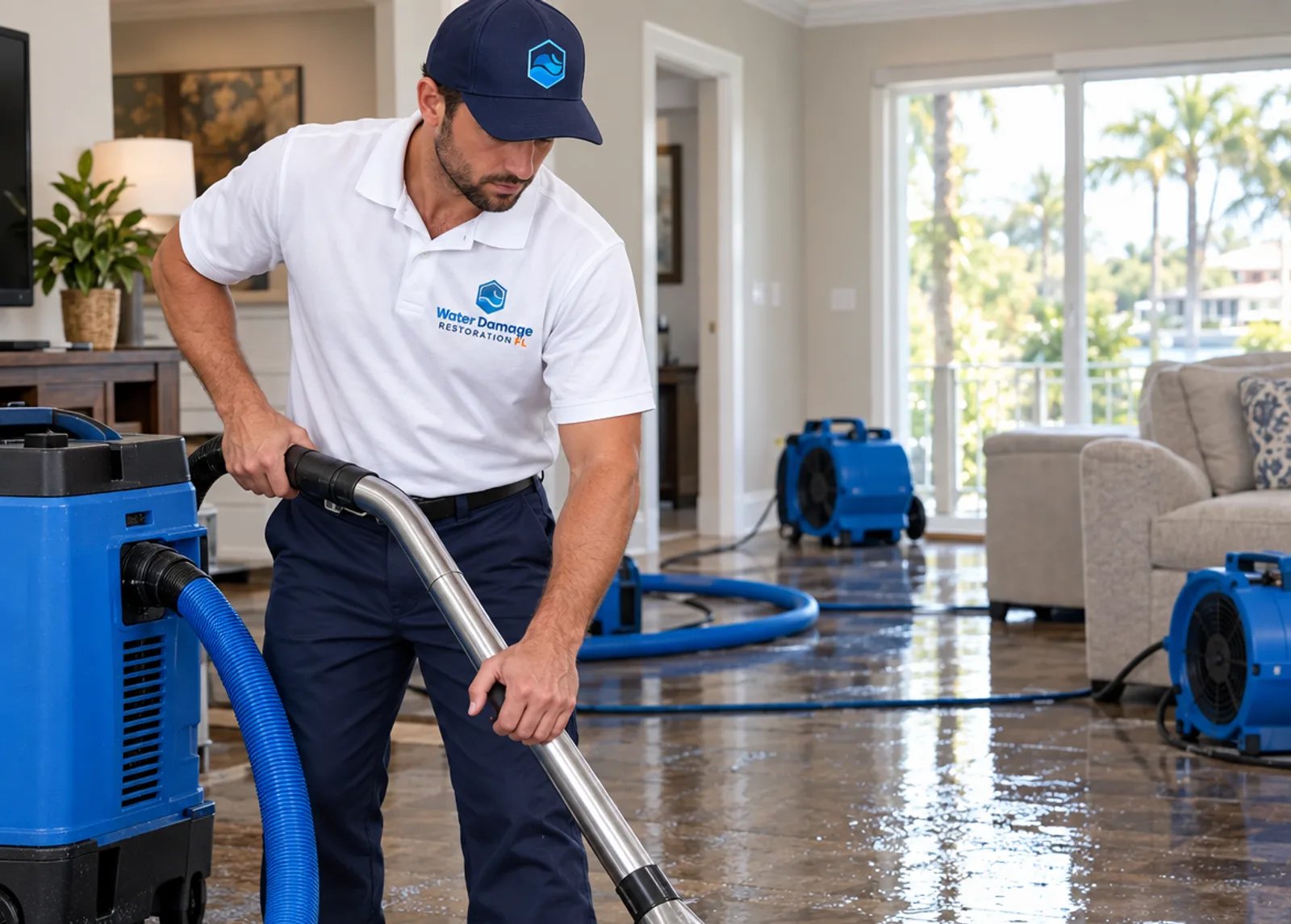
Extraction itself is usually one of the faster stages of a water loss — often a matter of hours — but how long it takes depends on the volume of water, the surfaces involved, and how easy the area is to reach. A single soaked room clears quickly; a flooded basement full of standing water takes longer.
What extraction shortens most is the stage that follows it. The more water we pull out up front, the less has to be evaporated during drying, so thorough extraction can take days off the overall timeline even when the extraction itself is quick.
Why professional extraction beats a shop vac
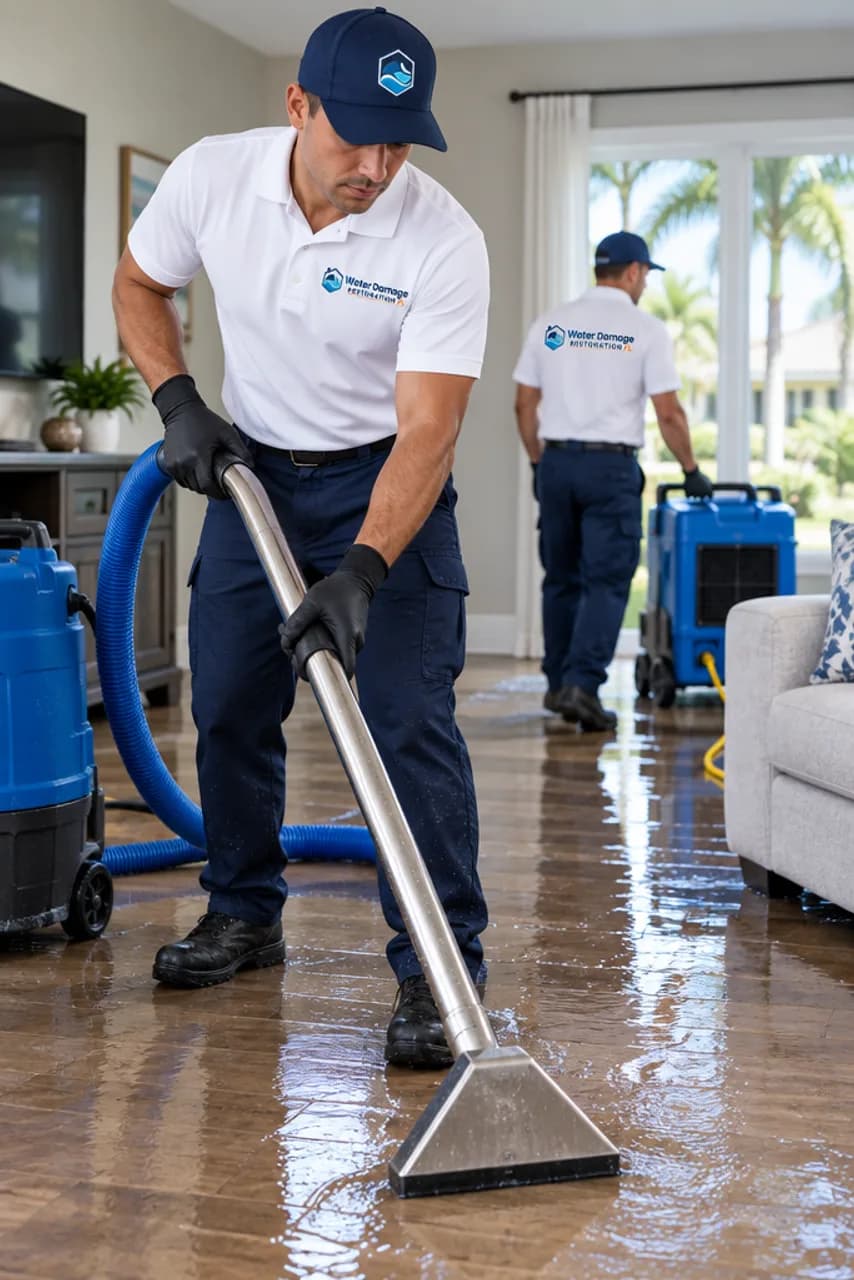
Household wet vacuums have their place for small spills, but they can't move the volume of a real water loss or pull water out of the materials it has soaked into. A shop vac skims the surface; professional truck-mounted and portable extractors draw water from deep in carpet, pad, and the seams of hard flooring.
That difference matters because the water left behind is what causes lasting damage. Removing more of it, faster, is exactly what limits warping, staining, and mold — and it's why the right equipment is worth calling for rather than trying to manage a major loss by hand.
Why water removal is the first priority
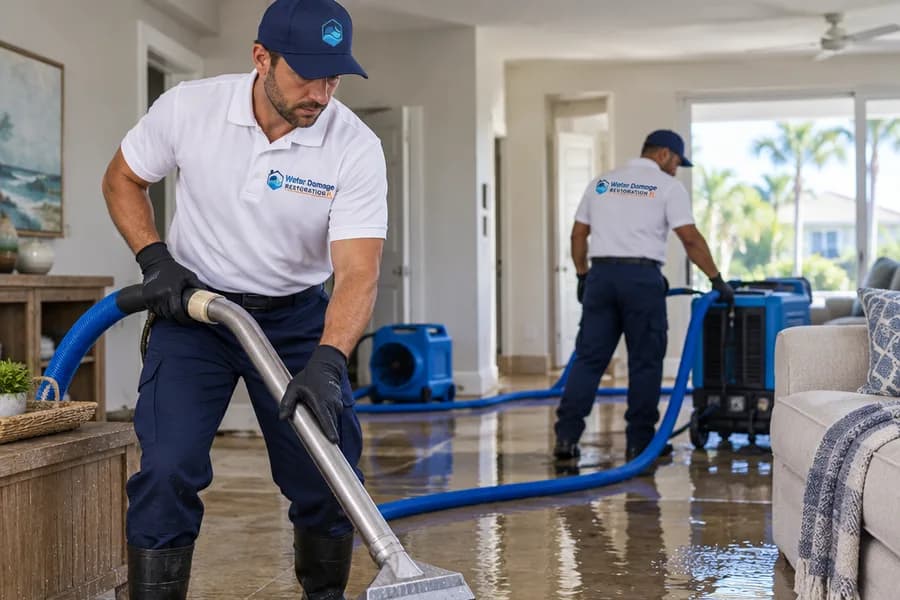
Removing as much water as possible, as early as possible, is one of the most important steps in limiting water damage. Until the standing water is gone, it keeps spreading — wicking into walls, soaking subfloors, and raising humidity that carries the problem to unaffected areas. No material can dry while it's still sitting in water.
That's why extraction and removal come first. Clear the water, and every step that follows becomes faster and more effective.
Extraction vs. removal — what's the difference?
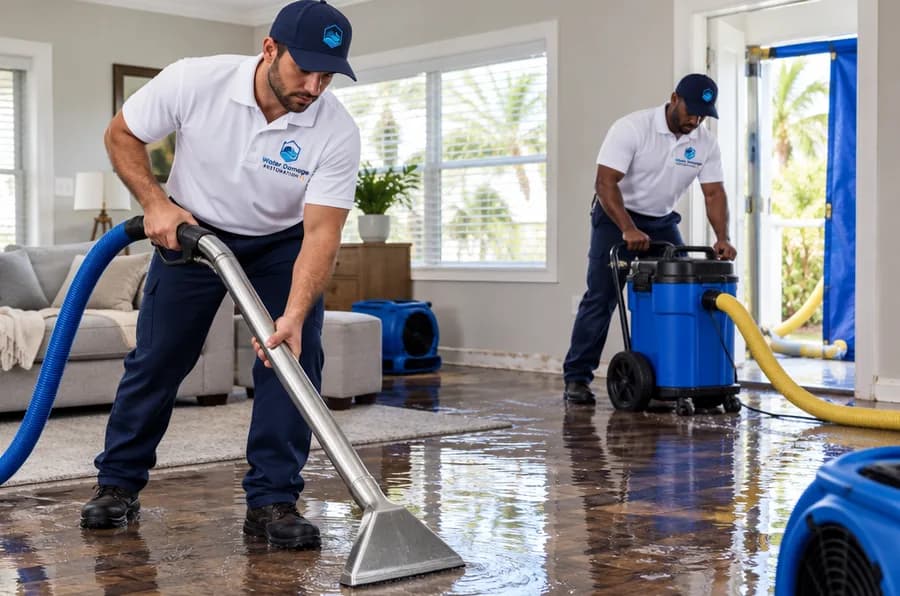
People use these terms interchangeably, and they overlap heavily. In practice, removal describes clearing standing water from a space, while extraction emphasizes pulling water out of the materials it has soaked into, like carpet and pad. Both use powered equipment, and most jobs involve both.
| Water removal | Water extraction | |
|---|---|---|
| Focus | Clearing standing water | Pulling water from materials |
| Tools | Pumps, wet vacs | Truck-mounted and portable extractors |
| Best for | Pooled water, basements | Carpet, pad, upholstery |
| Result | Space no longer flooded | Materials ready to dry faster |
The equipment we use
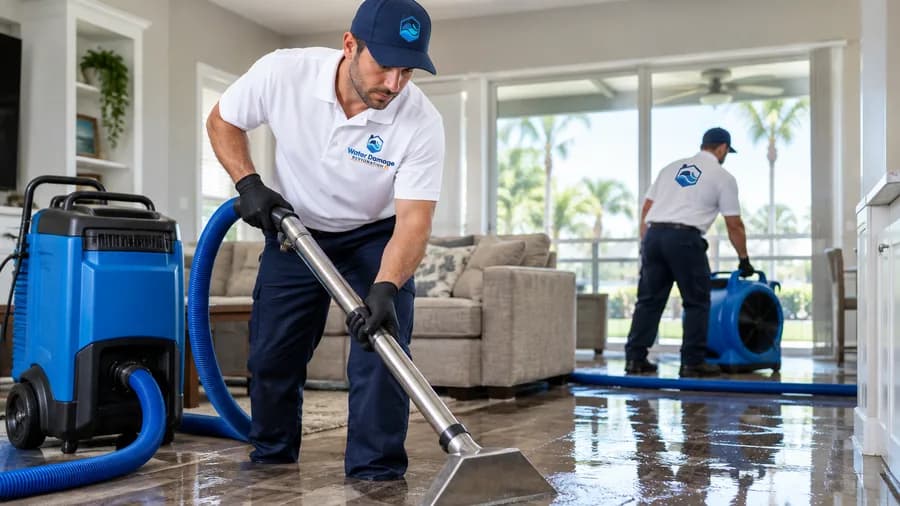
The right equipment depends on how much water there is and where it's collected. Our crews arrive prepared to move quickly:
- Submersible pumps for deep standing water in basements and low areas.
- Truck-mounted extractors with strong suction for saturated carpet.
- Portable extractors and wands for stairs, corners, and tight spaces.
- Wet vacuums for detail work and finishing.
- Moisture meters and thermal cameras to track where water has traveled.
Finding water you can't see
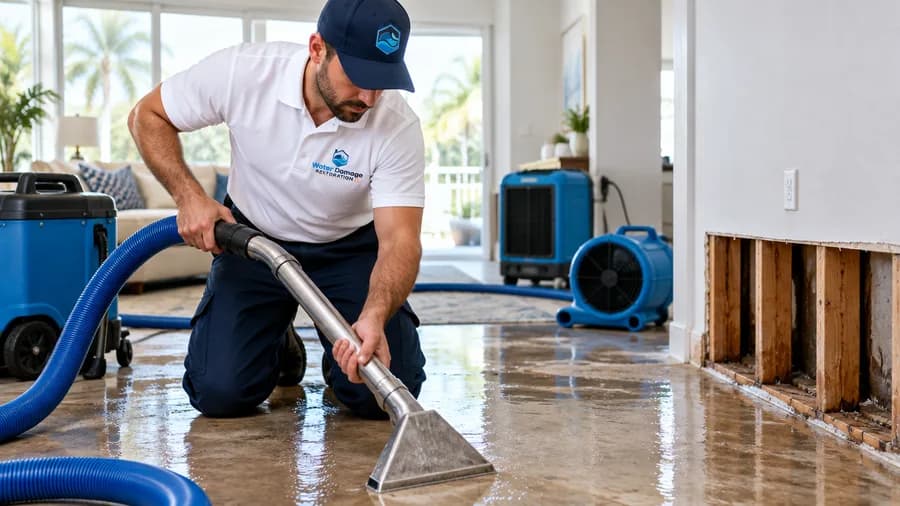
Visible standing water is only part of the story. Water follows gravity into the lowest and most hidden places — under flooring, inside wall cavities, beneath cabinets, and into crawl spaces and subfloors. If it's left there, it causes damage and mold long after the surface appears dry.
Our technicians use moisture meters and thermal imaging to map where water has actually gone, so removal reaches the hidden pockets rather than just the obvious puddles.
Removal sets up faster drying
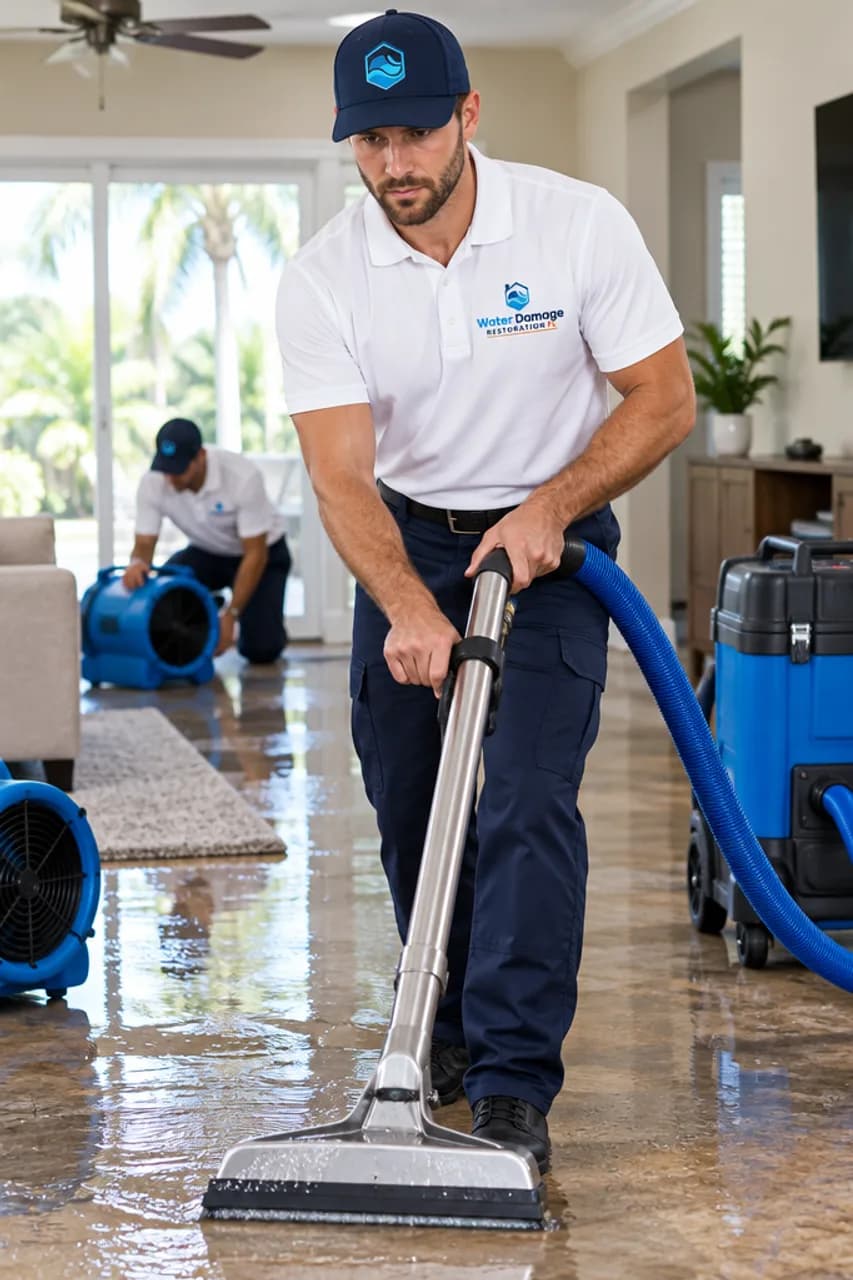
The more water that's extracted up front, the less has to be evaporated during drying. Thorough removal is what makes the drying stage shorter and more complete — and it lowers the mold risk by getting materials out of standing water quickly.
We move directly from removal into structural drying, using air movers and dehumidifiers to bring the remaining moisture down to normal levels, so the property isn't left partly wet.
Common situations that need water extraction
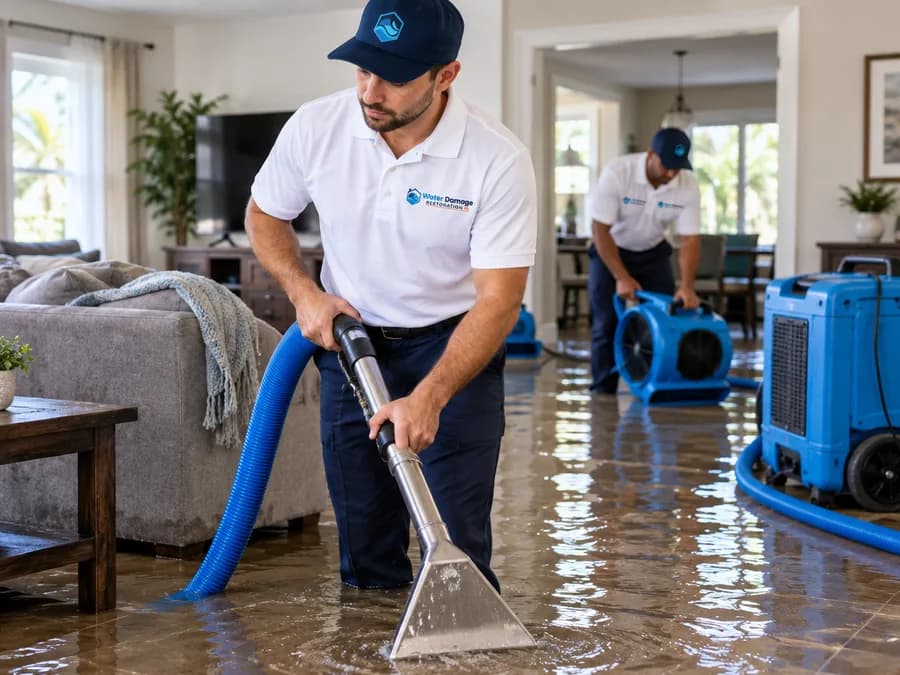
Extraction and removal apply to almost any water loss, but some situations call for it most urgently:
- Flooded basements and low-lying rooms holding standing water.
- Saturated carpet and pad after a leak or overflow.
- Storm and roof-leak water pooling on floors.
- Appliance and supply-line failures releasing large volumes.
- Sewage backups requiring careful, protected extraction.
Serving communities across Florida
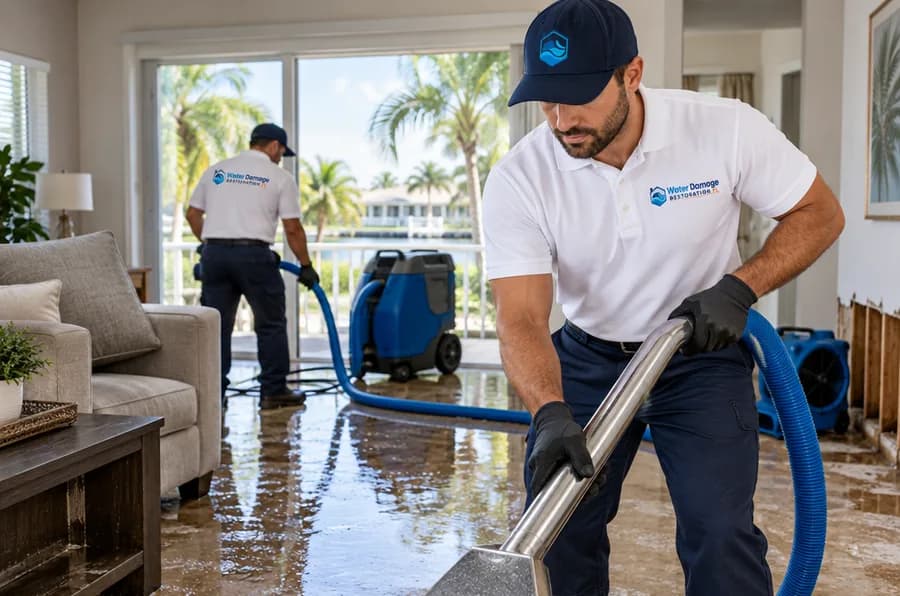
Our extraction and removal crews respond across Florida, from Jacksonville and Miami to Tampa and Orlando. Because getting water out quickly is what limits the damage, we focus on fast arrival and thorough extraction — 24/7 when it's an emergency.
Water Extraction & Removal services
Water Extraction
Using extraction equipment to pull water out of floors, carpets, and other surfaces.
Learn moreStanding Water Removal
Clearing pooled water from rooms, basements, and crawl spaces.
Learn moreWater Removal
Removing unwanted water from a property to begin the drying process.
Learn moreFlooded Basement Water Removal
Pumping out and removing water from flooded basements.
Learn moreCarpet Water Extraction
Extracting water from saturated carpet and padding.
Learn more
Frequently asked questions
Cost depends on how much water there is, the surfaces involved, and how far it spread. Extracting a single soaked room is far less than pumping out a flooded basement. We assess on site and document everything for your insurance claim.
They overlap heavily. Removal generally means clearing standing water from a space, while extraction emphasizes pulling water out of materials like carpet and pad. Most jobs involve both, using powered pumps and extractors.
Extraction itself is usually the fastest phase — often a few hours depending on the volume and access. The longer part is the structural drying that follows, which typically takes several days.
Often, if the water was clean and extraction happens quickly. The pad underneath frequently needs replacing, and carpet soaked by contaminated water usually can't be saved safely. We assess and give you an honest recommendation.
Yes. We use moisture meters and thermal cameras to find where water has traveled — under flooring, inside walls, and in subfloors — and extract from those areas, not just the visible puddles.
Removal and drying are separate steps we handle together. Once the water is out, air movers and dehumidifiers bring the remaining moisture down to normal levels so the structure is fully dry, not just clear of standing water.
Still have a question? Call us at (904) 555-0100
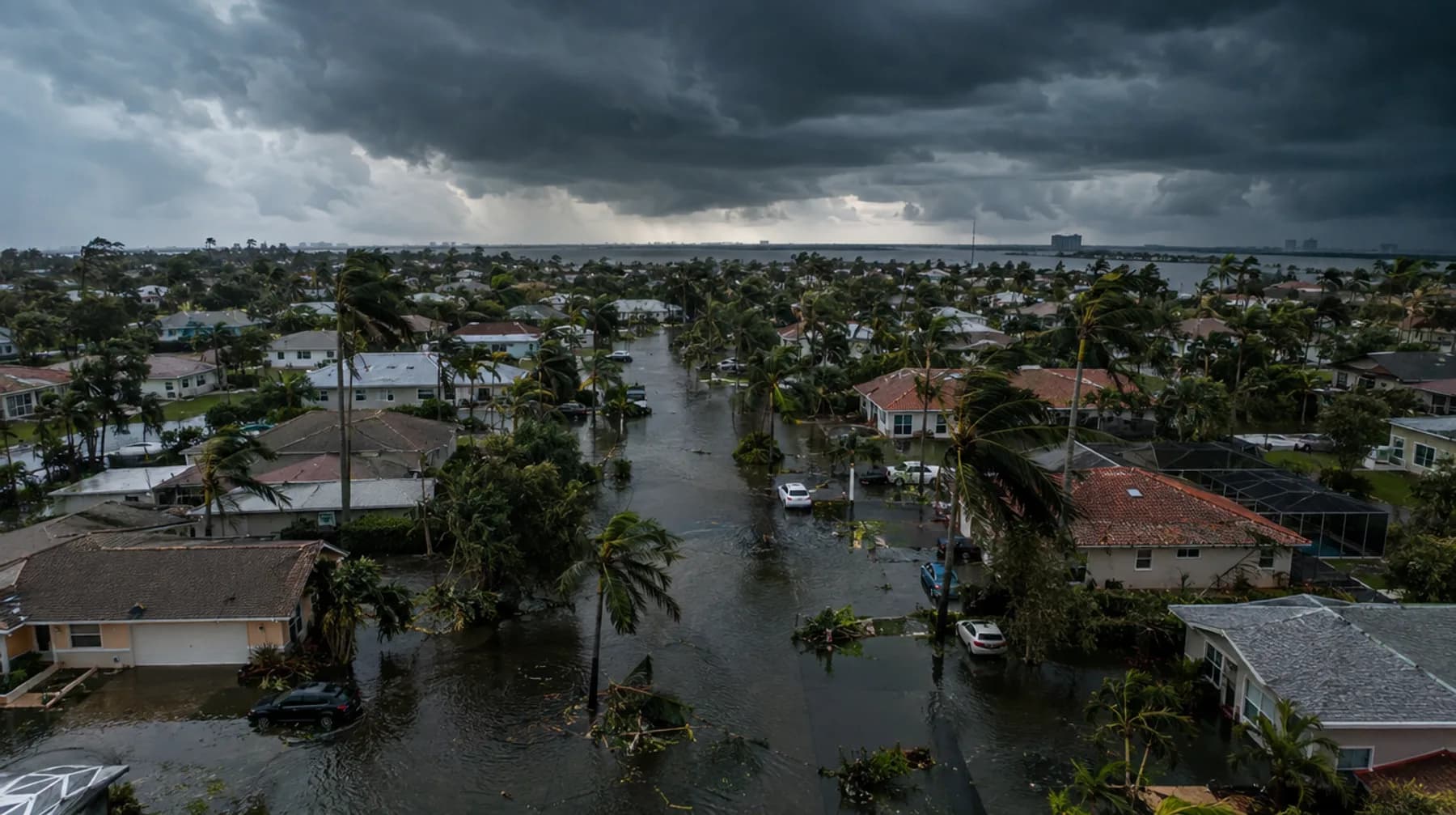
Damage doesn't wait for business hours — neither do we
Whether it's the middle of the night or a holiday weekend, our team is ready to respond and start stabilizing your property.