Drying & Dehumidification in Florida
Drying and dehumidification is the removal of moisture from structures, materials, and the air after water damage. In Florida's humidity, our crews use air movers and commercial dehumidifiers to bring walls, floors, and framing back to normal moisture levels — and confirm it with readings.
Monitoring the drying process daily
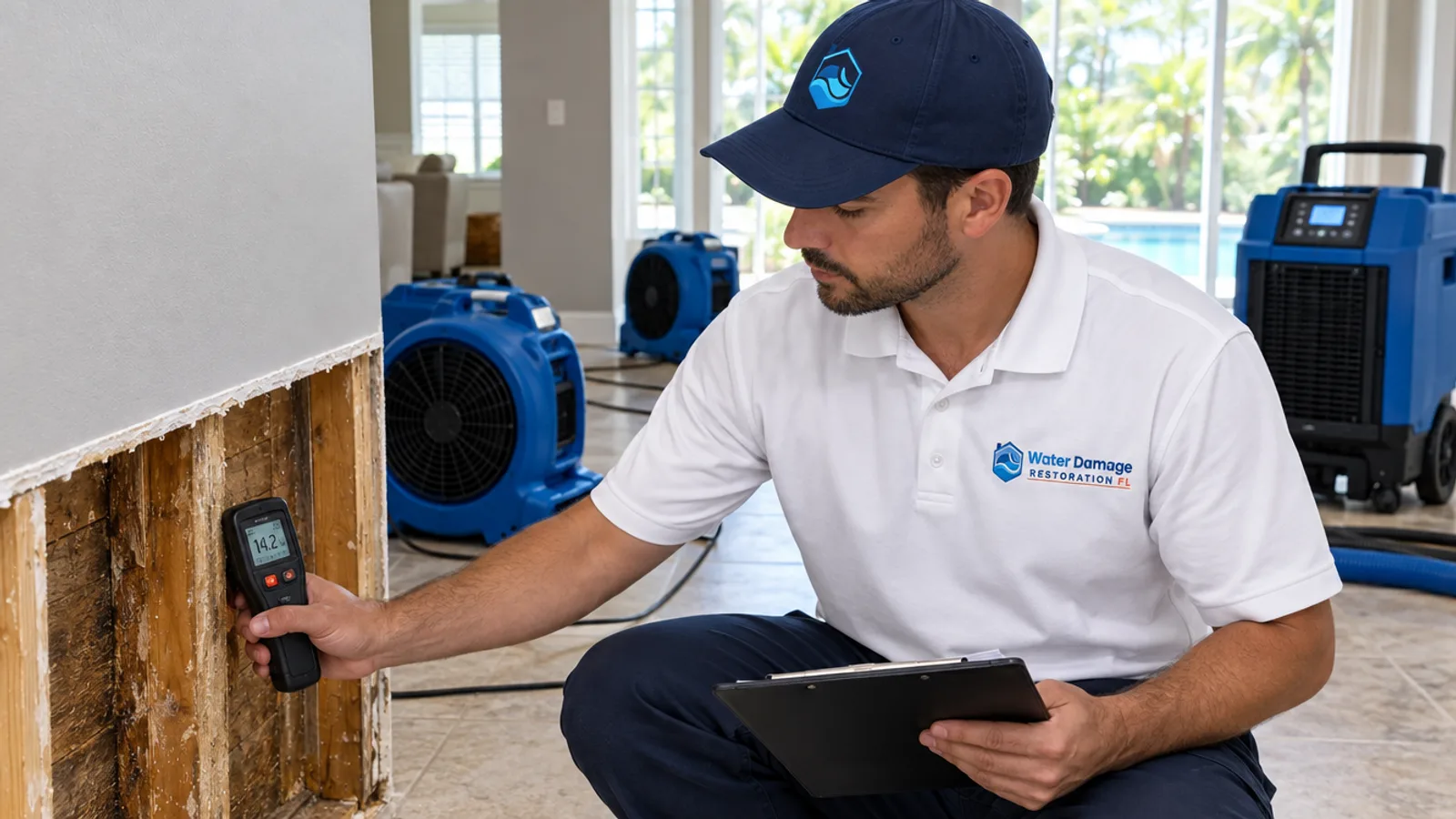
Drying isn't a set-it-and-forget-it process. As materials give up moisture, conditions in the space change, so our technicians return to take readings, check the equipment, and adjust it as the job progresses. Air movers may be repositioned, dehumidifiers rebalanced, and readings logged to track progress toward the drying goals.
This daily monitoring is what keeps drying efficient and prevents surprises. It also produces a clear record of the moisture coming down over time, which is useful documentation for an insurance claim.
What happens if drying is cut short
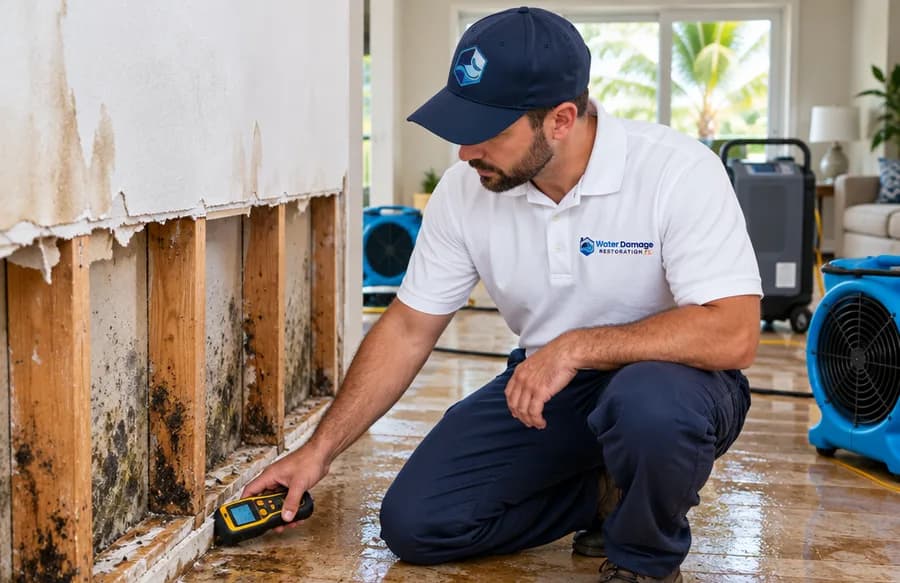
Stopping drying too early — because a surface feels dry, or the equipment is inconvenient — is one of the most common causes of problems weeks after a water loss. Materials that still hold moisture behind the scenes go on to warp, cup, stain, and grow mold, often behind finishes that were repaired over damp material.
Because the damage from incomplete drying is hidden and delayed, it's easy to underestimate. Drying to verified moisture targets, rather than to appearances, is what avoids paying for the same loss twice.
Why drying is its own stage
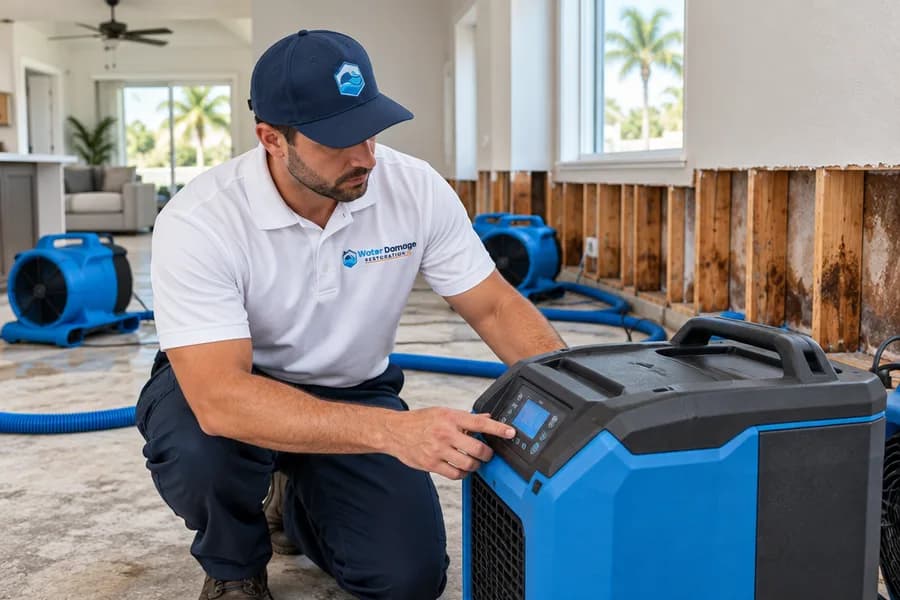
Even after visible water is removed, a great deal of moisture remains — soaked into drywall, trapped under flooring, and held in the air itself. Drying and dehumidification is the stage that removes that hidden moisture so materials return to their normal, stable condition.
Skipping or rushing it is what leads to warped floors, peeling paint, and mold weeks after the visible water is gone. Proper drying is the difference between a property that's actually dry and one that only looks dry.
How air movers and dehumidifiers work together
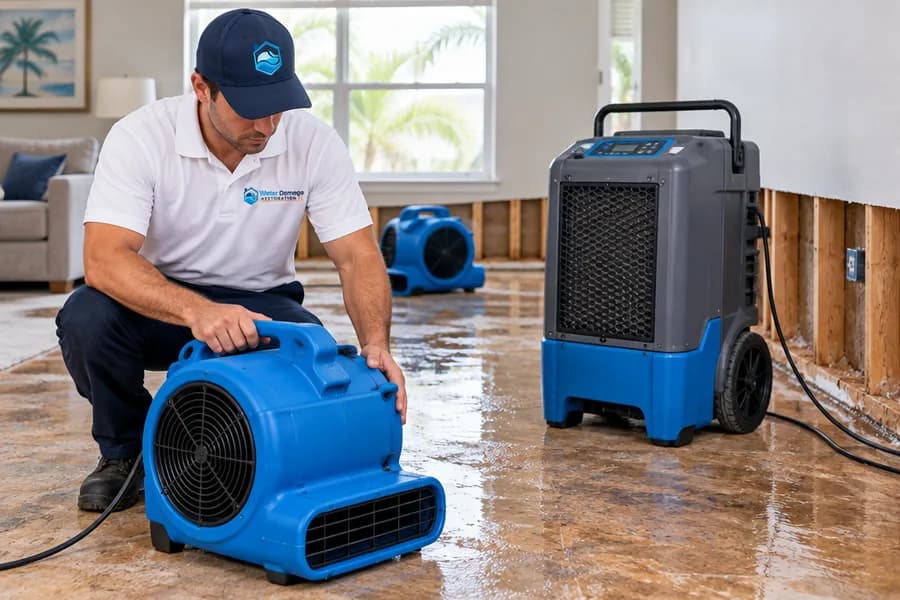
Effective drying relies on two tools working in tandem. Air movers push air across wet surfaces to speed evaporation, moving moisture from materials into the air. Dehumidifiers then pull that moisture out of the air so it doesn't simply resettle elsewhere.
Used alone, either one is far less effective. Together, and sized correctly to the space, they create the controlled conditions that dry a structure efficiently — even across Florida's humid climate.
Drying to a measured target
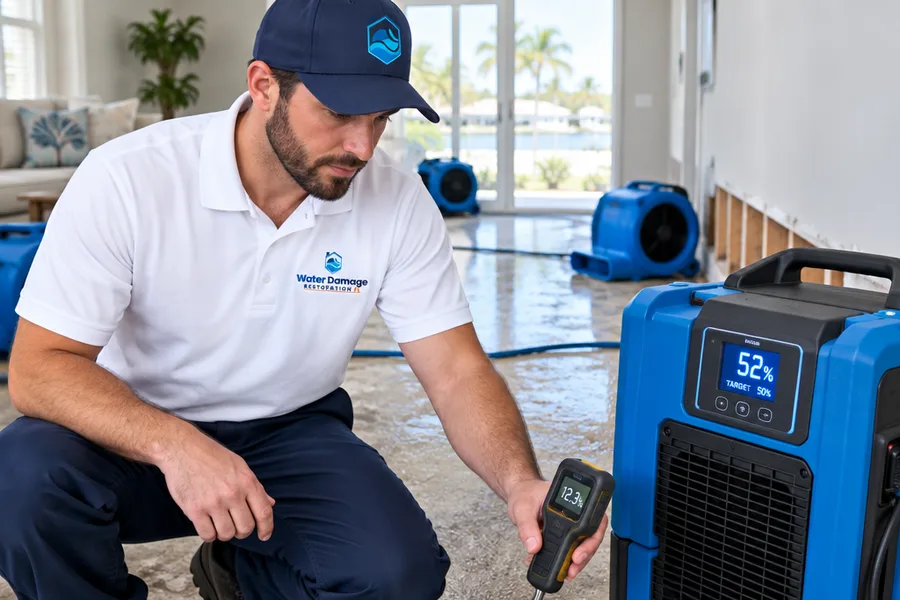
The core principle of professional drying is the drying goal — a specific moisture level materials should reach, based on readings from unaffected areas of the same property. A wall or subfloor can feel dry while still holding enough moisture to grow mold or warp over time.
Our technicians take moisture readings throughout the process and keep equipment running until materials hit their targets. That measured approach is what makes drying reliable rather than a guess.
The equipment we use
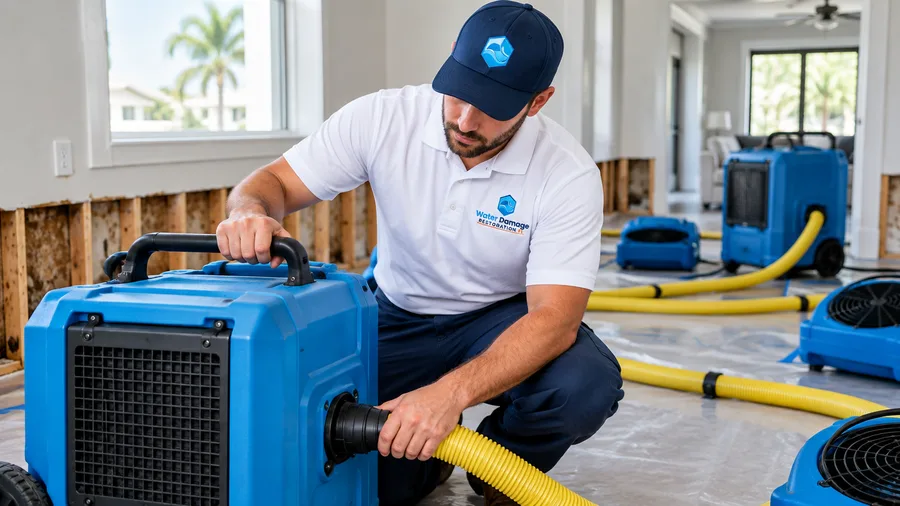
Different situations call for different tools, and our crews size the equipment to the space and the materials:
- Air movers to accelerate evaporation from wet surfaces.
- Commercial (refrigerant and desiccant) dehumidifiers to remove moisture from the air.
- Moisture meters and sensors to measure progress.
- Thermal cameras to locate damp areas that aren't visible.
- Specialty drying systems for hardwood, walls, and enclosed cavities.
Why humidity makes drying harder in Florida
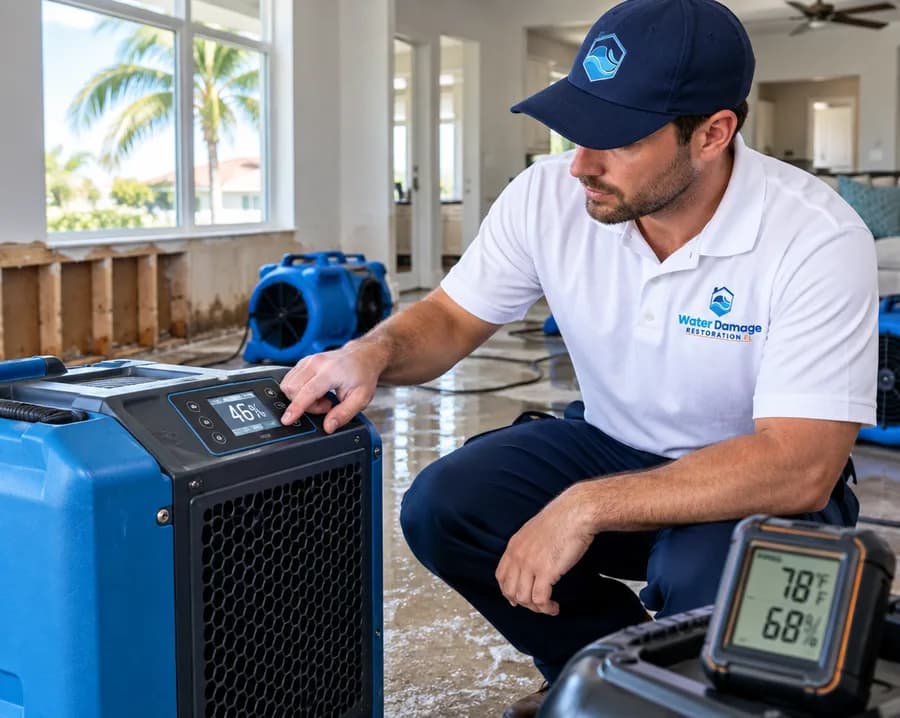
Florida's warm, humid air makes drying both more important and more demanding. High ambient humidity slows natural evaporation and gives mold a head start, so controlled dehumidification matters even more here than in drier climates. Simply opening windows can pull more moisture in on a humid day.
Proper drying manages the environment inside the affected area, removing moisture faster than the outside air can replace it — and doing it before secondary damage sets in.
Drying and dehumidification across Florida
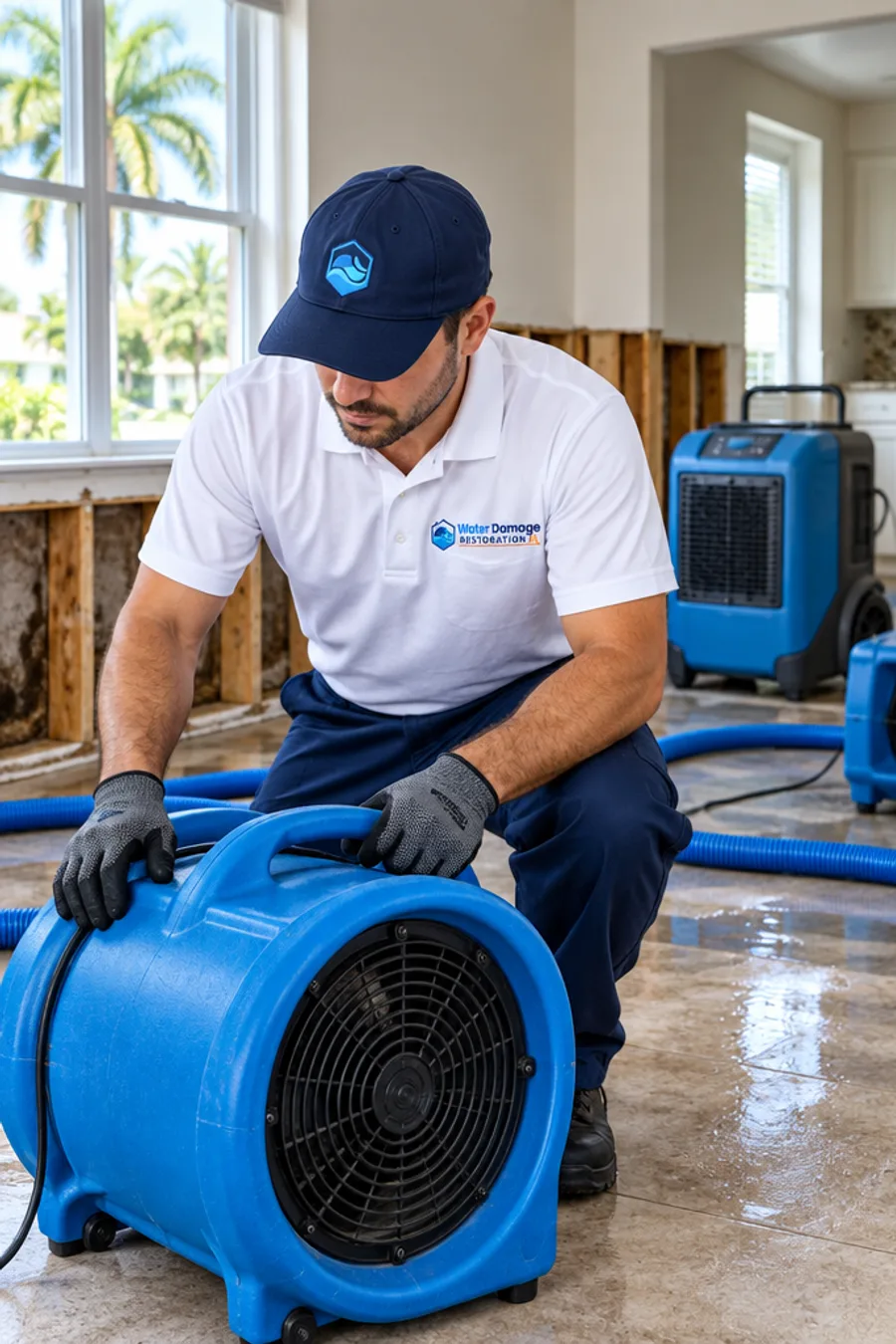
Our crews provide structural drying and dehumidification for homes and businesses across Florida, whether as part of a full restoration or as a focused service after water has been removed. The goal is always the same: materials dried to their targets, verified by readings.
Drying & Dehumidification services
Structural Drying
Drying walls, subfloors, and framing to prevent lasting damage.
Learn moreWater Damage Drying
Drying a property and its contents after water damage.
Learn moreDehumidification
Lowering indoor humidity to support drying and discourage mold growth.
Learn moreMoisture Removal
Finding and removing lingering moisture from affected materials.
Learn moreWet Carpet Drying
Drying wet carpet and padding after a leak or flood.
Learn more
Related services
Closely related services listed under another category.
Frequently asked questions
Most residential drying takes three to five days, though heavily saturated structures and humid conditions can take longer. We dry to moisture targets rather than a fixed schedule, monitoring with meters until materials are genuinely dry.
An air mover pushes air across wet surfaces to speed evaporation, moving moisture into the air. A dehumidifier removes that moisture from the air so it doesn't resettle. They work together — one without the other is far less effective.
Household fans move some air but don't remove moisture from the air the way dehumidifiers do, and they can't reach moisture inside walls and subfloors. In humid conditions, fans alone often just relocate the moisture. Professional equipment dries the structure itself.
We take moisture readings with meters and sensors and compare them against unaffected areas of the same property. When the affected materials reach their drying target, the structure is considered dry — a measured result, not a guess.
Fast, complete drying is one of the most effective ways to prevent mold, because mold needs moisture to grow. Drying materials to their target within the first day or two removes those conditions. If mold has already started, remediation may be needed alongside drying.
Yes. Air movers and dehumidifiers run continuously because stopping and restarting slows drying and raises the mold risk. They make some noise; we place them to be as unobtrusive as possible and explain how long they need to run.
Still have a question? Call us at (904) 555-0100

Damage doesn't wait for business hours — neither do we
Whether it's the middle of the night or a holiday weekend, our team is ready to respond and start stabilizing your property.