Mold Remediation Services in Florida
Mold remediation services cover containing, removing, and cleaning mold, and addressing its moisture source. Our our crews handle the full process — not just removal — so mold is returned to safe levels and kept from coming back, which is what remediation, unlike simple removal, is designed to do.
The role of HEPA filtration and containment
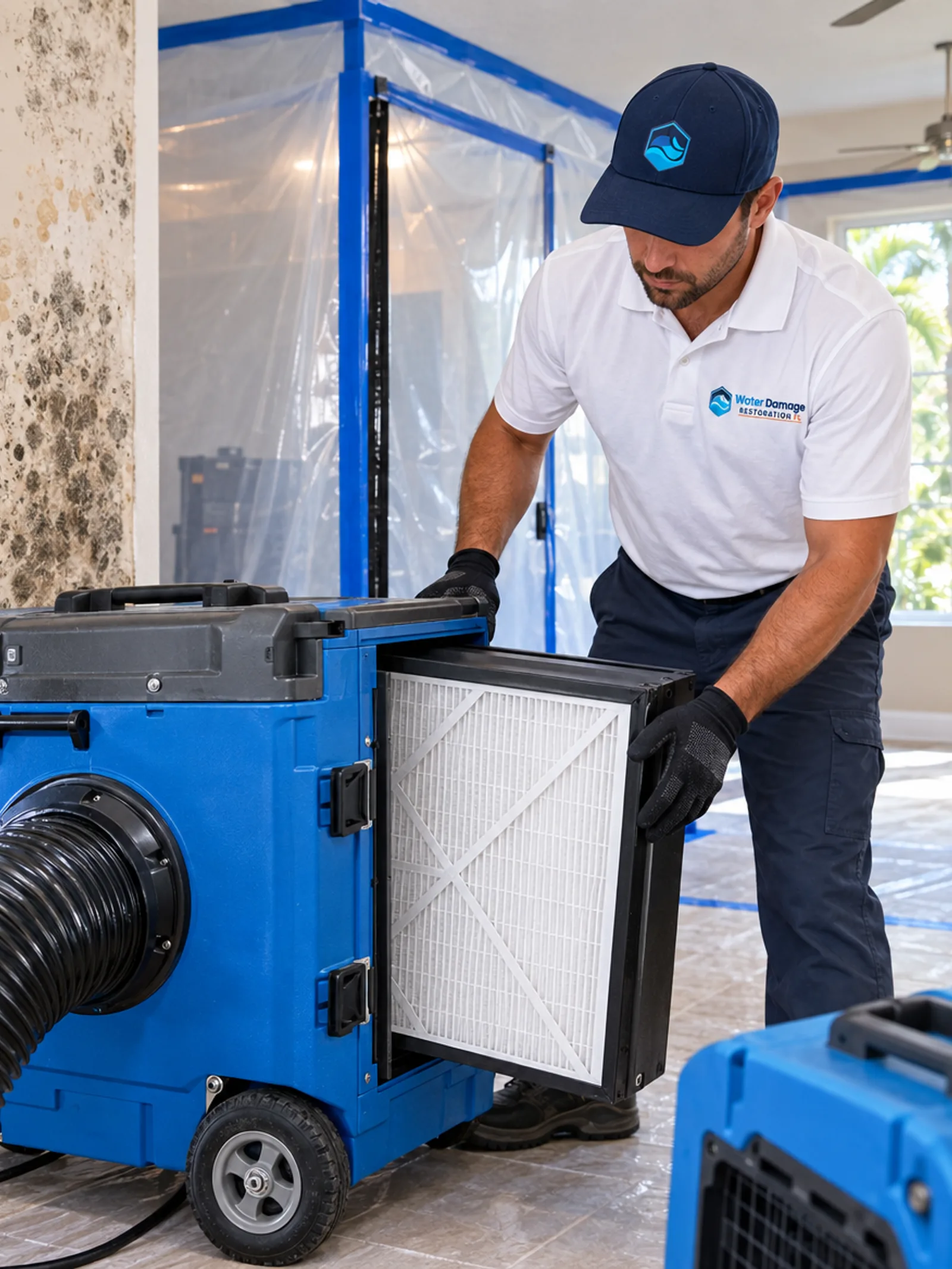
Two things separate professional remediation from a DIY scrub-down: containment and HEPA air filtration. Together they're what allow mold to be removed without turning a localized problem into a whole-property one.
Containment seals off the work area — with barriers and controlled airflow — so the spores stirred up during removal can't drift into clean parts of the home. HEPA air filtration then captures those airborne spores as the work proceeds, and a final HEPA-vacuum and wipe-down clears residual spores from surfaces. This is the piece most DIY efforts skip, and it's exactly why disturbing mold without precautions so often spreads it. The careful, contained approach is what keeps the mold isolated to where it was, so removing it actually reduces the problem instead of relocating it.
How long remediation takes
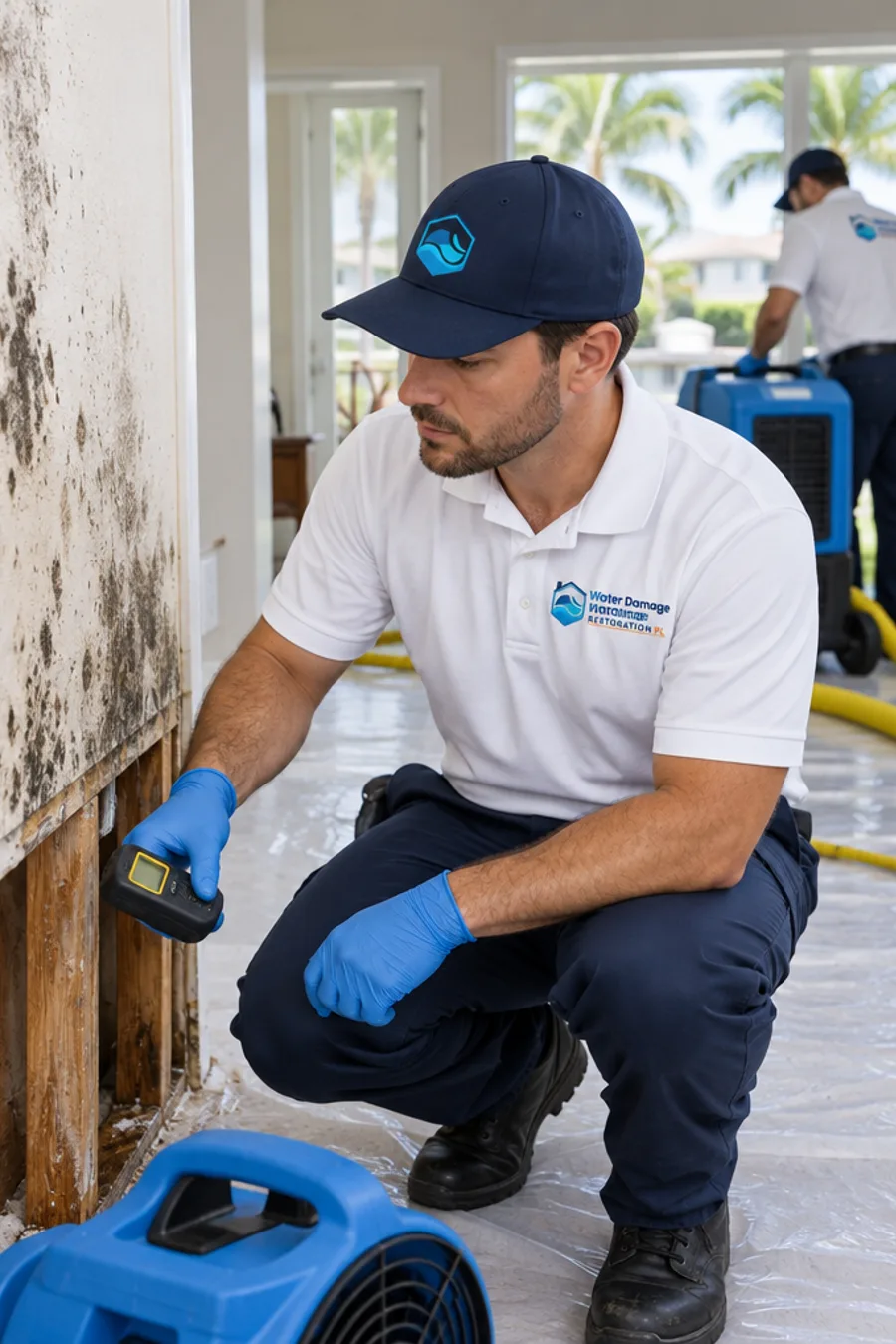
The timeline for mold remediation depends mostly on how much growth there is and how much material has to be removed. A small, contained area — a section of bathroom wall, say — can often be handled in a day, while widespread growth involving several rooms or structural materials takes longer.
Drying adds to the schedule too. Because remediation includes correcting the moisture source and drying the area, the job isn't finished the moment the mold is out — the space has to reach its drying targets before repairs go back. That verification step is what keeps the mold from returning.
We assess the extent first and give a realistic timeline, so you know what to expect rather than being surprised partway through.
What remediation includes beyond removal
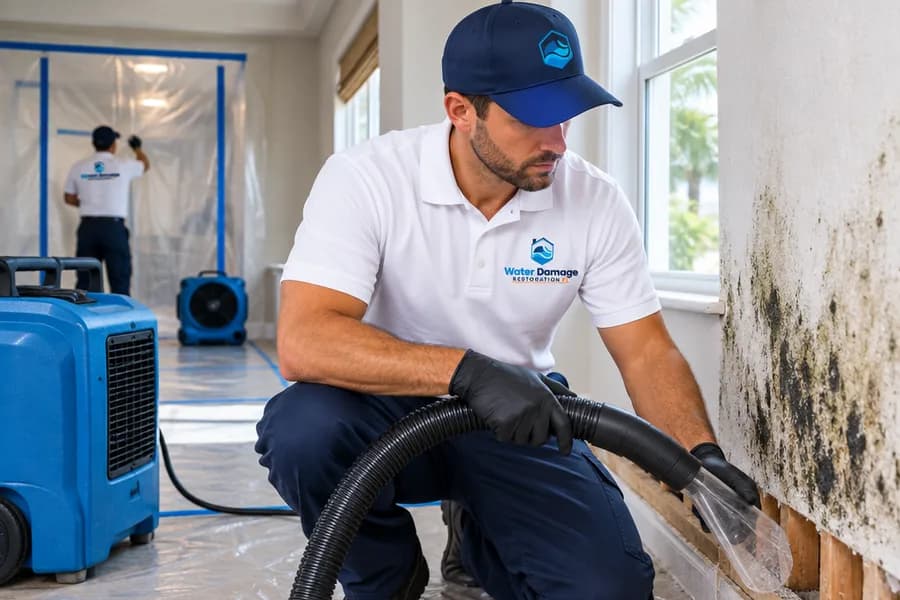
Remediation is the complete response to a mold problem, where removal is just one step within it. It covers assessing the situation, containing the area, filtering the air, removing affected materials, cleaning salvageable surfaces, and — critically — correcting the moisture that caused the growth.
Because mold spores are naturally present everywhere, the realistic aim of remediation is to bring mold back to normal, safe levels and prevent it from returning, not to sterilize the environment.
The full remediation process
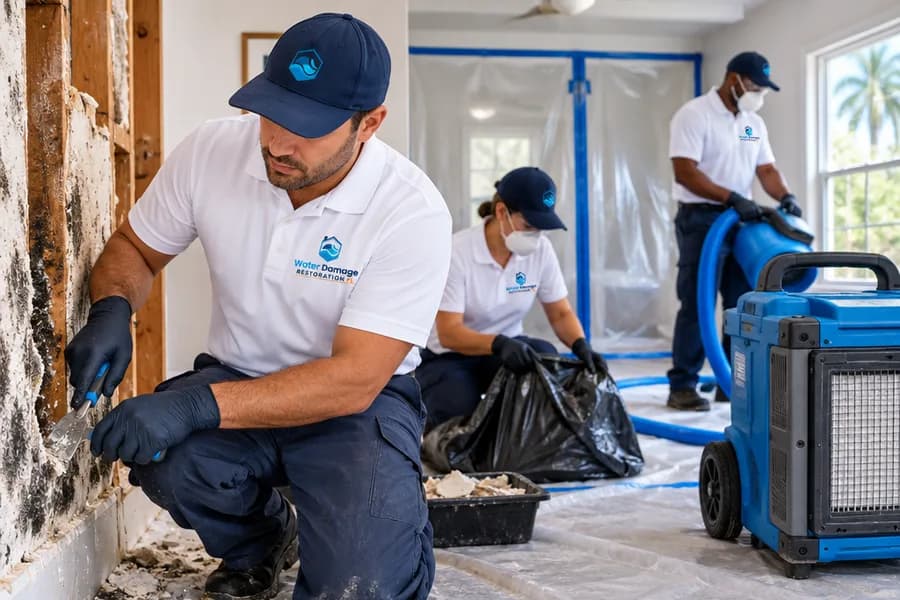
A thorough remediation moves through clear stages:
- Assess the mold and the moisture conditions supporting it.
- Contain the work area to prevent spores from spreading.
- Run HEPA air filtration throughout the work.
- Remove mold-affected materials that can't be cleaned.
- Clean and treat salvageable surfaces.
- Correct the moisture source and verify the area is dry.
Containment and air filtration
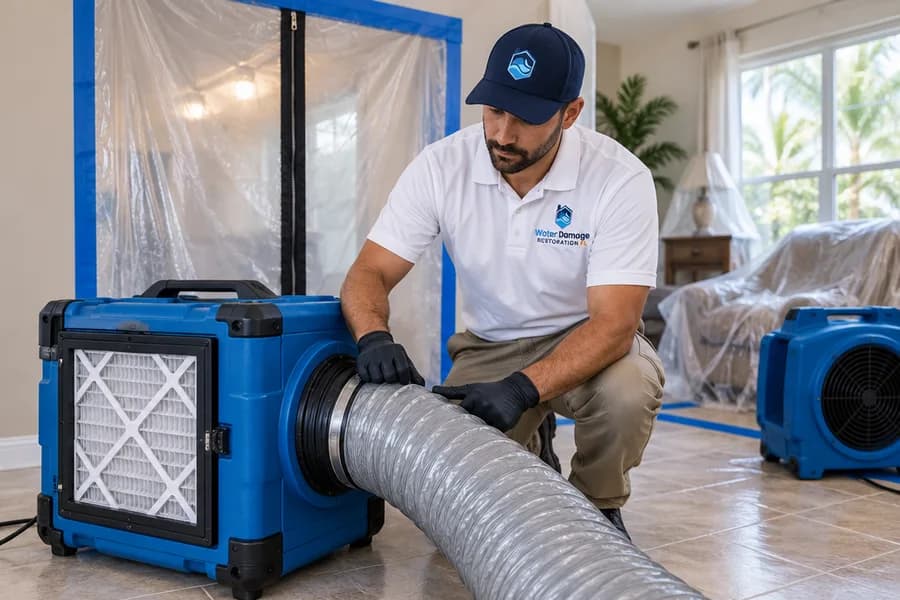
Keeping the work isolated is central to remediation. The affected area is contained, and HEPA air filtration captures airborne spores so they can't settle in clean parts of the property. Careful removal practices keep disturbed mold from traveling.
This controlled approach is what allows mold to be removed thoroughly without turning a localized problem into a whole-property one.
Fixing the moisture, verifying the result
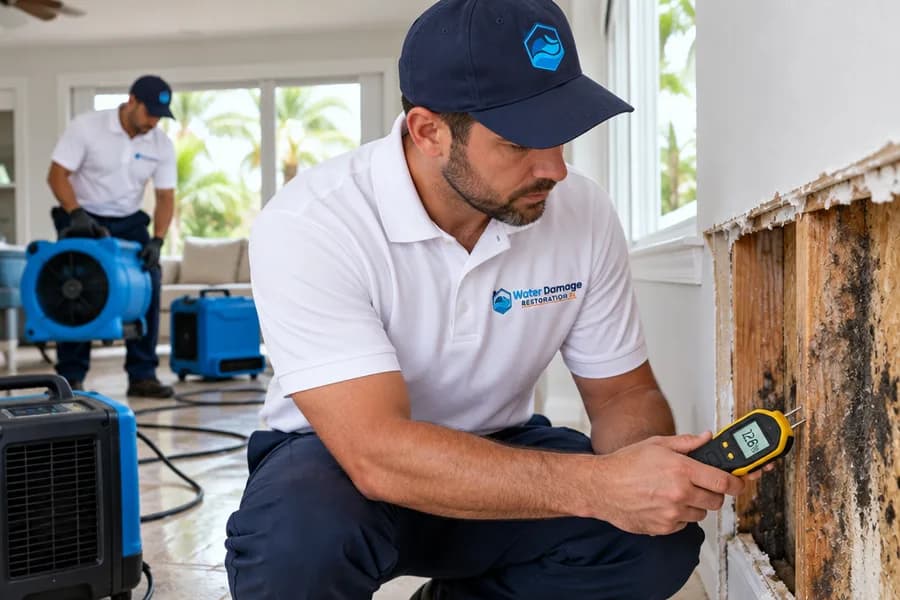
The step that makes remediation last is addressing the moisture source — the leak, humidity, or drainage issue that let mold grow. Once that's corrected and the area is dried and verified with moisture readings, mold loses the conditions it needs.
Remediation that skips this step is temporary; correcting the moisture is what turns it into a lasting fix.
Mold remediation services across Florida
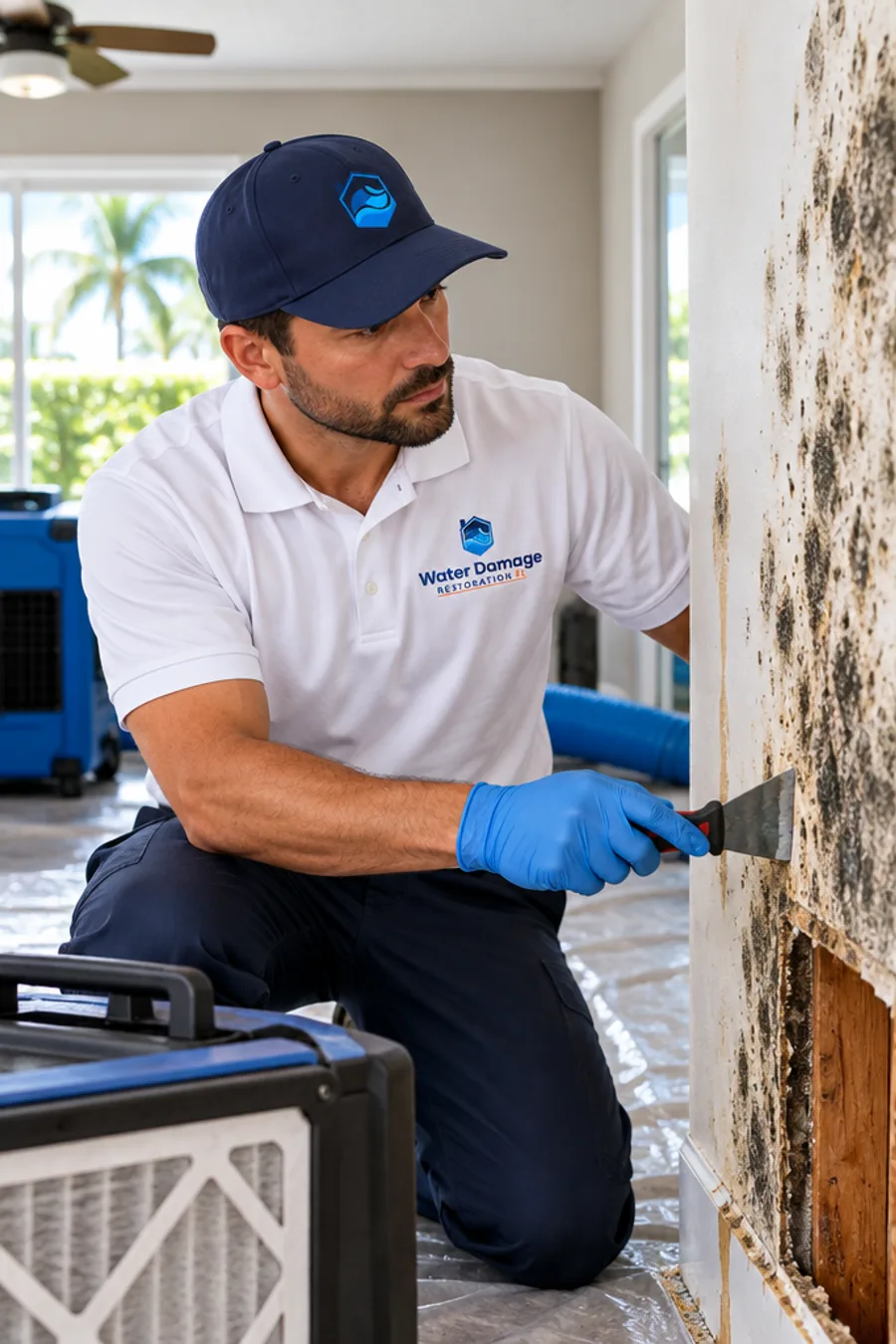
Our crews provide complete mold remediation for homes and businesses across Florida. In a humid climate where mold is a persistent risk, handling the full process — containment, removal, cleaning, and moisture control — is what delivers a result that holds.
More Mold Remediation services
View all Mold Remediation servicesRequest this service
Tell us what happened and we'll follow up to confirm next steps.
Frequently asked questions
Once the growth and affected materials are out and surfaces are cleaned, the moisture source is corrected and the area dried to normal levels — the step that keeps mold from returning. After that, any materials that were removed, like drywall or insulation, are repaired or replaced so the space is restored.
Assessment, containment, HEPA air filtration, removal of mold-affected materials, cleaning of salvageable surfaces, and correcting the moisture source — the full process, not just removal, so mold is returned to safe levels and kept from returning.
Removal takes out visible mold; remediation is the complete process, including containment, cleaning, and fixing the moisture source. Remediation aims to restore safe levels and prevent recurrence.
Because spores are naturally everywhere, the goal is to remove active growth and return mold to normal, safe levels — not to sterilize the air. Correcting the moisture source is what keeps it from coming back.
It depends on the extent of the growth and how much material must be removed. Small jobs may take a day or two; larger ones take longer, with drying and verification adding time. We provide a timeline after assessing.
By correcting the moisture source — the leak, humidity, or drainage issue that caused it — and verifying the area is dry with moisture readings. Without that, mold returns; with it, remediation lasts.
Still have a question? Call us at (904) 555-0100