
Ceiling Repair in Florida
Ceiling repair after water damage is the repairing of ceilings damaged by leaks or water from above. Our our crews fix stained, sagging, or damaged ceilings — after drying the cavity above — and finish to match, so the repair addresses the cause and not just the stain.
When a ceiling can be saved vs. replaced
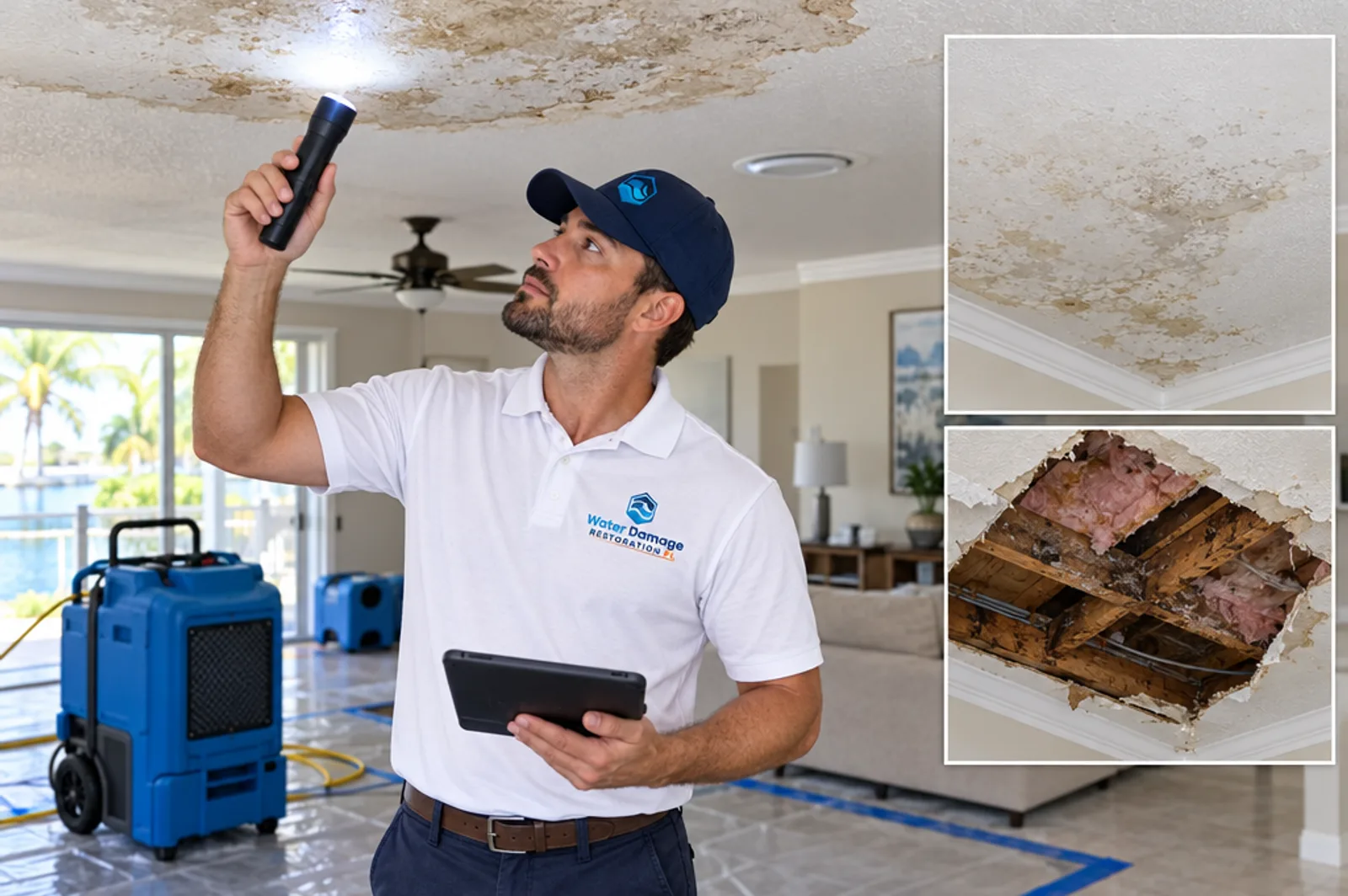
Whether a water-damaged ceiling can be saved comes down to how wet it got and how it's holding up structurally. The decision is guided by moisture readings and the condition of the drywall, not just the look of the stain.
A ceiling that's stained but still firm and sound can often be dried, sealed, and repainted — the stain is cosmetic once the moisture above is gone. But a ceiling that's sagging, soft, or bulging is holding water and has lost its integrity, and that section is removed and replaced. The same goes for any drywall touched by contaminated water or showing mold. Often the repair is targeted, taking out the damaged area while saving sound portions, with wet insulation in the cavity replaced. Either way, the space above is dried and verified before the ceiling is closed and refinished.
How long ceiling repair takes
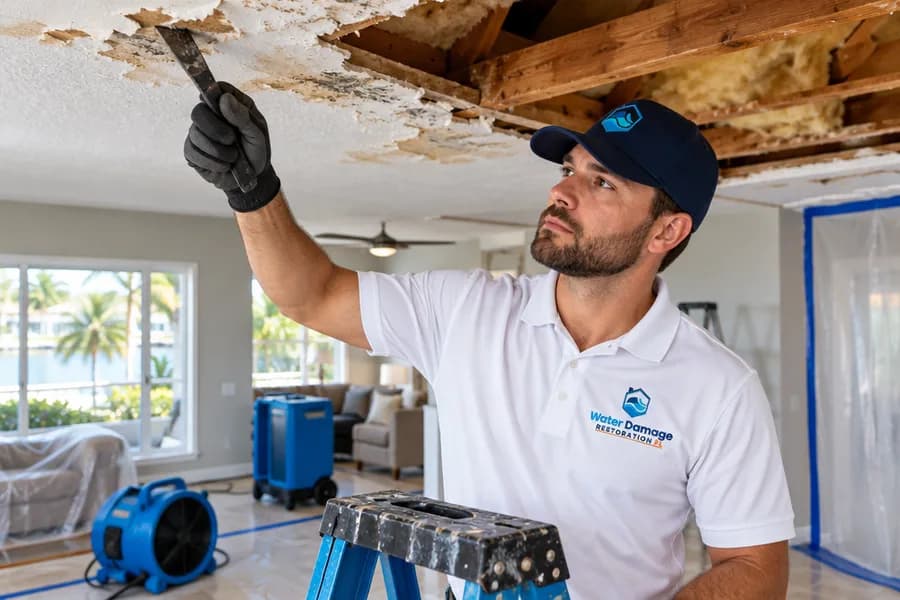
The time a ceiling repair takes depends on what the water did and what's above it. A stained but sound section that mainly needs sealing, patching, and repainting can be relatively quick. Replacing sagging drywall, drying a wet joist cavity, and re-texturing takes longer, on top of the drying time before repairs can start.
The drying is often the part that sets the pace. The cavity above the ceiling — joists, insulation, and the floor above — has to reach its moisture targets before the ceiling is closed up, since repairing over a wet cavity traps moisture and invites the problem back.
Once the structure above is dry, the repair and finish work moves at a normal pace. We give a realistic timeline after assessing both the ceiling and the space above it, so there are no surprises midway.
What water does to a ceiling
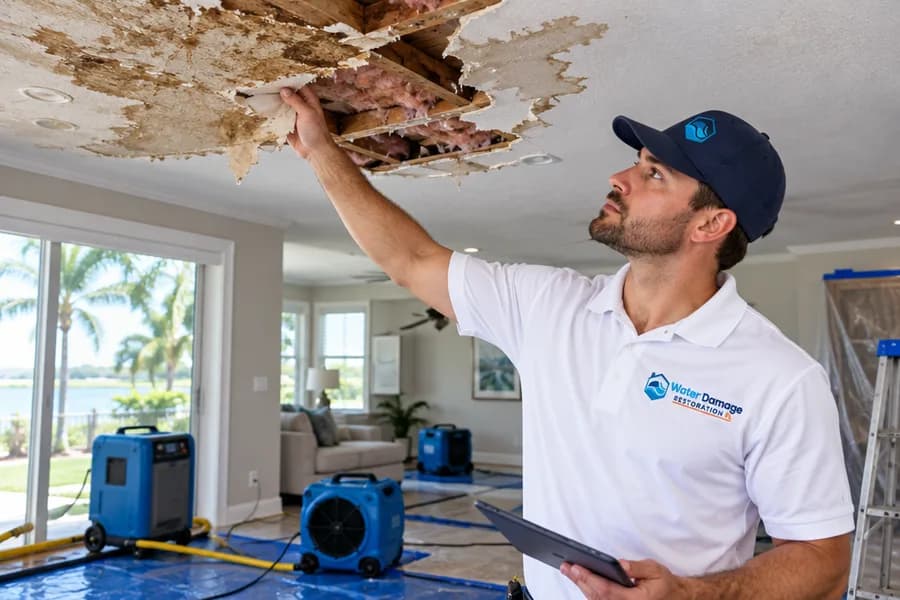
A ceiling shows water damage as staining, sagging, cracking, or, in bad cases, a section that fails under the weight of trapped water. Because ceilings take water from above — a roof leak, a pipe or appliance on the floor above, an overflow — the damage often signals a problem in the space overhead.
Repairing the ceiling means addressing both the visible damage and the moisture in the cavity above it.
Repairing different ceiling types
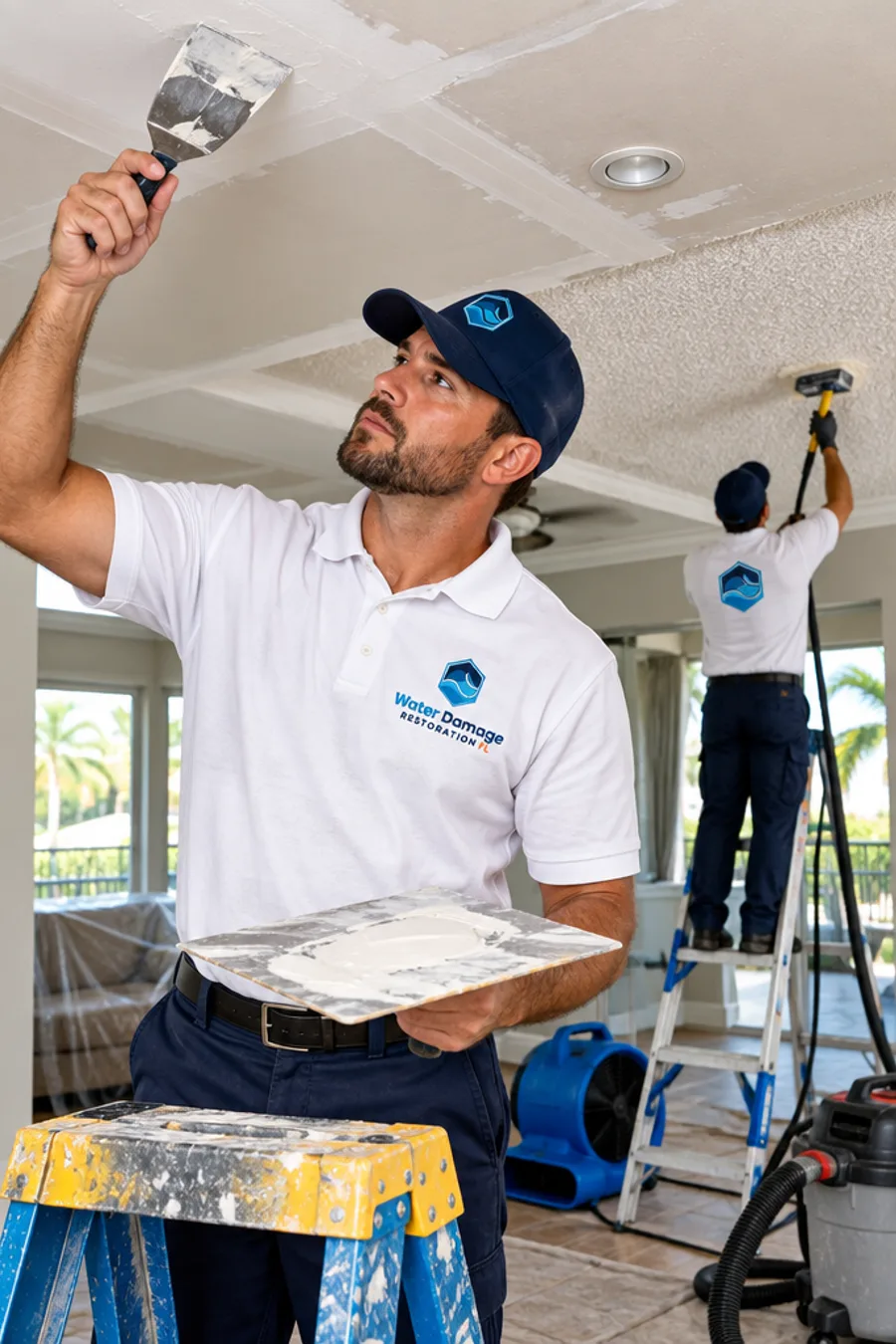
The repair approach depends on the ceiling and the extent of the damage:
- Stained but sound drywall ceilings can sometimes be sealed, patched, and repainted.
- Sagging or crumbling ceiling drywall is removed and replaced.
- Textured and popcorn ceilings are patched and re-textured to match.
- Wet insulation above the ceiling is removed and replaced.
Dry the cavity above first
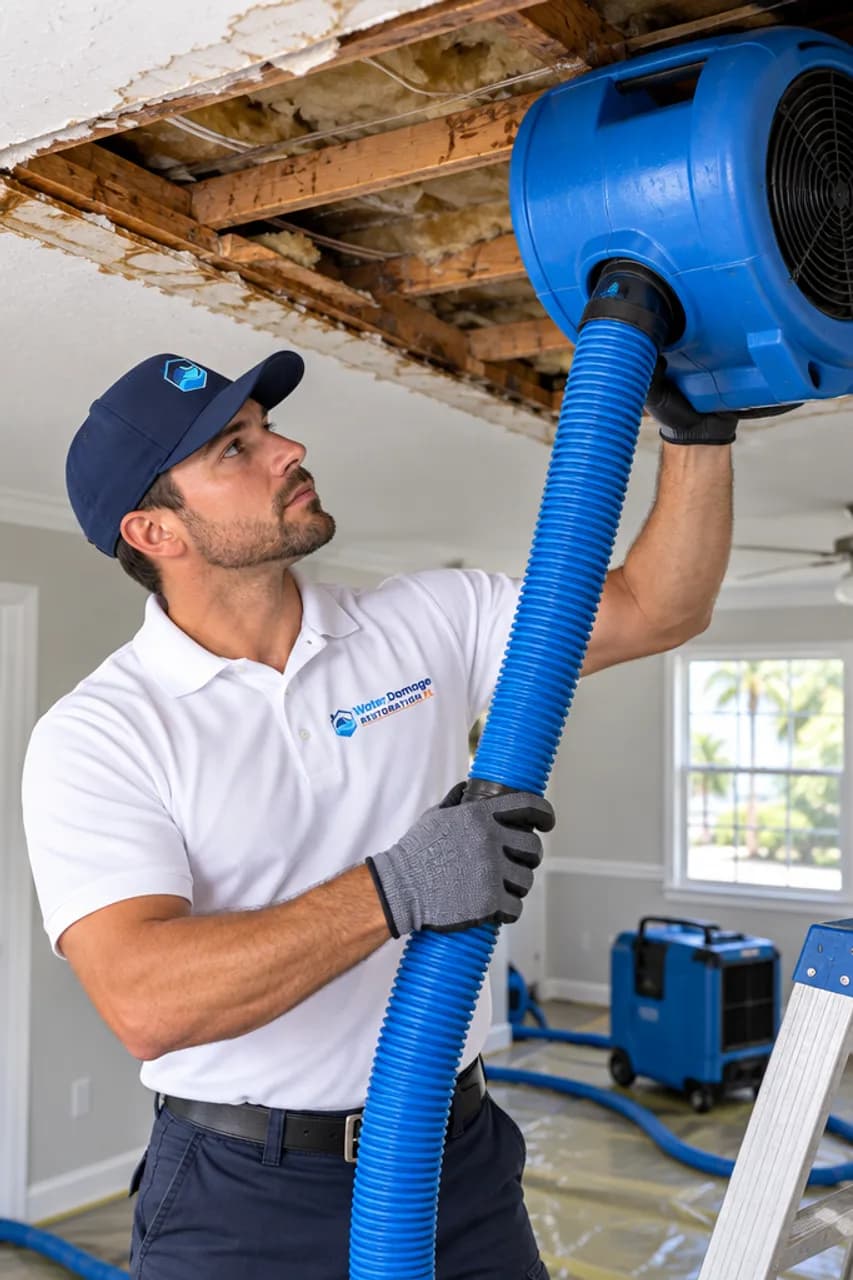
Just like walls, a ceiling can't be repaired properly until the space above it is dry. The joist cavity, insulation, and the underside of the floor above all hold moisture after a leak. Patching or replacing the ceiling over a wet cavity traps that moisture, leading to recurring stains, sagging, and mold.
We dry the cavity and verify it with moisture readings before repairing, so the new ceiling goes up over a dry structure.
Matching texture and finish
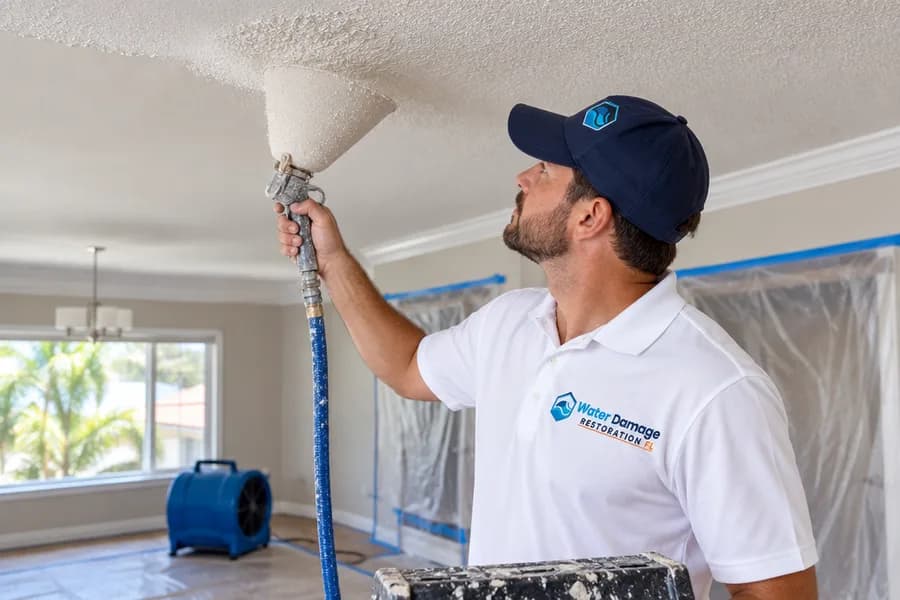
Ceilings are unforgiving of mismatched repairs, since texture and paint differences show clearly under overhead light. After the structural repair, we re-texture to match the existing ceiling and paint so the repaired area blends in.
For older popcorn or knockdown textures, matching takes extra care, and it's part of getting a finished result that doesn't stand out.
Ceiling repair across Florida
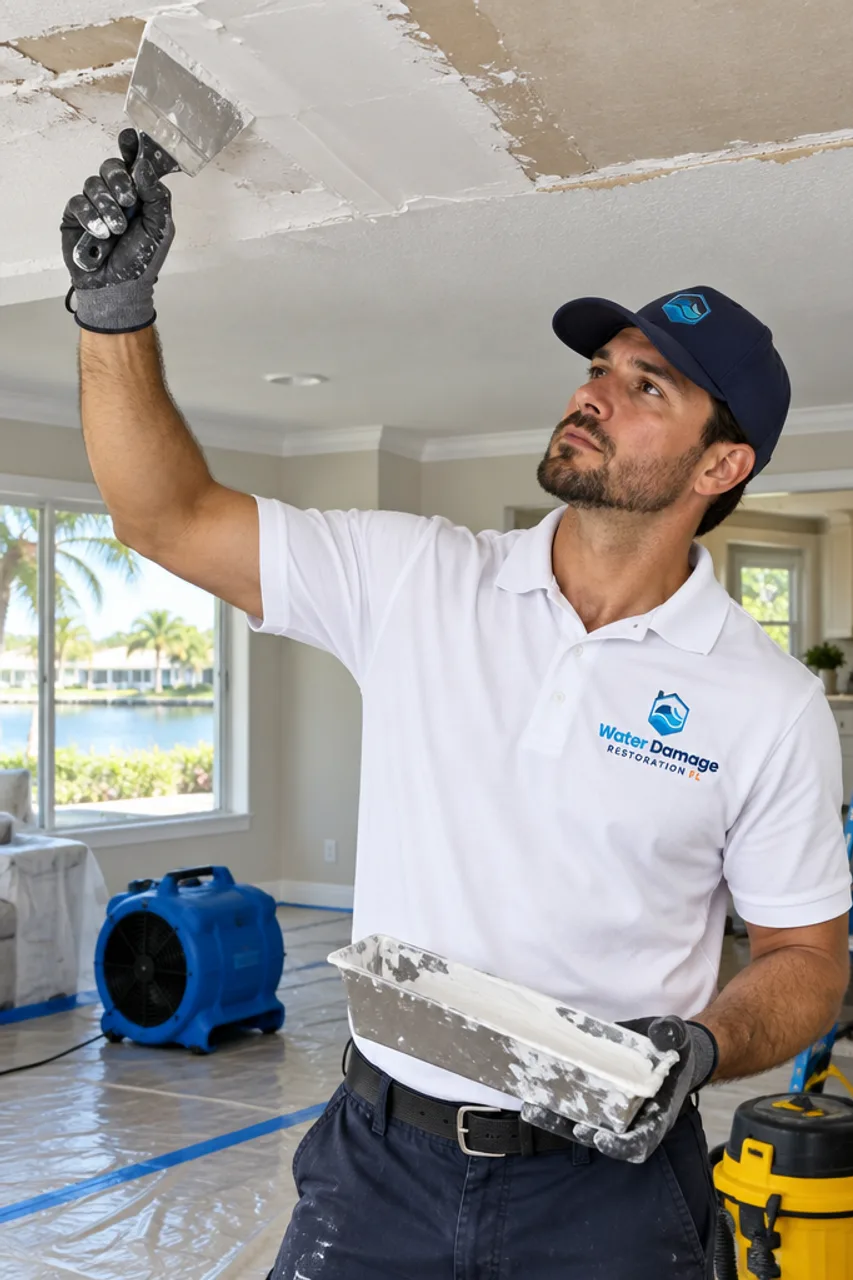
Our crews repair water-damaged ceilings for homes and businesses across Florida. Because we find the source, dry the cavity, and then repair, the finished ceiling addresses the real problem instead of hiding it behind fresh paint.
More Repair & Reconstruction services
View all Repair & Reconstruction servicesRequest this service
Tell us what happened and we'll follow up to confirm next steps.
Frequently asked questions
Not reliably. Paint hides the stain but leaves any trapped moisture and possible mold behind, and stains often bleed back through. The cavity needs to be dried and damaged drywall repaired before finishing.
Yes. Because ceilings take water from above, we trace the source — roof, plumbing, or an overflow on the floor above — and address the moisture in the cavity, so the repair fixes the cause, not just the symptom.
It can be. A sagging or bulging ceiling is holding water and can fail suddenly. Stay clear of it and call for help promptly so the trapped water can be relieved safely before repair.
Yes. We re-texture to match the existing ceiling — including popcorn and knockdown finishes — and paint so the repaired area blends with the rest of the ceiling.
Usually. Saturated insulation loses effectiveness and can harbor mold, so it's typically removed and replaced as part of drying and repairing the ceiling.
Still have a question? Call us at (904) 555-0100