Water Damage Cleanup in Florida
Water damage cleanup is the hands-on work of removing water, debris, and unsalvageable materials so an affected area can be dried and restored. Our our crews clear the mess safely, sort what can be saved from what can't, and prepare the space for drying — usually within hours of your call.
What water damage cleanup involves
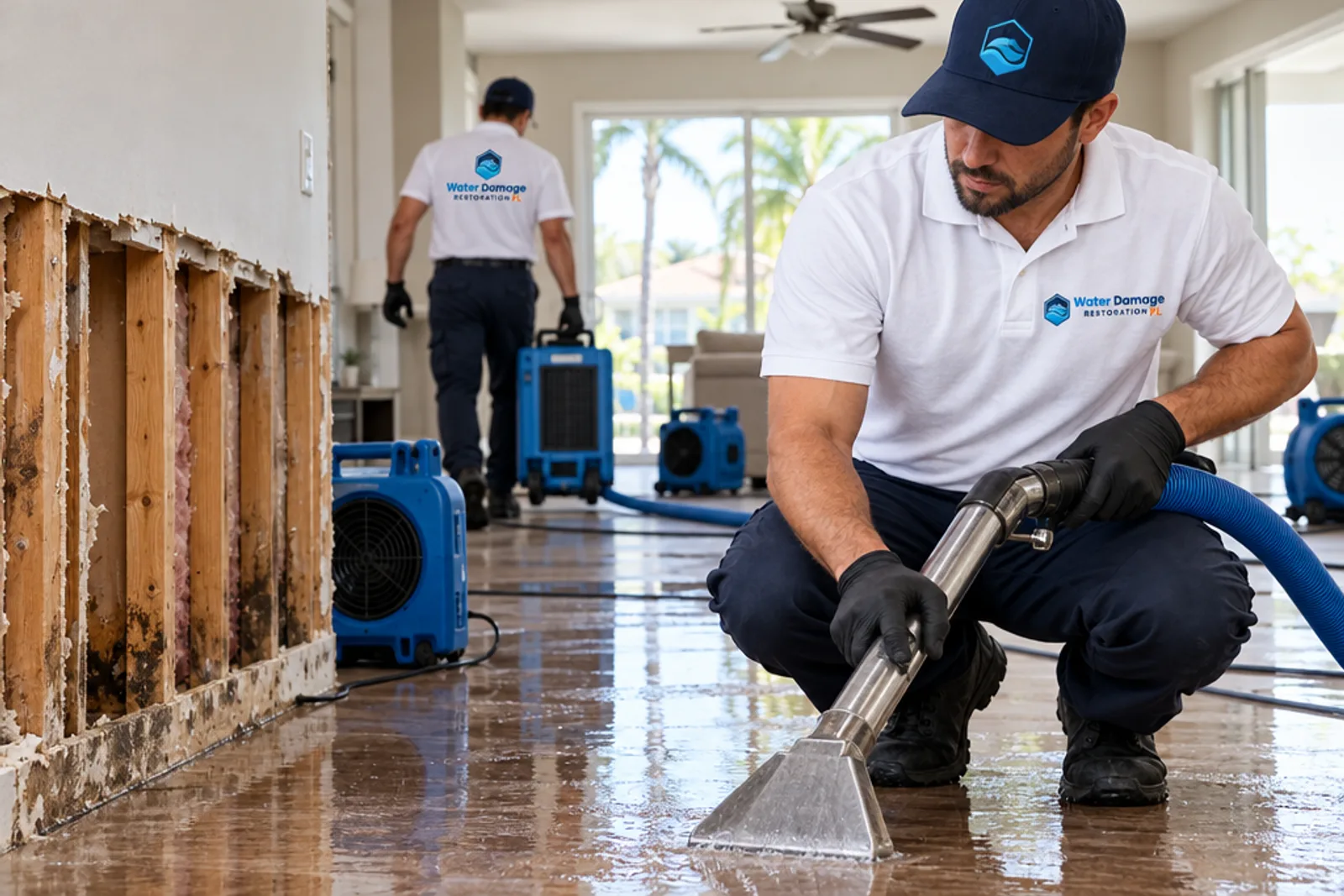
Cleanup is the bridge between an emergency and a dry, restorable property. Before anything can be dried or rebuilt, the water and the materials it ruined have to come out. Done well, cleanup limits how far the damage spreads and sets up faster, more thorough drying.
A typical cleanup includes several steps handled in sequence by our crew:
- Removing standing water with pumps and extractors.
- Pulling out soaked carpet, pad, and other materials that can't be dried in place.
- Clearing debris and separating salvageable contents from losses.
- Wiping down and pre-cleaning surfaces so drying can begin.
- Documenting damaged items with photos for your insurance claim.
Common causes of water damage we clean up
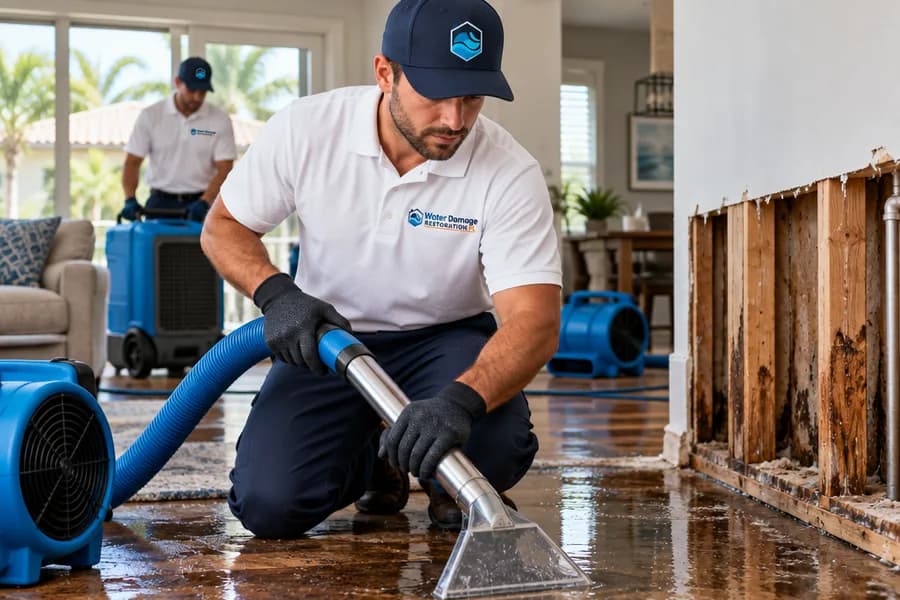
Water damage across Florida homes and businesses comes from a wide range of sources, and the cause shapes how we approach the cleanup. Some of the most common we see include:
- Burst or leaking supply lines and worn pipe fittings.
- Failed water heaters that dump tens of gallons at once.
- Appliance leaks from washing machines, dishwashers, and refrigerators.
- Roof leaks and window intrusion during heavy Florida rain.
- Air-conditioning condensate line clogs and overflows — a frequent local culprit.
- Sewage backups and storm flooding, which bring contaminated water.
Clean, gray, and black water — why it changes the cleanup
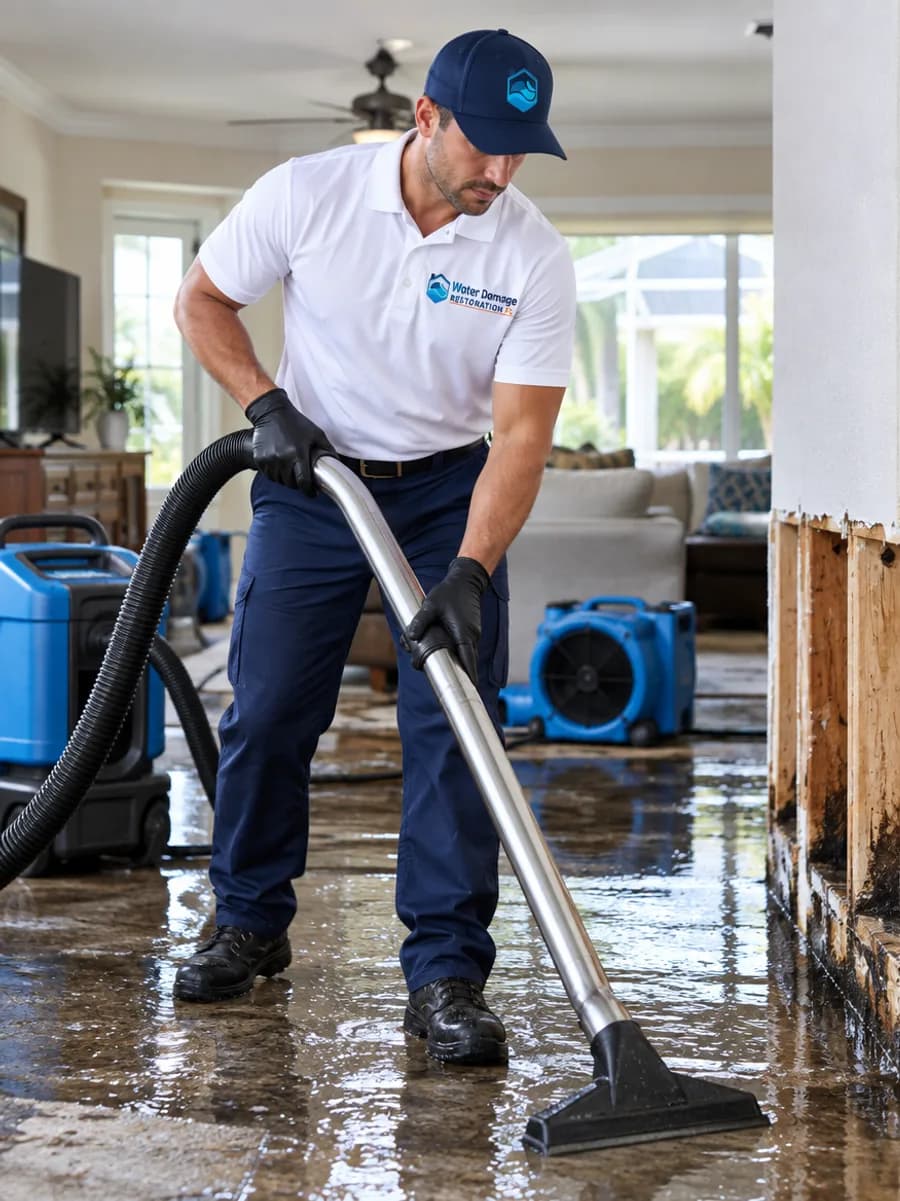
Not all water is equal, and the source dictates how cleanup is handled. Category 1 is clean water from a supply line or faucet. Category 2 (gray water) carries some contamination, like an appliance discharge or a sink overflow. Category 3 (black water) is grossly contaminated — sewage backups and flood water fall here and require protective equipment and disposal of porous materials.
Our technicians identify the category first, because it determines what can be cleaned and saved versus what has to be removed and replaced. Treating contaminated water like clean water is how health hazards and lingering odors happen. When water sits, its category can also worsen over time — clean water left long enough becomes gray, then black.
How we protect your belongings during cleanup
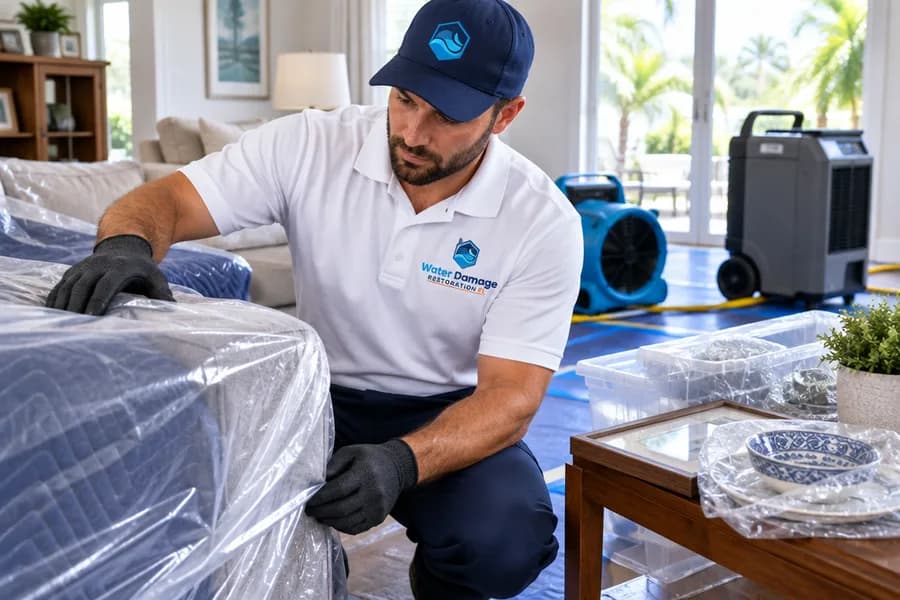
A big part of good cleanup is deciding what can be saved. Our crews move at-risk furniture and contents out of the water early, set the salvageable items to dry, and flag anything that's unsafe to keep. Hard, non-porous items can usually be cleaned and sanitized. Porous materials that soaked up contaminated water — carpet pad, particleboard, some upholstery — often can't be restored safely and are documented before removal.
The aim is to save as much of your property as we responsibly can while being honest about what's beyond recovery, so you're not left cleaning contaminated items that should have been discarded.
What happens after cleanup
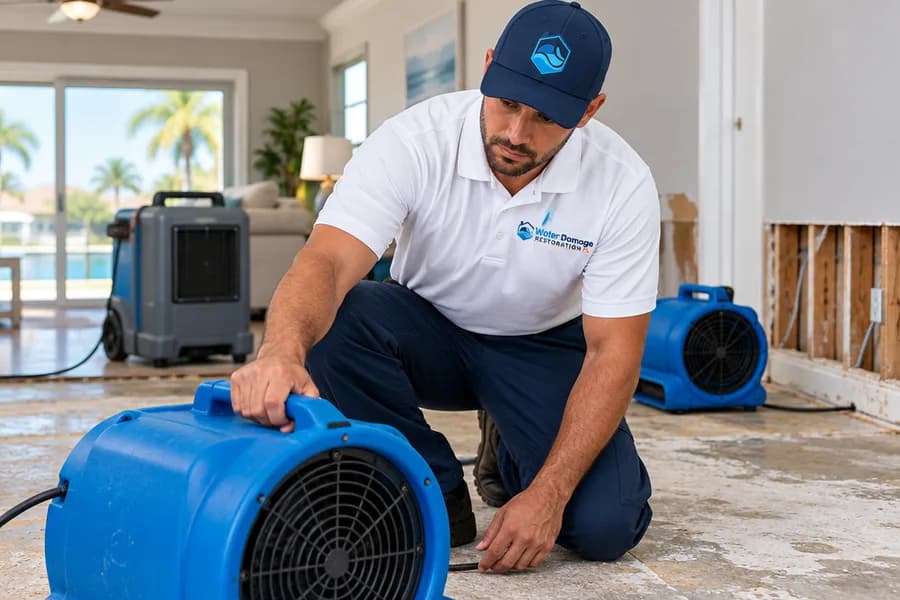
Cleanup gets the water and ruined materials out; it doesn't finish the job. Once the area is clear, structural drying brings the remaining moisture in walls, subfloors, and framing back down to normal with air movers and dehumidifiers. After drying, any needed repairs restore the space.
Because cleanup, drying, and repair connect directly, handling them as one continuous process — rather than stopping and starting — is what keeps a small loss from turning into a mold or reconstruction problem.
Why act quickly on water damage cleanup
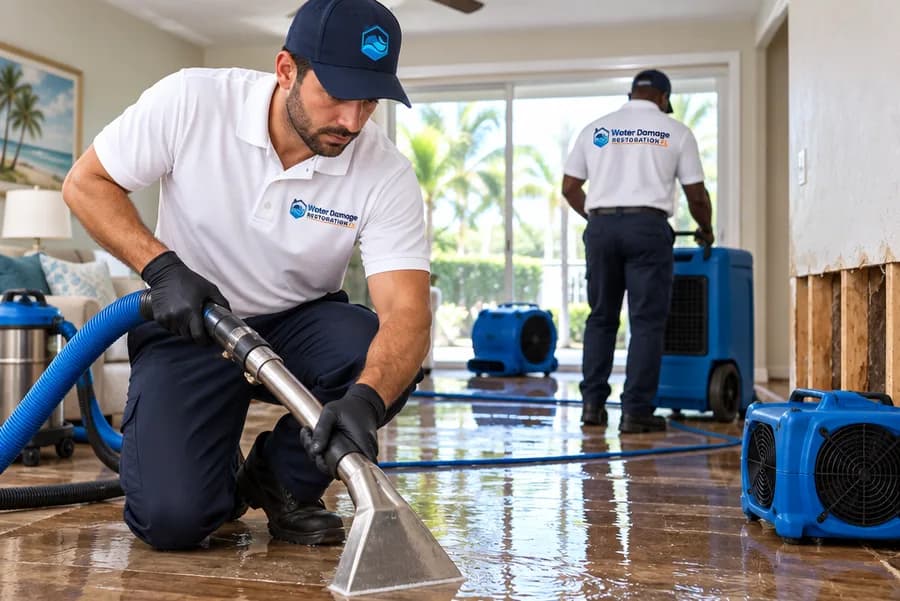
The longer water and wet materials sit, the more damage they cause and the higher the risk of mold — often within 24 to 48 hours across Florida's humidity. Prompt cleanup protects flooring, drywall, and belongings that might otherwise be lost, and it makes the drying stage shorter and more effective.
More Water Damage Restoration services
View all Water Damage Restoration servicesRequest this service
Tell us what happened and we'll follow up to confirm next steps.
Frequently asked questions
As soon as it's safe. Water spreads and soaks into materials quickly, and mold can start within 24 to 48 hours. The sooner cleanup begins, the more you can save and the faster the property dries.
If it's safe, shut off the water source and any electricity near the water, move valuables and electronics away from the wet area, and avoid walking through standing water near outlets. Take photos for your records, and don't use household fans on contaminated water.
When materials are too saturated or contaminated to dry in place — common with carpet pad, and with anything touched by Category 3 water — our crew removes and disposes of them so the structure can dry properly. Materials that can be dried safely are left in place and dried.
Cleanup and drying are closely linked but distinct. Cleanup removes water and ruined materials; structural drying then pulls the remaining moisture out of the building with professional equipment. We handle both as one continuous process so nothing is left half-dry.
Yes. We photograph damaged materials and contents and record moisture readings, giving you clear documentation to share with your adjuster. Coverage decisions are made by your insurer, but thorough records make the process smoother.
Still have a question? Call us at (904) 555-0100