
Basement Flood Cleanup in Florida
Basement flood cleanup is the cleaning and drying of a basement after flooding. Our our crews pump out the water, remove contaminated materials, sanitize, and dry the space thoroughly — because a flooded basement is enclosed, humid, and especially prone to mold.
Why basements are the hardest space to dry
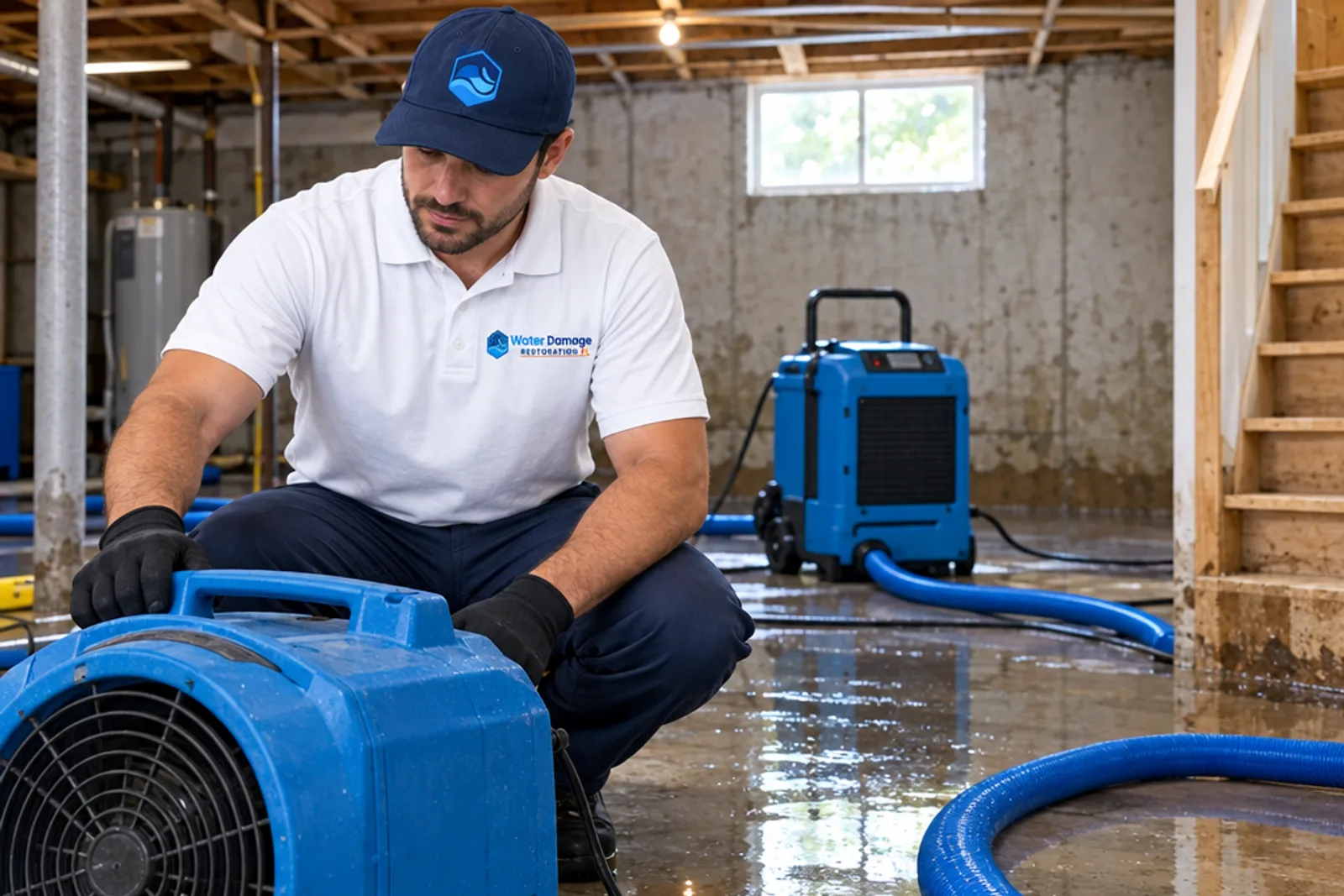
A flooded basement is one of the more demanding drying challenges, and understanding why explains the extra time and equipment it takes. Basements work against drying in several ways at once.
They're the lowest point in the building, so water collects there and has nowhere to drain on its own. They're enclosed, with limited airflow to carry moisture away. They tend to be humid to begin with, which slows evaporation. And they're often full of moisture-holding materials — framing, insulation, stored belongings, and sometimes concrete that releases moisture for a long time. Together, those factors mean a flooded basement needs sustained dehumidification and careful monitoring to dry thoroughly, rather than the quicker turnaround a well-ventilated upstairs room might allow.
Safety first in a flooded basement
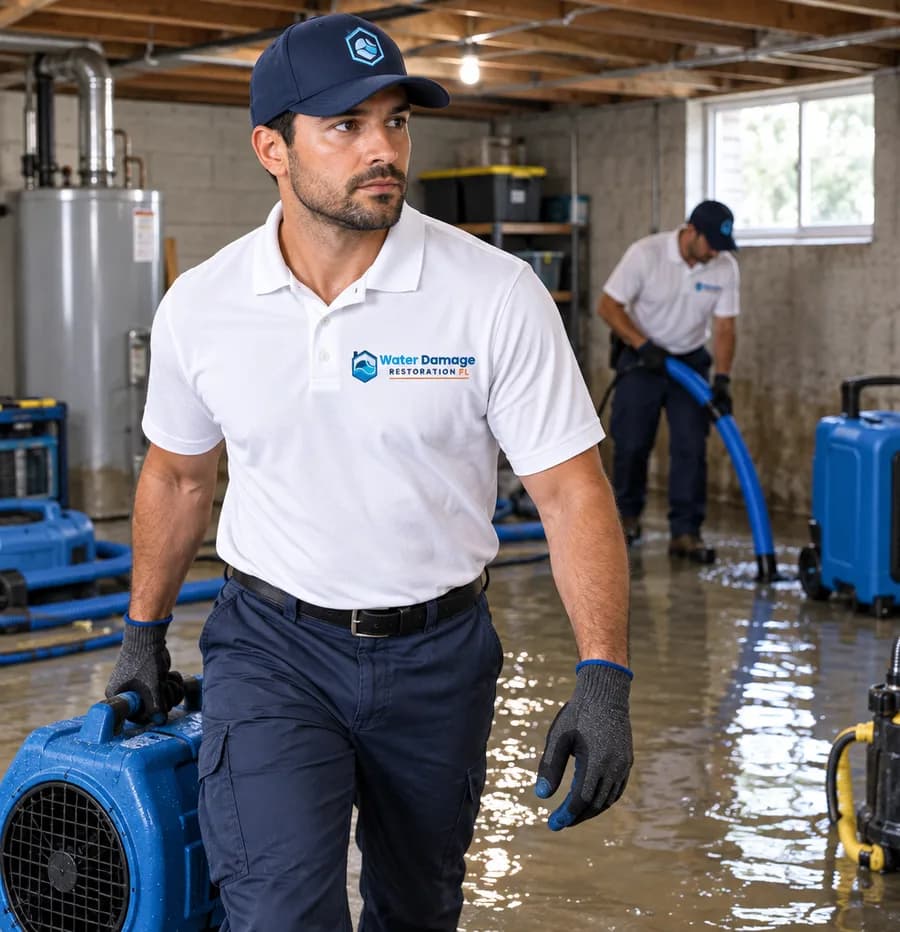
A flooded basement combines several hazards in one enclosed space, so safety comes before cleanup. Standing water often sits near electrical panels, outlets, and appliances, creating a shock risk, and basement flood water is frequently contaminated by storm runoff or a sewer backup.
Before entering or working in a flooded basement, a few precautions matter:
- Don't enter standing water if it may be in contact with electrical sources — cut the power first if it's safe to reach the panel.
- Treat the water as potentially contaminated until it's assessed.
- Watch for hidden steps, debris, or unstable footing beneath the surface.
- Keep children and pets out of the area entirely.
Why flooded basements need special attention
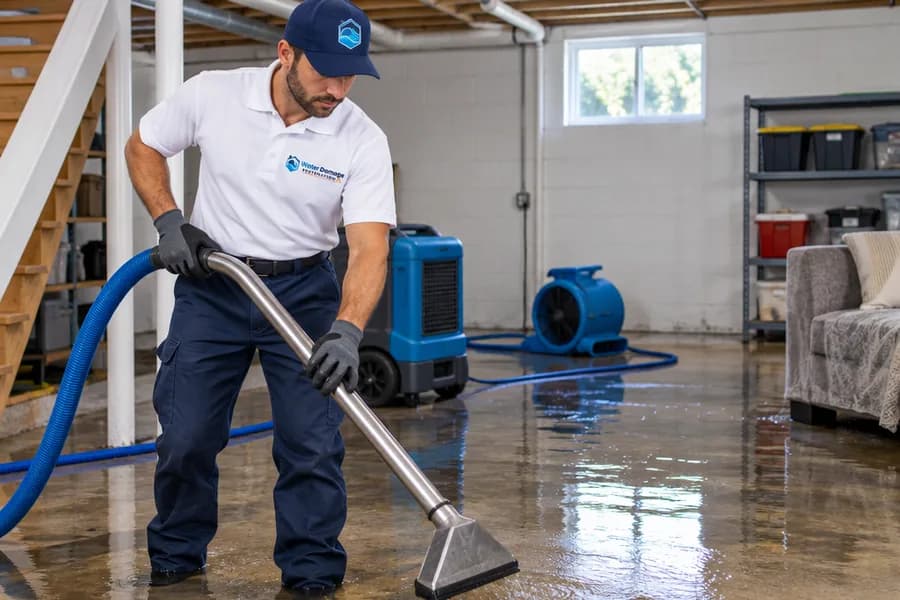
Basements collect water because they're the lowest point in a building, and they're the hardest area to dry because they're enclosed, humid, and full of moisture-holding materials. A flooded basement soaks framing, insulation, and stored belongings, and its still, damp conditions are ideal for mold.
That combination makes prompt, thorough cleanup and drying especially important after a basement flood.
How basement flood cleanup works
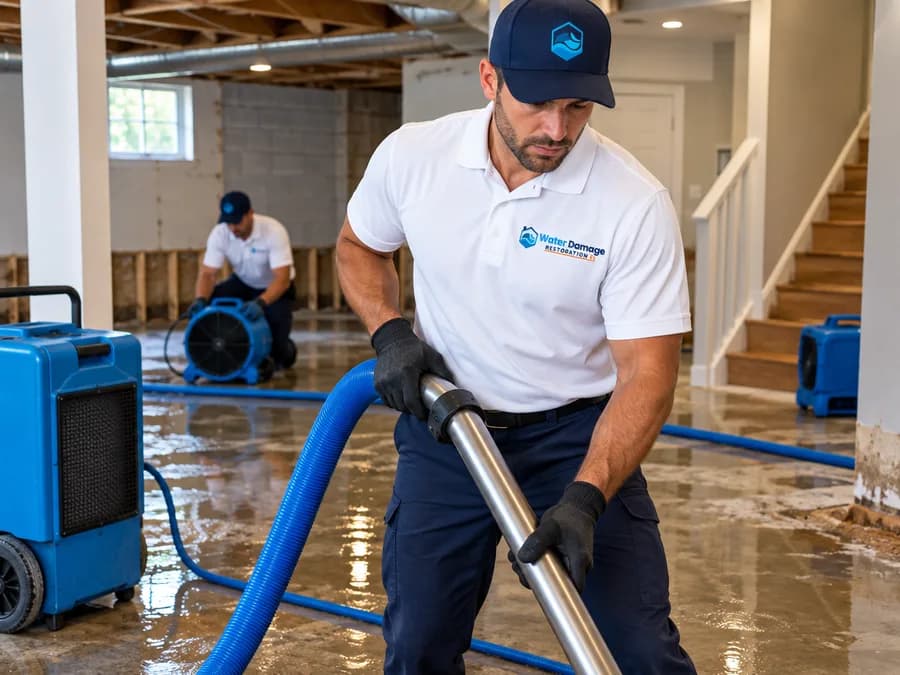
Cleaning up a flooded basement follows a clear sequence:
- Pump out standing water with submersible pumps.
- Remove mud, debris, and contaminated porous materials.
- Clean and sanitize hard surfaces and salvageable contents.
- Dry the framing, subfloor, and walls with dehumidifiers and air movers.
- Document the loss for the insurance claim.
Contamination in basement flood water
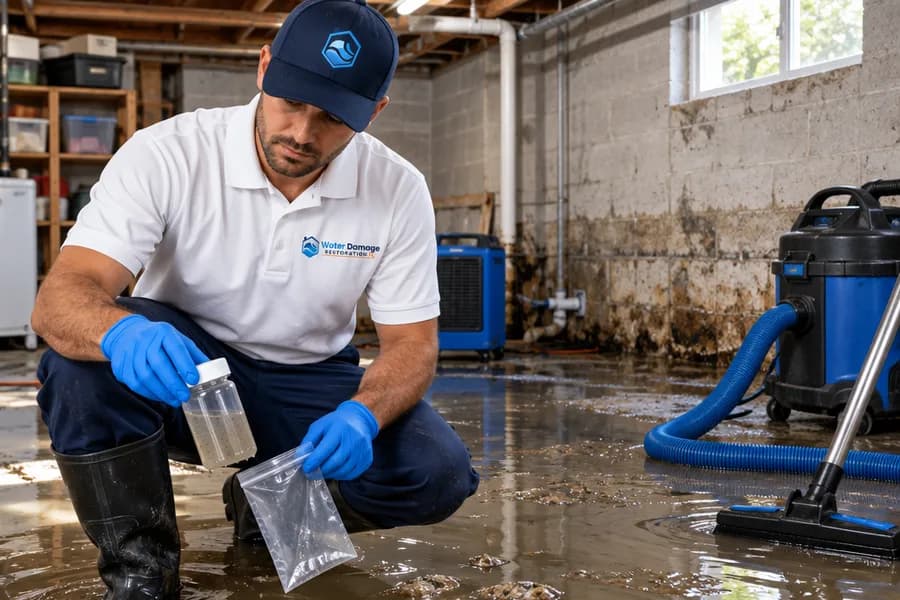
Basement flooding often involves contaminated water — storm runoff seeping through walls, or a sewer backup pushing black water up through drains. Our technicians identify the water category before cleanup so it's handled safely, with protective equipment and disposal of porous materials the water soaked.
Belongings stored in the basement are documented, and items soaked by contaminated water are handled according to what can be safely cleaned versus what must be discarded.
Drying an enclosed basement thoroughly
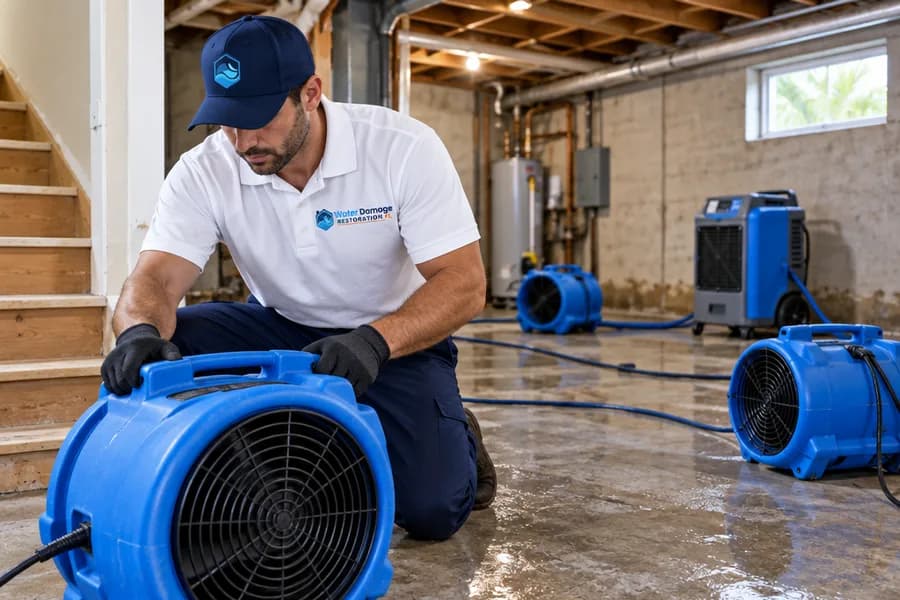
Basements dry slowly, so drying is the stage that most often gets shortchanged — and incomplete drying is exactly what leads to that persistent basement mustiness and mold. We run dehumidifiers and air movers and monitor moisture readings in the framing, subfloor, and lower walls until they reach their targets.
Managing the enclosed, humid environment is the key: pulling moisture out faster than the space can reabsorb it.
Preventing the next basement flood
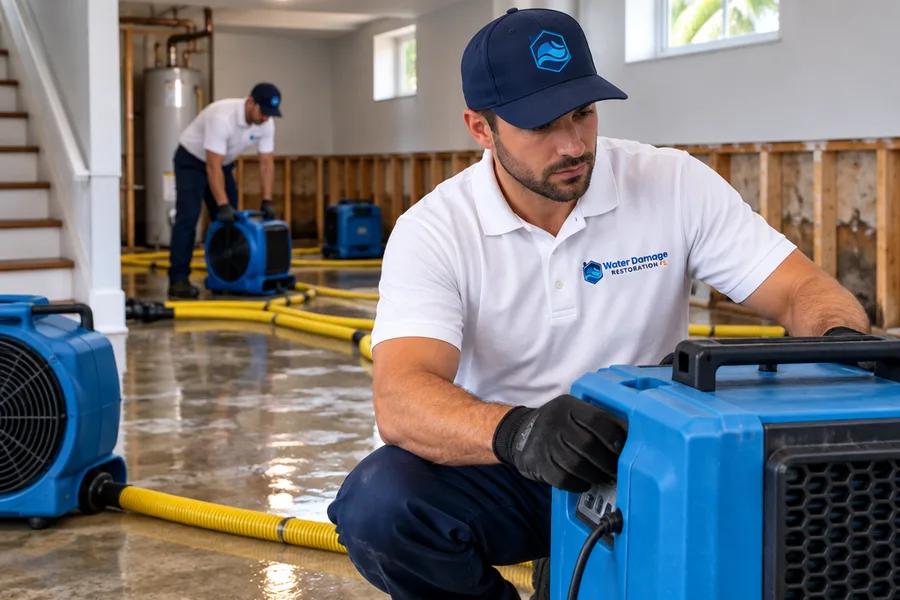
Cleanup addresses the current flood, but recurring basement flooding usually has a source worth fixing — a failed sump pump, foundation seepage, drainage issues, or a plumbing problem. While our focus is restoring the space, we'll point out what we observe so you can address the underlying cause and reduce the chance of it happening again.
More Flood Damage Restoration services
View all Flood Damage Restoration servicesRequest this service
Tell us what happened and we'll follow up to confirm next steps.
Frequently asked questions
We pump out the standing water, remove mud, debris, and contaminated materials, clean and sanitize hard surfaces, then dry the framing, subfloor, and walls with dehumidifiers and air movers until they reach moisture targets.
Basements are enclosed, humid, and full of moisture-holding materials, and they dry slowly. If a flood isn't dried thoroughly, that trapped moisture creates ideal conditions for mold, which is why complete drying matters so much.
Often, yes — especially with storm seepage or a sewer backup. We identify the water category first and handle contaminated water safely, disposing of porous materials it soaked rather than drying them in place.
It depends on the material and the water. Hard, non-porous items can usually be cleaned; porous items soaked by contaminated water often can't be saved safely. We document everything and advise honestly.
Recurring flooding usually has a fixable cause — a failed sump pump, foundation seepage, drainage problems, or plumbing. We restore the space and point out what we observe so you can address the underlying source.
Still have a question? Call us at (904) 555-0100