Flood Damage Restoration in Florida
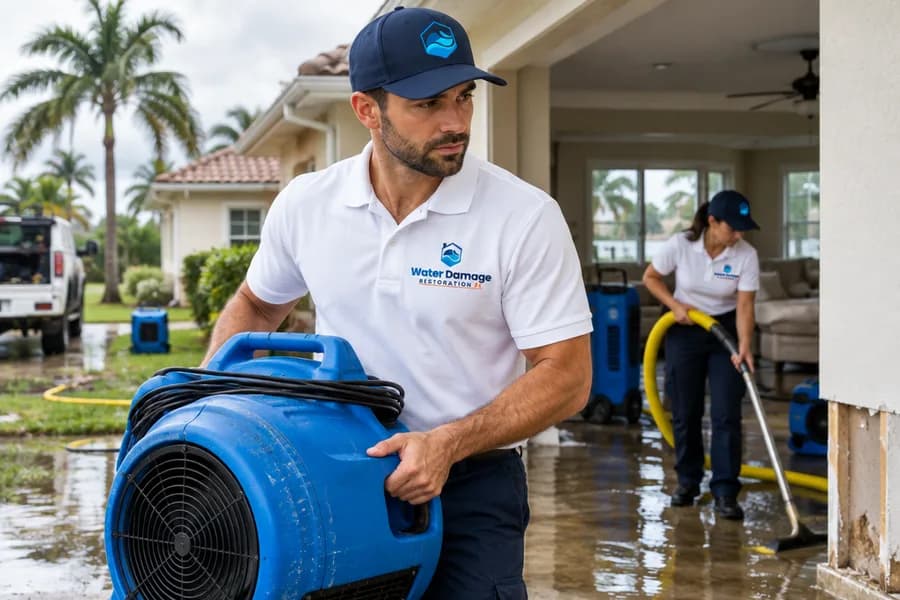
Flood damage restoration is the cleanup, water removal, and drying that returns a property to normal after flooding or storm-driven water. In Florida, our crews handle flood water safely — including contaminated Category 3 water — removing water and mud, sanitizing, and drying the structure.
What flooding does to a structure over time
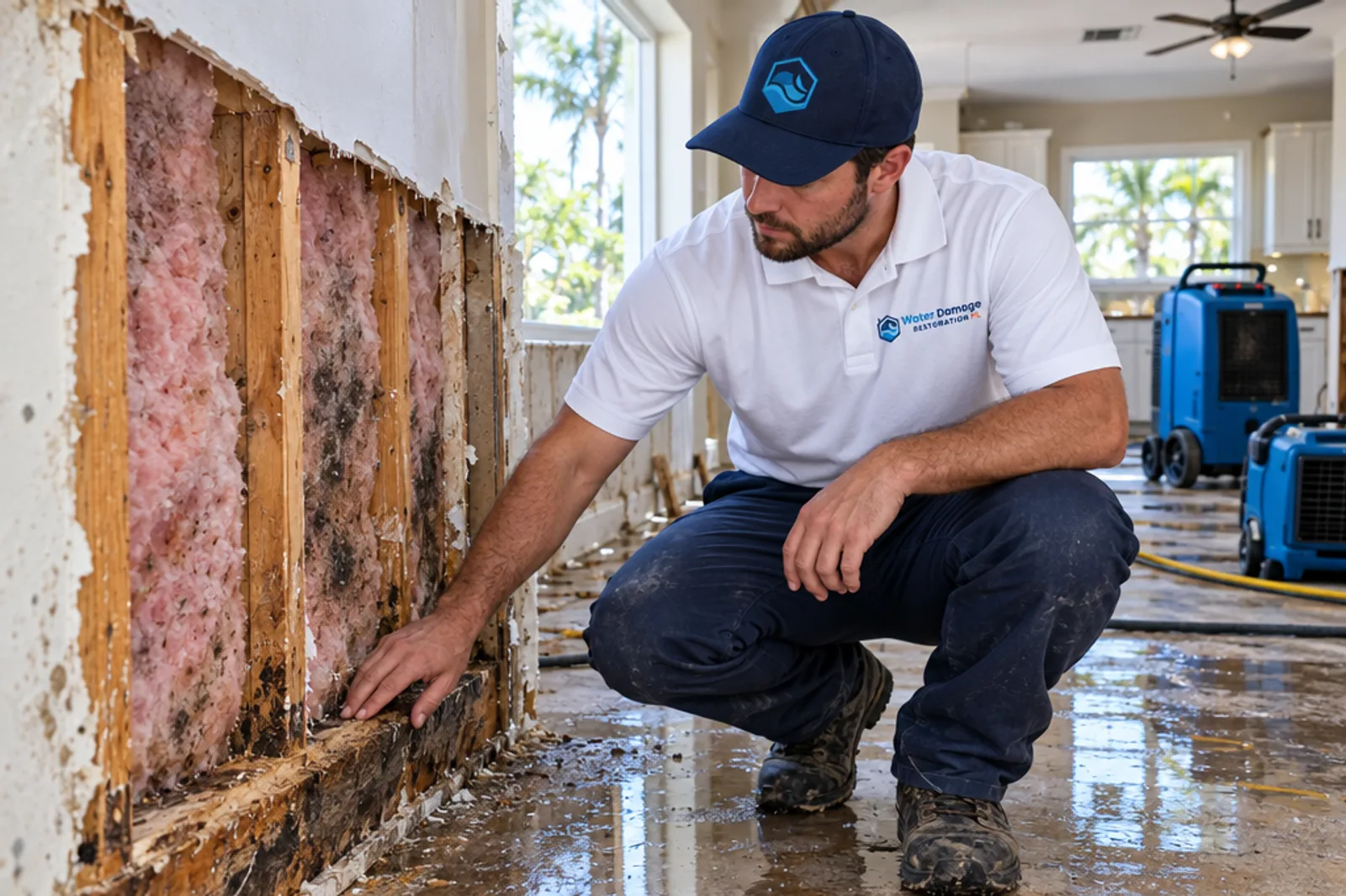
Flood water rarely stays where it lands. It moves along the floor into adjacent rooms, wicks up drywall, soaks insulation, and settles into subfloor and crawl spaces. Left in place, it keeps spreading contamination and moisture through the structure, and the standing water grows more hazardous the longer it sits.
That's why flood losses are handled as a race against time. The faster the water and contaminated materials come out and the structure is dried, the more of the building can be saved — and the lower the chance of mold taking hold across Florida's heat and humidity.
Salvaging belongings after a flood
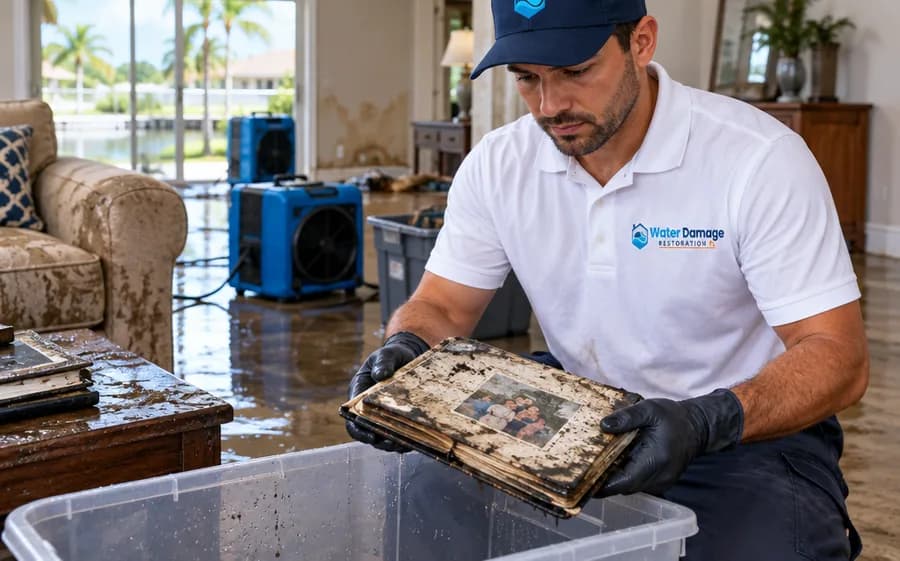
A flood affects contents as much as the building. Hard, non-porous items — sealed furniture, metal, glass, dishes — can usually be cleaned and disinfected. Porous belongings that soaked up contaminated water, like upholstered furniture, mattresses, and many soft goods, often can't be restored safely and are documented before removal.
Our crews sort salvageable items from losses early, set the ones worth saving to dry, and are honest about what's beyond recovery — so you aren't left cleaning contaminated belongings that should have been discarded, or throwing out things that could have been saved.
What makes flood damage different
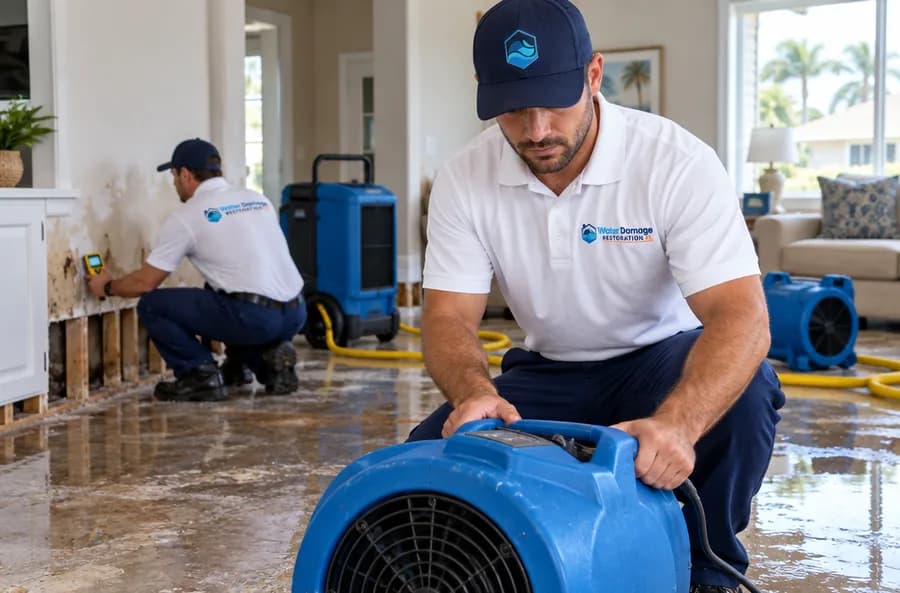
Flood water isn't like a burst pipe. It usually affects large areas of a property at once, it often carries dirt, debris, and contaminants, and it can rise fast during a storm. That combination — volume plus contamination — is what sets flood restoration apart from a routine water loss.
Because flood water is frequently Category 3 black water, it's treated as a health hazard from the start, with protective equipment, containment, and disposal of porous materials it soaked.
The flood restoration process
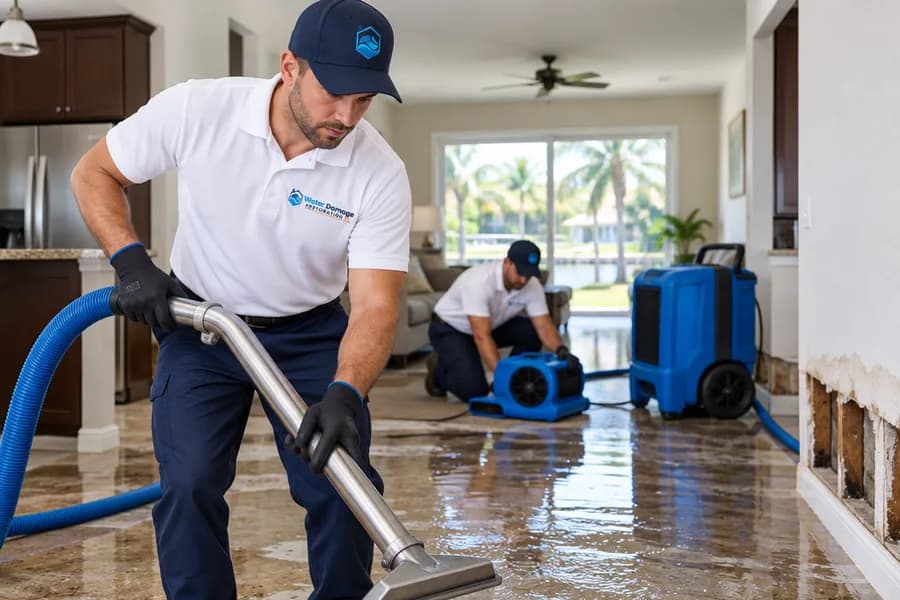
Flood restoration follows a clear sequence built around the extra challenges of contaminated, large-volume water:
- Safety assessment and water-category identification.
- Removal of standing water, mud, and debris.
- Removal of unsalvageable, contaminated porous materials.
- Cleaning and sanitizing of affected surfaces.
- Structural drying and dehumidification to normal moisture levels.
- Repairs and reconstruction of what was removed.
Handling contaminated flood water safely
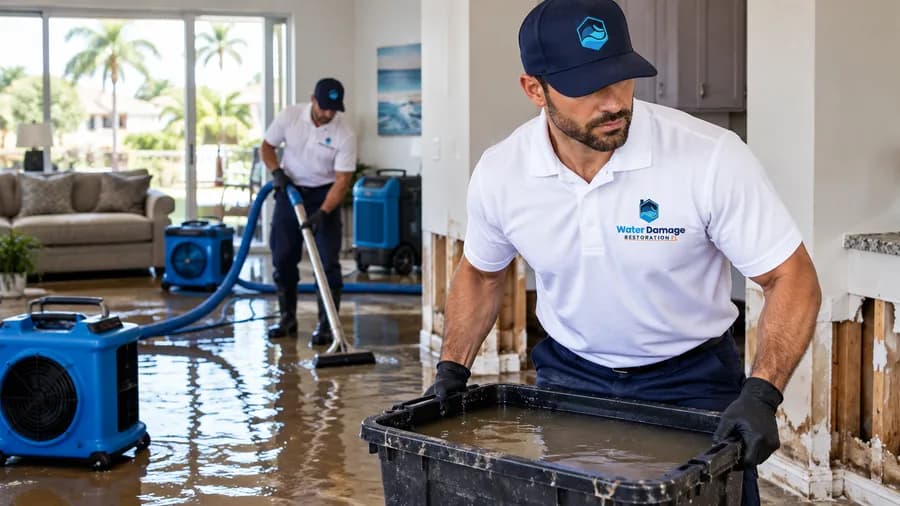
Flood and storm water commonly carries bacteria, chemicals, and sewage, which makes safe handling essential. Our technicians identify the contamination level first, then contain the area, use appropriate protective equipment, and dispose of porous materials — carpet, pad, drywall low on the wall, insulation — that can't be cleaned safely.
This is why flood cleanup is not a DIY job when black water is involved: the goal isn't just to dry the space, but to make it safe again.
Flood damage vs. clean-water damage
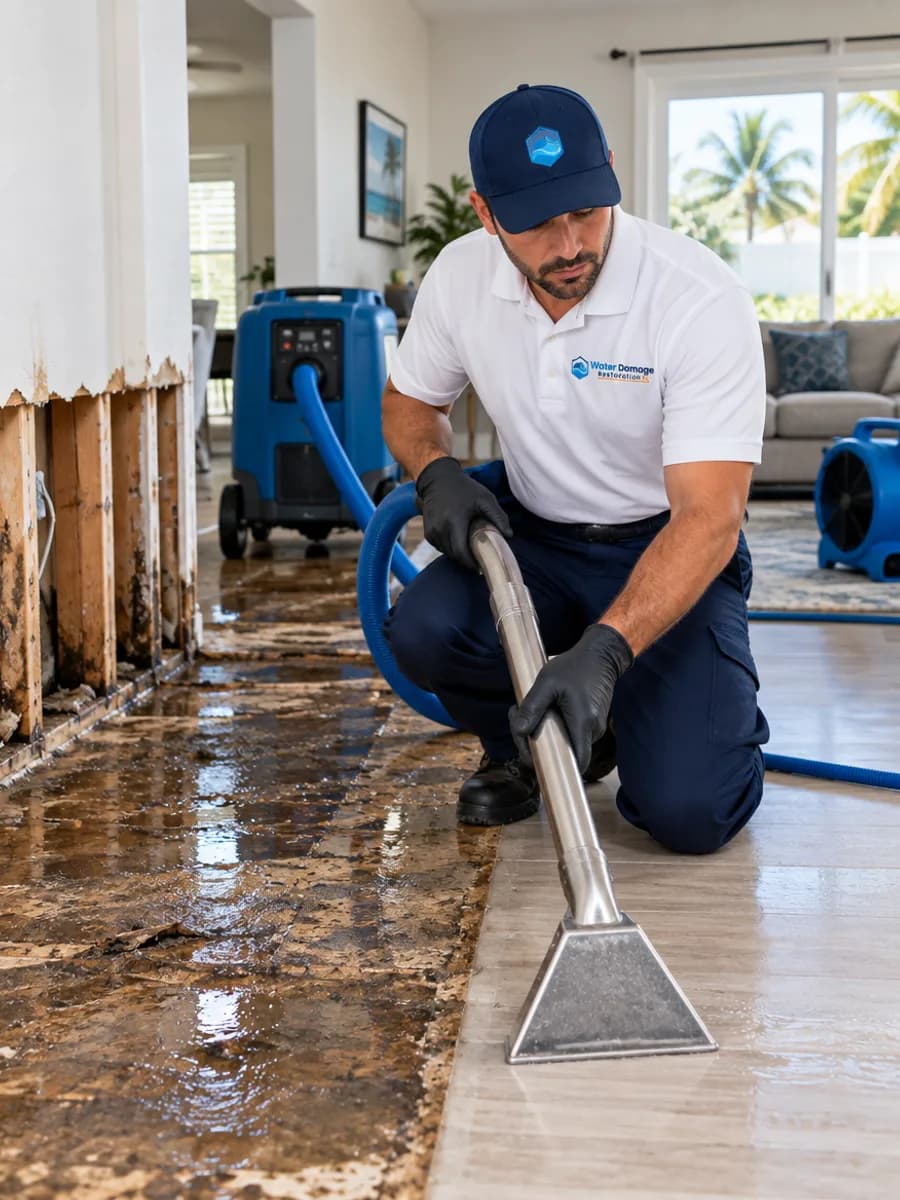
The difference between flood water and a clean-water leak shapes the entire job. This comparison shows why.
| Flood / storm water | Clean-water leak | |
|---|---|---|
| Water category | Often Category 3 (black water) | Usually Category 1 (clean) |
| Area affected | Large, often whole rooms | Localized |
| Contamination | Dirt, bacteria, possible sewage | Minimal |
| Material removal | More materials removed | Fewer, often dried in place |
Why fast action matters after a flood
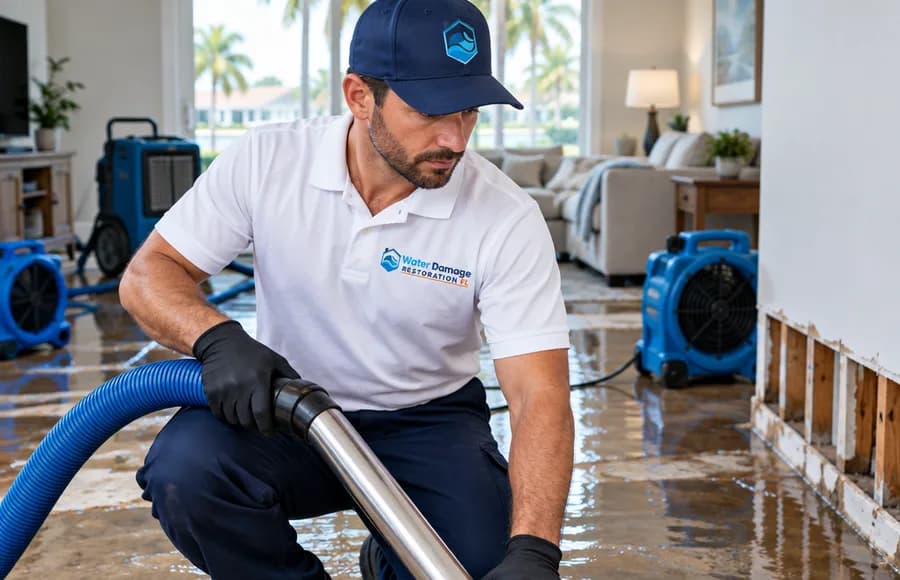
After a flood, standing water keeps soaking into the structure and contamination keeps spreading. Mold can begin within 24 to 48 hours, and Florida's heat and humidity accelerate it. The faster water and contaminated materials are removed and the structure is dried, the more of the property can be saved.
Documenting the loss thoroughly from the start also supports your insurance claim, whether it's covered under flood insurance or a homeowners policy.
Storm-prone Florida needs storm-ready crews
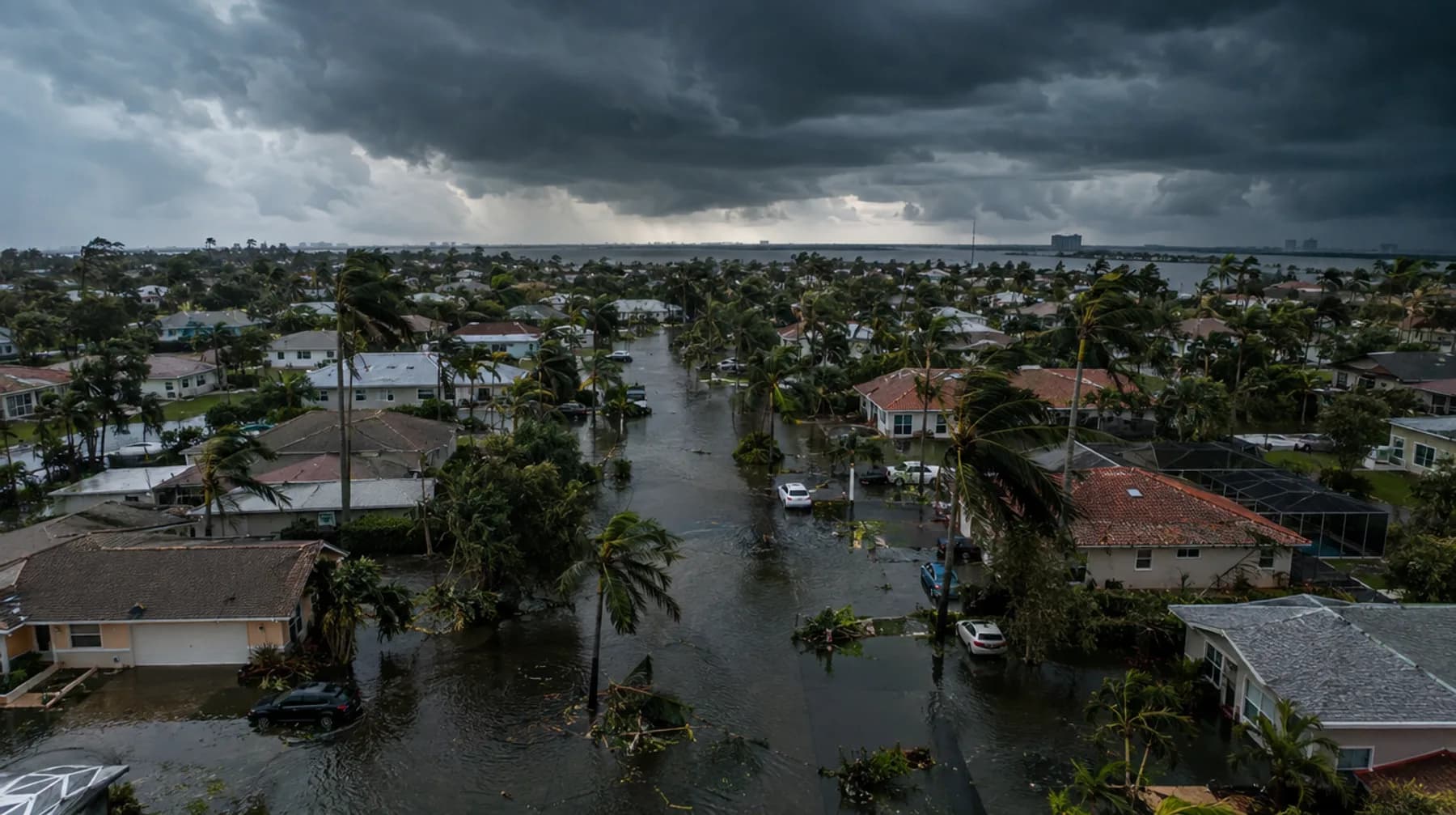
Florida sees heavy rain, tropical systems, and storm surge that can flood homes and businesses quickly. Our crews respond across Florida after flooding and storms, and because we're based in the region, we can reach affected properties when demand spikes after severe weather.
Flood Damage Restoration services
Flood Damage Cleanup
Cleaning up water, mud, and debris left behind after a flood.
Learn moreFlood Water Removal
Removing flood water from the interior of a property.
Learn moreFlood Restoration
Restoring flood-affected areas from cleanup through drying.
Learn moreBasement Flood Cleanup
Cleaning and drying basements after flooding.
Learn moreStorm Water Damage
Addressing water that enters a property during storms and heavy rain.
Learn more
Frequently asked questions
If it's safe, avoid the water (it may be contaminated or hide electrical hazards), turn off power to affected areas, and document the damage with photos. Then call for professional flood restoration — flood water usually needs safe, protected removal rather than DIY cleanup.
Flooding from outside — storm surge, rising water — typically requires separate flood insurance and is usually not covered by a standard homeowners policy, while some storm-driven water intrusion may be. Coverage depends on your policies and your insurer's determination; we document thoroughly to support your claim.
It varies with the size of the affected area and how much material must be removed and rebuilt. Removal and drying often take several days to over a week, and reconstruction adds more time. We provide a realistic timeline after assessing the property.
Often, yes. Flood and storm water is frequently contaminated Category 3 black water carrying bacteria and possibly sewage. It should be handled with protective equipment and proper disposal, which is why professional restoration is recommended for flood losses.
Porous materials soaked by contaminated water — carpet, pad, the lower portion of drywall, insulation — usually have to be removed because they can't be cleaned and dried safely. Hard, non-porous surfaces are cleaned and sanitized.
Yes. We manage the full process — safe water and debris removal, cleaning and sanitizing, structural drying, and the repairs or reconstruction that follow — so you have a single point of contact from start to finish.
Still have a question? Call us at (904) 555-0100
Damage doesn't wait for business hours — neither do we
Whether it's the middle of the night or a holiday weekend, our team is ready to respond and start stabilizing your property.