
Mold Removal in Florida
Mold removal is the safe removal of mold and mold-affected materials from a property. Our our crews contain the area, use HEPA filtration, and remove the mold without spreading spores — then address the moisture source, because removal alone won't keep mold from coming back.
How we confirm the removal worked
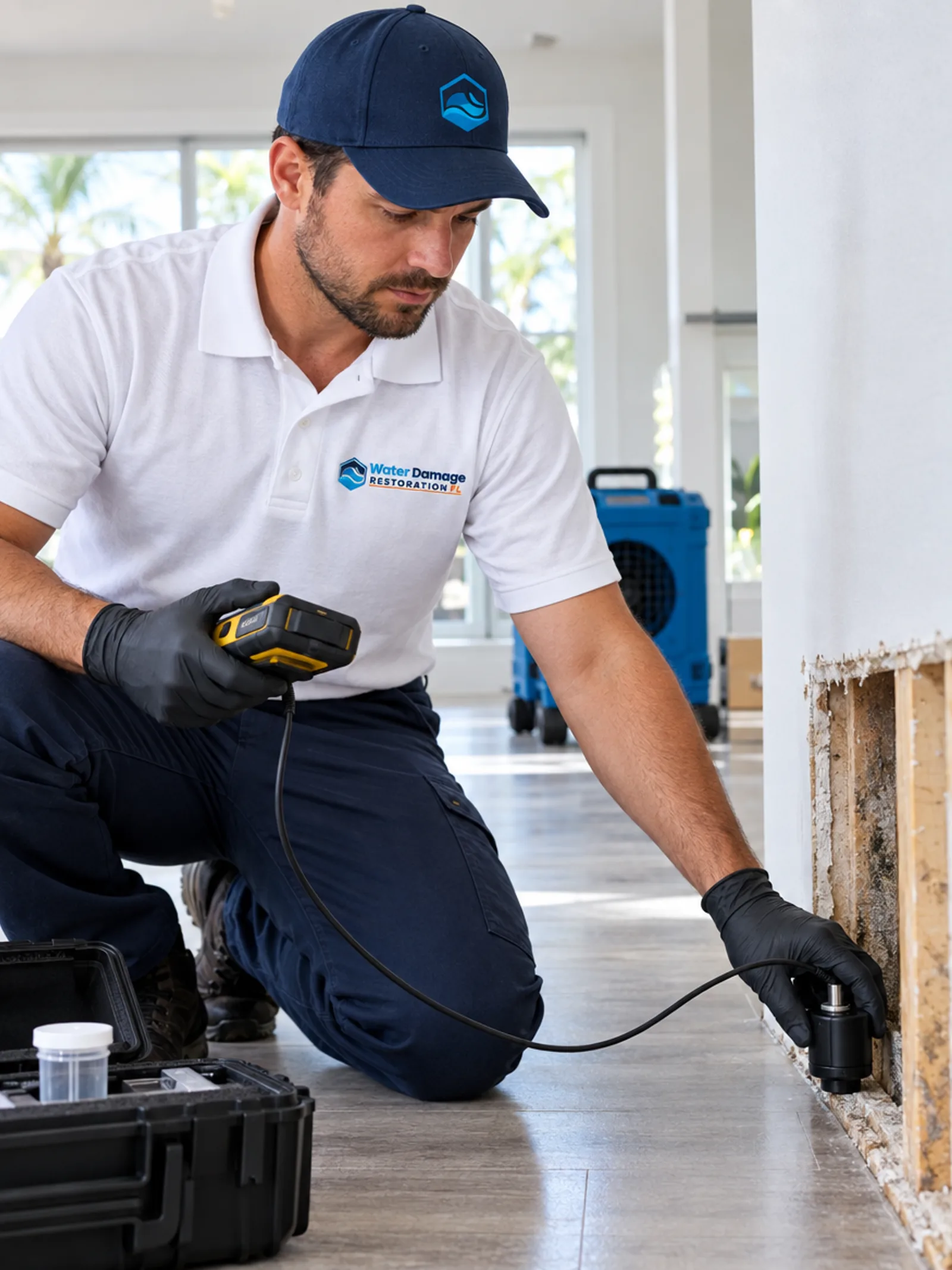
Because the realistic goal of mold removal is to return mold to normal, safe levels rather than sterilize the air, knowing when the job is genuinely done matters. It's not simply a matter of the visible growth being gone.
A proper removal is confirmed on a few fronts: the visible growth and affected materials are removed, salvageable surfaces are cleaned and treated, the area is HEPA-vacuumed and wiped to capture residual spores, and — critically — the moisture source that caused the growth is corrected and the area dried to normal levels. That last step is what makes the result hold. Because mold needs moisture, an area that has been cleaned but left damp will grow mold again; an area that's clean and dry has lost the conditions mold needs. Verifying the moisture is gone is as important as removing the mold itself.
What to expect during a mold removal
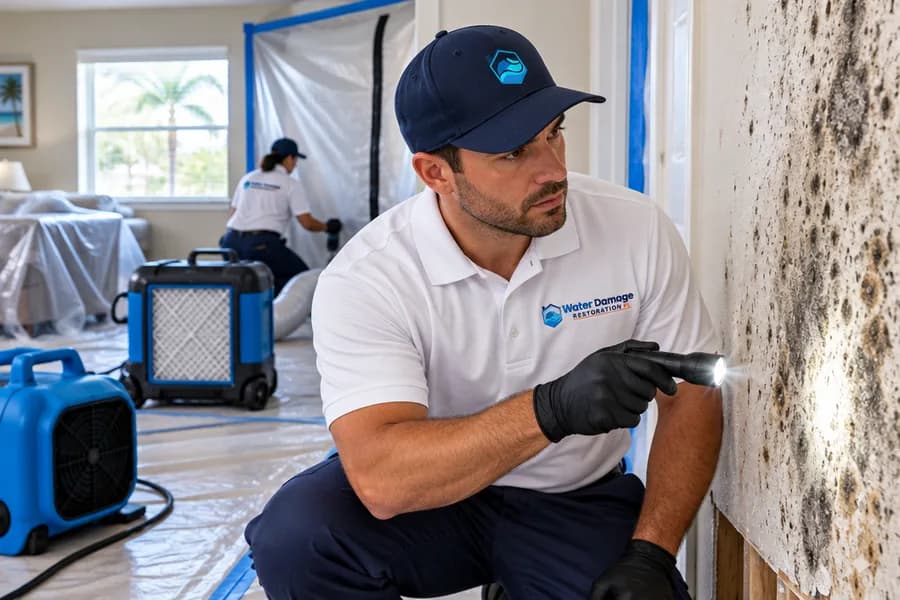
Knowing how a mold removal unfolds takes some of the stress out of it. The work is deliberately methodical, because the whole point is to take the mold out without scattering spores through the rest of the property.
A typical removal follows a predictable arc:
- The work area is sealed off with containment to keep spores from spreading.
- HEPA air filtration runs throughout to capture airborne spores.
- Mold-affected porous materials are removed; hard surfaces are cleaned and treated.
- The area is HEPA-vacuumed and wiped down to capture residual spores.
- The moisture source is identified so the mold doesn't simply return.
Removing mold without spreading it
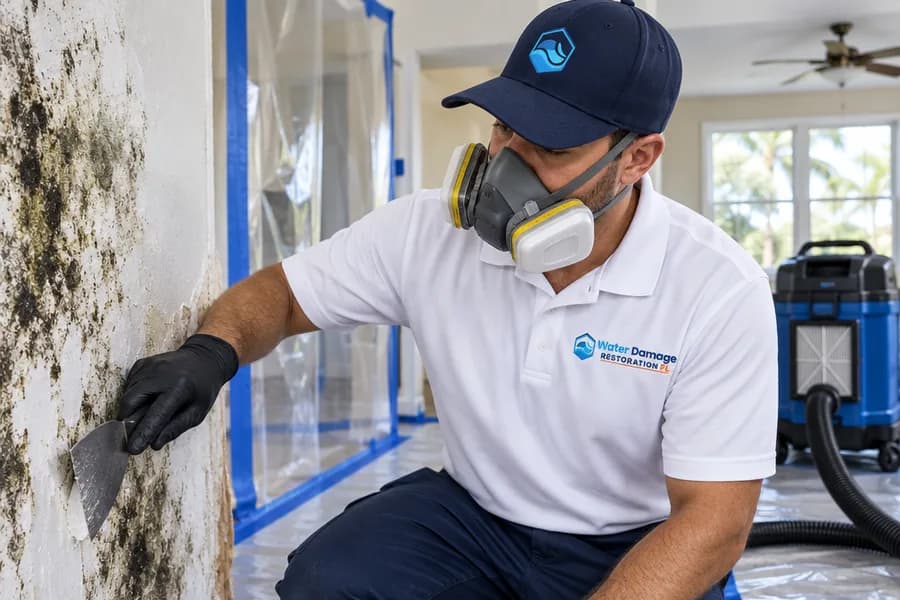
The central challenge in mold removal is doing it without scattering spores through the rest of the property. Disturbing mold — cutting, scrubbing, or tearing out materials — releases spores into the air, and without containment those spores settle in clean areas and start new growth.
That's why professional removal is a contained, methodical process rather than a quick tear-out.
How we remove mold safely
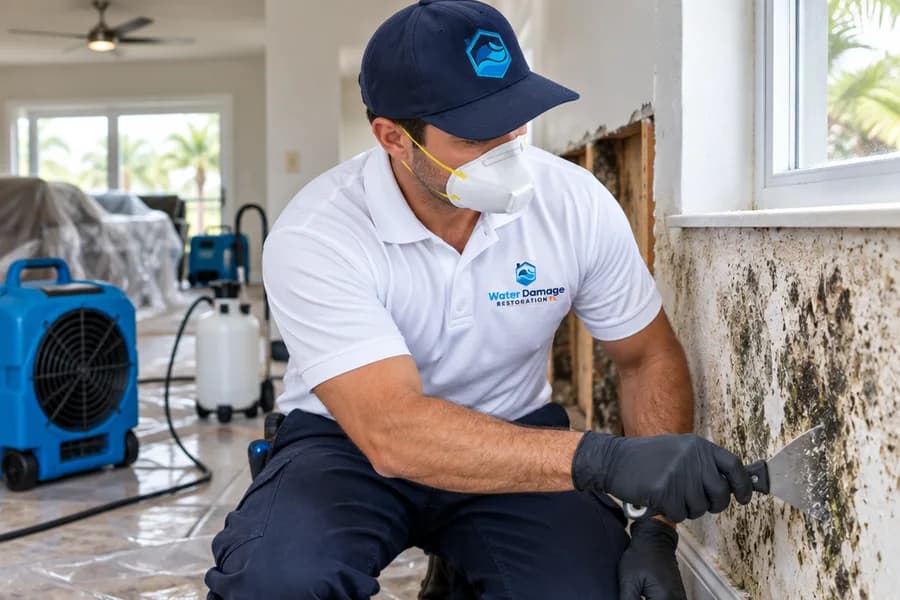
Our removal follows careful steps to keep the work isolated:
- Contain the work area so spores can't spread.
- Run HEPA air filtration to capture airborne spores.
- Remove mold-affected porous materials that can't be cleaned.
- Clean and treat salvageable surfaces.
- HEPA-vacuum and wipe down the area to capture residual spores.
What gets removed and what's cleaned
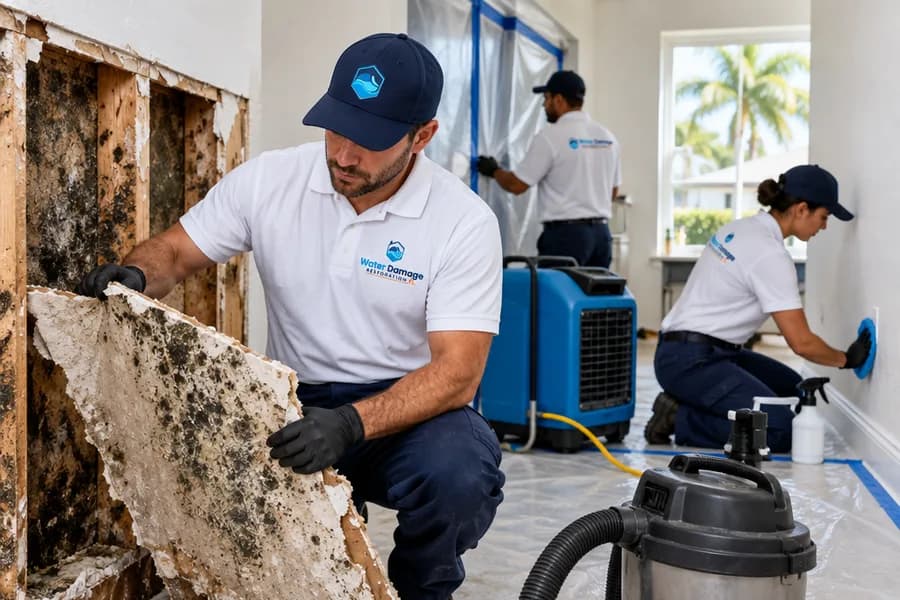
Porous materials that mold has grown into — drywall, insulation, carpet, ceiling tiles — usually can't be cleaned reliably and are removed. Hard, non-porous surfaces such as sealed wood, metal, tile, and glass can generally be cleaned and treated in place.
We assess what's salvageable versus what needs removal and explain the reasoning, so the work is thorough without discarding materials that could be saved.
Removal is only half the job
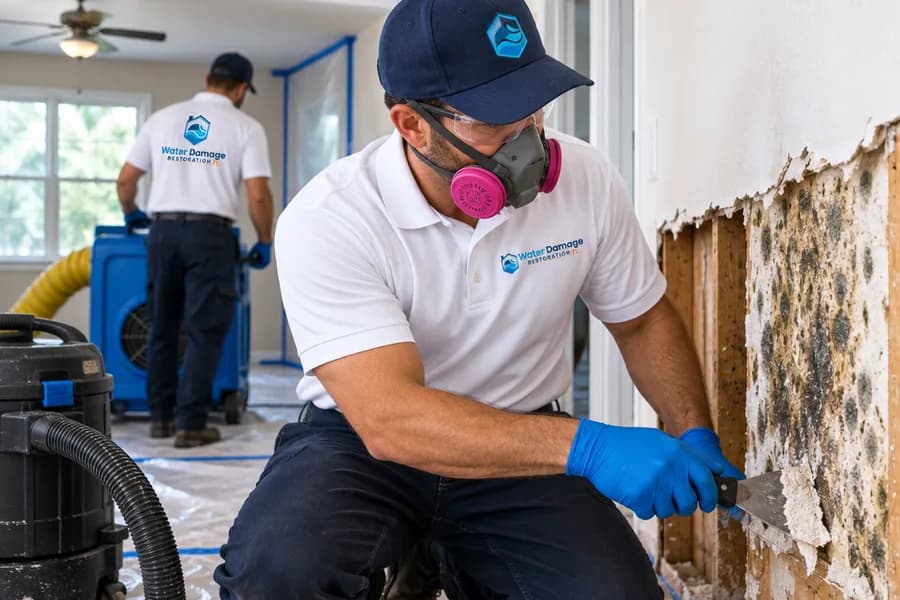
Removing mold you can see doesn't fix why it grew. Mold needs moisture, so if the underlying dampness — a leak, poor drainage, or high humidity — isn't addressed, it will return. Effective removal is paired with identifying and correcting the moisture source.
This is the difference between removal that lasts and removal that has to be redone a few months later.
Mold removal across Florida
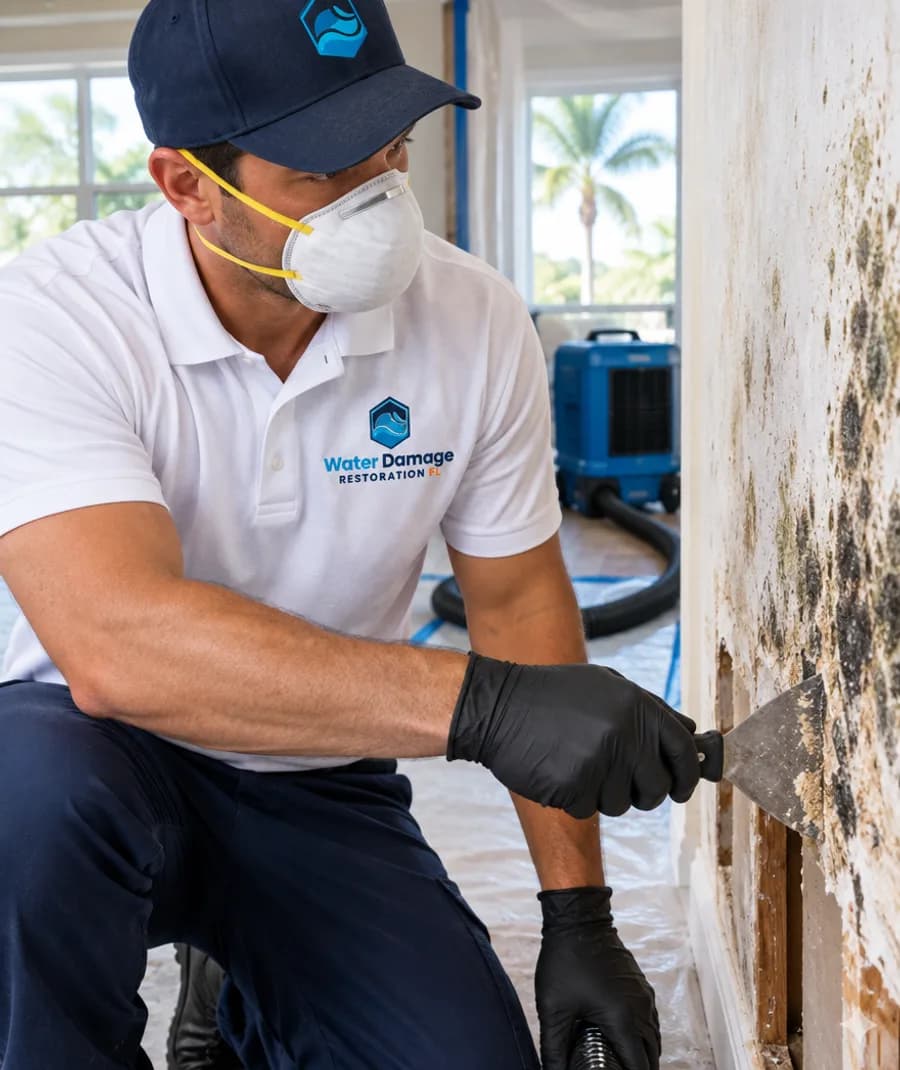
Our crews provide safe, contained mold removal across Florida. Because Florida's humidity keeps the risk high, we focus on both removing the mold properly and addressing the moisture that caused it, so the result holds.
More Mold Remediation services
View all Mold Remediation servicesRequest this service
Tell us what happened and we'll follow up to confirm next steps.
Frequently asked questions
The sooner the better. Mold spreads by releasing spores, and the longer it grows the larger and more expensive the removal becomes. Because it also signals an active moisture problem, prompt removal paired with fixing the source keeps a small, contained issue from becoming a whole-property one.
Scrubbing or disturbing larger mold growth without containment releases spores that settle and grow elsewhere, often making the problem worse. Professional removal contains the area and uses HEPA filtration to keep spores from spreading.
Porous materials the mold grew into — drywall, insulation, carpet, ceiling tiles — usually can't be cleaned reliably and are removed. Hard, non-porous surfaces can generally be cleaned and treated in place.
Only if the moisture source isn't addressed. Mold needs moisture to grow, so we identify and correct the underlying dampness — a leak, drainage issue, or humidity problem — so removal lasts.
It depends on the size of the affected area and how much material must be removed. A small, contained area may take a day, while larger jobs take longer. We give a realistic timeline after assessing it.
Yes. Removal is paired with identifying and correcting the moisture source, because removing mold without fixing why it grew only leads to it coming back.
Still have a question? Call us at (904) 555-0100