
Drywall Repair in Florida
Drywall repair after water damage is the repairing or replacing of water-damaged drywall. Our our crews replace materials that are too far gone and patch what can be saved — but only after the structure behind the wall is dried, so moisture and mold aren't sealed inside.
Signs drywall needs replacing, not patching
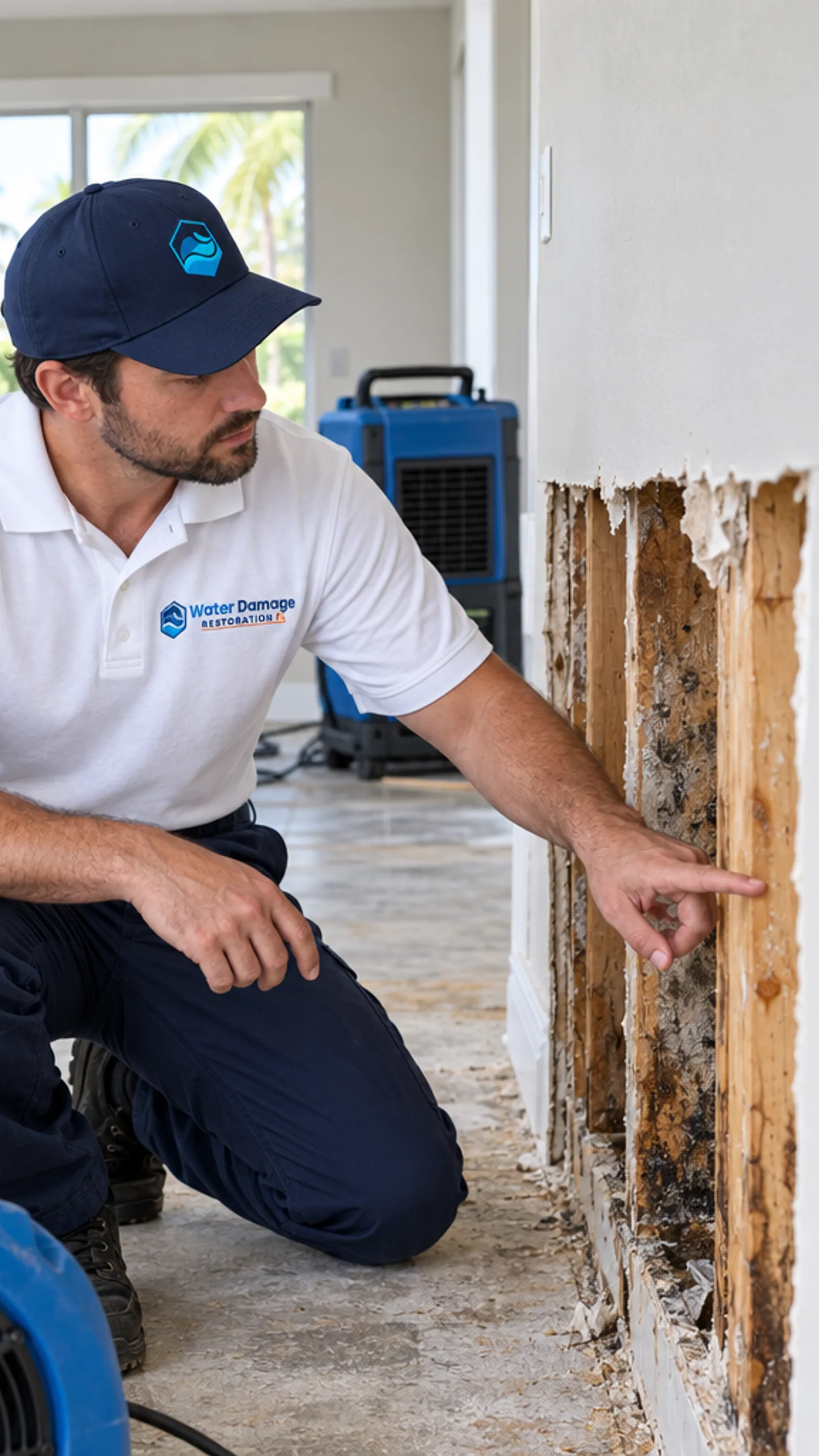
Not all water-damaged drywall has to come out, and knowing the difference helps set expectations for a repair. Some drywall can be dried and patched; some has lost too much integrity to save.
- Swelling, softness, or crumbling — the drywall has lost its structure and is replaced.
- Sagging or bulging — a sign it's saturated and failing.
- Contact with contaminated (gray or black) water — removed regardless of appearance.
- Visible mold growth in or on the board — removed and addressed.
- Light staining on otherwise firm, dry drywall — often patchable after sealing.
Matching texture and paint on a drywall repair
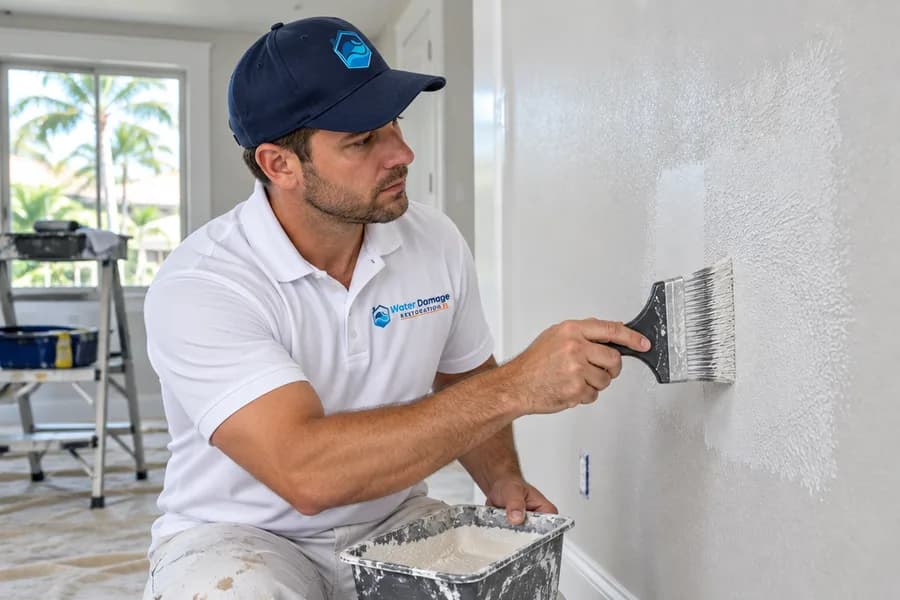
A drywall repair is only as good as its finish. Replacing or patching the board is the structural part, but blending it into the surrounding wall is what makes the repair disappear — and it takes more care than it might seem, especially on textured walls.
After the new drywall is in, the seams are taped, mudded, and sanded smooth, then the surface is textured to match the existing wall. Common textures like orange peel or knockdown each have their own technique, and getting the match right is what keeps the patch from standing out under light.
Priming and painting finish the job. Because paint can fade and shift over time, blending into the surrounding area sometimes means feathering the paint out or repainting a full wall for a seamless result. The goal is simple: a wall where you can't tell the damage was ever there.
How water damages drywall
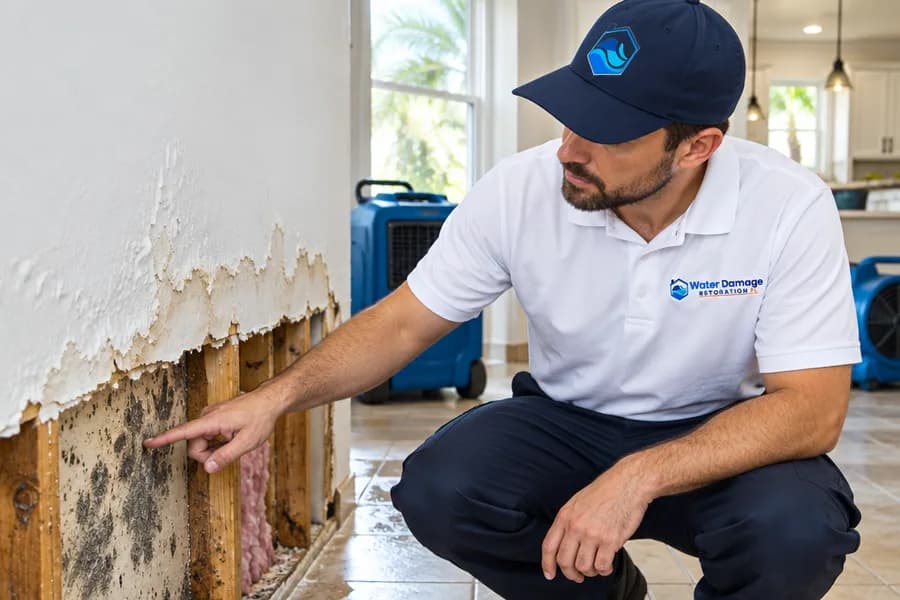
Drywall is porous and absorbs water readily, which is why it's so often the material that shows water damage first. Once saturated, it can swell, soften, sag, stain, and lose its structural integrity. Even when it dries, heavily affected drywall may remain weakened or harbor mold within it.
Whether drywall can be patched or needs replacing depends on how wet it got, how long it stayed wet, and whether the water was contaminated.
Repair or replace?
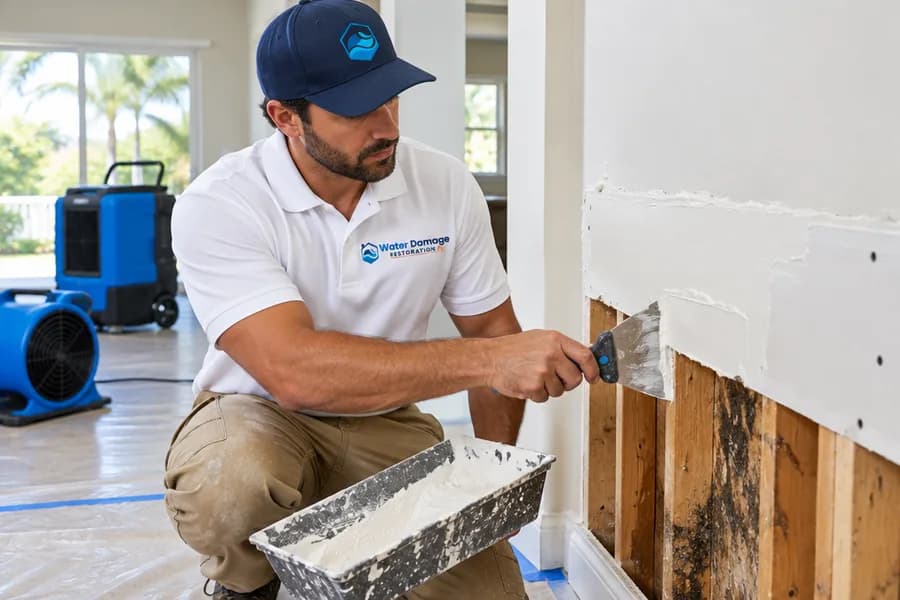
We assess each area to decide the right approach:
- Lightly affected drywall that dried quickly can often be patched and refinished.
- Swollen, soft, or crumbling drywall is removed and replaced.
- Drywall touched by contaminated (gray or black) water is removed regardless of appearance.
- The lower portion of a wall is often cut and replaced while the upper section is saved.
Dry the wall cavity first
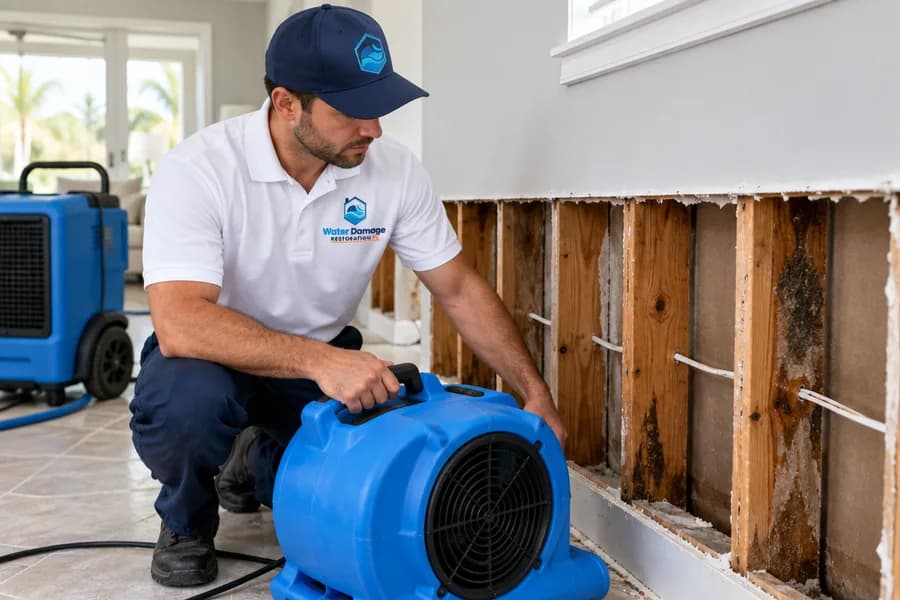
The most important part of drywall repair happens before any new board goes up: drying the wall cavity behind it. Insulation and framing inside the wall hold moisture, and installing new drywall over a damp cavity seals that moisture in — a direct path to mold and future damage.
We verify the cavity is dry with moisture readings before closing it up, so the repair sits on a dry, sound structure.
Finishing to match
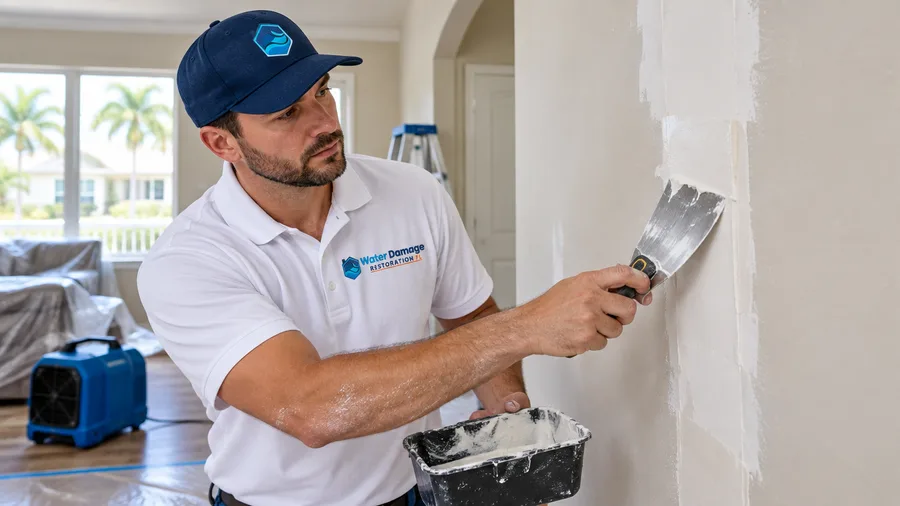
A good drywall repair should be invisible. After replacing or patching the board, we tape, mud, sand, and texture to match the surrounding wall, then prime and paint so the repaired area blends in. The aim is a finish that looks like the damage never happened.
Because the same crew handled the drying, the repair is coordinated with everything that came before it.
Drywall repair across Florida
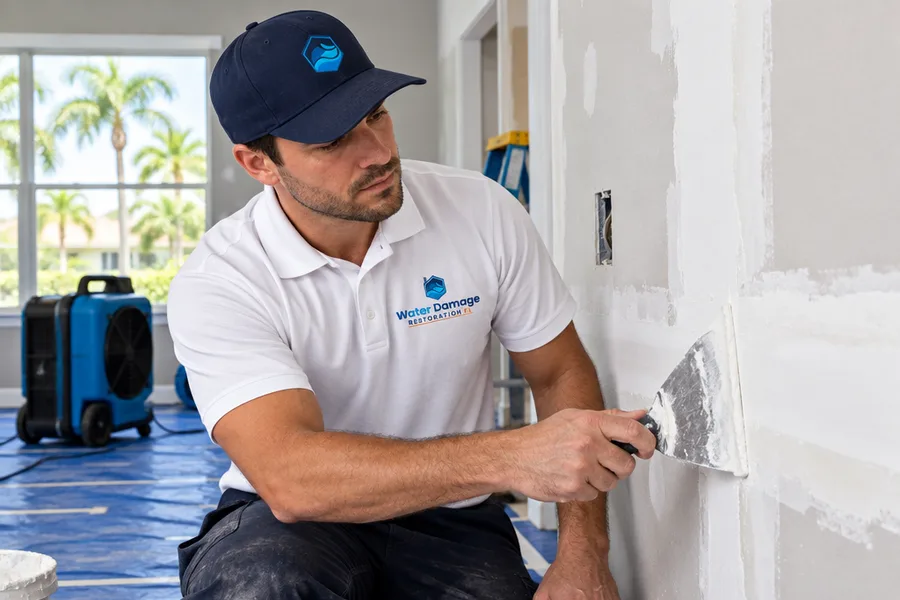
Our crews repair and replace water-damaged drywall for homes and businesses across Florida — always after verifying the structure behind the wall is dry, so the finished repair lasts.
More Repair & Reconstruction services
View all Repair & Reconstruction servicesRequest this service
Tell us what happened and we'll follow up to confirm next steps.
Frequently asked questions
It depends. Lightly affected drywall that dried quickly can often be patched, while swollen, soft, or crumbling drywall is replaced. Drywall touched by contaminated water is removed regardless of how it looks.
We use moisture readings to determine how far the water traveled up the wall and how saturated the drywall is. Often the lower, wet portion is cut out and replaced while the dry upper section is saved.
Because insulation and framing inside the wall hold moisture. Installing new drywall over a damp cavity seals that moisture in, causing mold and future damage. We verify the cavity is dry first.
It shouldn't be. We tape, mud, sand, texture, prime, and paint to match the surrounding wall, so the repaired area blends in and looks like the damage never happened.
Yes. Drywall is porous and, kept damp, it readily grows mold — sometimes within the material itself. That's why saturated drywall is replaced and the cavity is dried before repair.
Still have a question? Call us at (904) 555-0100