
Carpet Water Extraction in Florida
Carpet water extraction is the removal of water from saturated carpet and the padding beneath it. Our our crews extract deeply and quickly, because carpet acts like a sponge — the faster the water comes out, the better the chance of saving the carpet and avoiding mold.
How we decide whether to save the carpet
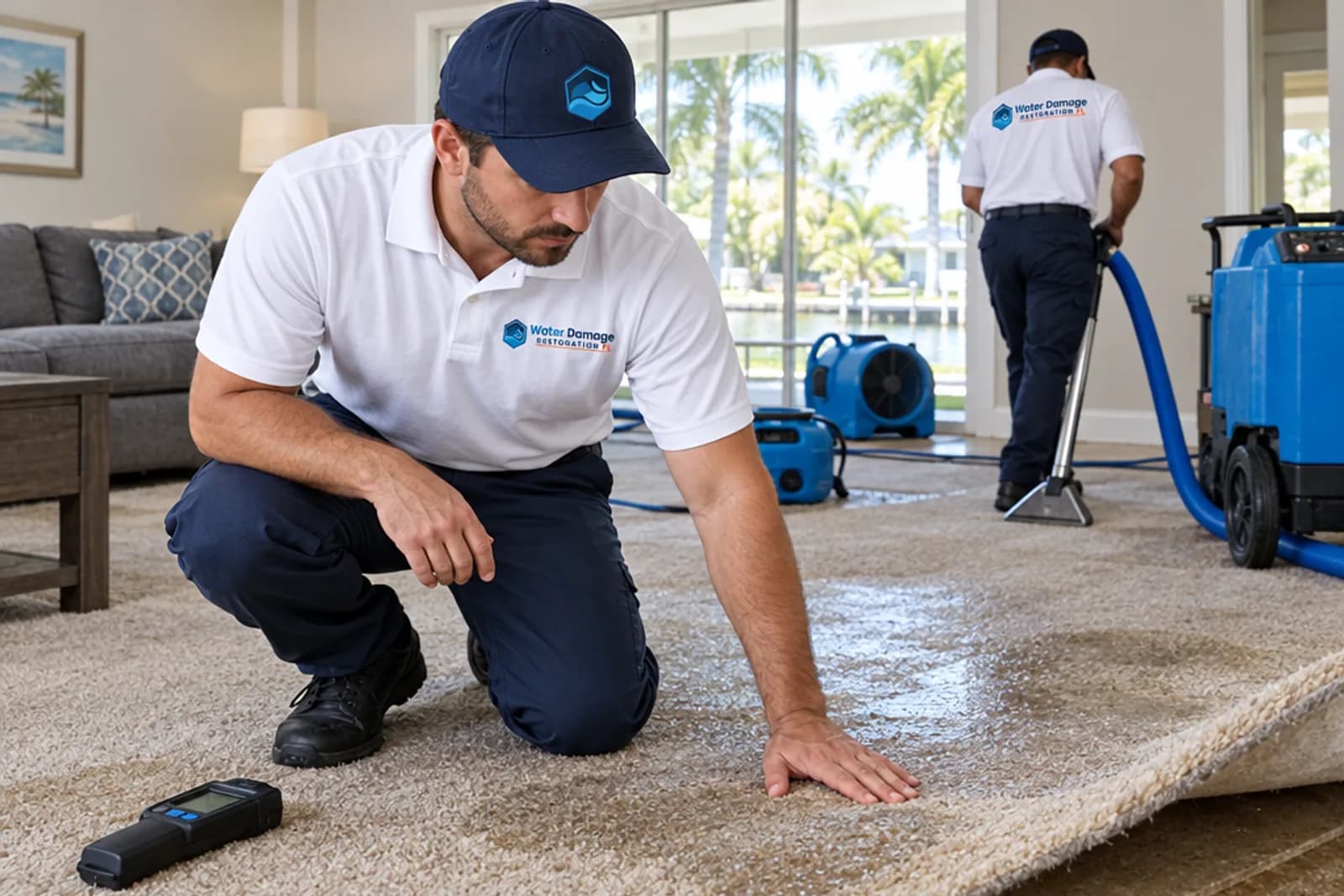
Every wet-carpet job comes down to a judgment: can this carpet be saved, or is it better replaced? We base it on a few clear factors rather than guesswork, and we're honest about the answer.
- The water category — clean water gives the best odds; contaminated gray or black water usually means the carpet can't be saved safely.
- How long it stayed wet — carpet dried within the first day or two has a much better chance.
- The condition of the pad — the pad is usually replaced even when the carpet is saved.
- The subfloor beneath — checked for hidden moisture that would undermine a saved carpet.
- Signs of delamination or a set-in musty smell, which point to replacement.
Odor and mold: the risk of leaving carpet wet
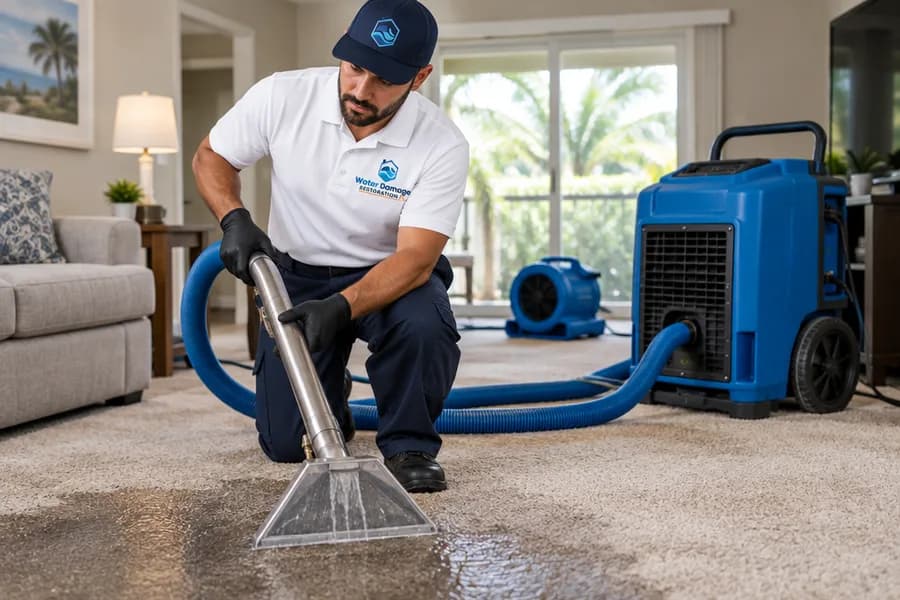
The reason wet carpet is worth treating urgently is what happens if it isn't. Carpet and pad hold water deep in their fibers and backing, and that trapped moisture is one of the most common sources of the musty smell people associate with water damage. Left long enough, it becomes mold growing in and under the carpet.
In Florida's humidity, that process starts fast — often within a day or two. Once mold takes hold in the pad or spreads to the subfloor, the carpet usually can't be saved, and the problem shifts from drying to remediation.
Fast, thorough extraction and drying is what interrupts that chain, which is why the first day matters so much for wet carpet.
Why wet carpet is a race against time
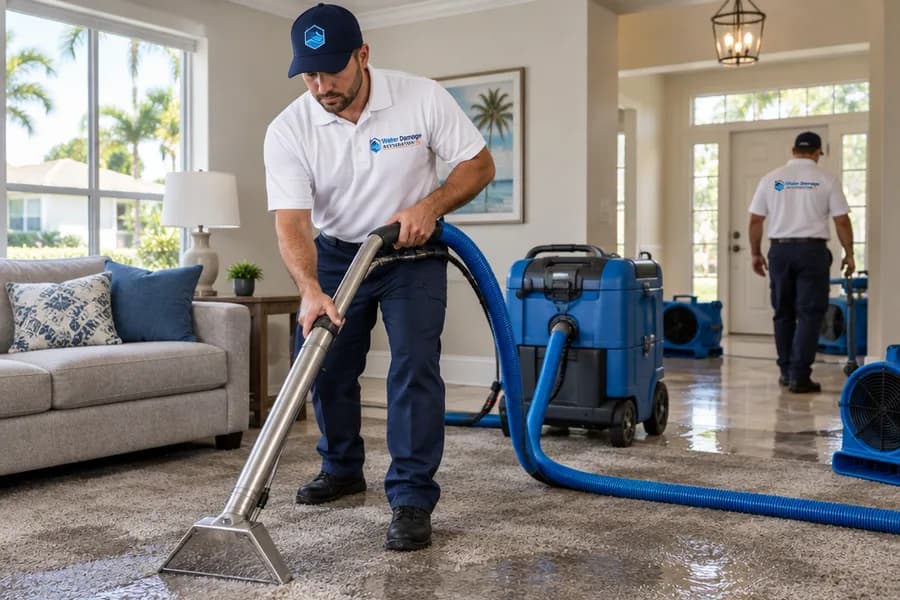
Carpet and its pad soak up and hold a surprising amount of water, and they stay wet long after the surface feels damp. That trapped moisture is what leads to mold, odors, and a ruined pad — and across Florida's humidity it can start causing problems within a day or two.
Extracting the water quickly and thoroughly is what gives carpet the best chance of being saved rather than replaced.
How carpet extraction works
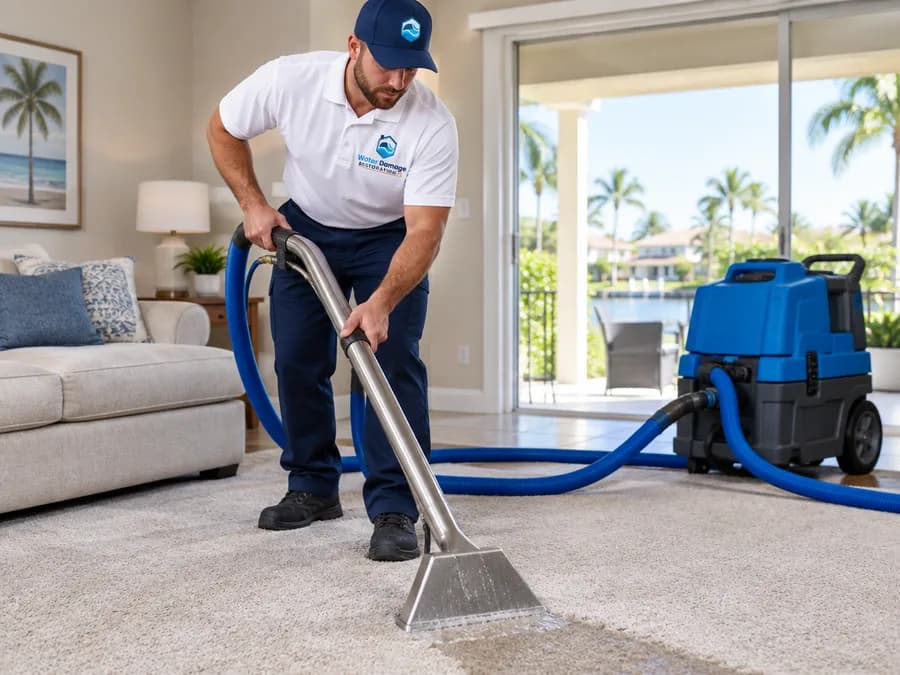
Good carpet extraction pulls water from deep in the fibers and backing, not just off the surface:
- Truck-mounted extractors with strong suction pull water from the carpet.
- Weighted extraction tools press water out of the pad as they pass.
- Portable extractors and wands reach stairs, edges, and tight areas.
- Moisture meters confirm how much water remains in carpet, pad, and subfloor.
Can your carpet be saved?
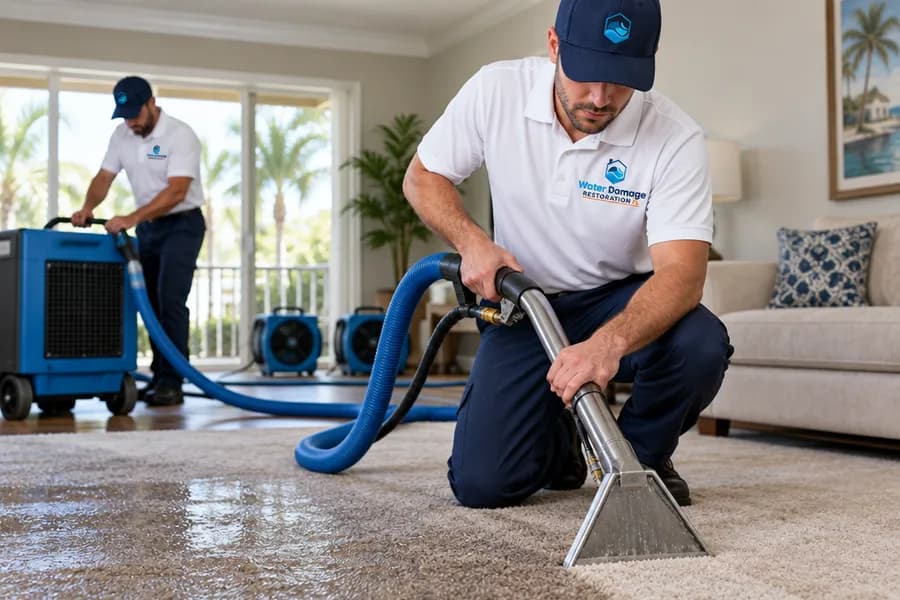
It depends on two things: how clean the water was and how fast extraction happened. Carpet soaked by clean water and extracted quickly can often be saved, though the pad underneath usually has to be replaced because it holds so much water. Carpet soaked by contaminated gray or black water generally can't be saved safely and should be removed.
Our technicians assess the water category and the extent of saturation, then give you an honest recommendation rather than drying carpet that should be replaced.
The pad and the subfloor underneath
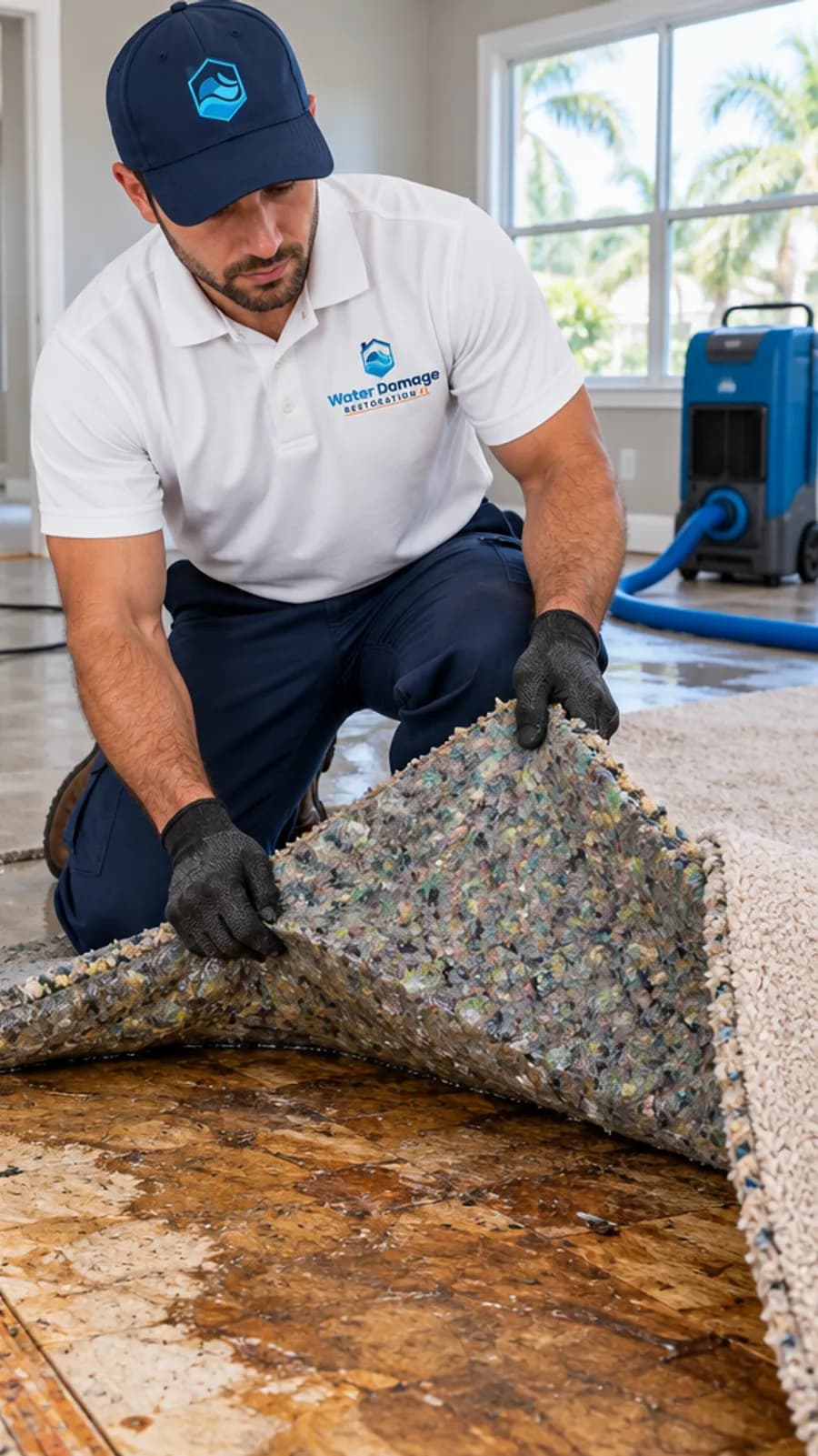
The carpet you can see is only the top layer. Beneath it, the pad acts like a sponge, and below that the subfloor can absorb water and stay wet. Extraction has to account for all three. Often the most effective approach is to extract the carpet, remove and replace the saturated pad, and dry the subfloor directly.
Checking the subfloor with moisture meters is important, because water trapped there causes lasting damage even after the carpet feels dry.
Extraction, then drying the carpet properly
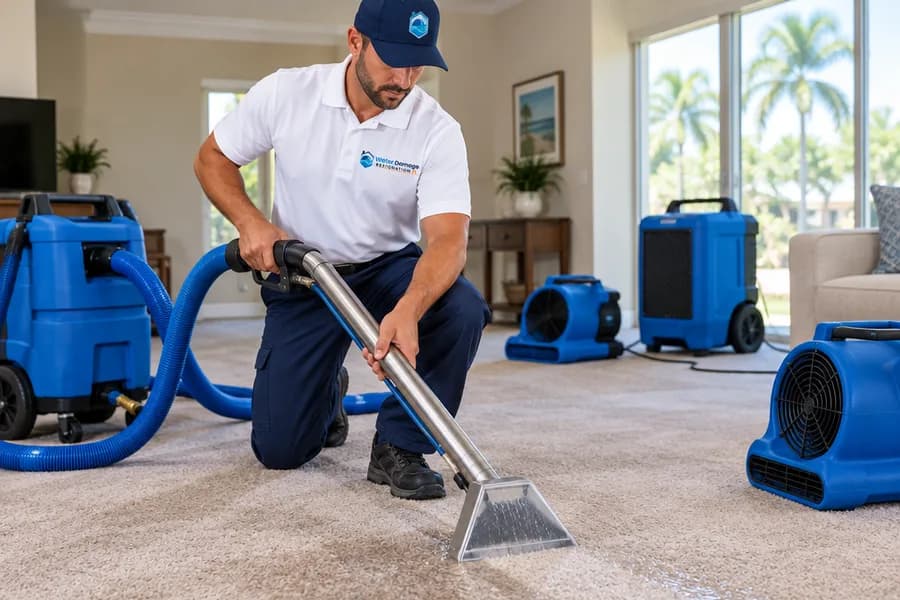
After extraction, drying finishes the job. Air movers direct airflow across and, where appropriate, beneath the carpet, while dehumidifiers pull the released moisture out of the air. We dry to moisture targets so the carpet, pad area, and subfloor reach normal levels — the reliable way to prevent the musty smell and mold that follow incomplete drying.
More Water Extraction & Removal services
View all Water Extraction & Removal servicesRequest this service
Tell us what happened and we'll follow up to confirm next steps.
Frequently asked questions
Often, if the water was clean and extraction was prompt. The pad underneath usually needs replacing, and carpet soaked by contaminated water generally can't be saved safely. We assess and recommend honestly.
Frequently, yes. The pad holds a large amount of water and dries slowly, so replacing it is often faster and more reliable than trying to dry it — especially with contaminated water.
Air movers direct airflow across and sometimes beneath the carpet while dehumidifiers remove the released moisture from the air. We dry to moisture targets so the carpet, pad area, and subfloor all reach normal levels.
It can, if it isn't extracted and dried quickly. Trapped moisture in carpet and pad is a common source of musty odors and mold. Fast, thorough extraction and drying is what prevents it.
As soon as possible. Carpet holds water and stays wet for a long time, and the mold risk climbs within 24 to 48 hours. The sooner extraction begins, the better the chance of saving the carpet.
Still have a question? Call us at (904) 555-0100