Property Drying in Florida
Property drying is the controlled removal of moisture from a building and its contents after water exposure. Our our crews use air movers, commercial dehumidifiers, and moisture meters to dry rooms, materials, and belongings back to normal levels — and confirm it with readings, not guesswork.
What can slow the drying process down
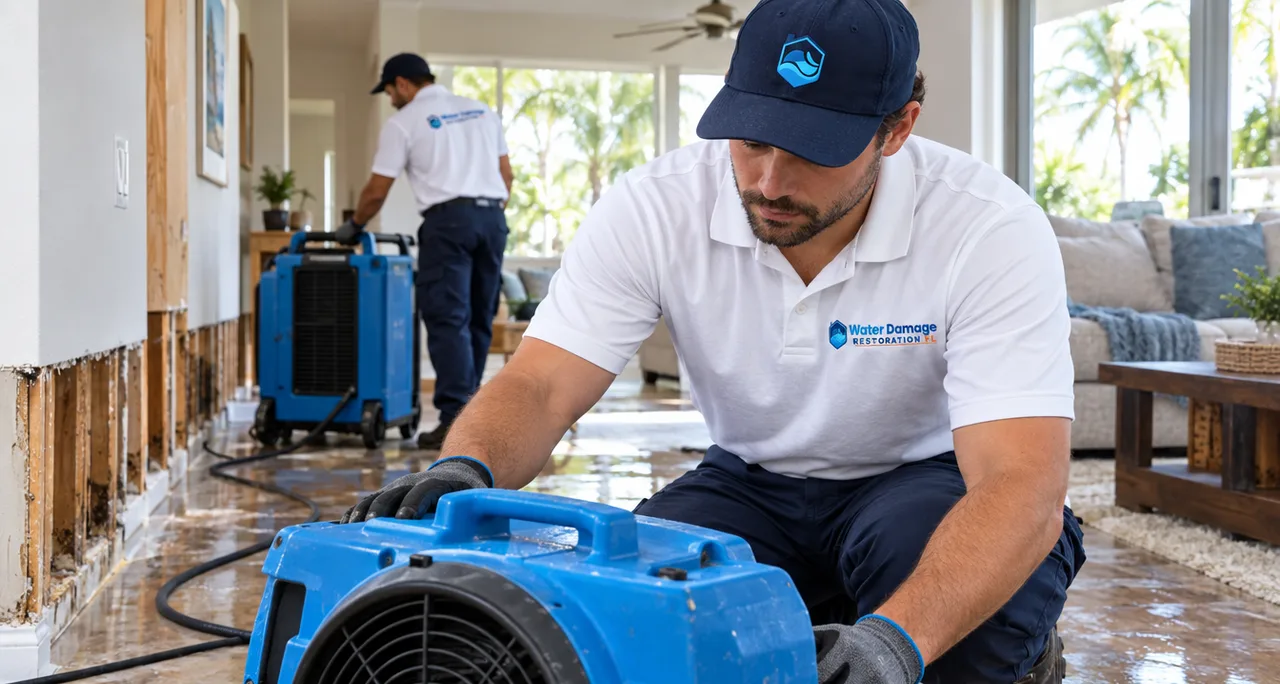
Not every space dries at the same rate, and knowing what slows things down explains why drying is measured rather than scheduled. Several factors can extend a job beyond the usual few days.
The most common are:
- High ambient humidity — a constant factor across Florida that works against evaporation.
- Dense materials like solid hardwood, plaster, and concrete that release moisture slowly.
- Water trapped in enclosed cavities, under flooring, or behind cabinets.
- Large volumes of water or a loss that sat before drying began.
What property drying involves
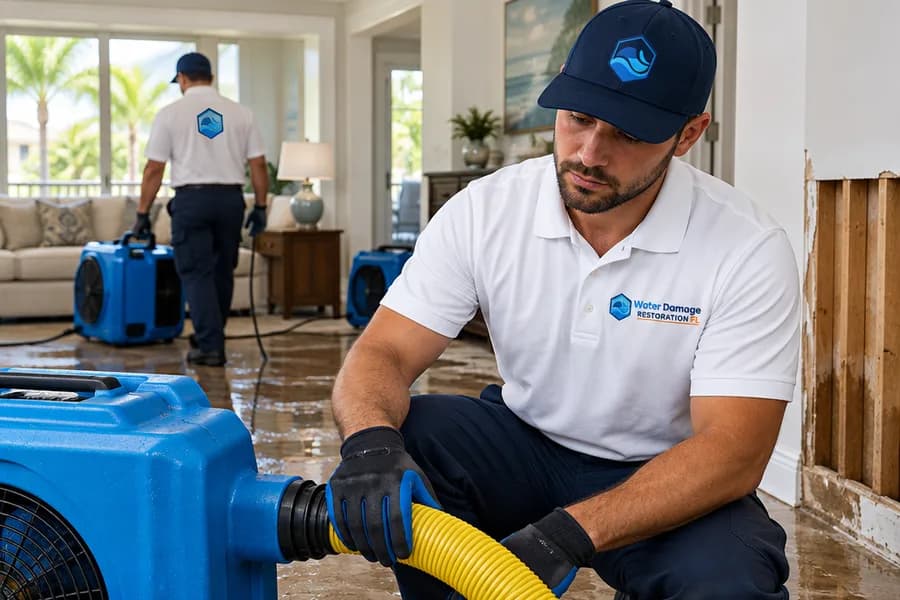
Once standing water is removed, a surprising amount of moisture remains — soaked into drywall, trapped under flooring, and held in the air itself. Property drying is the stage that removes that hidden moisture so materials return to their normal, stable condition. Skipping or rushing it is what leads to warped floors, peeling paint, and mold after the visible water is long gone.
Effective drying combines a few things working together:
- Air movers positioned to sweep air across wet surfaces and speed evaporation.
- Dehumidifiers that pull the evaporated moisture out of the air.
- Moisture meters and sensors to measure progress and find damp spots.
- Daily monitoring so equipment can be adjusted as materials dry.
Drying to a target, not just until it feels dry
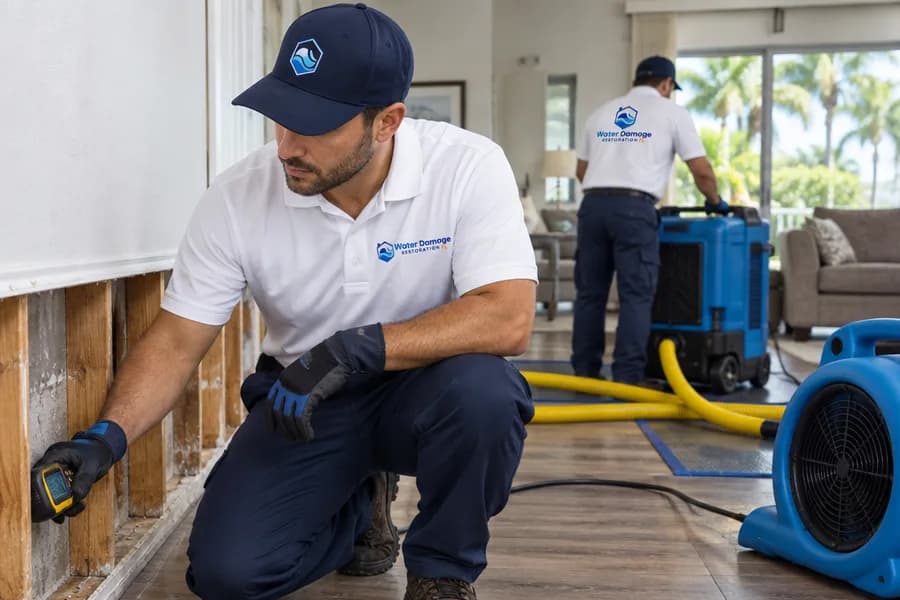
The key idea in professional drying is the drying goal — a specific moisture level that materials should reach, based on readings taken from unaffected areas of the same property. A wall or subfloor might feel dry to the touch while still holding enough moisture to grow mold or warp over time.
Our technicians take moisture readings throughout the process and keep equipment running until materials hit their target. That measured approach is the difference between a property that's actually dry and one that only appears to be.
Drying different materials the right way
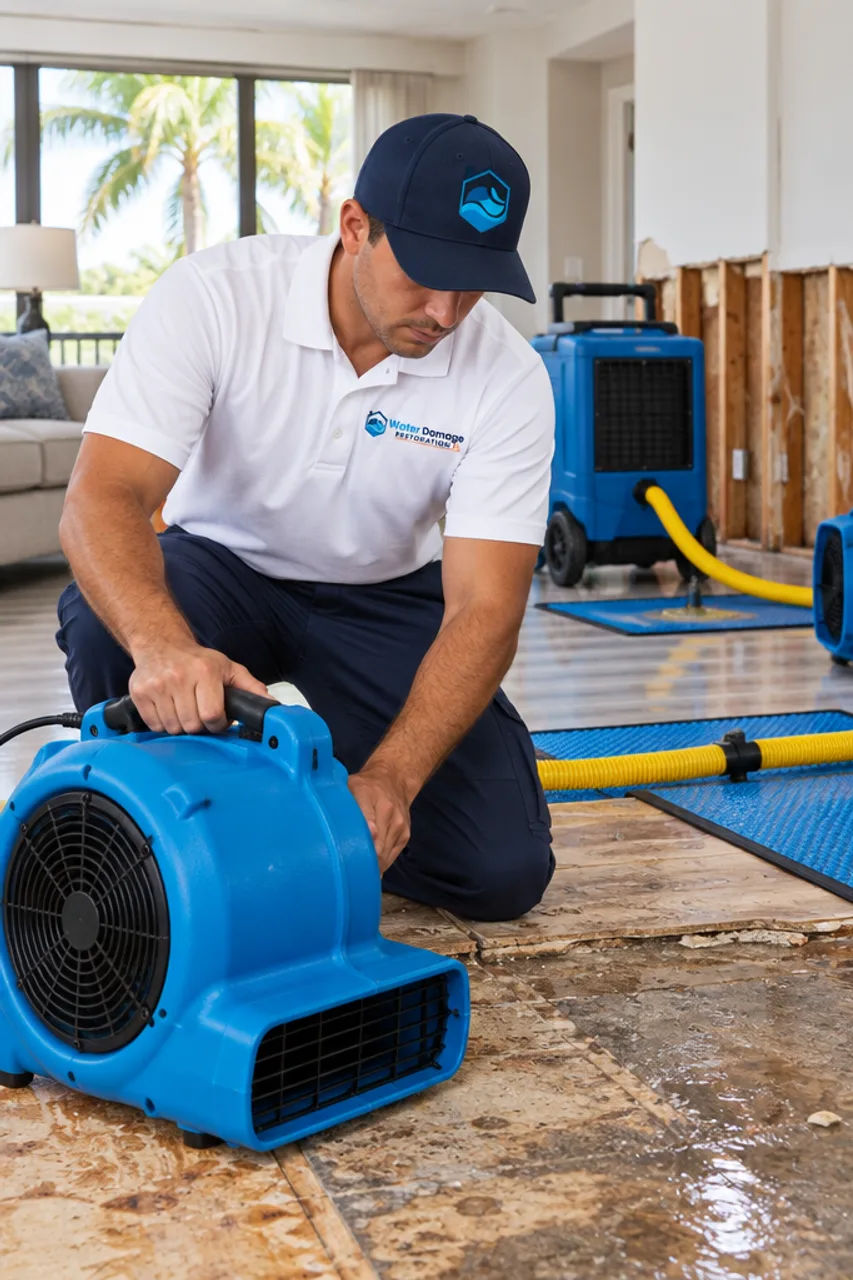
Different building materials release moisture at very different rates, and each needs the right approach. Drywall and insulation are porous and dry relatively quickly once airflow reaches them, though wet insulation often has to be removed. Solid wood and engineered flooring hold moisture stubbornly and may need specialty drying mats. Concrete slabs release moisture slowly for a long time. Framing and subfloor are what we watch most closely, because trapped moisture there causes the worst long-term problems.
Matching the drying method to the material — and to how wet it actually is — is why professional drying reaches areas that fans alone never will.
Signs your property still isn't fully dry
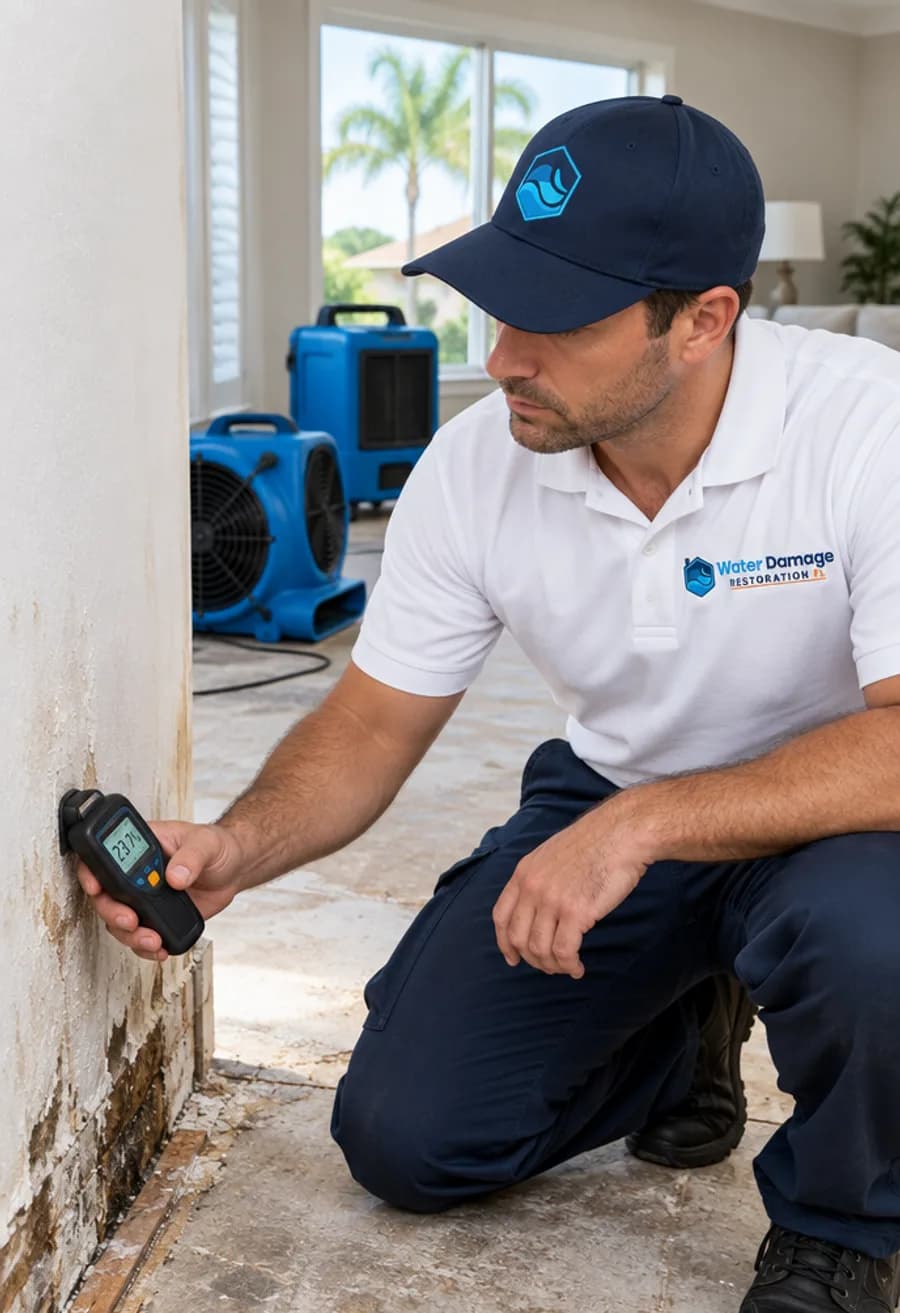
Because moisture hides inside materials, a space can look and feel dry while still being wet where it counts. Warning signs that drying isn't complete include:
- A lingering musty or damp smell.
- Cupping, buckling, or soft spots in flooring that appear days later.
- Discoloration, staining, or bubbling paint on walls and ceilings.
- Condensation on windows or a room that feels humid compared with the rest of the home.
Why drying is critical in Florida's humidity
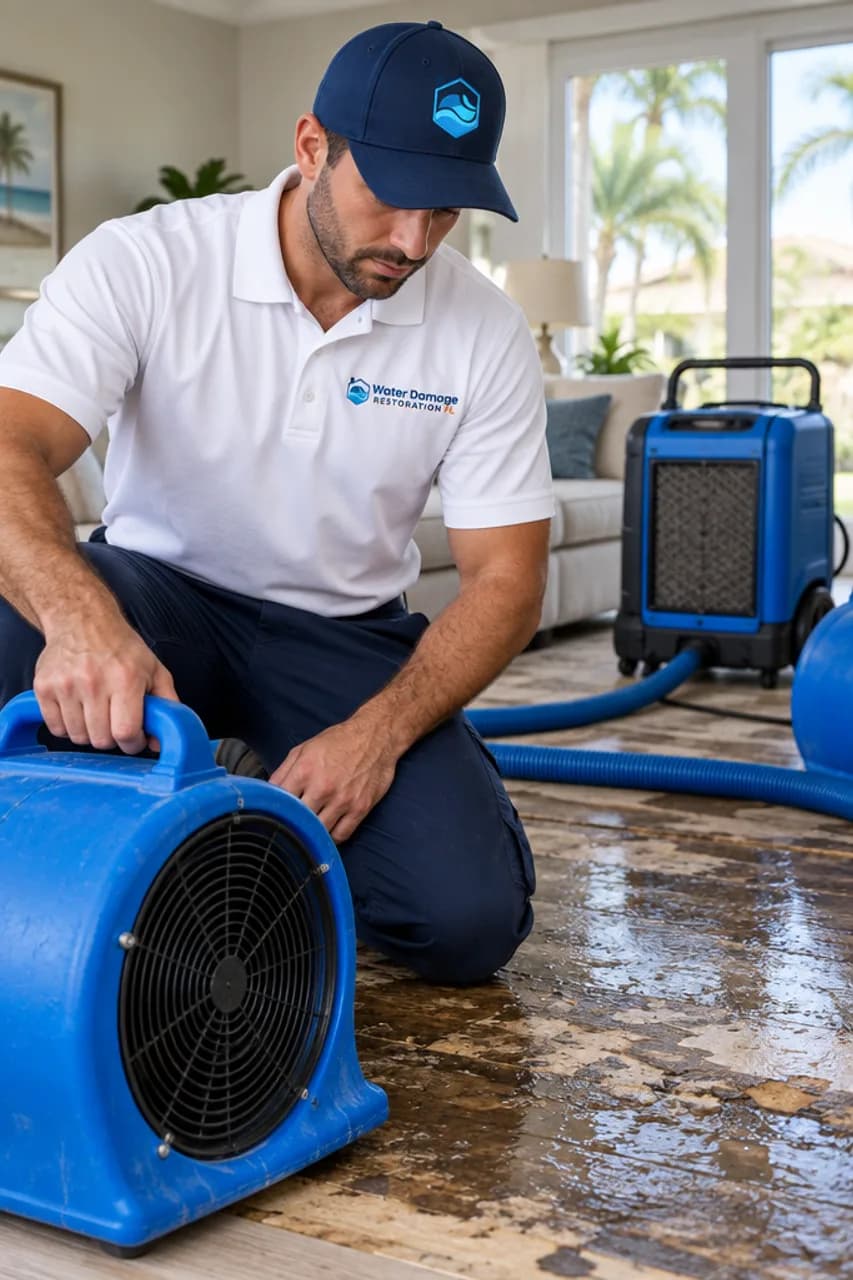
Florida's warm, humid air makes drying both more important and more demanding. High ambient humidity slows natural evaporation and gives mold a head start, which is why controlled dehumidification matters so much here. Simply opening windows can actually pull more moisture in on a humid day.
Proper property drying manages the environment inside the affected area, removing moisture faster than the outside air can replace it — and doing it before secondary damage sets in.
Drying your belongings, not just the structure
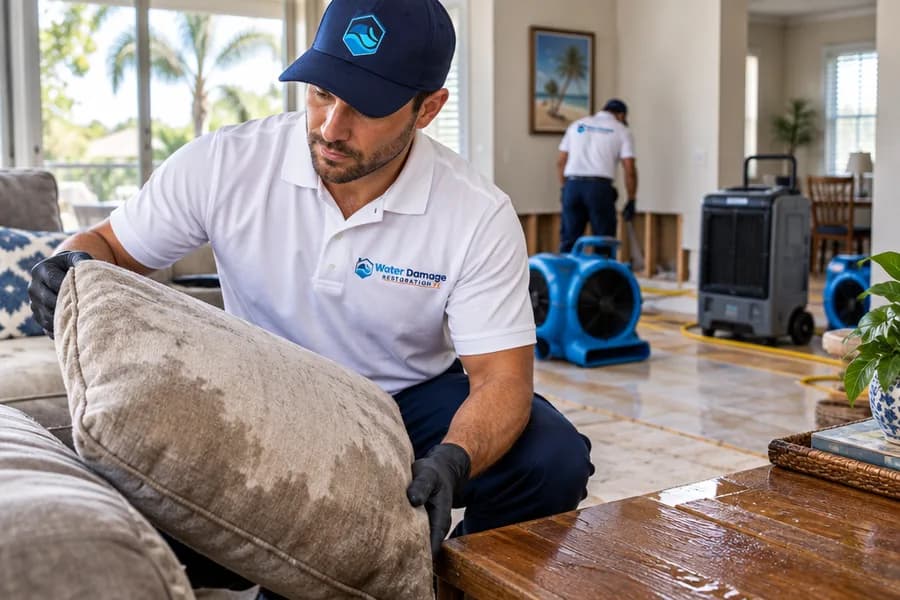
Water damage affects contents as well as the building. Where possible, our crews dry and salvage furniture, documents, and other belongings alongside the structure, and advise honestly on what can be saved versus what's beyond recovery. The aim is to restore as much of your property as safely possible.
More Water Damage Restoration services
View all Water Damage Restoration servicesRequest this service
Tell us what happened and we'll follow up to confirm next steps.
Frequently asked questions
Most residential drying takes three to five days, but it depends on how much water there was, which materials are wet, and the humidity. Rather than working to a fixed schedule, we dry until moisture readings hit their targets — some materials dry faster than others.
Household fans move some air but don't remove moisture from the air the way commercial dehumidifiers do, and they can't reach moisture trapped inside walls and subfloors. In humid conditions, fans alone often just relocate the moisture. Professional equipment dries the structure itself, which is what prevents mold and warping.
We take moisture readings with meters and sensors and compare them against unaffected areas of the same property. When the affected materials reach their drying target, the structure is considered dry — it's a measured result, not a guess.
Air movers and dehumidifiers do run continuously and make some noise, because stopping and restarting the process slows drying and increases the mold risk. We place equipment to be as unobtrusive as possible and explain how long it needs to run.
Fast, thorough drying is one of the most effective ways to prevent mold, because mold needs moisture to grow. Drying materials to their target within the first day or two removes those conditions. If mold has already started, remediation may be needed alongside drying.
Still have a question? Call us at (904) 555-0100