Black Water Cleanup in Florida
Black water cleanup is the handling of heavily contaminated Category 3 water with appropriate safety precautions. Our our crews contain, remove, and disinfect black water from sewage and flooding using protective equipment — because this is the most hazardous class of water damage.
Common sources of black water
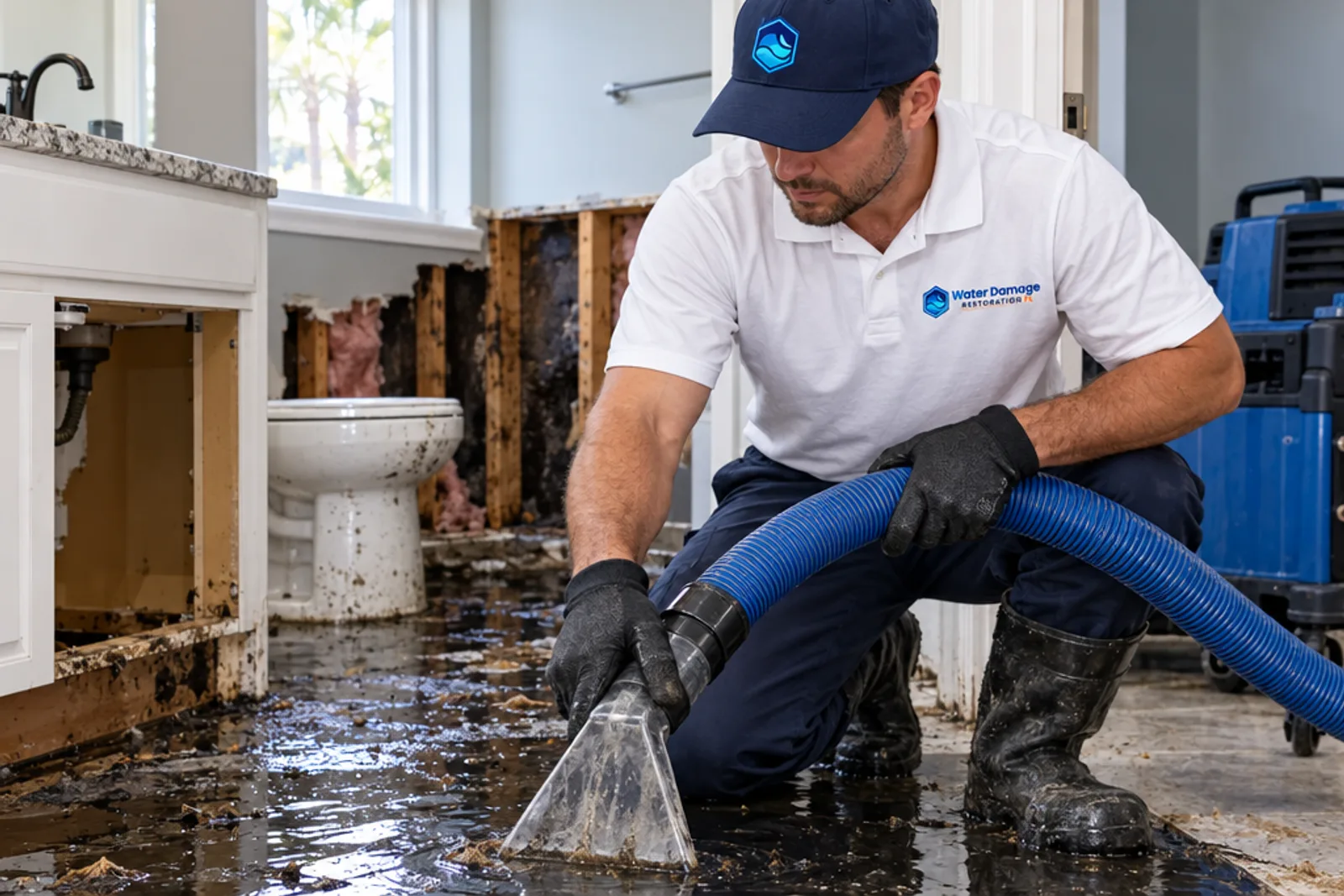
Black water isn't limited to sewage, though sewage is the most familiar source. It's defined by contamination level, not origin, so several situations produce it — and knowing them helps explain why the cleanup is handled the same cautious way each time.
- Sewage backups through drains, toilets, and floor drains.
- Toilet overflows that contain waste.
- Sewer main backups affecting multiple fixtures.
- Flood and storm water from outside, which carries ground contaminants.
- Water that started clean but sat long enough to become grossly contaminated.
What can and can't be salvaged
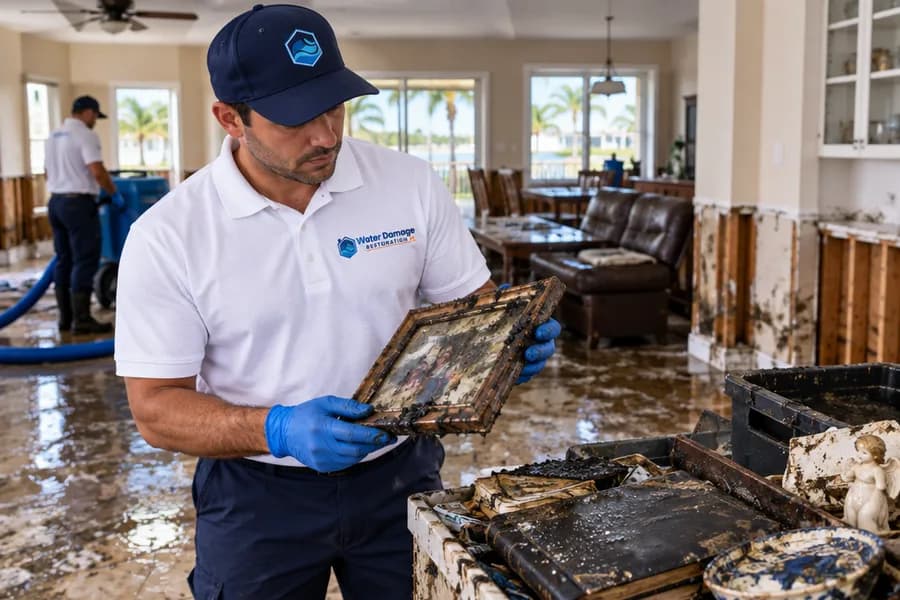
A hard part of any black water loss is accepting what has to go. The rule is straightforward once you understand why it exists: porous materials that absorb contaminated water can't be reliably disinfected, so they're removed.
- Usually removed — carpet and pad, insulation, the lower portion of drywall, particleboard, mattresses, and upholstered items the water soaked.
- Usually salvageable — sealed hard flooring, tile, metal, glass, and solid, non-porous items that can be cleaned and disinfected.
- Case by case — some semi-porous items and valuables, evaluated individually.
How the three water categories differ
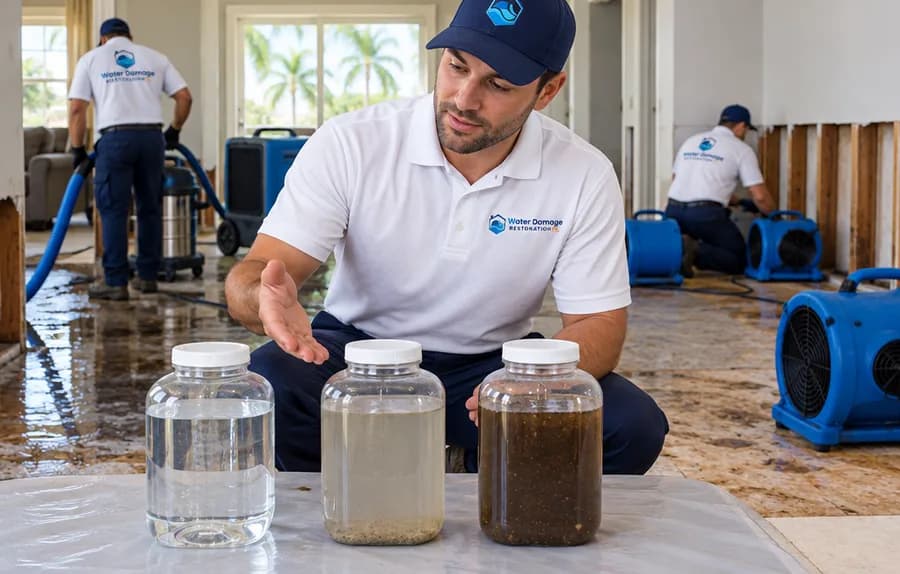
Understanding black water is easier alongside the two cleaner categories. The restoration industry grades water by how contaminated it is, and that grade decides how it's handled — from what protective steps are needed to what materials can be saved.
- Category 1 (clean water) comes from a sanitary source like a supply line and poses little risk when handled promptly.
- Category 2 (gray water) carries some contamination — appliance discharge or an overflow — and needs more caution.
- Category 3 (black water) is grossly contaminated with bacteria and often sewage; it's a health hazard requiring containment, protective equipment, and disposal of soaked porous materials.
What black water is
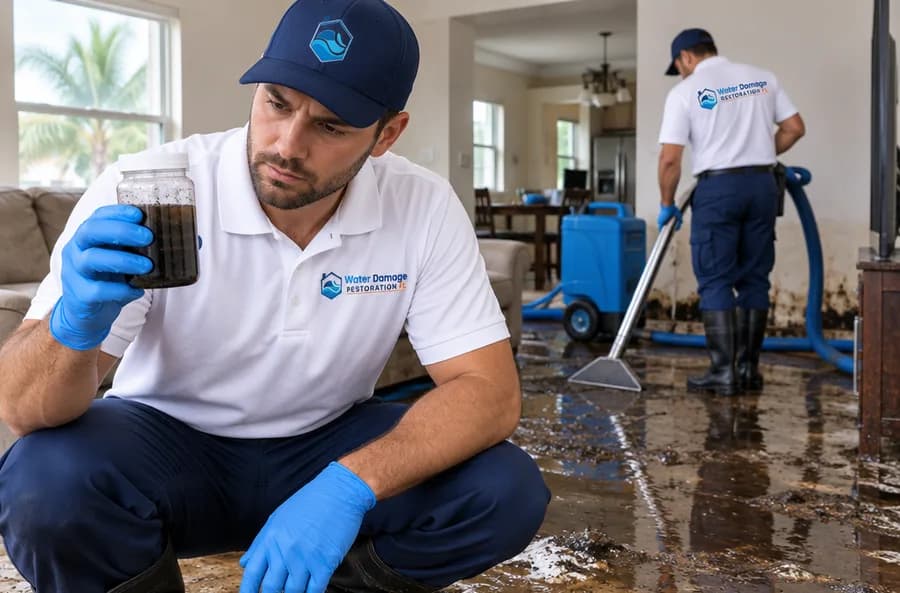
Black water is the industry term for Category 3 water — the most contaminated classification. It contains bacteria, viruses, chemicals, and often sewage, and it comes from sources like sewer backups, toilet overflows involving waste, and flood or storm water from outside.
Because contact with black water carries real health risks, it demands a different, more cautious approach than clean or gray water.
The safety-first cleanup process
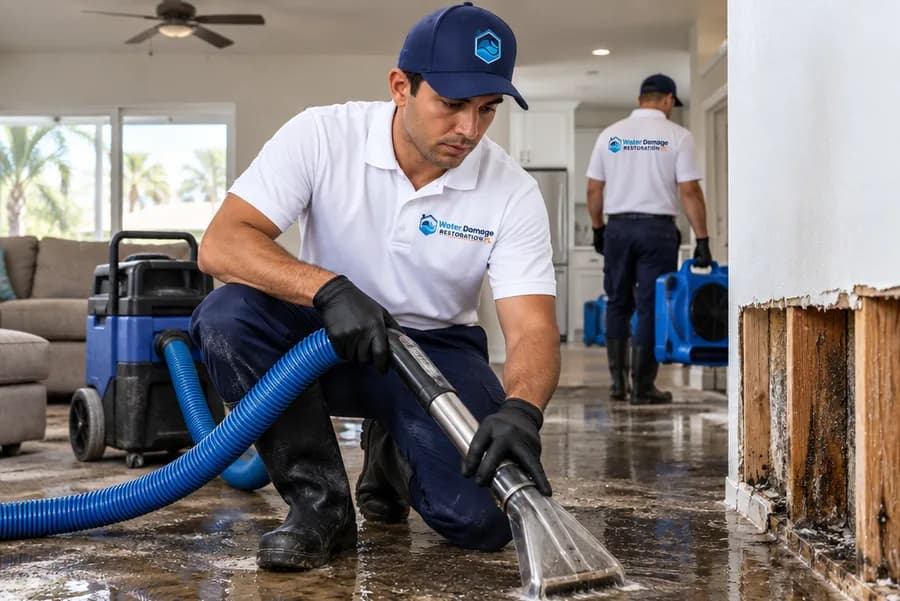
Black water cleanup is built around protecting health while decontaminating the space:
- Contain the affected area to prevent the contamination from spreading.
- Use protective equipment throughout the work.
- Remove the black water and any solids.
- Remove porous materials that absorbed the contamination.
- Disinfect hard surfaces, then dry and deodorize.
Why porous materials must be removed
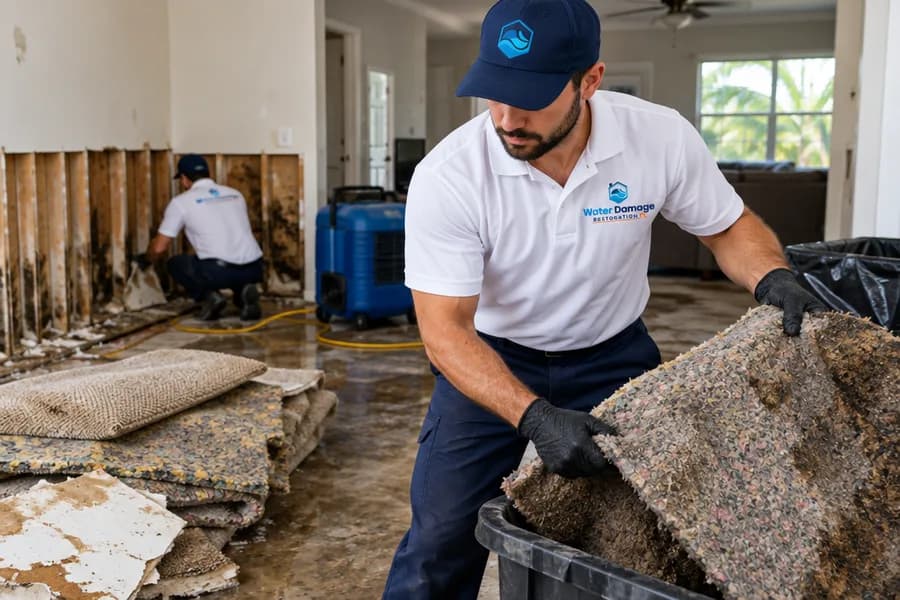
Materials that absorb water — carpet, pad, drywall, insulation, particleboard, many soft goods — soak up the contaminants in black water and can't be disinfected reliably all the way through. Trying to clean and keep them risks leaving pathogens and odor behind.
For that reason, contaminated porous materials are removed and disposed of, while hard, non-porous surfaces are cleaned and disinfected. We document everything before disposal for your insurance records.
Decontamination, drying, and verification
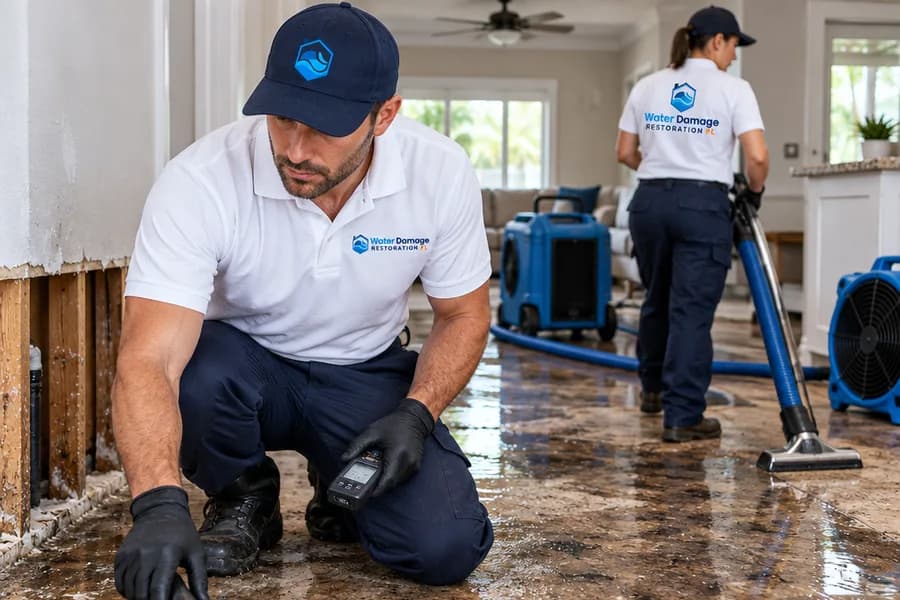
After removal, surfaces are cleaned and treated with antimicrobial products, the structure is dried with dehumidifiers and air movers, and the area is deodorized. Because black water is a health hazard, the standard is decontamination — making the space safe — not simply drying it out.
Thorough drying is also essential across Florida's humidity, where leftover moisture on top of contamination is a fast path to mold.
24/7 black water response across Florida
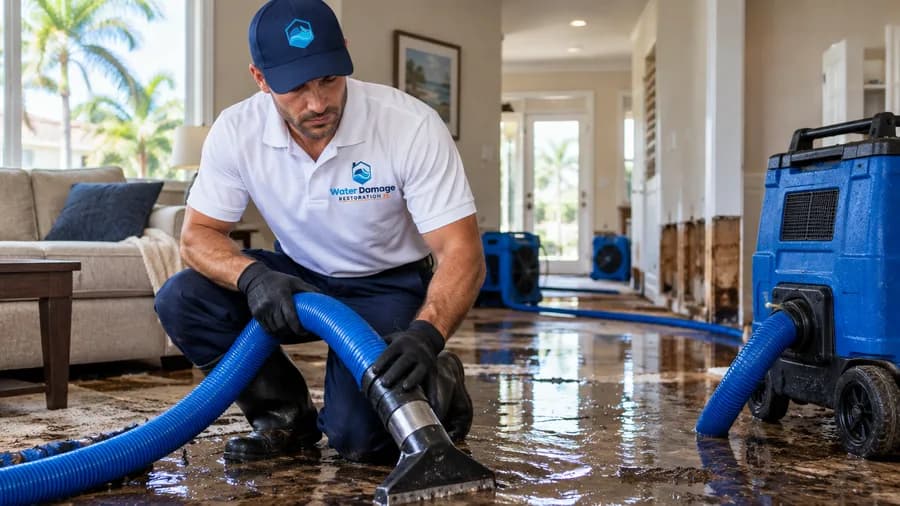
Black water situations are hazardous emergencies, so our crews respond around the clock across Florida. Fast containment and removal are what limit the spread and keep the cleanup as safe as possible.
Request this service
Tell us what happened and we'll follow up to confirm next steps.
Frequently asked questions
Black water cleanup adds containment, protective equipment, disinfection, and disposal of contaminated porous materials — because the water is a health hazard, not just a mess. Where a clean-water cleanup ends with drying, black water cleanup aims at decontamination: making the space genuinely safe again, which is a fundamentally more involved process.
Black water is Category 3 water — the most contaminated class — containing bacteria, viruses, chemicals, and often sewage. It comes from sewer backups, waste-related overflows, and flood or storm water, and it's a genuine health hazard.
It's strongly discouraged. Black water carries pathogens that can cause illness and requires containment, protective equipment, and disinfection to handle safely. Professional cleanup is the recommended approach.
Porous materials absorb the contaminants in black water and can't be disinfected reliably all the way through. Keeping them risks leaving pathogens and odor behind, so they're removed and disposed of instead.
It adds containment, protective equipment, disinfection, and disposal of contaminated porous materials. The goal is decontamination — making the space safe — rather than simply removing water and drying.
It depends on the source and your policy. Sewer backups often need a specific endorsement, and outside flooding usually requires flood insurance. Your insurer determines coverage; we document the loss thoroughly to support your claim.
Still have a question? Call us at (904) 555-0100