Mold Inspection in Florida
Mold inspection is the process of checking a property for visible mold and the conditions that support mold growth. Our our crews look for visible growth and, just as importantly, the moisture behind it using meters and thermal cameras — because finding the source is what makes remediation last.
Where we look during a mold inspection
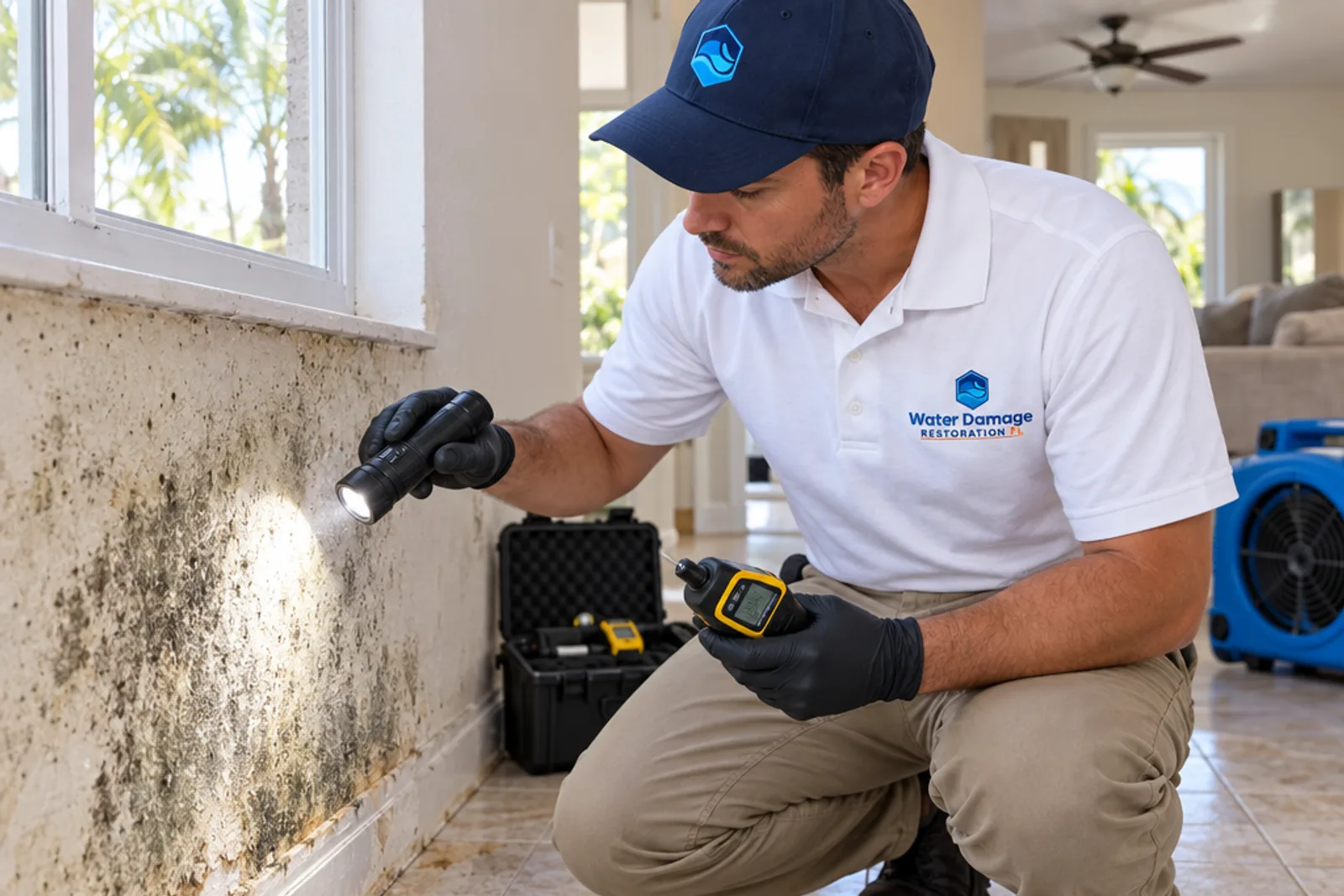
A thorough mold inspection is guided by where mold actually grows — in the damp, dark, still places that are easy to overlook. Knowing the usual trouble spots is part of finding a problem before it spreads.
- Bathrooms, laundry rooms, and under sinks, where moisture is constant.
- Around windows and exterior walls, where condensation collects.
- Behind and under appliances and cabinets.
- Attics and around HVAC systems, where condensation and poor airflow meet.
- Anywhere there's been past water damage that may not have been fully dried.
Inspection vs. testing: what's the difference?
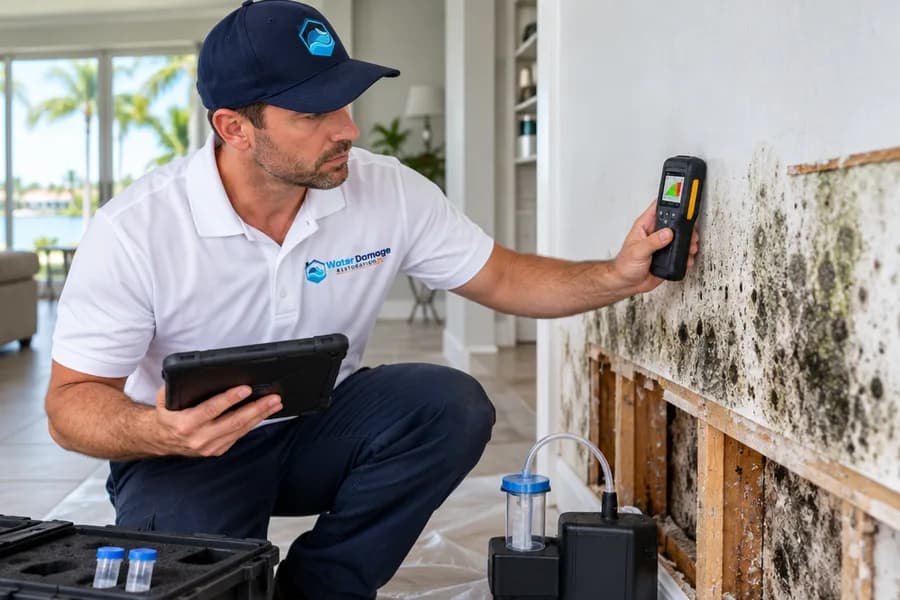
People often use 'inspection' and 'testing' interchangeably, but they answer different questions. An inspection is a hands-on assessment: looking for visible growth, following up on odors, and finding the moisture conditions that let mold grow. It tells you where the problem is and, just as importantly, why.
Testing — collecting air or surface samples for a lab — can put numbers to what's in the air, but it doesn't fix anything and isn't always necessary. When mold is visible or clearly linked to a known water problem, the practical priority is finding its extent and its moisture source, then addressing it.
Our focus is that practical assessment: identifying the growth and the dampness behind it so remediation can be planned. Where specialized testing is genuinely useful, we'll say so rather than adding steps that don't change the outcome.
What a mold inspection looks for
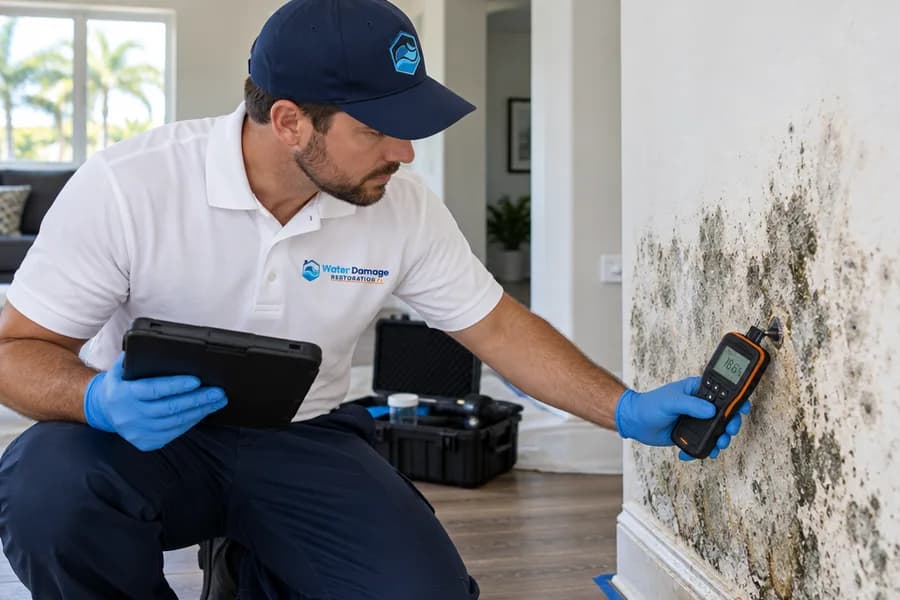
A good mold inspection looks at two things: the mold itself and the moisture feeding it. Visible growth is only part of the picture — mold often starts behind walls, under flooring, and in other hidden spots, and it always needs a moisture source. Finding that source is what separates a real inspection from a quick look.
We check common trouble areas, follow up on any musty odors, and use tools to detect the dampness that supports growth.
How we inspect for mold
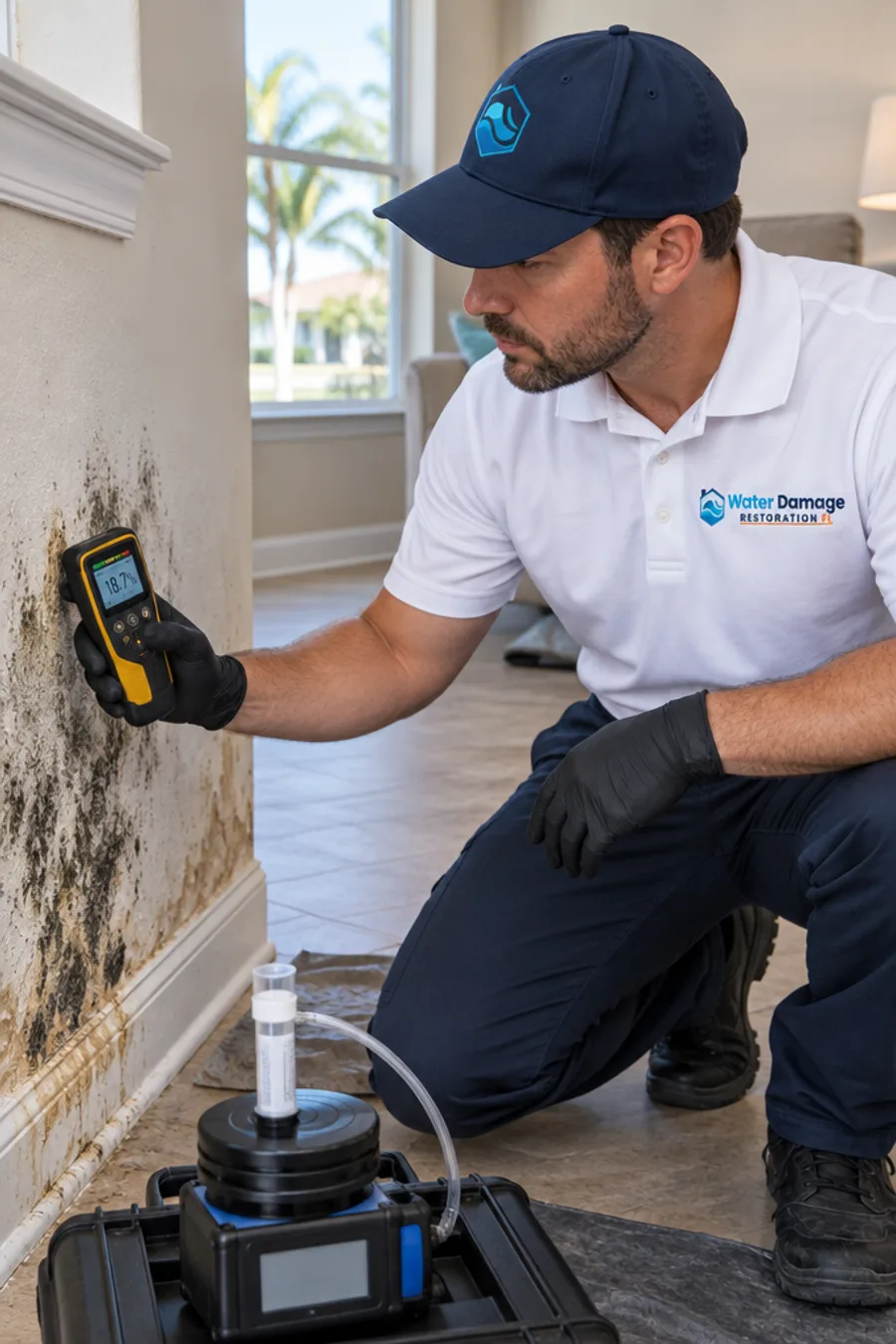
Our inspection combines visual assessment with moisture detection:
- Visual examination of walls, ceilings, grout, cabinets, and known problem areas.
- Moisture meters to find damp materials that support mold.
- Thermal cameras to reveal hidden moisture behind surfaces.
- Review of any past water damage or leak history.
- Checking humidity-prone areas like bathrooms, laundry rooms, and attics.
Why moisture is the real target
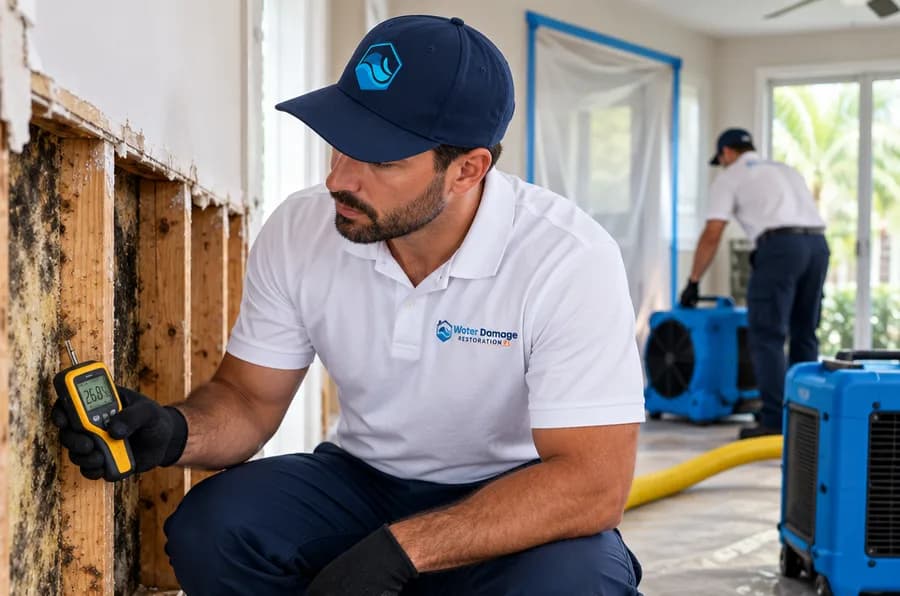
Mold spores are everywhere; they only become a problem when they find moisture. That's why an inspection focused only on visible mold misses the point — without identifying and fixing the moisture source, any removal is temporary.
By locating the dampness, we can tell you not just where mold is, but why it's there and what has to change to keep it from coming back.
When to get a mold inspection
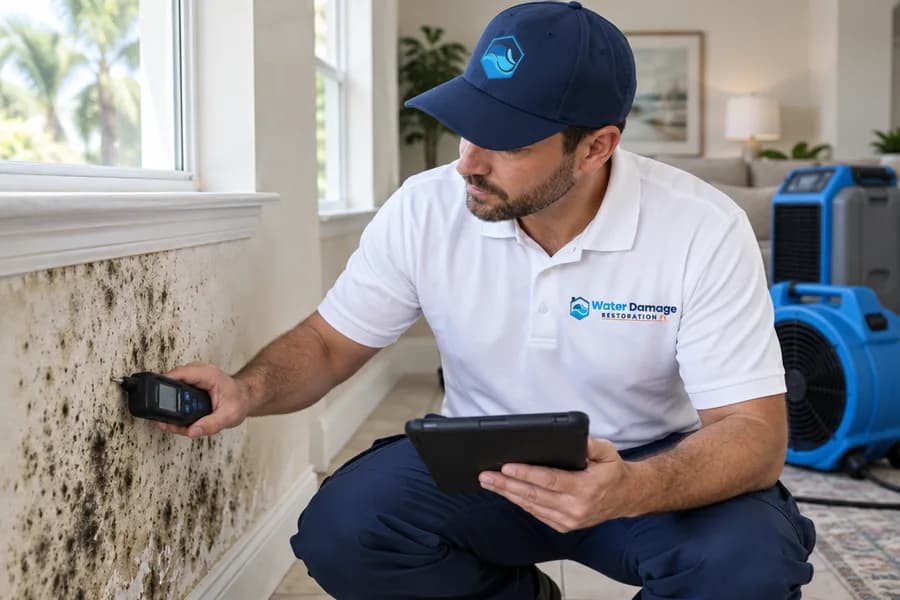
An inspection is worth doing any time you suspect mold or have conditions that invite it: a musty smell, visible discoloration, recent water damage that wasn't fully dried, or a property with a history of leaks or high humidity. In Florida's climate, humidity alone can be enough to support growth.
Catching a mold problem early — and the moisture behind it — is far easier and less costly than dealing with widespread growth later.
Mold inspection across Florida
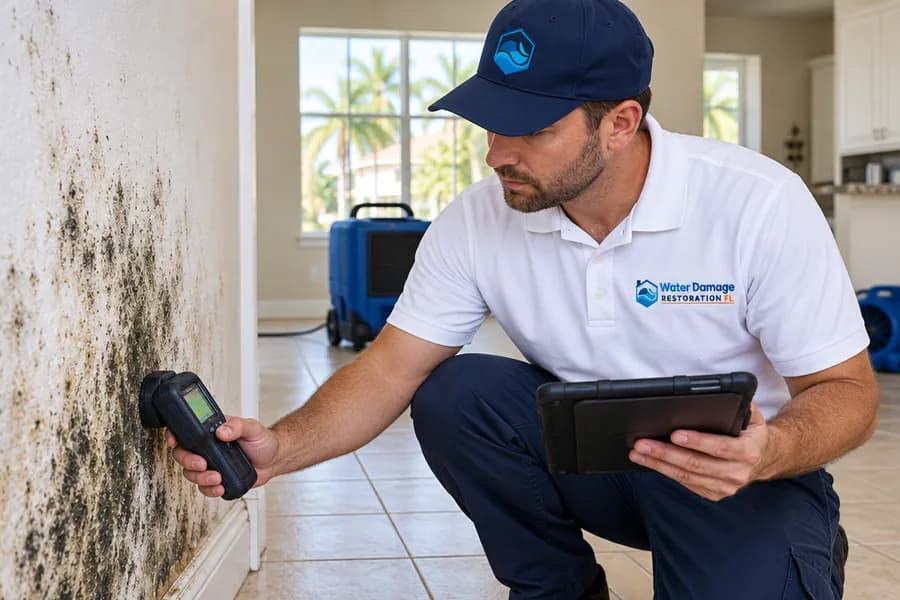
Our crews provide mold inspection for homes and businesses across Florida. If we find mold, we can move directly into a contained remediation plan that removes it and addresses the moisture source, so the problem is solved rather than postponed.
More Mold Remediation services
View all Mold Remediation servicesRequest this service
Tell us what happened and we'll follow up to confirm next steps.
Frequently asked questions
We visually examine problem areas, use moisture meters and thermal cameras to find dampness that supports mold, and review any water-damage history. The focus is on both visible mold and the moisture source behind it.
Any time you notice a musty smell, see discoloration, or have had water damage that wasn't fully dried. Properties with a history of leaks or high humidity are also worth checking, especially in Florida's climate.
We can detect the moisture conditions that support hidden mold using meters and thermal cameras, and identify likely areas. Confirming hidden growth may require accessing the area, which we handle carefully to avoid spreading spores.
Because mold needs moisture to grow. Finding and fixing the moisture source is what makes removal last — without it, mold returns. An inspection that ignores moisture only tells half the story.
We can move into a contained remediation plan that removes the mold safely, cleans salvageable surfaces, and addresses the moisture source. We'll explain what we found and the recommended next steps first.
Still have a question? Call us at (904) 555-0100