
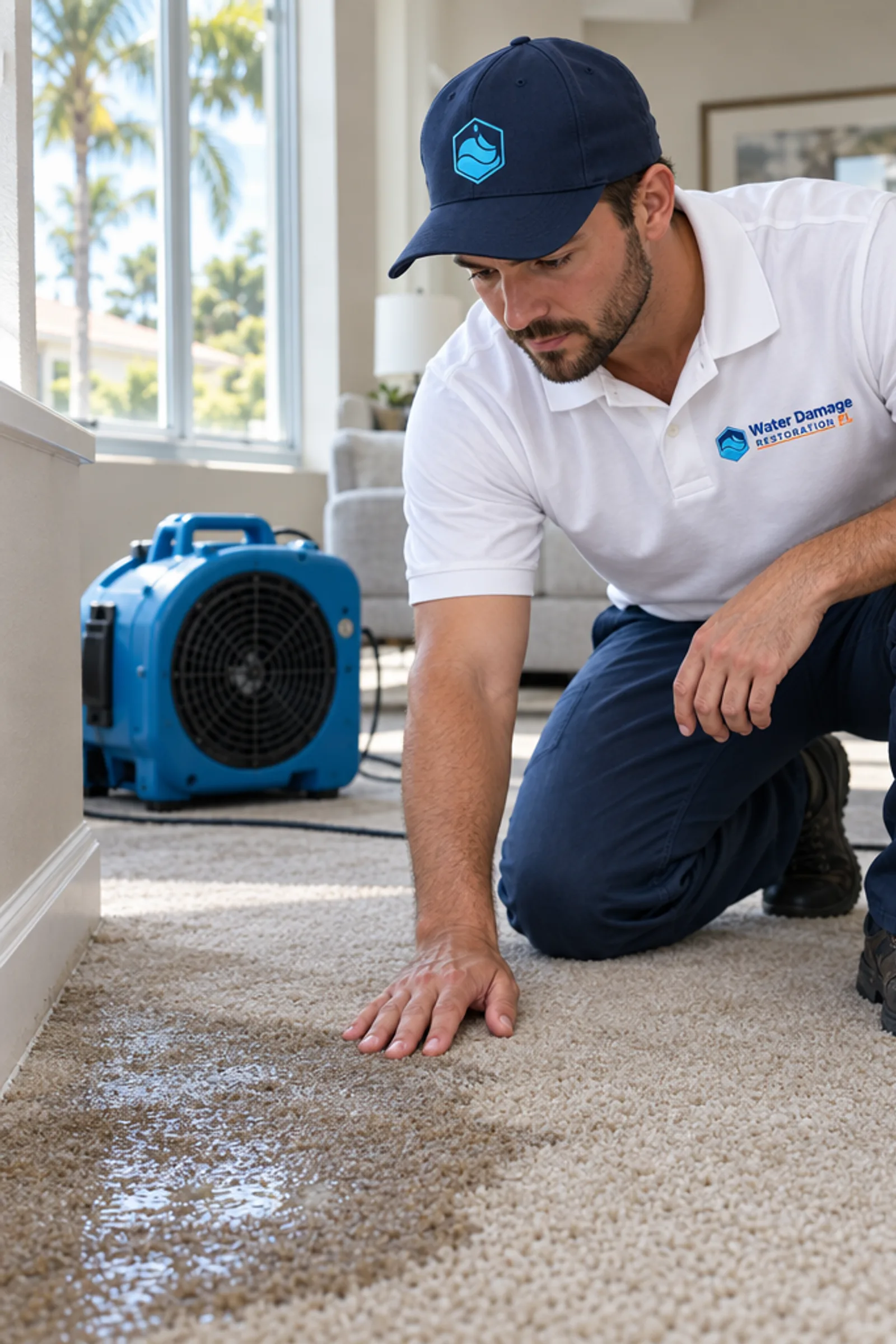
Wet carpet is a common casualty of leaks and floods, and the first question is usually whether it can be saved or has to be replaced. The honest answer is: it depends — mainly on two things, the type of water and how fast you act. Understanding those two factors tells you most of what you need to know, and it explains why speed matters so much.
Factor one: what kind of water?
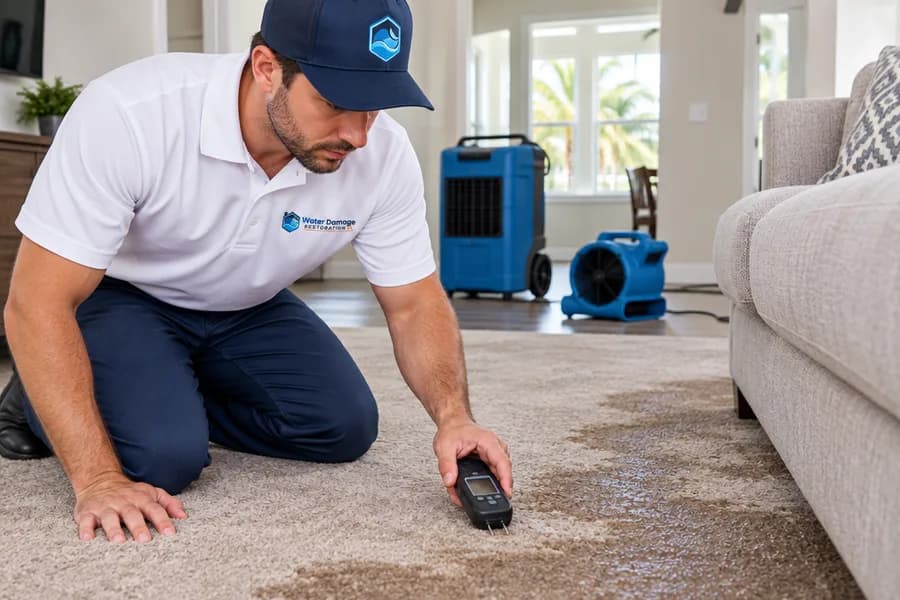
The category of water is the biggest factor. Carpet soaked by clean water — from a supply line or a clean overflow — can often be saved if it's dried quickly. Carpet soaked by gray water needs more caution, and carpet soaked by black water from sewage or flooding generally can't be saved safely and should be removed, because the contamination can't be sanitized reliably out of the fibers and backing.
So the same wet carpet might be salvageable or a total loss depending entirely on where the water came from.
Factor two: how fast did you act?
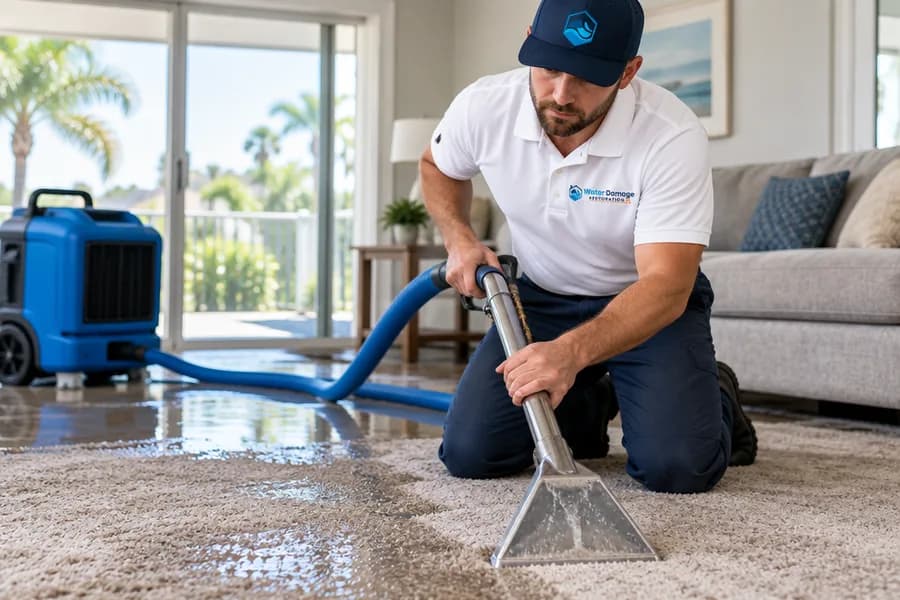
Time is the other deciding factor. Carpet and its pad hold a lot of water and stay wet long after the surface feels damp. The longer they stay saturated, the higher the chance of mold, odor, and delamination — and in Florida's humidity, that window is short. Mold can begin within 24 to 48 hours. Carpet dried within that window has a much better chance than carpet left wet for days.
The pad almost always has to go
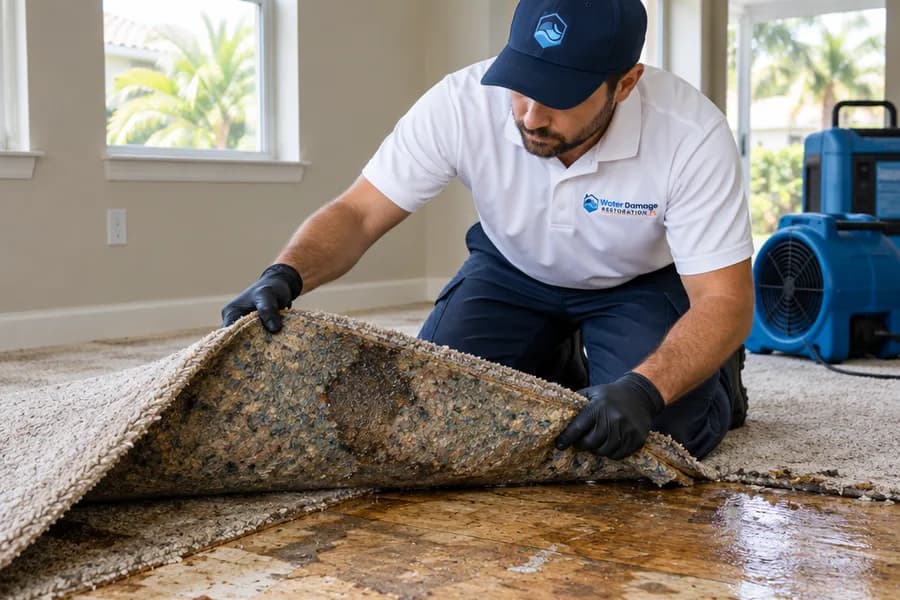
Even when the carpet itself can be saved, the pad underneath usually can't. The pad is designed to be absorbent, so it soaks up and holds a large amount of water and dries very slowly — far slower than the carpet. Trying to dry a saturated pad in place tends to trap moisture against the subfloor, which is exactly where odor and mold take hold. Replacing the pad is usually faster and more reliable, and it lets the subfloor dry directly.
Don't forget the subfloor
The carpet is only the top layer. Water passes through it and the pad into the subfloor, which can stay wet even when the carpet feels dry. A carpet that seems fine on top can be sitting on a wet subfloor — which causes warping and mold if it's missed. Proper wet carpet drying checks the subfloor with moisture meters and dries it directly where needed.
What to do with wet carpet, in order
- Act fast — the sooner drying starts, the better the odds of saving it.
- Figure out the water source; if it's contaminated, don't try to save the carpet.
- Extract as much water as possible — a wet vacuum for small areas, professional extractors for more.
- Get airflow across it and a dehumidifier running to pull moisture from the air.
- Check (or have someone check) the pad and subfloor for hidden moisture.
- If it doesn't dry quickly or a musty smell develops, it may be beyond saving.
When to call for help
For a small clean-water spill you catch immediately, you may be able to handle it. For anything larger, contaminated, or where the carpet stays wet, professional water extraction gives the carpet its best chance — pulling water deep from the fibers and backing, drying the subfloor, and verifying with moisture readings. The alternative, incomplete drying, is the leading cause of the musty smell and mold that make carpet a total loss after all.
A realistic timeline for saving carpet
Timing is so central to saving carpet that it's worth spelling out. Within the first few hours, extraction and drying have the best chance of saving clean-water carpet. Within 24 to 48 hours, the odds are still reasonable if drying is underway, though the pad likely needs replacing. Past 48 hours — especially in Florida's humidity — mold risk climbs sharply and the carpet often can't be saved. With contaminated water, the window essentially doesn't exist: black-water carpet is a loss from the start. The lesson is simple — the clock is the deciding factor, so act immediately.
Signs your carpet is beyond saving
Sometimes replacement is the honest answer. Signs a carpet can't be saved include:
- It was soaked by contaminated gray or black water.
- It stayed wet for more than a couple of days.
- A musty smell has set in and won't clear with drying.
- The carpet is delaminating — the backing separating from the fibers.
- Visible mold has appeared on or under it.
What replacing water-damaged carpet involves
When carpet is a loss, replacement is more than swapping the top layer. The old carpet and pad are removed and disposed of, and — importantly — the subfloor underneath is checked and dried before anything new goes down, since water almost always reaches it. Installing fresh carpet over a damp subfloor simply repeats the problem, trapping moisture and inviting mold beneath the new floor. Done right, replacement starts with a verified-dry subfloor, so the new carpet lasts.
How professionals dry salvageable carpet
When carpet is worth saving, the drying process is more involved than running a fan over it:
- Extract water deeply from the carpet and backing with powerful equipment.
- Lift or float the carpet where needed so air can reach beneath it.
- Replace the saturated pad, which holds too much water to dry reliably.
- Run air movers across the surface and dehumidifiers to remove airborne moisture.
- Check the subfloor and dry it directly if water reached it.
- Verify with moisture readings before declaring it dry.
Why the pad and subfloor matter so much
The carpet you see is only the top of a three-layer system, and the layers below decide the outcome. The pad is highly absorbent and dries slowly, so it's usually replaced rather than saved. The subfloor beneath can soak up water and stay wet even when the carpet feels dry — and drying new or salvaged carpet over a wet subfloor simply traps moisture and invites mold from below. This is why proper wet-carpet work always addresses all three layers, not just the visible surface.
Why contaminated water changes everything
The single biggest factor in whether carpet can be saved is the water's category. Clean water gives the best odds. But carpet soaked by gray or, especially, black water from sewage or flooding generally can't be saved safely — the contamination works into the fibers and backing where it can't be reliably sanitized. In those cases, trying to clean and keep the carpet risks leaving a health hazard in your home, so removal and replacement is the responsible choice, no matter how new the carpet was.