
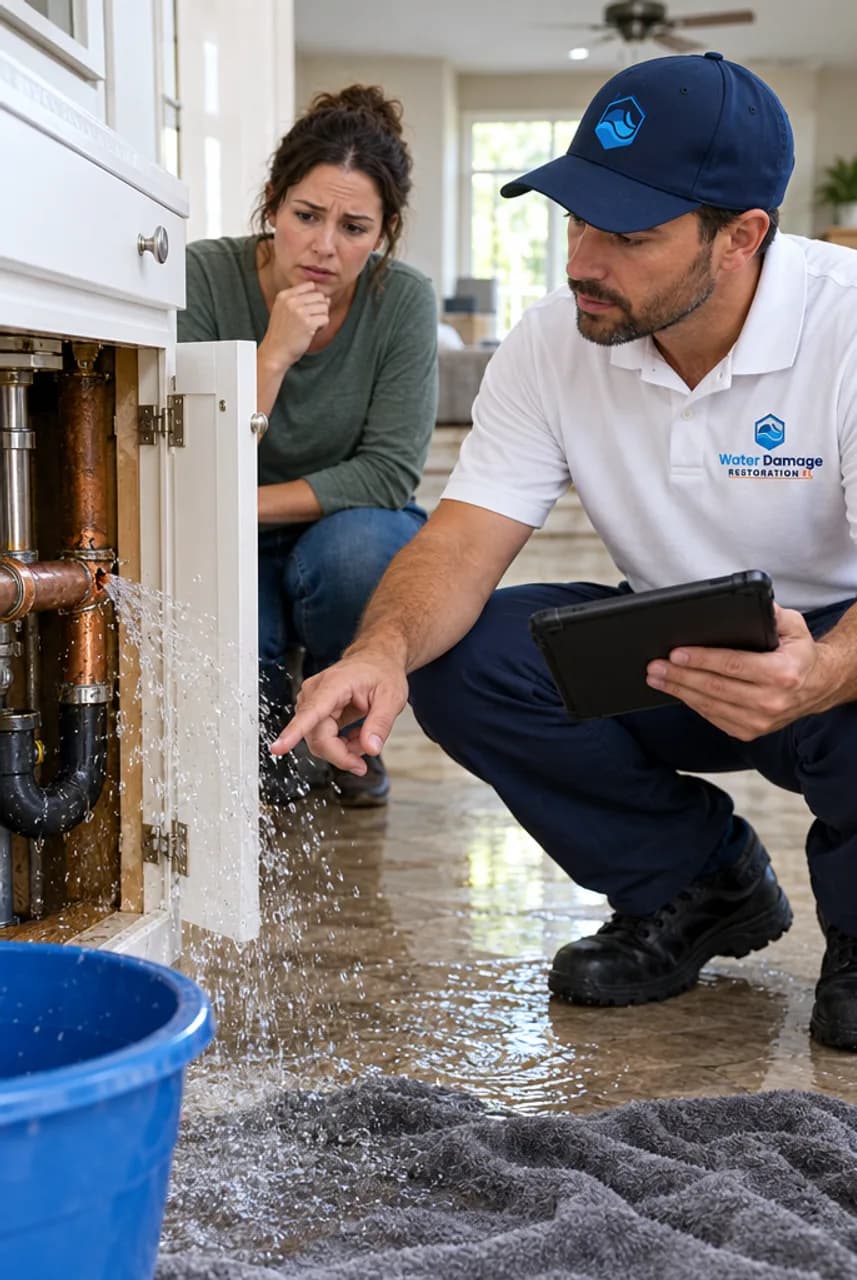
A burst pipe is one of the fastest-moving water emergencies there is. Water comes out under pressure and keeps coming until it's shut off, and because pipes run inside walls and floors, it spreads through the structure quickly. What you do in the first few minutes genuinely affects how much damage there is — so it helps to know the steps in advance, before you're standing in water trying to think clearly.
Step 1: Shut off the water
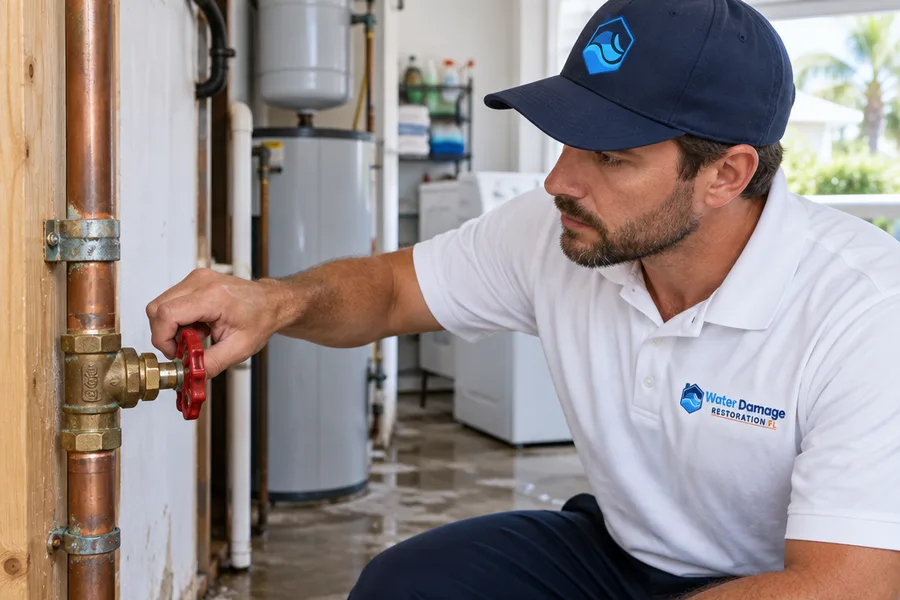
The single most important thing is to stop the flow. Find your home's main water shut-off valve and turn it off — this stops water to the whole house and is the fastest way to end an active burst. It's worth knowing where that valve is now, before an emergency, because hunting for it while water pours in costs precious minutes. For a localized fixture, a local shut-off may be enough, but the main is the sure bet.
Step 2: Cut the power if needed
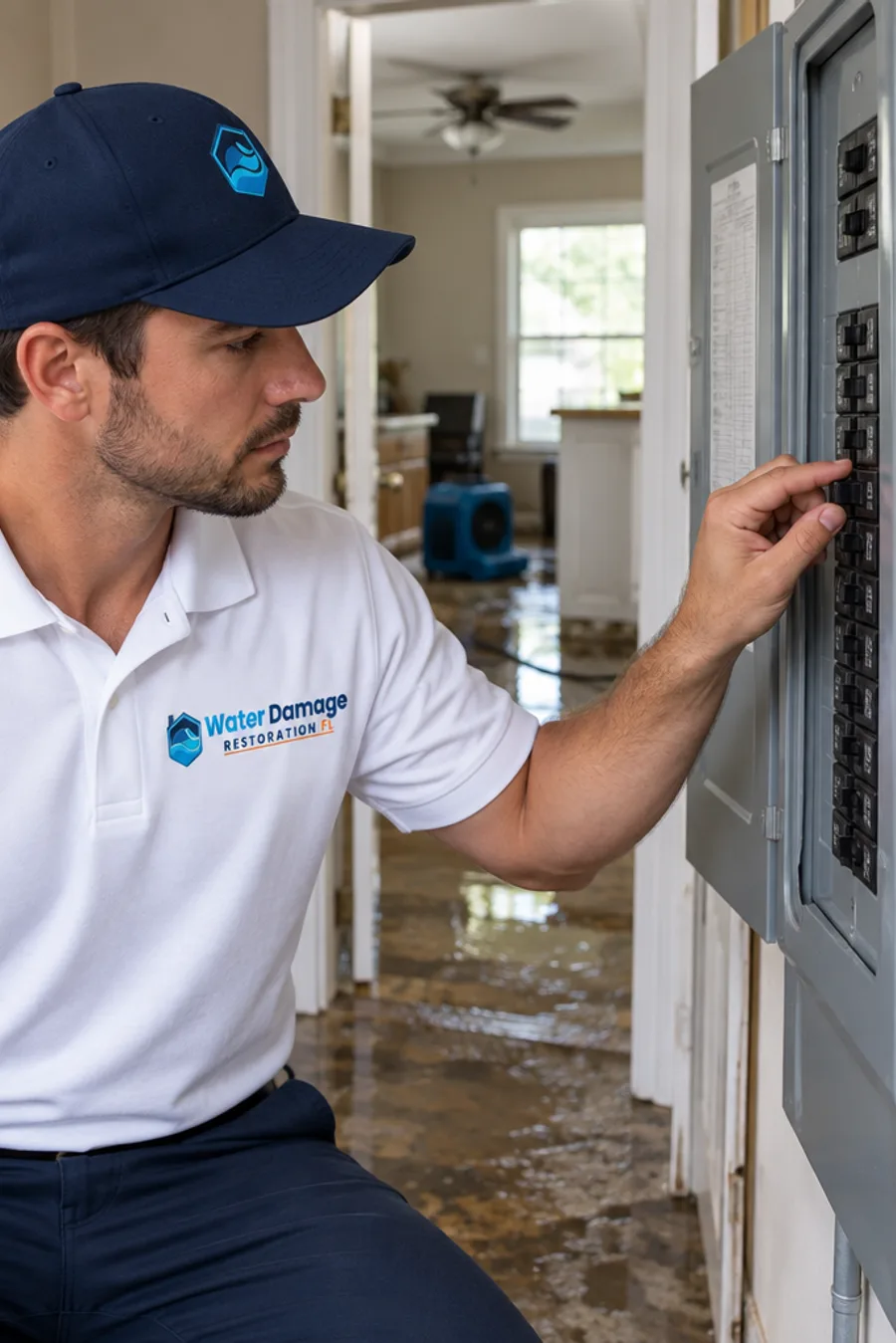
Water and electricity are dangerous together. If water is near outlets, appliances, or the electrical panel, turn off power to the affected area at the breaker — but only if you can reach the panel without standing in water. If you can't reach it safely, stay clear and call an electrician or wait for professionals.
Step 3: Move what you can
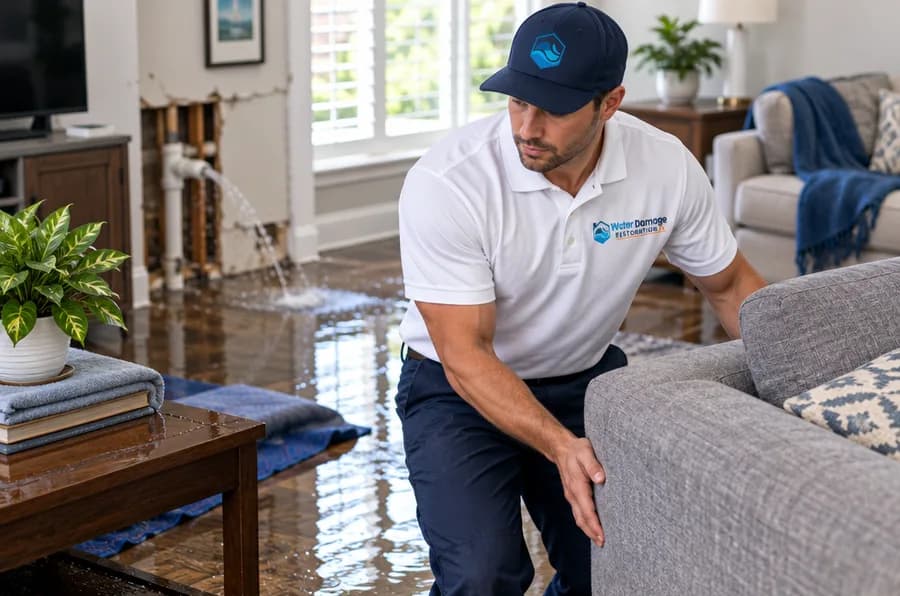
Once the water is off and the area is safe, limit the damage to your belongings:
- Move furniture, electronics, and valuables out of the water.
- Lift curtains and fabric off the floor.
- Get anything of sentimental or high value to a dry area first.
- Put foil or wood blocks under furniture legs that can't be moved.
Step 4: Document the damage
Before cleanup, take photos and video of the burst, the water, and the damaged items. Burst pipes are often covered by homeowners insurance as sudden, accidental events, and good documentation supports your claim. Our guide on whether insurance covers water damage explains what tends to be covered.
Step 5: Start removing water — carefully
If it's clean water and a manageable amount, you can start mopping and using towels or a wet vacuum. But don't overestimate what household tools can do — a burst pipe can release a large volume fast, and much of the water soaks into walls and subfloors where you can't reach it. This is where professional help makes the biggest difference.
Step 6: Call for professional help
A burst pipe is a true emergency, and the faster a crew is on site, the more of your property can be saved. Professional burst pipe water damage restoration extracts the water, finds and dries the moisture that traveled inside walls and floors, and repairs the damage. Because burst pipes are usually inside the structure, much of the water is hidden — and drying only the visible area leaves the rest to cause rot and mold.
Our team responds around the clock for emergency water damage across Florida, because a burst pipe won't wait for morning and neither should the response.
Why speed matters
Everything about a burst pipe rewards fast action. The sooner the water is off and extraction begins, the less it spreads, the more you can save, and the lower the mold risk — mold can begin within 24 to 48 hours, faster in Florida's humidity. A calm, quick response in those first minutes and hours is the best thing you can do.
How to find your main shut-off valve now
The single best preparation you can do before a burst ever happens is to locate your main water shut-off valve — because fumbling for it mid-emergency wastes the minutes that matter most. It's usually where the water line enters the home: check a basement, garage, or utility area, near the water heater, or outside near the meter. Turn it a quarter or full turn to confirm it works, and make sure everyone in the household knows where it is. Thirty seconds of preparation today can save gallons of damage later.
What not to do during a burst pipe
In the rush, a few instincts can make things worse:
- Don't touch electrical outlets or switches in a flooded area — cut power safely first.
- Don't wade through deep standing water near electrical sources.
- Don't ignore water that disappeared into walls or floors; hidden water still causes damage.
- Don't assume mopping up the visible water is enough for anything beyond a minor amount.
- Don't delay the call — the longer you wait, the more it spreads.
Preventing burst pipes in the first place
While some bursts are unavoidable, a few habits reduce the odds: insulate exposed pipes before the occasional Florida cold snap, address low water pressure or frequent hammering, replace aging supply lines and worn fittings, and don't ignore small leaks, which often precede a bigger failure. Knowing your home's plumbing age and keeping an eye on the water bill for unexplained jumps can also flag a problem before it becomes a burst.
What causes pipes to burst
Understanding why pipes fail helps you spot risk before it becomes an emergency. The common causes include:
- Corrosion and age — older pipes weaken until a spot gives way.
- Excess pressure — a surge or a clog that traps pressure can rupture a line.
- Freezing — even a rare Florida cold snap can freeze water in an exposed pipe, and expansion cracks it.
- Physical damage — an accidental hit during other work.
- Poor installation or failing joints and fittings.
The damage a burst pipe does behind the scenes
What makes a burst pipe so serious is how much of the damage is hidden. Because pipes run inside walls, ceilings, and floors, the water spreads through the structure before it ever pools where you can see it. It soaks insulation, wicks up drywall, saturates subfloor, and can travel to the level below — all out of sight. A burst that runs for hours while you're away can release hundreds of gallons into places that look fine on the surface. This is why proper restoration doesn't stop at the visible water; it finds and dries the moisture that traveled inside the structure.
After the emergency: what restoration involves
Once the immediate crisis is handled, restoring a burst-pipe loss follows a clear path: extracting the water, locating hidden moisture with meters and thermal cameras, removing materials too saturated to save, drying the structure (including the wall cavity where the pipe ran) to measured targets, and finally repairing the drywall, insulation, and finishes. Handled as one continuous process, it takes the property from an active emergency back to its pre-loss condition — with the confidence that the water hidden inside the walls was found and dried, not left behind.