
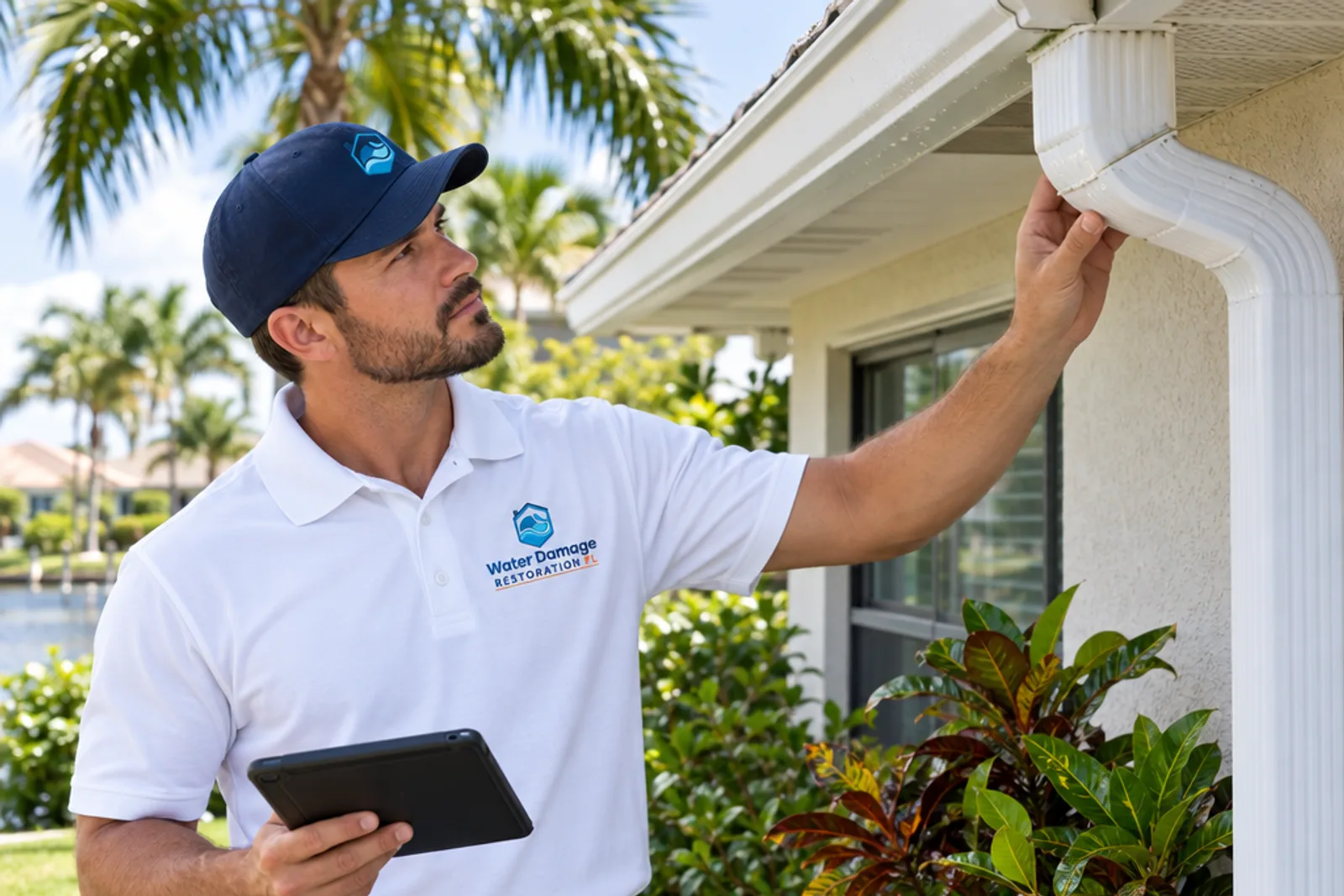
Water damage is one of the most common — and most preventable — problems homeowners face, and in Florida the risk runs a little higher. Heavy rain, storm season, constant humidity, and year-round air-conditioning all add moisture pressure that homes in drier climates don't face. The good news is that a handful of habits and checks prevent the majority of water losses. Here's a practical, Florida-focused prevention guide.
Keep an eye on your plumbing
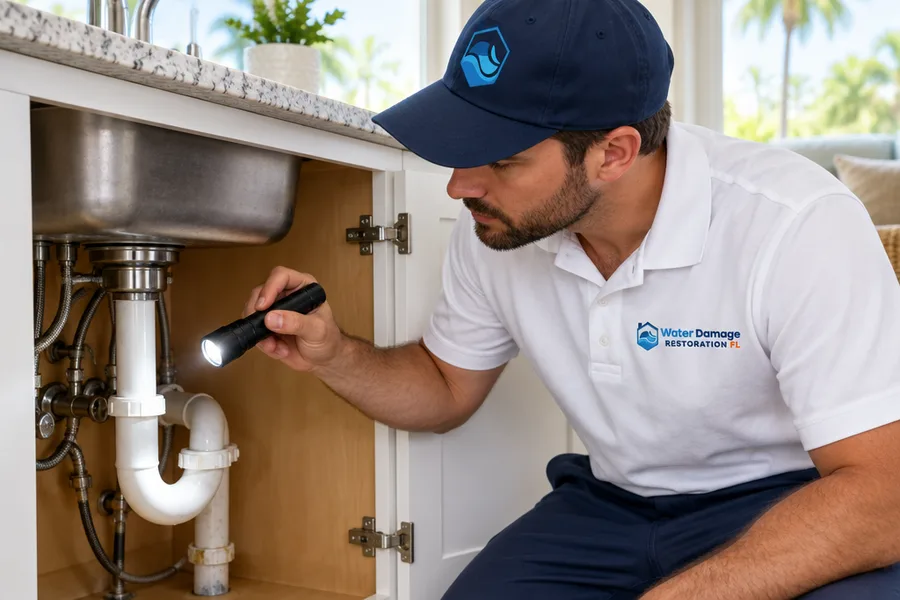
Plumbing is behind a large share of water damage, and much of it is preventable with attention:
- Check under sinks and around toilets periodically for dampness, corrosion, or slow drips.
- Replace rubber washing-machine supply hoses with braided stainless steel, and swap them every few years.
- Watch your water bill — an unexplained jump often signals a hidden leak.
- Know where your main shut-off valve is so you can act fast in an emergency.
Catching a small leak early prevents the hidden, spreading damage that a slow leak causes over time — the kind we cover in our post on signs of hidden water damage.
Maintain your appliances and water heater
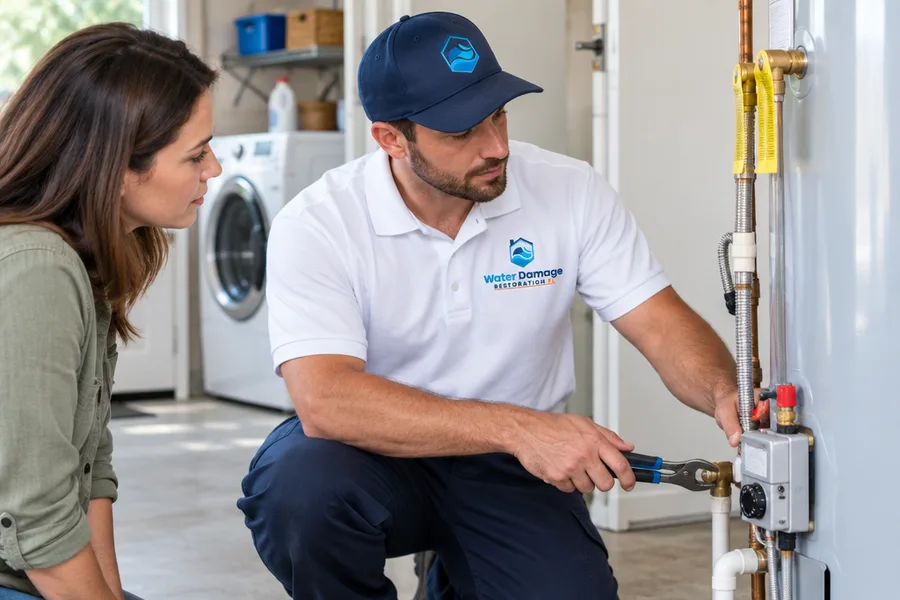
Appliances connected to water lines are a frequent source of leaks. Check dishwashers, refrigerators with ice makers, and washing machines for signs of moisture. Water heaters deserve special attention — most last 8 to 12 years, and rust stains, dampness at the base, or rumbling sounds are warning signs of a failure that can flood a room.
Manage Florida's humidity
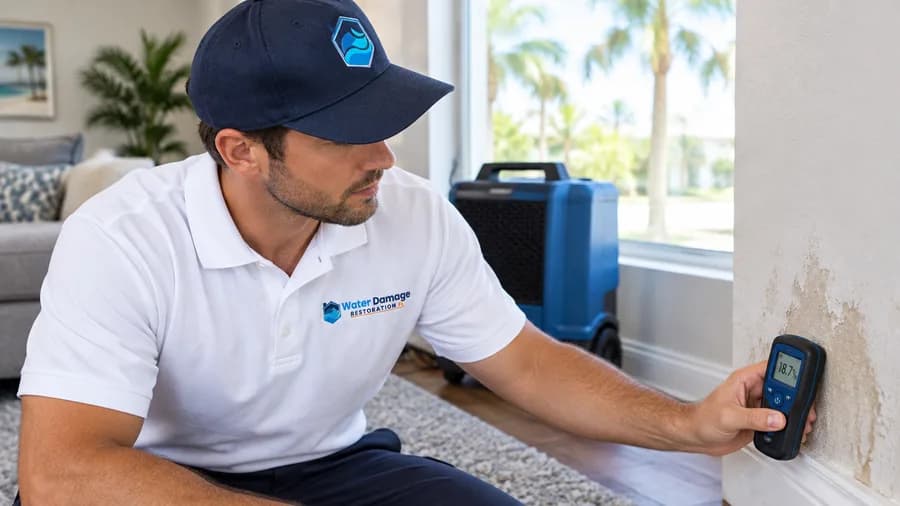
Humidity is a constant here, and it does slow, quiet damage. Keep indoor humidity in check with well-maintained air conditioning and, where needed, dehumidifiers. Make sure your AC's condensate drain line stays clear — a clogged condensate line is a surprisingly common cause of water damage in Florida homes. Good ventilation in bathrooms, kitchens, and laundry rooms also helps keep moisture from building up.
Protect against roof and storm water
Florida's storms test every roof, and roof leaks often go unnoticed until water shows up on a ceiling. Before storm season:
- Have the roof inspected and address loose shingles or failing flashing.
- Keep gutters and downspouts clear so water drains away from the house.
- Check that the ground slopes away from the foundation.
- Test your sump pump if you have one, before you need it.
- Trim tree branches that could damage the roof in high winds.
Watch the vulnerable spots
Some areas deserve extra attention because they hide moisture: crawl spaces, closets against exterior walls, behind and under appliances, and around window seals. A quick periodic look at these low-traffic spots catches problems while they're small.
Have a plan for when it happens anyway
Even with good prevention, water damage sometimes happens — a pipe fails, a storm overwhelms a roof. The other half of prevention is knowing how to respond fast, because speed limits the damage. Keep the number of a restoration company that offers 24/7 emergency water damage service on hand, and know your shut-off valve. Acting within the first hours is what keeps a small problem from becoming a big one.
A seasonal prevention schedule
Spreading a few checks across the year keeps prevention manageable rather than overwhelming:
- Monthly — glance under sinks and behind appliances for dampness; check the AC condensate line is draining.
- Quarterly — test the sump pump, and scan ceilings and exterior walls for new stains.
- Before storm season — inspect the roof, clear gutters, and check that the ground slopes away from the foundation.
- Annually — have the water heater and plumbing looked over, and replace aging supply hoses.
Leak-detection devices worth considering
Technology can catch what routine checks miss. Inexpensive water sensors placed under sinks, behind the washer, and near the water heater sound an alarm at the first sign of moisture. More advanced smart shut-off systems monitor flow and can automatically cut the water when they detect a burst or an abnormal pattern — valuable if you travel or own a second property. None of these replace good habits, but they add a safety net exactly where hidden leaks tend to start.
The one habit that prevents the most damage
If you do only one thing, make it this: never ignore a small sign. A minor stain, a faint musty smell, a slightly higher water bill, a small puddle near an appliance — these are the early warnings of problems that are cheap to fix now and expensive to fix later. The homeowners who avoid major water damage aren't necessarily the most diligent inspectors; they're the ones who act on the little clues instead of waiting to see if they get worse.
The most common sources of home water damage
Knowing where water damage usually comes from tells you where to focus your prevention efforts:
- Plumbing supply lines and fittings — slow leaks and sudden bursts.
- Water heaters — a leading source of major indoor flooding as they age.
- Appliance connections — washing machines, dishwashers, and ice makers.
- Roof leaks — especially after storms and high winds.
- AC condensate lines — a frequent Florida culprit when they clog.
- Poor drainage and foundation seepage during heavy rain.
- Sewer and drain backups.
Special considerations for Florida homes
Florida adds moisture pressures that homes elsewhere don't face, so prevention here has a local flavor. Year-round humidity means indoor moisture control and clear AC condensate lines matter more. Intense storm and hurricane season puts roofs, windows, and drainage to the test. Low-lying, coastal geography raises flood risk in many areas, making separate flood insurance worth understanding. And the heat and humidity mean that when water damage does happen, mold gets a faster start — so the margin for a slow response is thinner. Prevention and quick action both carry extra weight in this climate.
What to do the moment you spot a problem
Prevention and response blend together at the first sign of trouble. If you notice a leak, a stain, a musty smell, or a spike in your water bill, act rather than wait: locate and stop the water source if you can, check for the extent of any dampness, and address it — or get it assessed — promptly. The homeowners who avoid major losses aren't necessarily luckier; they simply treat small signs as the early warnings they are, catching problems while they're still small and cheap to fix.