After a water loss, one of the most common questions is simply: how long until this is dry? It's an understandable thing to want to know, because drying is the stage that holds everything else up — repairs can't start until the structure is dry. The short answer is usually three to five days, but the real answer is 'until the readings say so,' and it's worth understanding why.
The typical timeline
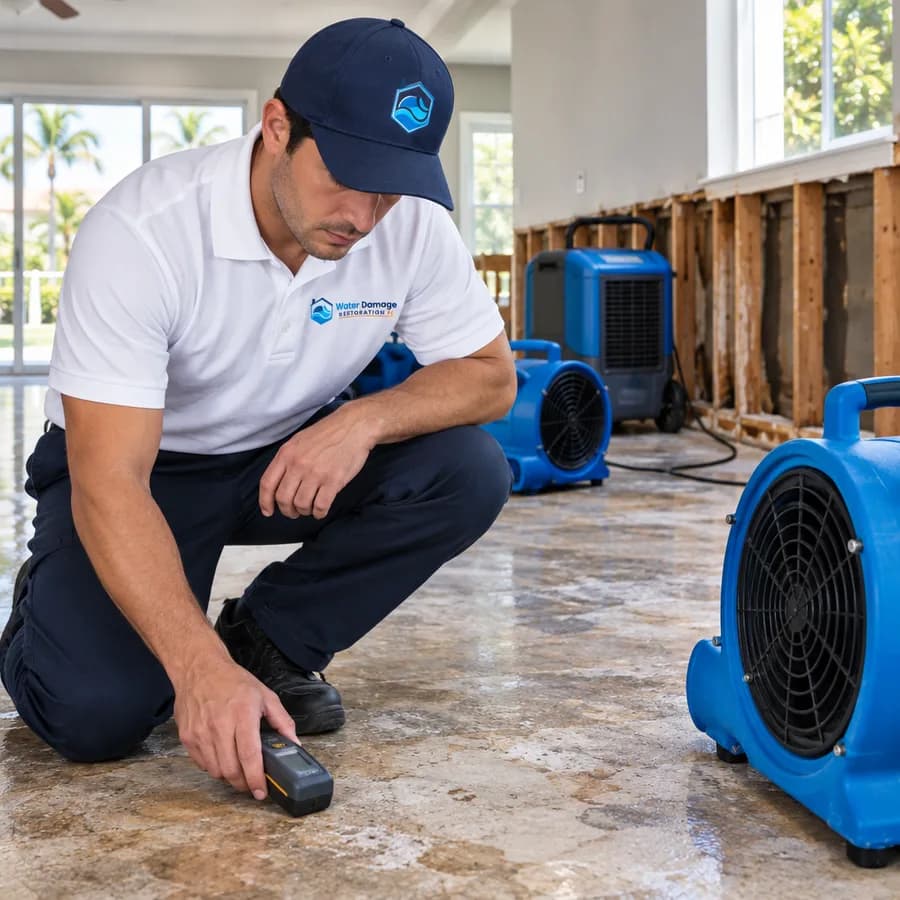
Most residential structural drying takes three to five days with proper equipment. That covers drying the framing, subfloor, and other structural materials back to their normal moisture levels — not just the surfaces. Heavily saturated structures, or losses that sat before drying began, can take longer.
It's important to separate drying from the repairs that follow. Drying is the three-to-five-day part; any reconstruction — replacing drywall, flooring, or larger rebuilding — adds time on top of that.
What affects how long drying takes
- How much water there was and how far it spread.
- Which materials are wet — drywall dries faster than solid wood or concrete.
- How saturated those materials are.
- The humidity, which in Florida works against drying year-round.
- How quickly drying began after the loss.
Dense materials are the usual holdup. Solid hardwood, plaster, and concrete release moisture slowly, so a room with hardwood floors can take longer than one with carpet over a subfloor.
Why the timeline is set by readings, not the calendar
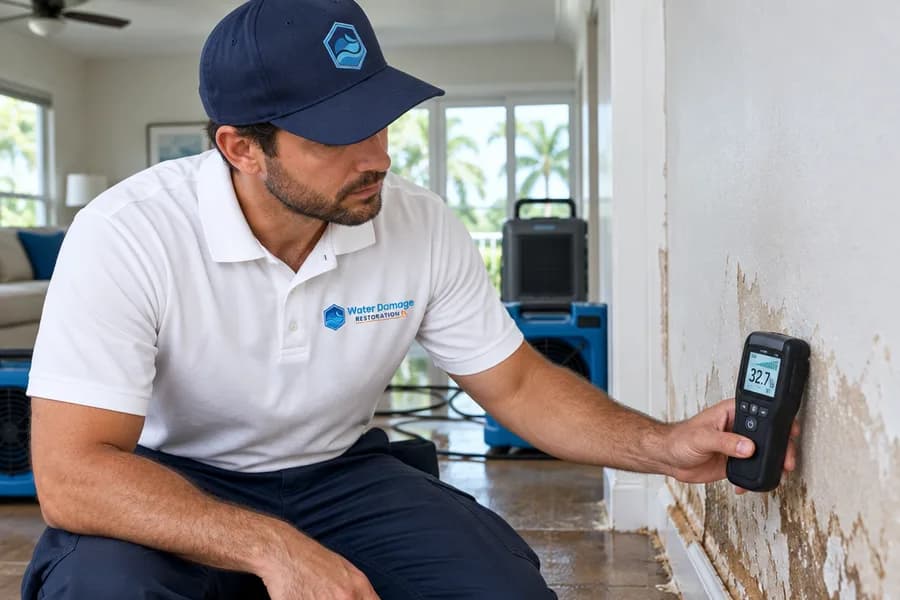
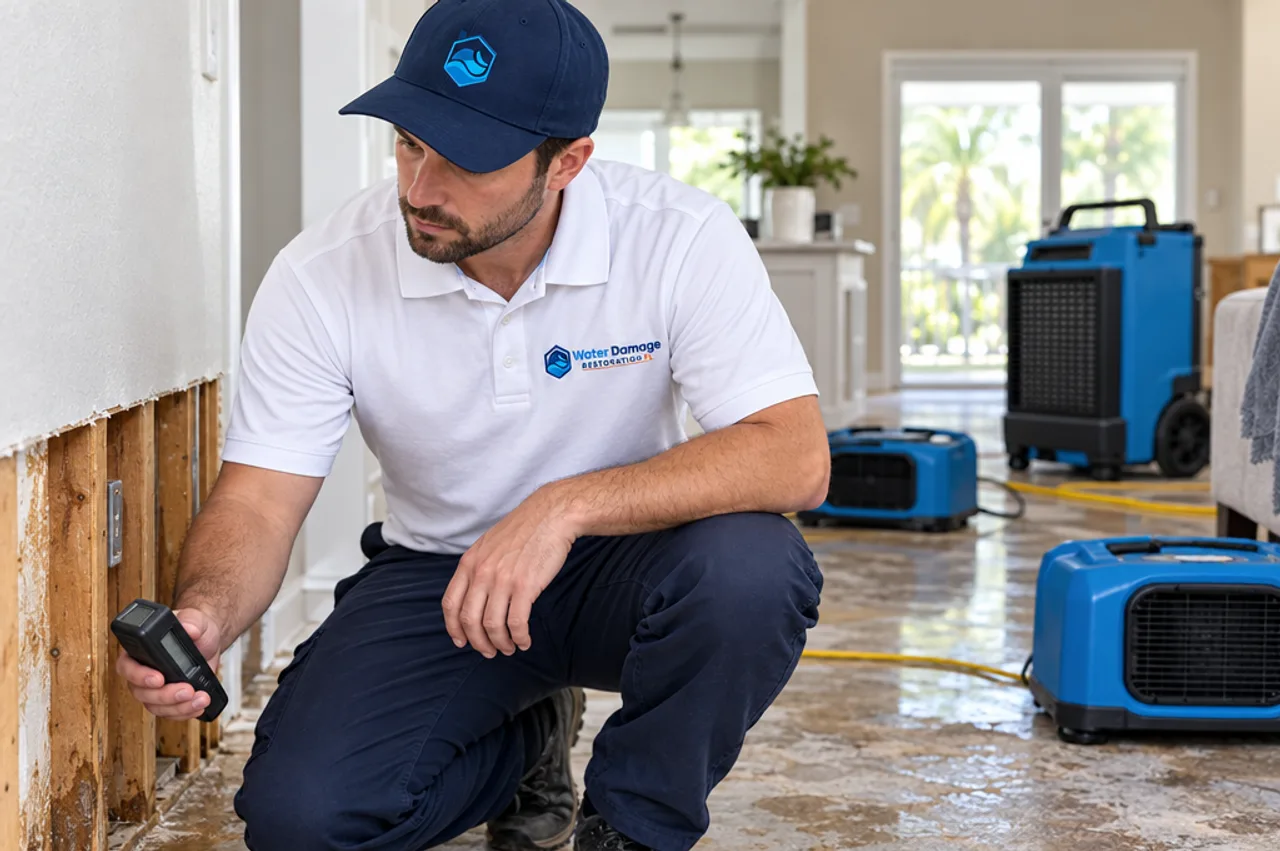
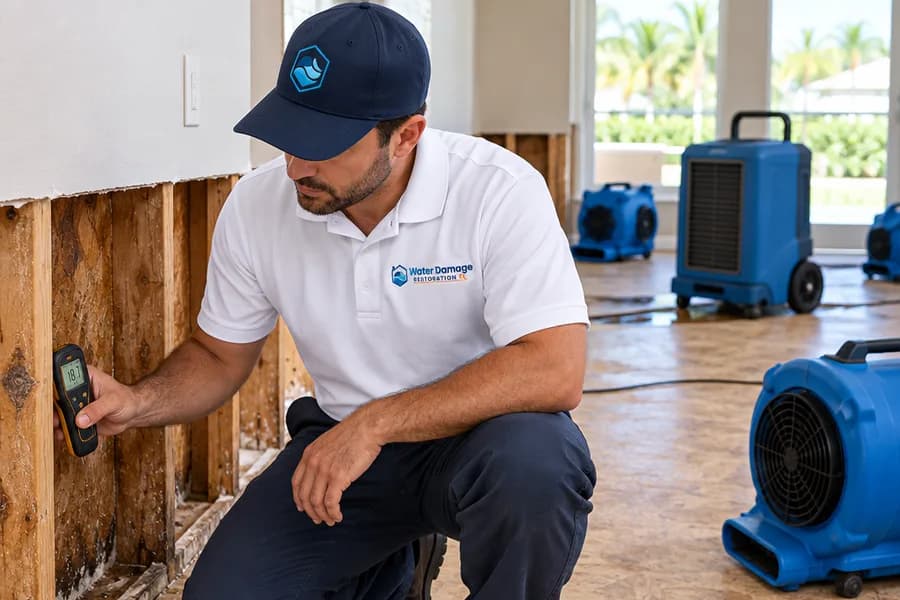
Professional structural drying works toward moisture targets, not a fixed number of days. Technicians take readings from unaffected areas of the same property to establish what 'dry' should look like, then measure the affected materials against that goal — continuing until they reach it.
This matters because a wall or subfloor can feel dry to the touch while still holding enough moisture to warp or grow mold. Drying to a measured target, rather than to appearances, is what makes the result reliable. It's also why the process can't simply be rushed to hit a deadline.
What happens if drying is cut short
Stopping early — because a surface feels dry or the equipment is inconvenient — is one of the most common causes of problems weeks later. Materials that still hold moisture go on to warp, cup, stain, and grow mold, often behind finishes that were repaired over damp material. Because that damage is hidden and delayed, it's easy to underestimate, and it can mean paying to fix the same loss twice.
Living with the equipment
Air movers and dehumidifiers run continuously during drying, and they do make noise. It's tempting to turn them off at night, but stopping and restarting slows the process and raises the mold risk, so they're best left running. A good crew places them to be as unobtrusive as possible and explains how long they'll need to stay.
How to help drying go faster
The biggest lever is speed at the start. The sooner extraction and drying begin, the less water has soaked in and the shorter the drying. That's why fast water extraction up front — pulling out as much water as possible before drying begins — is one of the most effective ways to keep the timeline short.
Drying times by material
Because different materials give up moisture at very different rates, the slowest material in a room usually sets the timeline. A rough sense of the range:
- Drywall and insulation — relatively quick once airflow reaches them, though saturated insulation is often removed instead.
- Carpet and pad — the carpet dries fairly fast, but the pad holds water and is usually replaced.
- Solid hardwood — slow; it can take a week or more and sometimes needs specialty drying mats.
- Concrete slabs — very slow, releasing moisture for a long time and needing monitoring.
- Framing and subfloor — watched most closely, since trapped moisture here causes the worst problems.
Signs drying is progressing well
During the days of drying, a few signs indicate things are on track: falling moisture-meter readings on the affected materials, a room that feels less humid, no new or worsening musty smell, and no fresh staining or warping appearing. A good crew logs the readings so the downward trend is visible — that record is the real evidence of progress, more reliable than how a surface happens to feel on a given day.
Why drying takes longer in Florida
Florida's climate works against drying. High ambient humidity means the outside air is already carrying a heavy moisture load, so natural evaporation is slower and dehumidification has to work harder. Opening windows, which might help in a dry climate, can actually pull more moisture in on a humid day. This is why controlled drying — managing the environment inside the affected area rather than relying on ventilation — matters so much here, and why Florida drying can run a little longer than the same job in a drier region.
What you can do to help drying along
While the professionals handle the equipment, a few things on your end can support the process:
- Leave the drying equipment running — don't turn off air movers or dehumidifiers to save on noise or power.
- Keep interior doors open as directed so air can circulate.
- Avoid adding moisture — hold off on long showers or cooking that raises humidity in the affected area.
- Don't move or cover the equipment, which is positioned deliberately.
- Report anything that seems off, like a new smell or a damp spot, so it can be checked.
What happens after drying is complete
Once moisture readings confirm the materials have reached their targets, the equipment comes out and the job moves into repairs. Anything that was removed — drywall, insulation, flooring — is replaced, and finishes are restored to match. Because the structure has been verified dry, those repairs go onto a sound foundation rather than sealing moisture inside. This hand-off from drying to repair is smoothest when one team handles both, since they know exactly what got wet and how it was dried.
Why rushing drying backfires
It's tempting to want the equipment gone and the repairs done, but cutting drying short is a false economy. Materials that still hold moisture behind a repaired surface go on to warp, cup, stain, and grow mold — problems that surface weeks later and cost far more to fix, because now the new finishes have to come back off. Drying to verified targets, even when it takes an extra day or two, is what ensures you deal with the loss once rather than twice.