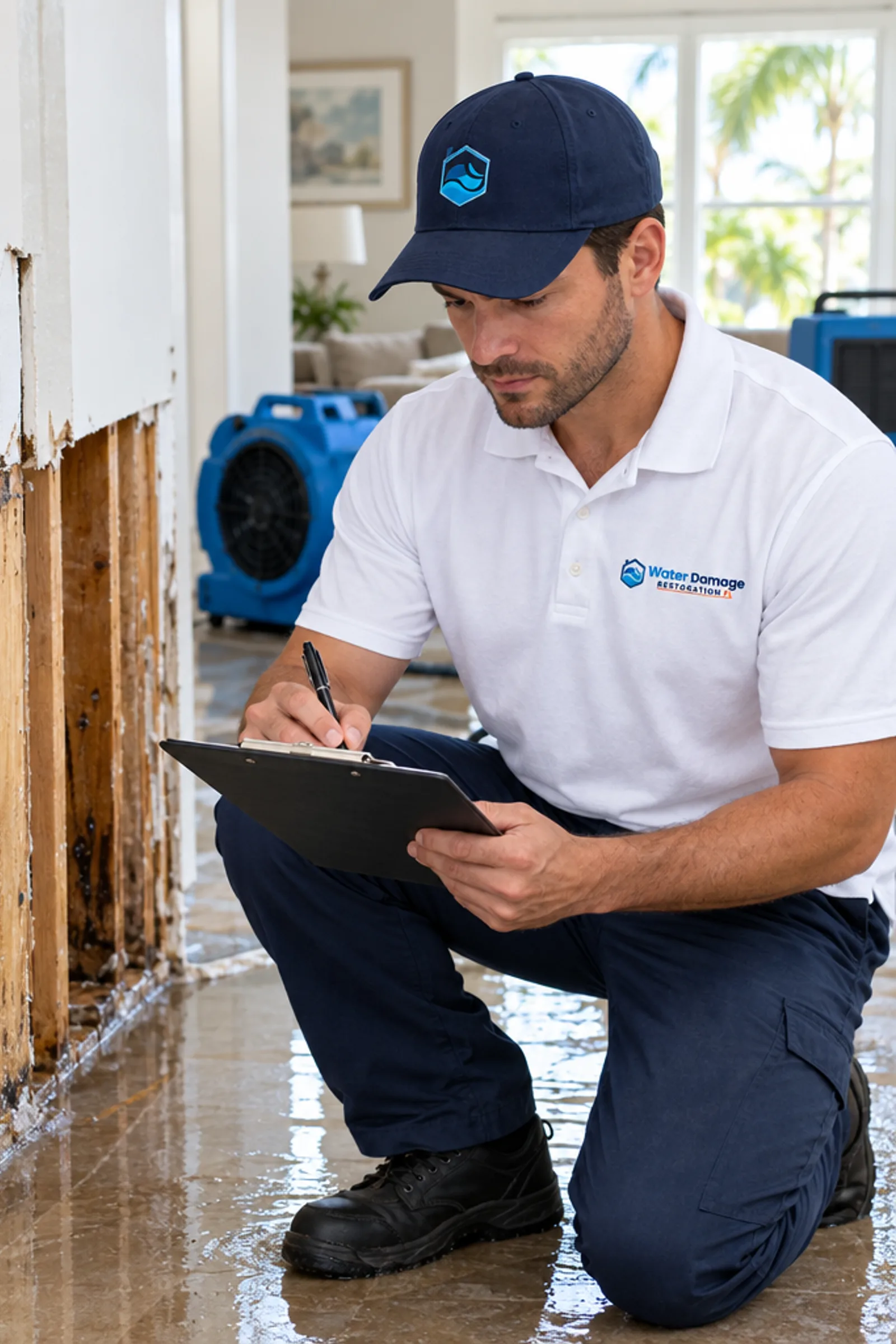
The first 24 hours after water damage are the most important for limiting how far it spreads. What you do in that window affects how much can be saved, how much it costs, and whether mold gets a foothold. Here's how to make the most of that time, safely and in order.
Make the area safe first
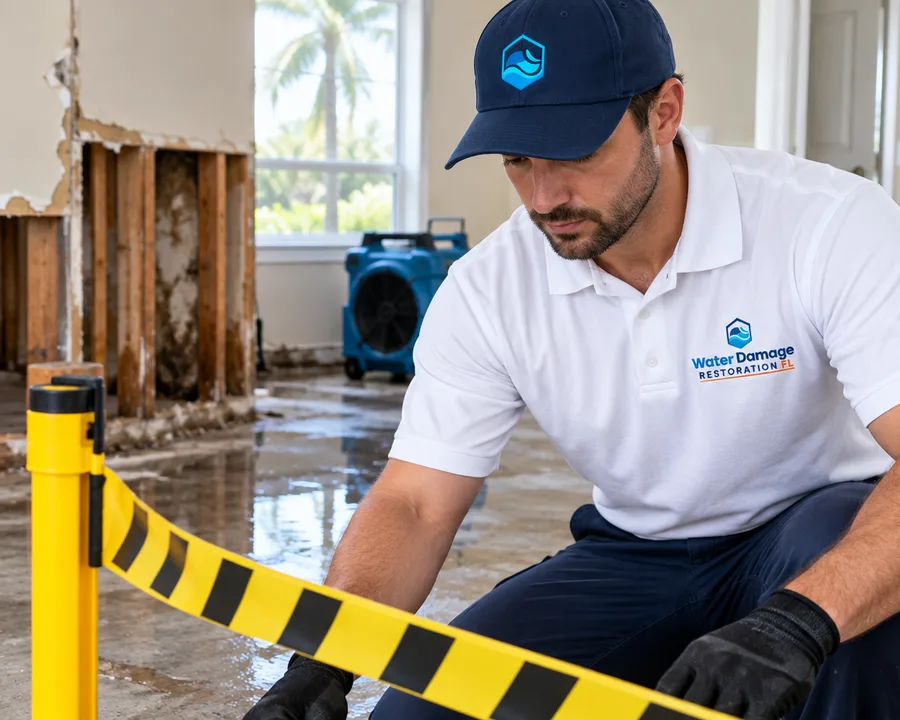
Before anything else, if it's safe to do so, shut off the water source and any electricity near the affected area. Avoid walking through standing water near outlets, and treat any water that may be contaminated with caution.
Protect your belongings and document the damage
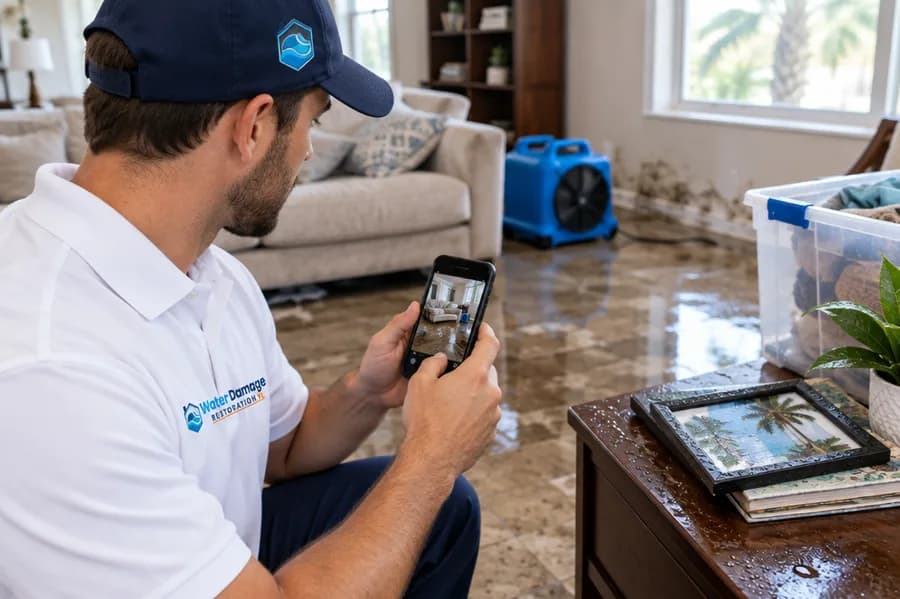
Move furniture, electronics, and valuables away from standing water, and document the damage with photos before cleanup begins — this makes the insurance process much smoother later. Our guide on whether insurance covers water damage explains what tends to be covered.
Start drying — but know the limits
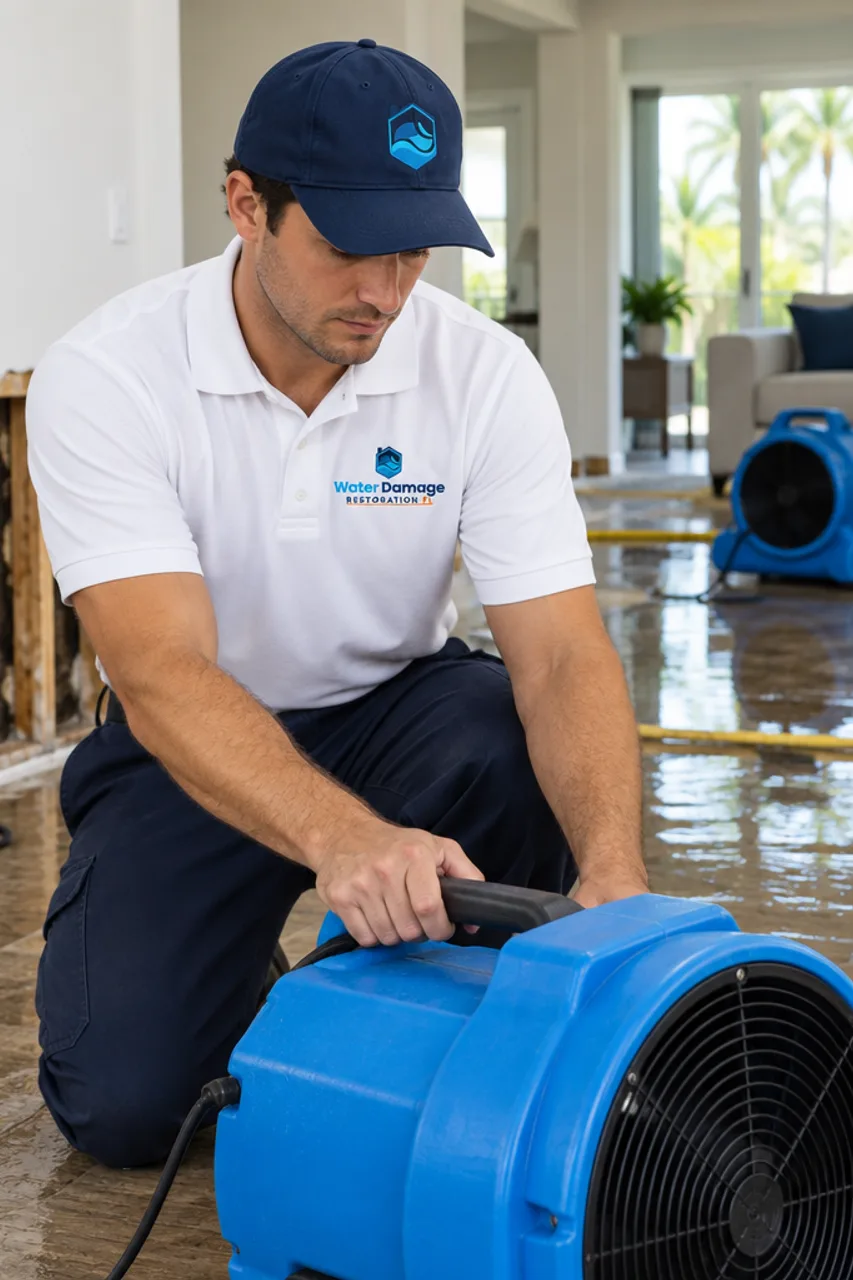
Ventilate the space if the weather allows, but avoid using household fans on contaminated water. Household tools can handle a small clean-water spill, but they can't reach moisture inside walls and subfloors, which is where hidden damage develops. For anything more than a minor amount, professional water damage restoration extracts the water and dries the structure properly.
Why speed matters
Once the area is safe, call a restoration professional as soon as possible. Water that sits for more than 24 to 48 hours significantly increases the risk of mold growth, and Florida's humidity shortens that window further. The faster the water is removed and drying begins, the less damage there is to repair. For active situations, our team responds around the clock for emergency water damage.
A quick action checklist
When water damage strikes, it's easy to freeze or scramble. A simple checklist keeps you focused on what matters, in order:
- Stop the water — shut off the source or the main valve.
- Kill the power to the affected area if water is near outlets and it's safe to reach the panel.
- Move valuables, electronics, and furniture out of the water.
- Document everything with photos and video before you clean up.
- Mop or blot clean water if it's a small amount and safe to do so.
- Call a restoration professional — sooner is always better.
Clean water vs. contaminated water
One judgment shapes how you should respond: what kind of water you're dealing with. Clean water from a supply line or faucet is low-risk to handle in the short term, so blotting it up and starting to dry is reasonable. But water from a drain, toilet, appliance backup, or outside flooding may be contaminated, and that changes everything — it should be handled with caution and, ideally, by professionals with protective equipment. When you're not sure, treat standing water as potentially unsafe rather than wading in and spreading it around.
What the professionals will do
Knowing what to expect makes the call easier to make. A restoration crew will assess the source and extent of the damage, extract standing water, and use moisture meters to find where water has traveled inside walls and floors. They'll remove materials too saturated to save, set air movers and dehumidifiers to dry the structure to measured targets, and document everything for your insurance claim. Handling it as one continuous process — cleanup, drying, and repair — is what keeps a fast response from turning into a drawn-out problem.
Mistakes to avoid in the first 24 hours
In the rush to respond, a few common missteps can make water damage worse rather than better:
- Touching electrical outlets or switches near water before cutting the power.
- Wading through standing water that may be contaminated or electrified.
- Assuming a mopped-up surface means the problem is solved — hidden moisture remains.
- Using household fans on contaminated water, which can spread it.
- Waiting to 'see if it dries on its own,' which gives mold time to start.
- Throwing out damaged items before documenting them for insurance.
How water damage gets worse over time
Water damage is progressive, and understanding the timeline shows why speed matters. In the first minutes and hours, water spreads and soaks into materials. Within a day, drywall swells, wood begins to warp, and furniture finishes can bleed onto flooring. Between 24 and 48 hours, mold can begin to grow, and in Florida's humidity that window is shorter. After a few days, mold spreads, materials deteriorate further, and what began as a cleanup becomes a remediation and reconstruction job. Each stage is more expensive than the last, which is why the first 24 hours carry so much weight.
Salvaging your belongings
Contents are often salvageable if you act quickly and sort sensibly:
- Move electronics, documents, and valuables to a dry area first.
- Hard, non-porous items can usually be cleaned and dried.
- Porous items soaked by clean water may be saved if dried fast; soaked by contaminated water, usually not.
- Photos and documents can sometimes be saved by specialists — don't discard them hastily.
- Document anything you do remove, for your claim.
Why the source of the water matters
Before you decide how to respond, identify where the water came from, because it determines both safety and next steps. Clean water from a supply line is low-risk to handle briefly. Water from an appliance, drain, toilet, or outside flooding may be contaminated and calls for more caution and, often, professional help. The source also matters for insurance, since sudden failures are treated differently from gradual leaks and outside flooding. A minute spent identifying the source guides everything that follows.