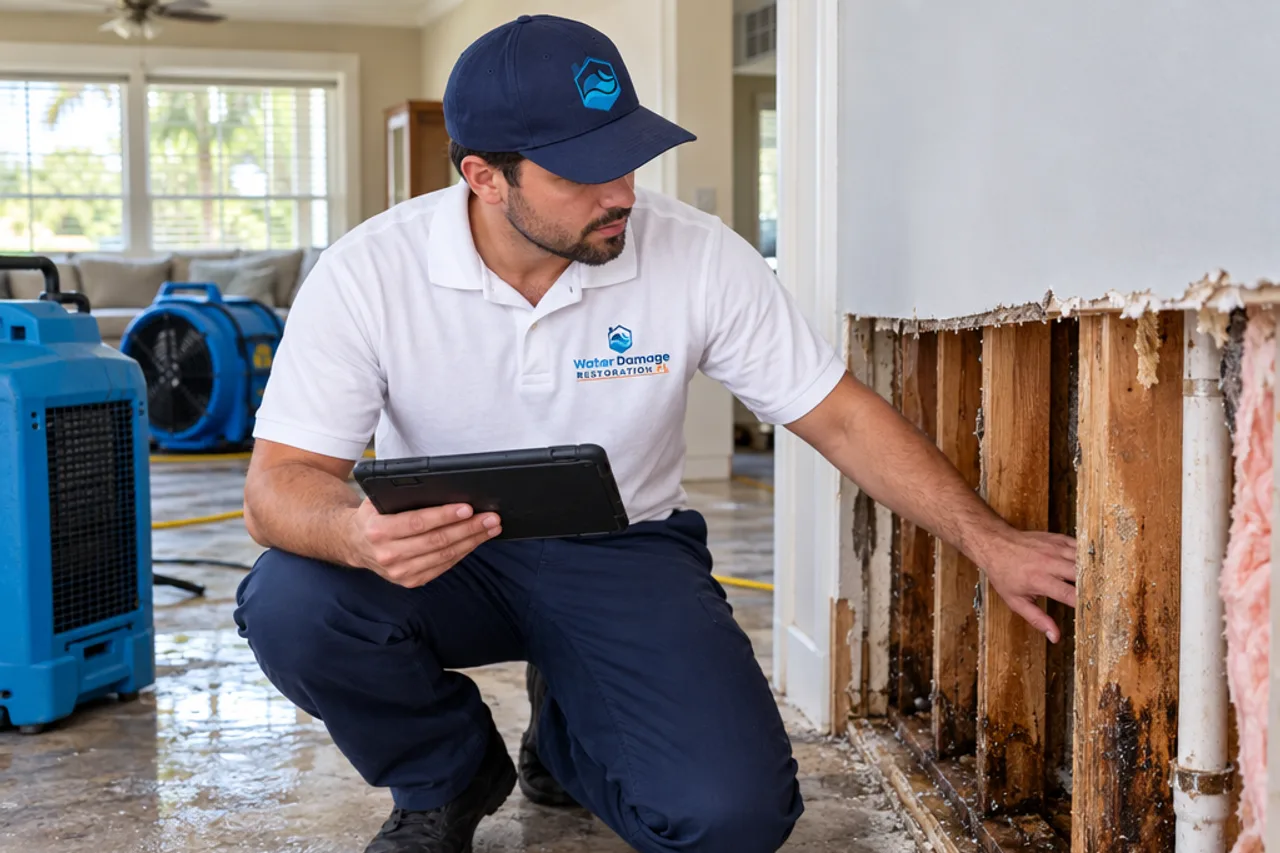
If you've dealt with a water loss, you've probably heard both 'mitigation' and 'restoration,' sometimes used as if they mean the same thing. They don't — they describe two different phases of the same job. Understanding the difference helps you know what's happening at each stage and why both matter.
Mitigation: stopping the damage from getting worse
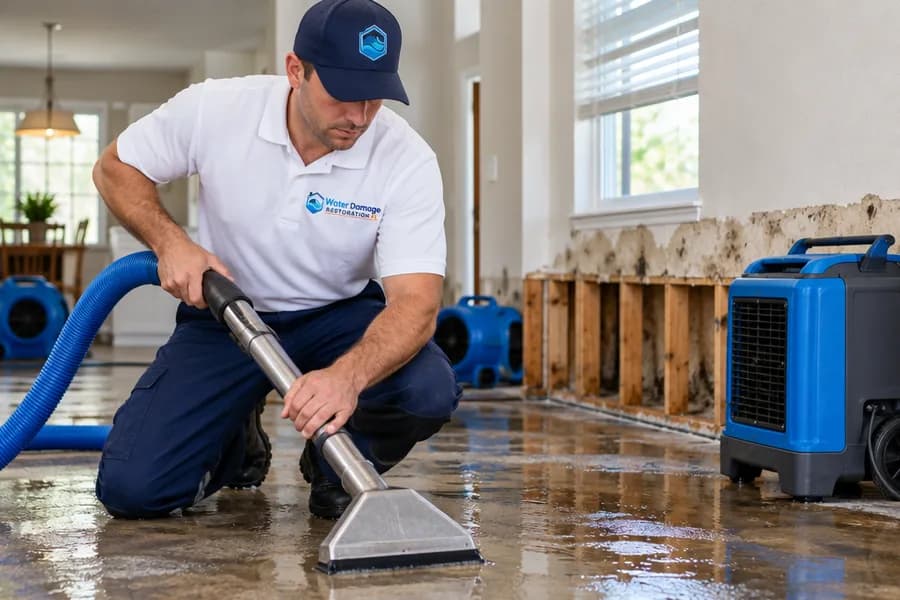
Mitigation is the emergency phase. Its goal is to limit the damage and stop it from spreading — fast. When water is actively moving through a property, every hour means more soaked drywall, more warped flooring, and a higher mold risk, so mitigation is all about speed and containment.
Typical mitigation work includes:
- Stopping or isolating the water source where possible.
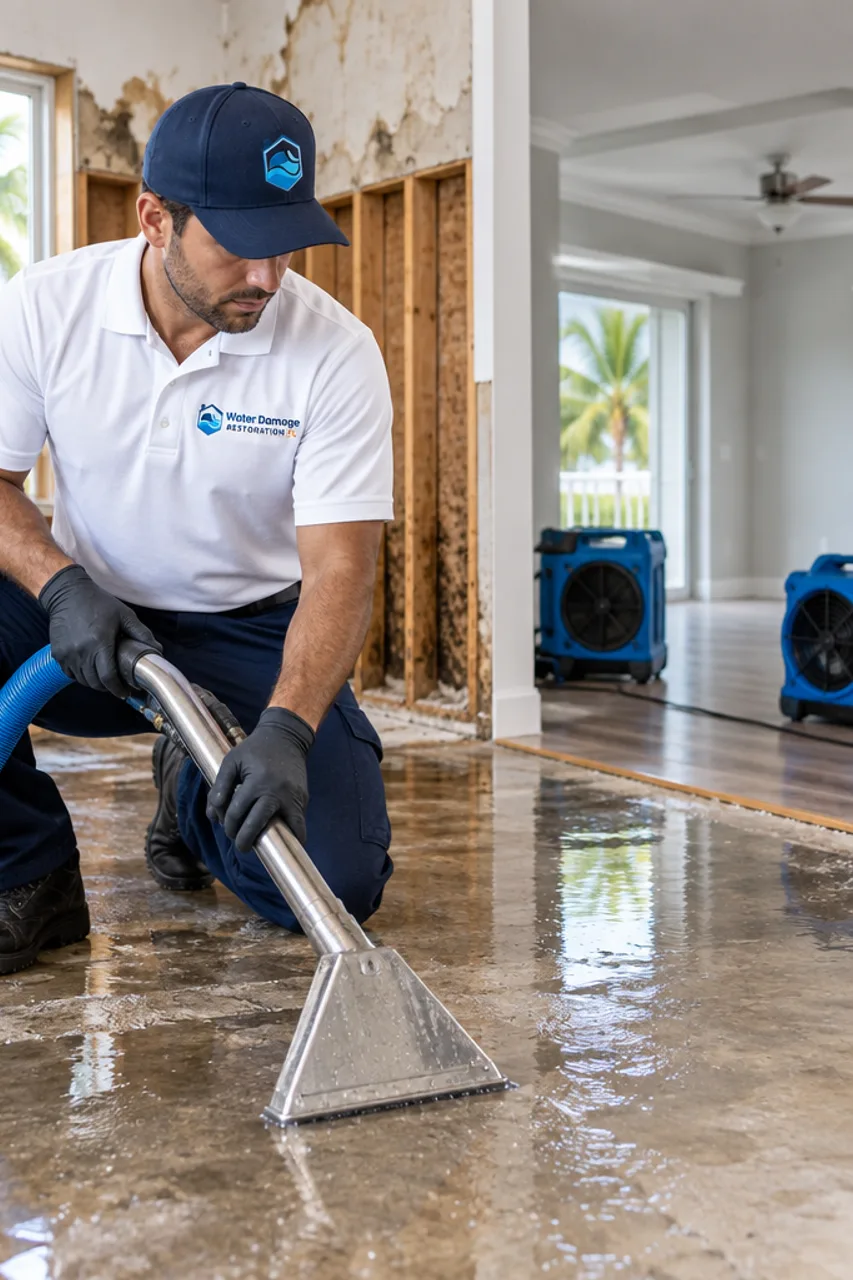
- Extracting standing water quickly.
- Moving furniture and contents out of harm's way.
- Removing saturated materials that would keep spreading moisture.
- Setting air movers and dehumidifiers to begin drying immediately.
Mitigation is the first thing our crews focus on during emergency water damage response, because it's what draws a line under the loss.
Restoration: putting things back to normal
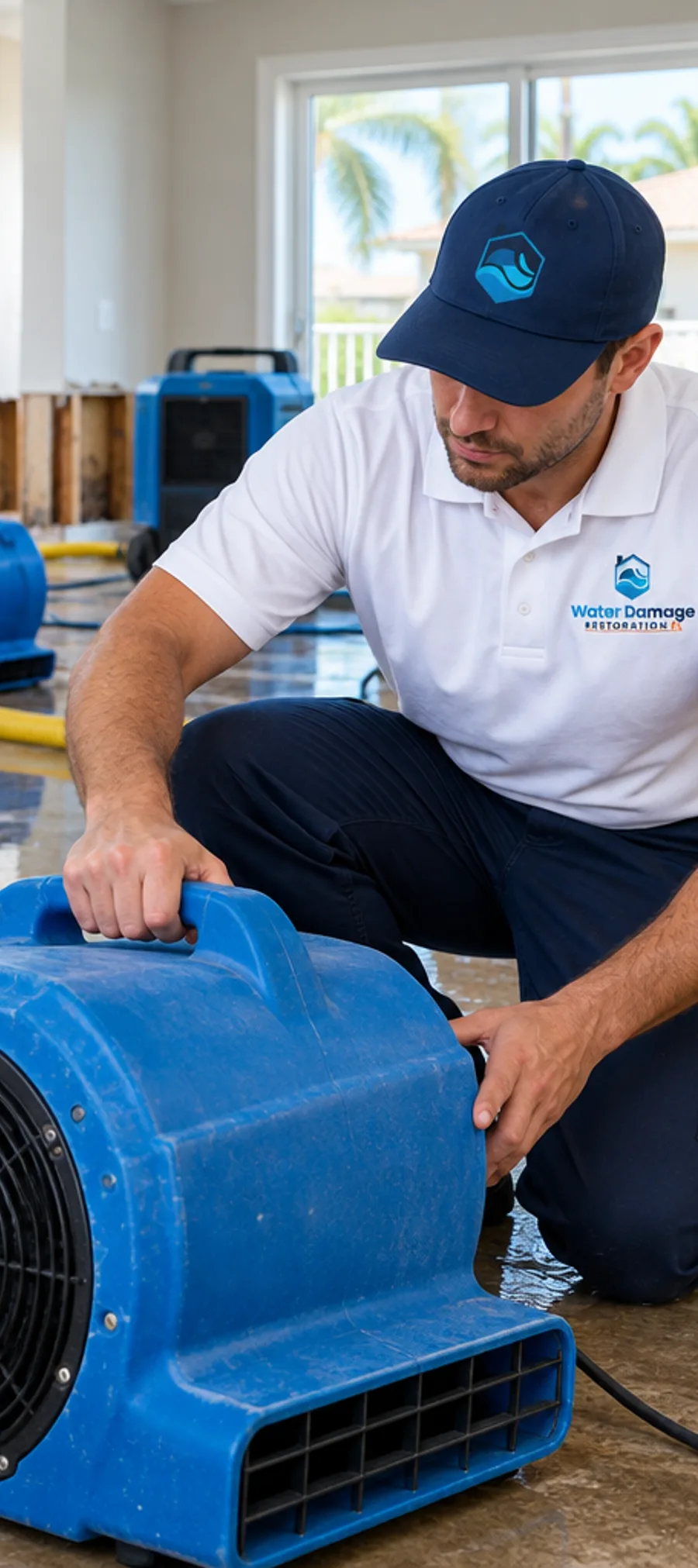
Restoration is the longer phase that follows. Once the situation is stabilized, restoration fully dries the structure, cleans and sanitizes, and repairs or rebuilds what the water damaged — from replacing drywall to full reconstruction. Where mitigation is measured in hours, restoration is measured in days to weeks.
The full arc of water damage restoration covers everything from that first emergency response through the final repair, ending with a property returned to its pre-loss condition.
How the two phases compare
- Goal — mitigation prevents further damage; restoration repairs existing damage.
- Timing — mitigation is immediate and urgent; restoration comes after.
- Work — mitigation is extraction and removal; restoration is drying, cleaning, and rebuilding.
- Duration — mitigation takes hours; restoration takes days to weeks.
Why you usually need both
Most water losses require both phases, in order. Mitigation stabilizes things and limits the damage; restoration then makes the property whole. Skipping straight to restoration without proper mitigation means starting the repair on a worse loss than necessary — more material soaked, more to replace.
There's also an insurance angle: policies generally expect you to take reasonable steps to prevent further damage, so prompt mitigation supports your claim as well as your property. Handling both phases as one continuous process, with a single team, avoids the gaps and delays that come from coordinating separate companies.
What this means when you call for help
When you reach out during a water emergency, the first response is mitigation — get someone on site to stop the spread and start drying. Restoration follows once the property is stable. Knowing that sequence helps set expectations: the fast, disruptive part comes first, and the careful rebuilding comes after.
A real-world example of both phases
Picture a supply line that fails overnight and floods a kitchen and the room below. Mitigation is the crew that arrives fast, shuts off the water, extracts the standing water, pulls the soaked cabinets' kick panels and wet carpet in the room below, and sets air movers and dehumidifiers before leaving. That's the emergency phase — hours of work to stop the damage from spreading.
Restoration is everything after: days of monitored drying until the framing and subfloor hit their targets, then replacing the damaged drywall and flooring, repainting, and a final walkthrough. Same loss, two distinct phases — one that races the clock, one that rebuilds carefully.
Why one company for both phases helps
Because mitigation and restoration are so connected, having one team handle both avoids a common headache: the handoff. When a mitigation company dries the property and a separate contractor does the rebuild, details get lost, timelines stretch, and it's unclear who's accountable for what.
A single team carries the full history of the loss from the first hour to the last repair — they know exactly what got wet, how it was dried, and what needs rebuilding. That continuity means fewer gaps, a smoother timeline, and one point of contact throughout.
What this means for your timeline
Understanding the two phases also helps you anticipate how a water loss unfolds. The first day or two is intense and disruptive — the mitigation phase, focused on stopping the damage. Then things quiet into the slower, steadier restoration phase: several days of drying, followed by repairs sized to the damage. Knowing the fast part comes first makes the process easier to plan around.
The mitigation phase, step by step
Mitigation follows a fast, focused sequence aimed at stopping the damage:
- Make the area safe and stop or isolate the water source.
- Extract standing water quickly with pumps and extractors.
- Move furniture and contents out of harm's way.
- Remove saturated materials that would keep spreading moisture.
- Set air movers and dehumidifiers to begin drying immediately.
- Document conditions and moisture readings from the first hour.
The restoration phase, step by step
Restoration is the slower, more thorough work that returns the property to normal:
- Complete the structural drying to measured moisture targets.
- Clean and sanitize affected surfaces and salvageable contents.
- Remove and dispose of anything that can't be restored.
- Repair or replace drywall, flooring, and finishes.
- Handle any larger reconstruction the loss requires.
- Finish with a walkthrough to confirm the space is back to normal.
Which phase does insurance care about?
Both, but in different ways. Insurers generally expect prompt mitigation — taking reasonable steps to prevent further damage is often a policy requirement, and failing to do so can affect a claim. Restoration is then the covered repair of the documented loss. This is another reason the two phases are best handled together and documented as one continuous record: it shows the insurer you acted responsibly to limit the damage and provides clear evidence of the full scope of work.